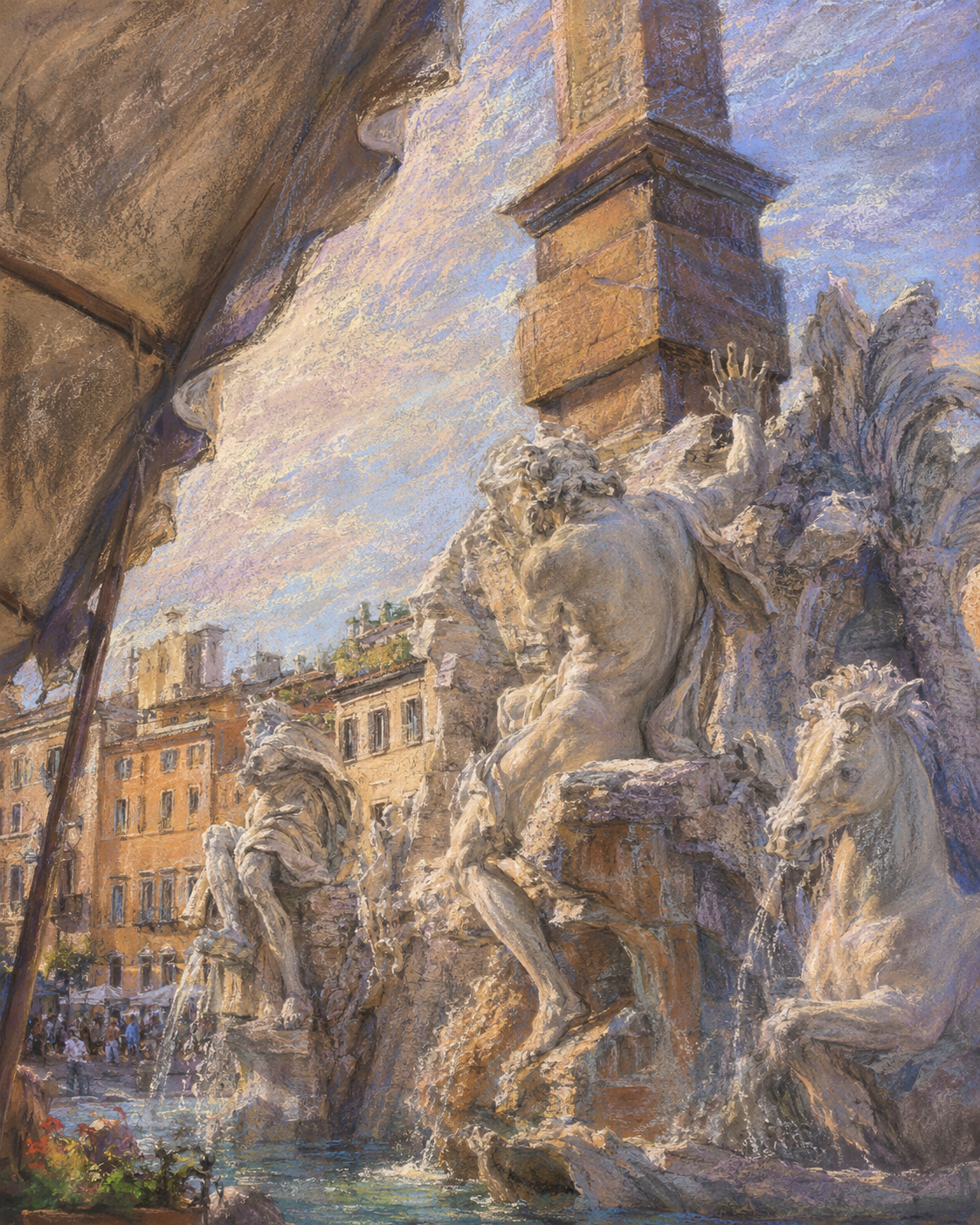
Echoes of the Eternal Piazza
Critique
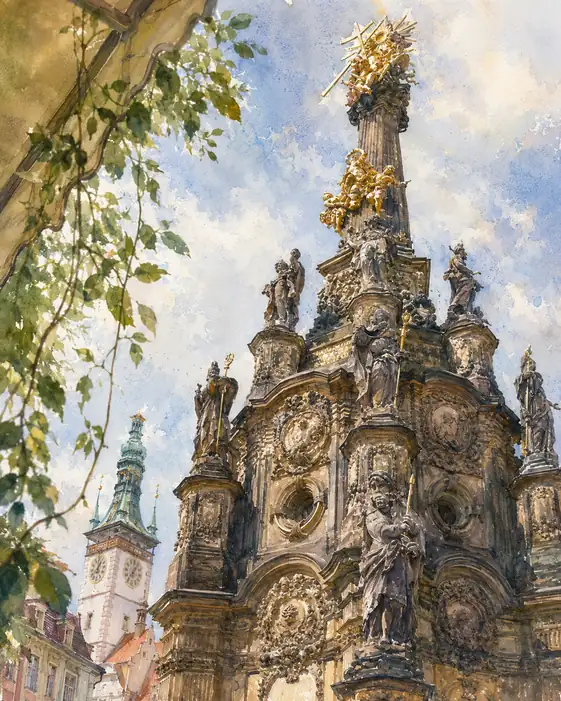
1. Introduction This painting presents a dynamic and textured view of a grand Baroque fountain, capturing the monumental energy of Rome's historical center. The work depicts a complex arrangement of stone sculptures, including muscular river gods and a powerful horse, situated beneath an imposing obelisk. The perspective is from a low, slightly sheltered vantage point, possibly under a café awning, which adds a sense of urban immediacy to the scene. Through a thick, almost sculptural application of paint, the artist conveys the dramatic movement and the enduring physical presence of the fountain's classical forms. 2. Description The composition is dominated by the central fountain structures, rendered in warm, sandy tones that catch the golden light of the sun. A powerful river god is depicted in a dynamic pose, leaning back against the rocky base, while a horse's head emerges from the cascading water on the right. In the background, a tall, square obelisk rises toward a pale, lavender-tinged sky. To the left, several multi-story Roman buildings in shades of ochre and terracotta line the piazza, their windows and architectural details visible. The foreground on the left is partially obscured by a dark, textured awning, providing a structural frame for the scene. 3. Analysis The artist utilizes a heavily textured technique, possibly employing a palette knife or thick impasto, to mimic the weathered and rugged surface of the stone sculptures. The color palette is dominated by warm yellows, oranges, and earthy browns, contrasted with the subtle purples and blues of the sky and the cool reflections in the water below. The composition is built on a series of intersecting diagonals and powerful vertical lines, creating a sense of restless energy. Light is used effectively to highlight the muscularity of the figures and the rough textures of the rocks, while the splashing water is suggested through flickers of bright white paint. 4. Interpretation and Evaluation This work demonstrates strong draftsmanship and a sophisticated understanding of Baroque sculpture's theatricality. The composition is highly effective, using the foreground awning to create a sense of place and to contrast the modern everyday life with the timeless grandeur of the fountain. The choice of a highly textured medium adds a tactile dimension to the painting, emphasizing the weight and permanence of the stone. The color scheme successfully captures the legendary "Roman light," conveying a feeling of warmth and historical depth. The artist's ability to translate the fluid movement of water and the solid forms of sculpture into a unified, energetic whole is impressive. 5. Conclusion Initially, the viewer is overwhelmed by the sheer density of the texture and the complexity of the sculptural forms, but the focus eventually settles on the harmonious interaction between light and material. The painting successfully captures the atmospheric essence of a Roman piazza, where art and life are inextricably linked. The synthesis of the monumental Baroque fountain and the fleeting, golden light of the day results in a powerful and evocative tribute to the city's artistic heritage. Ultimately, this work serves as a celebration of the enduring power of classical art to inspire and animate the modern urban environment.
Same Subcategory
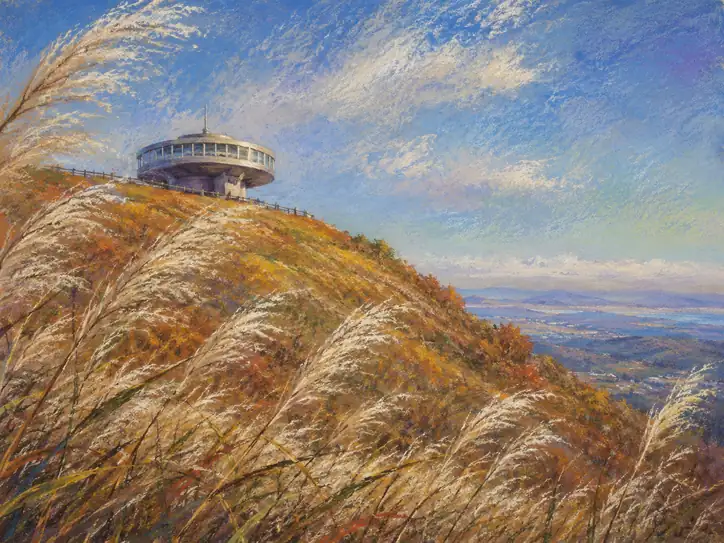 Autumn Whispers from the Lookout Hill
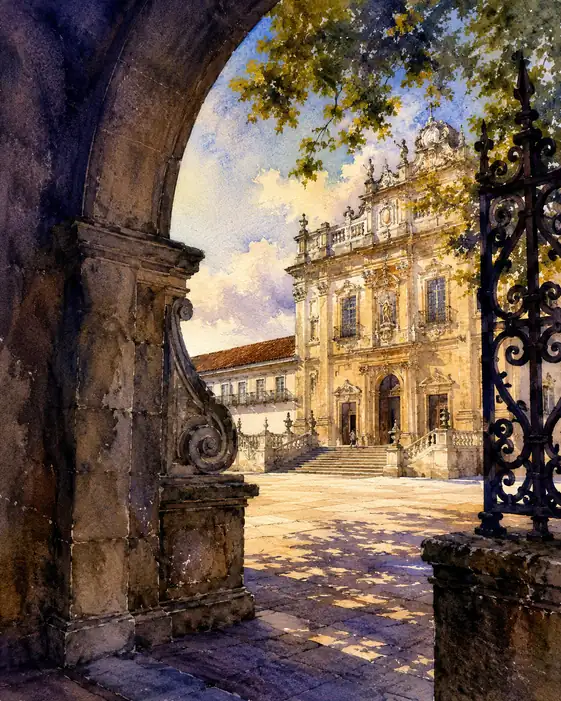 The Arch of Timeless Afternoon
Similar Artworks
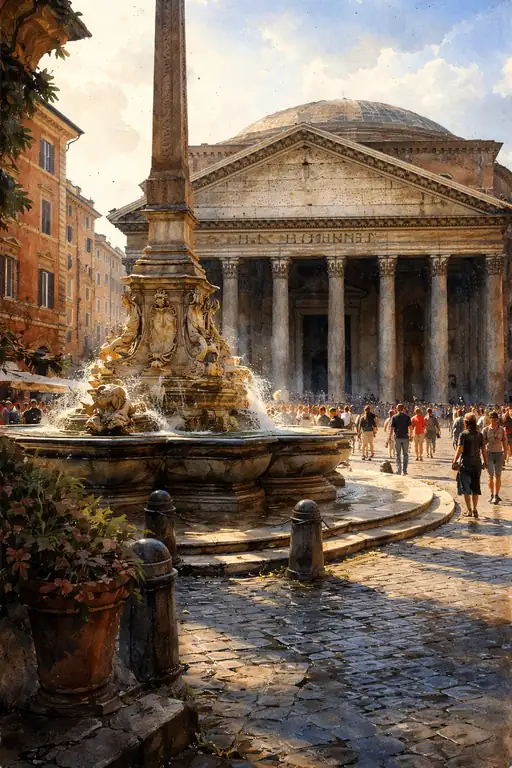 The Eternal Pantheon
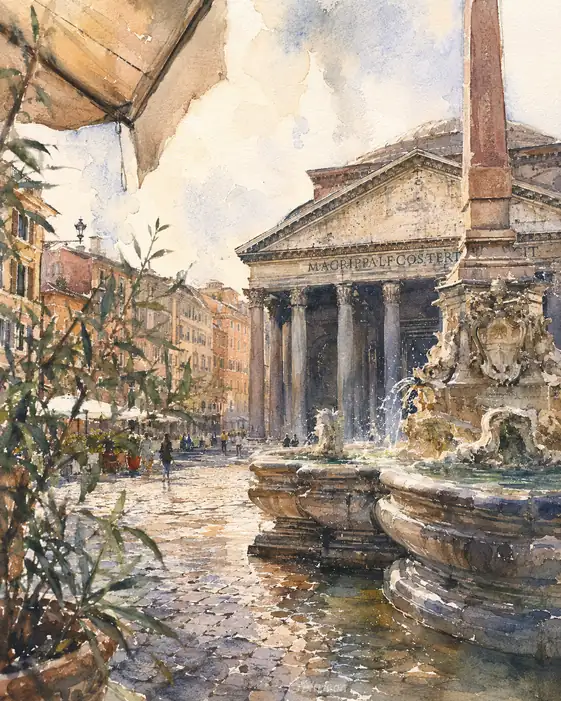 The Timeless Portico
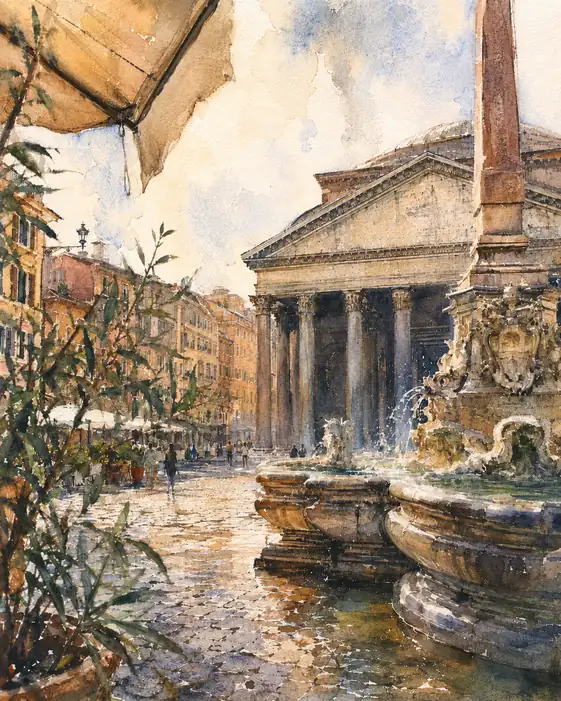 Golden Afternoon at the Pantheon
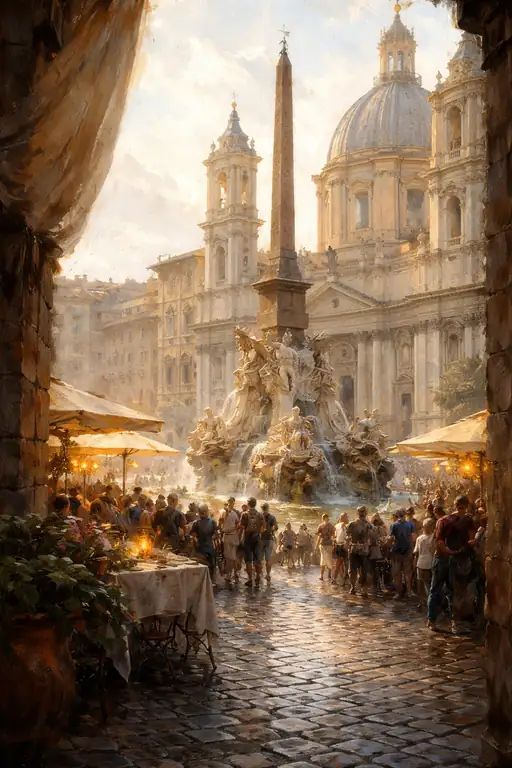 A Golden Toast to the Eiffel Silhouette: Romance on the Cobblestones
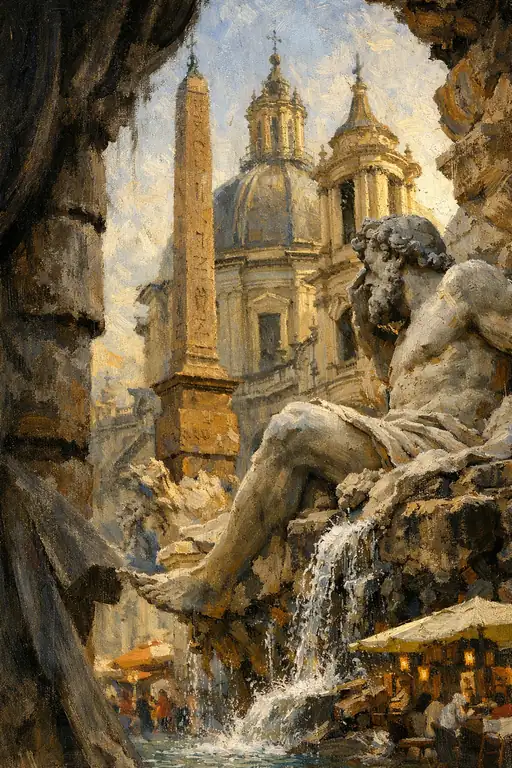 Timeless Echoes of Navona
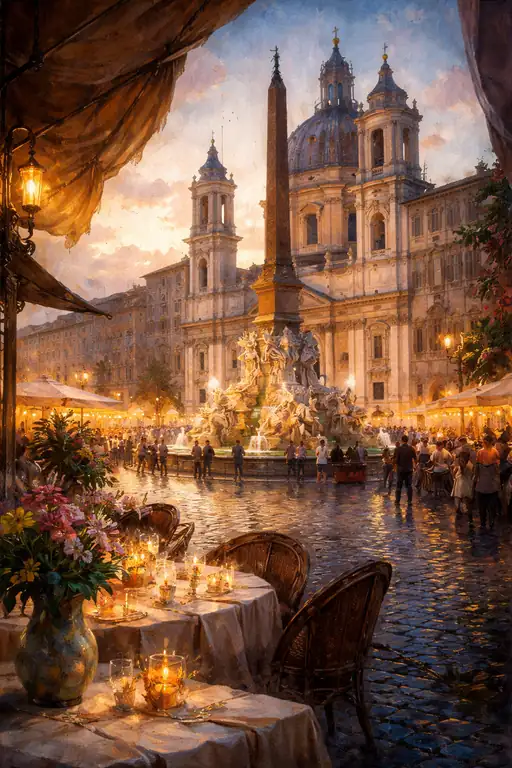 Twilight at Navona
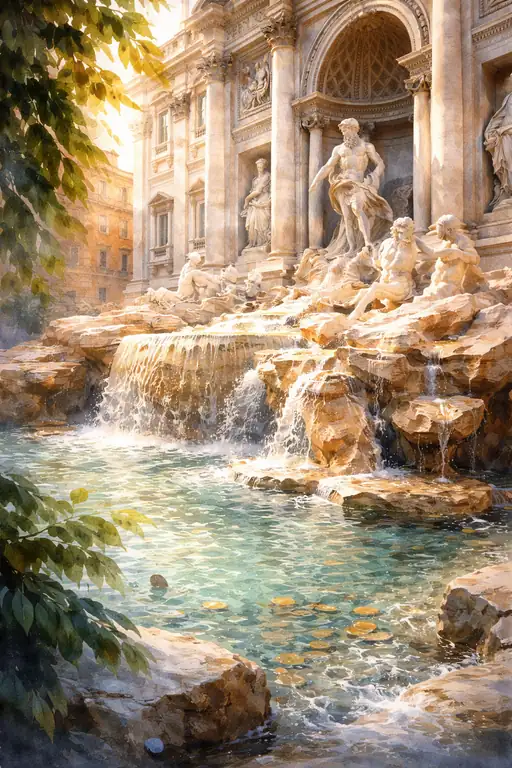 Symphony of the Sunlit Cascade
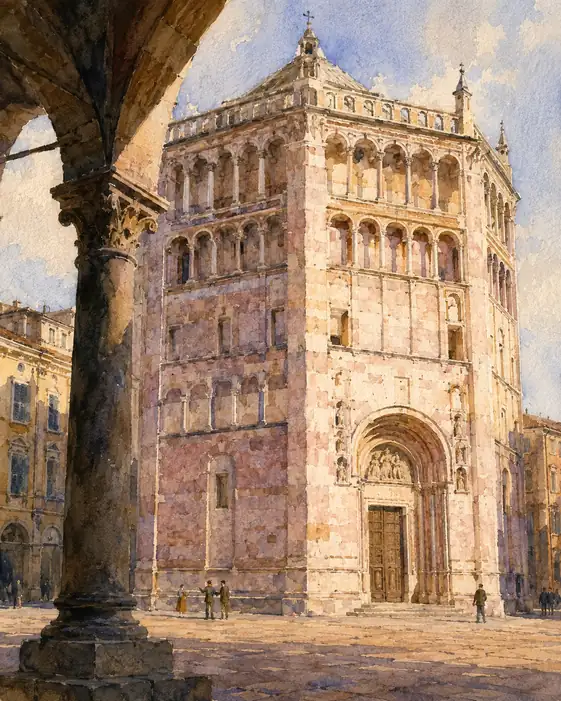 Sun-Drenched Echoes of Eternity
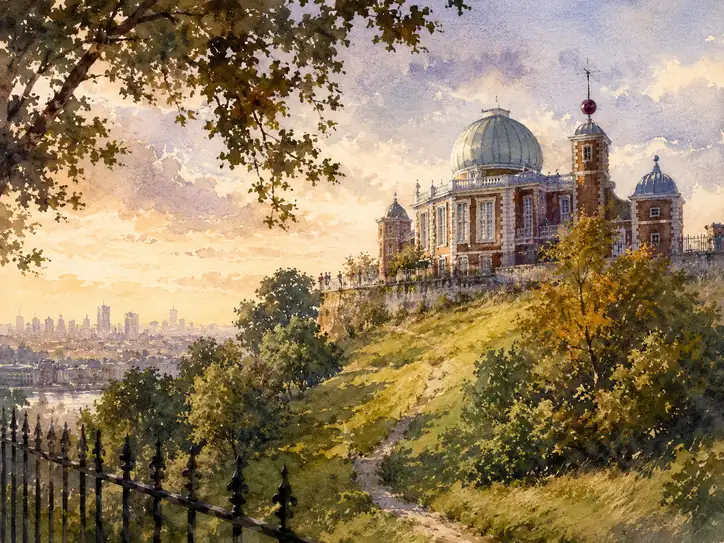 Where Time Meets the Horizon
 Echoes of Ancient Grace