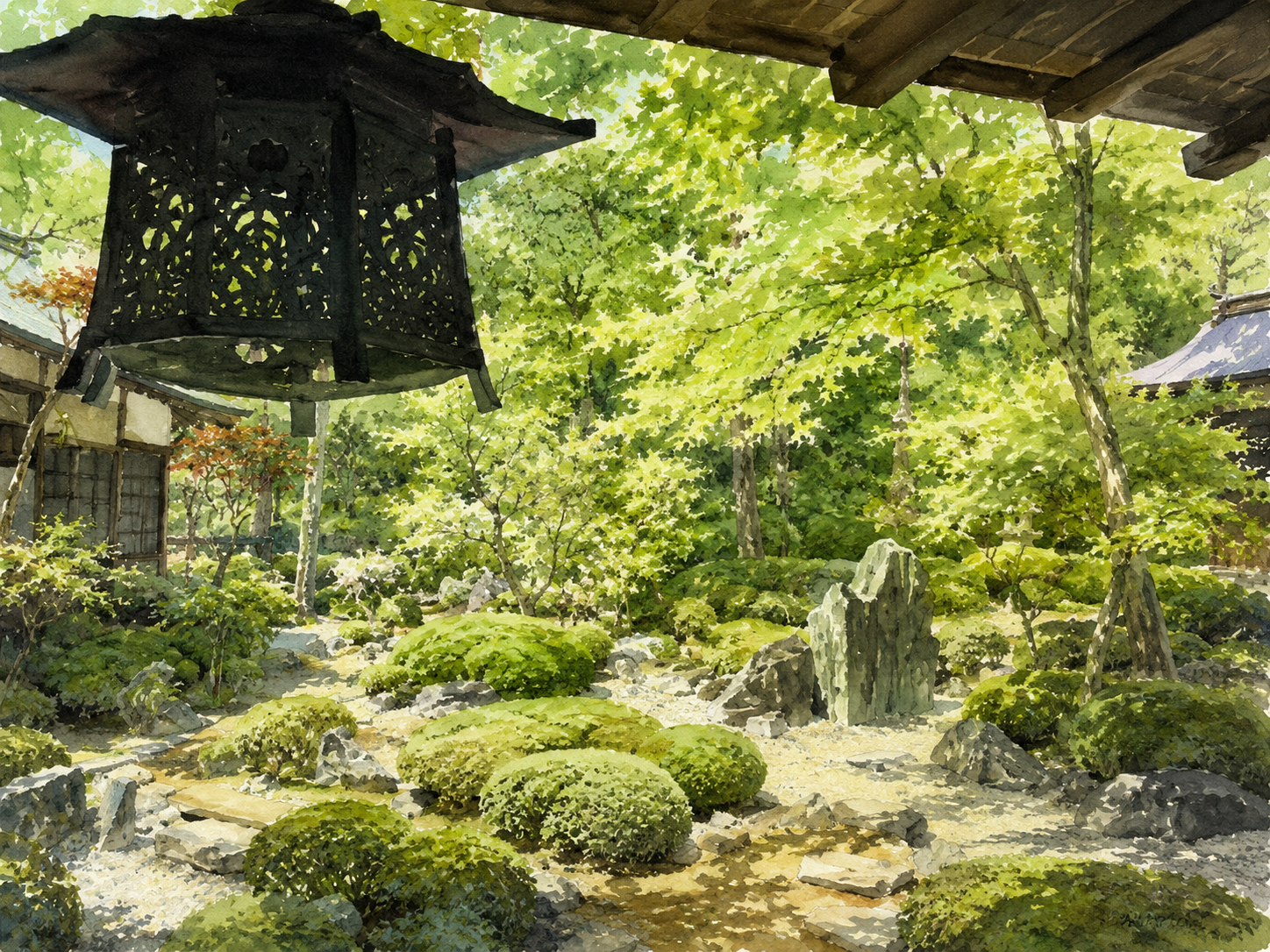
Eternal Silence of the Mossy Sanctuary
Critique
1. Introduction This watercolor painting depicts a tranquil Japanese temple garden, capturing a moment of profound stillness and natural beauty. The work focuses on the harmonious relationship between man-made religious artifacts and the carefully cultivated landscape, characteristic of Zen Buddhist aesthetics. A large, ornate bronze lantern hanging from a temple eave serves as the primary foreground element, framing the view of a lush, sun-dappled moss garden beyond. The overall atmosphere is one of contemplation, where the interplay of light and shadow evokes a sense of spiritual peace. 2. Description In the upper left foreground, a heavy, dark bronze lantern with intricate decorative patterns hangs from a weathered wooden roof. Its dark silhouette contrasts sharply with the vibrant greenery of the garden behind it. The garden features meticulously maintained mounds of green moss, interspersed with grey stones and gravel paths. A tall, vertical rock serves as a central point within the garden, surrounded by low-lying shrubs. In the background, a dense canopy of deciduous trees allows dappled sunlight to filter through, creating a complex pattern of highlights and shadows on the ground. 3. Analysis The artist employs a rich palette of greens, ranging from deep forest tones to bright, lime-colored highlights, to represent the varied textures of the moss and foliage. The use of "komorebi," or sunlight filtering through trees, is achieved through delicate wet-on-dry techniques that create sharp, realistic light patches. The composition is balanced by the large, dark mass of the lantern on the left and the upward reaching lines of the trees on the right. The depth of the scene is emphasized by the gradual softening of details as the garden recedes into the background, creating an atmospheric perspective. 4. Interpretation and Evaluation This work demonstrates a high level of skill in capturing the subtle textures of a traditional Japanese garden. The draftsmanship is particularly evident in the detailed rendering of the bronze lantern and the organic forms of the moss and rocks. The composition is thoughtfully arranged, using the lantern as a powerful framing device that invites the viewer to enter the sacred space of the garden. The color choices are exceptionally effective in conveying the cool, moist atmosphere of a forest temple. The artist's ability to render the fleeting quality of dappled sunlight adds a dynamic yet peaceful energy to the static garden scene. 5. Conclusion Initially, the viewer's eye is drawn to the impressive weight and detail of the hanging lantern, but the focus soon moves to the intricate and vibrant life of the garden it overlooks. The painting successfully translates the sensory experience of a quiet temple visit, including the visual softness of the moss and the play of light. The synthesis of the rigid, historical lantern and the soft, living landscape creates a compelling visual dialogue between tradition and nature. Ultimately, this piece serves as a meditation on the beauty of silence and the enduring presence of nature within a structured cultural space.
Same Subcategory
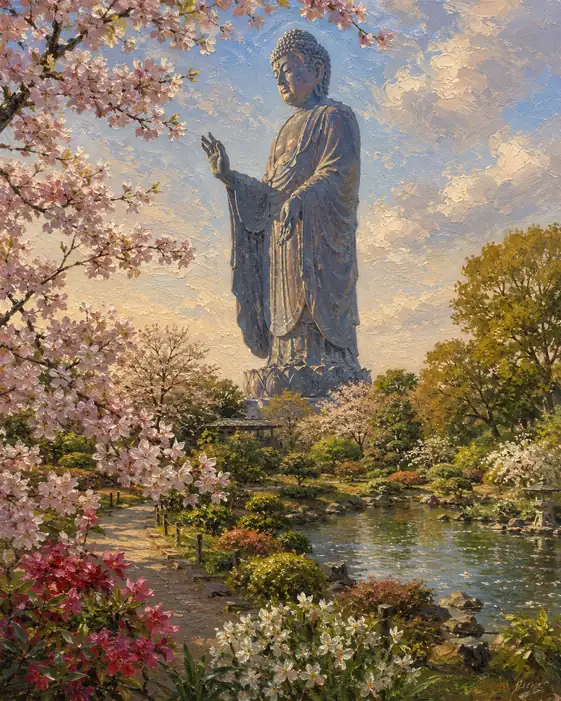 Amida Rising into the Skies of Hitachi
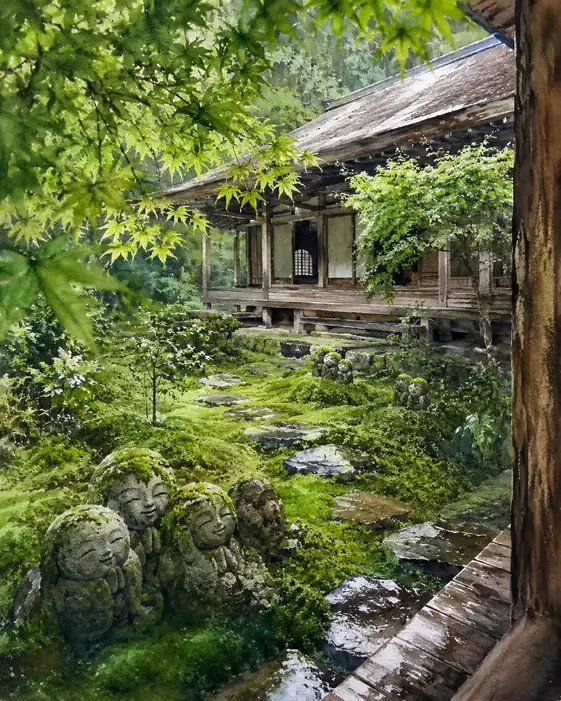 The Forest's Gentle Smile
Similar Artworks
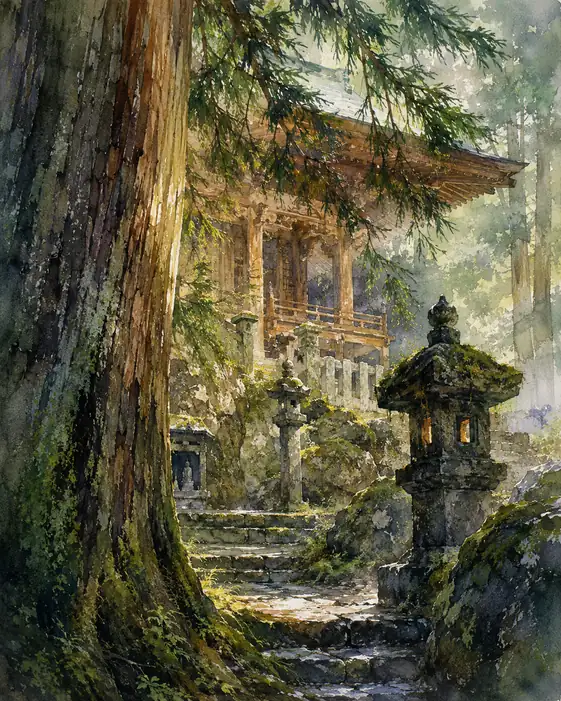 Sanctuary of the Ancient Cedars
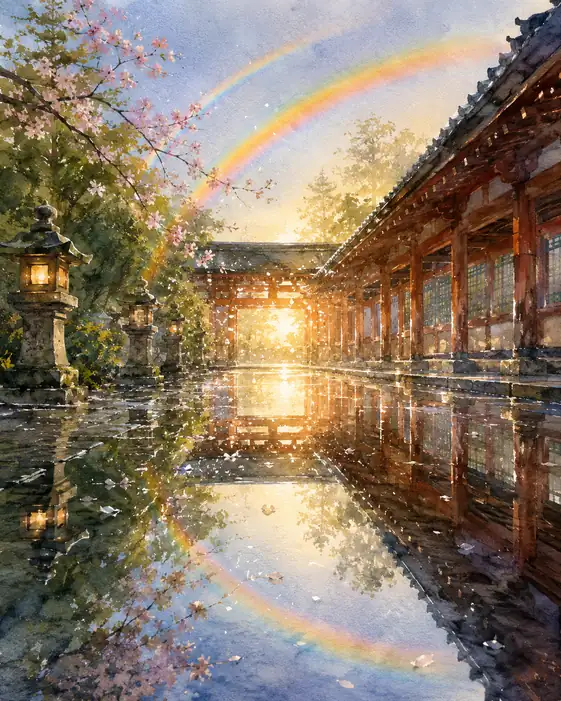 Spring Enters Through the Temple Gate
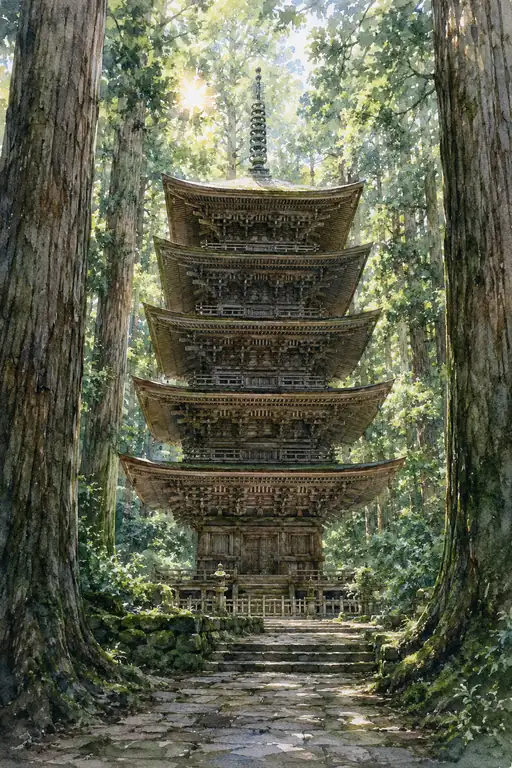 Silent Watcher of the Sacred Forest
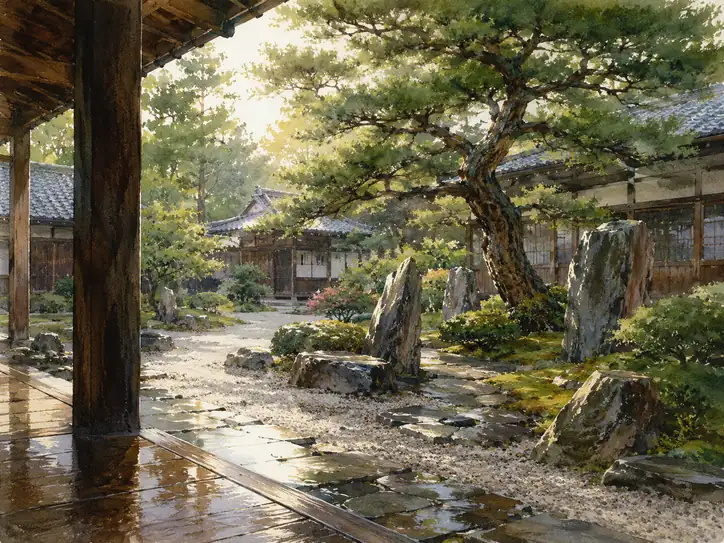 Reflections of Tranquility: Sunlight on the Wet Engawa
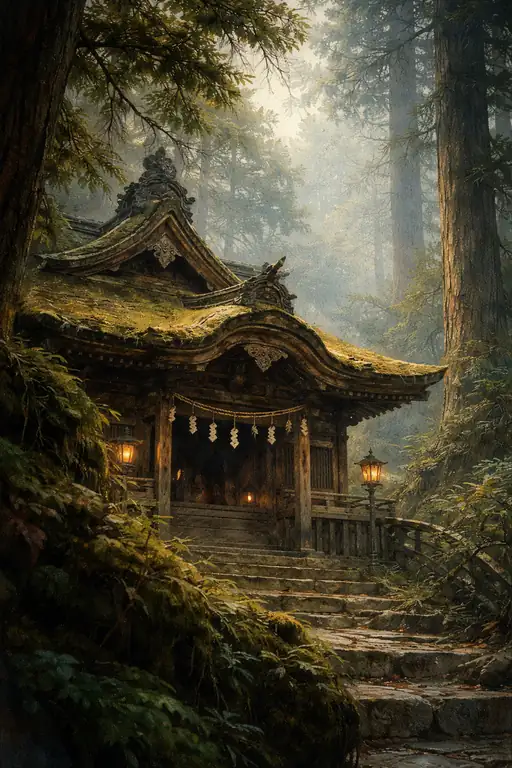 Sanctuary in the Shadows
 One Step Closer to the Divine
 Where the Forest Meets My Gaze
 Whispers of the Sunlit Sanctuary
 Sunlight on the Sacred Path
 The Sacred Stillness of the Rock