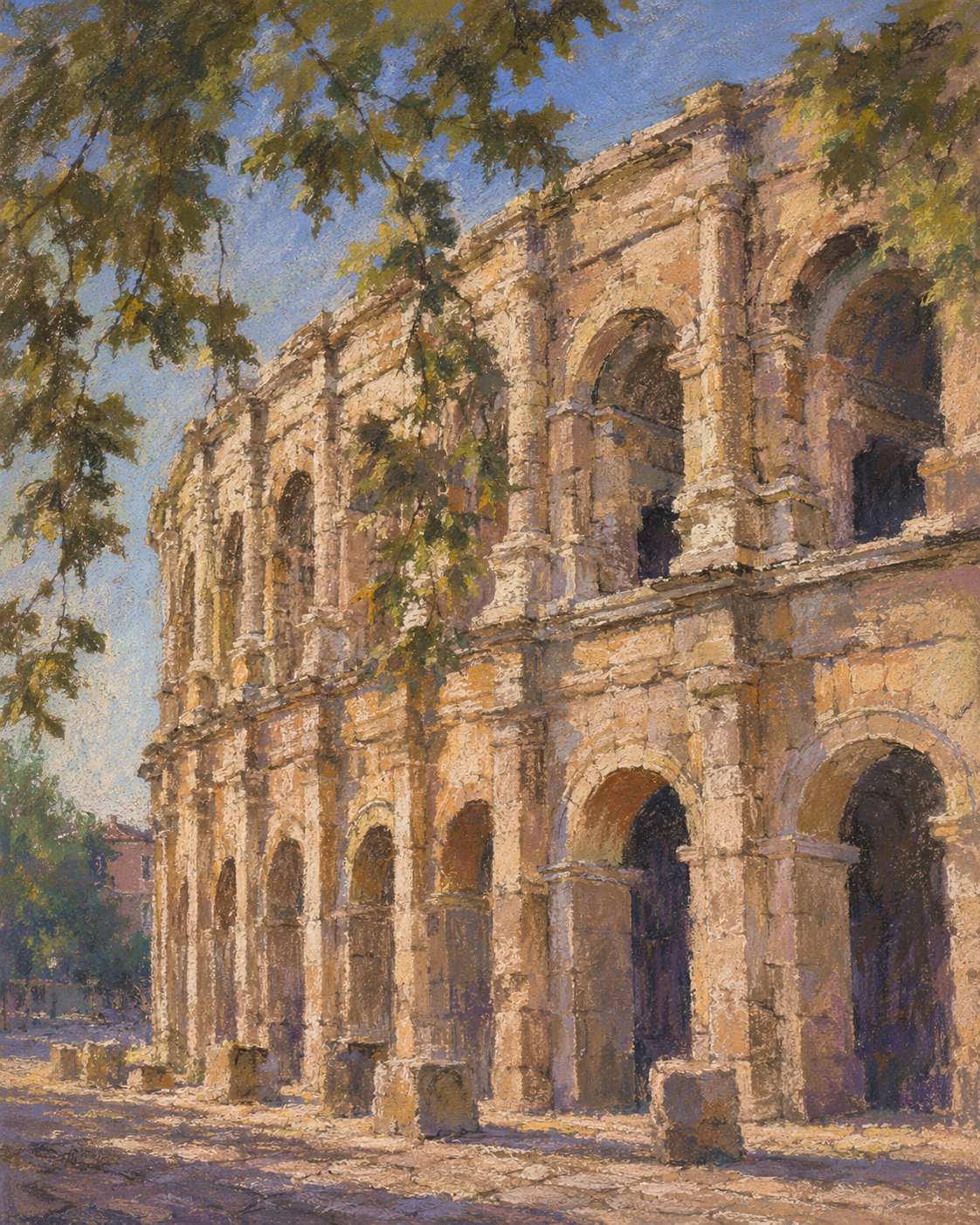
Eternal Silence of the Sunlit Arena
Critique
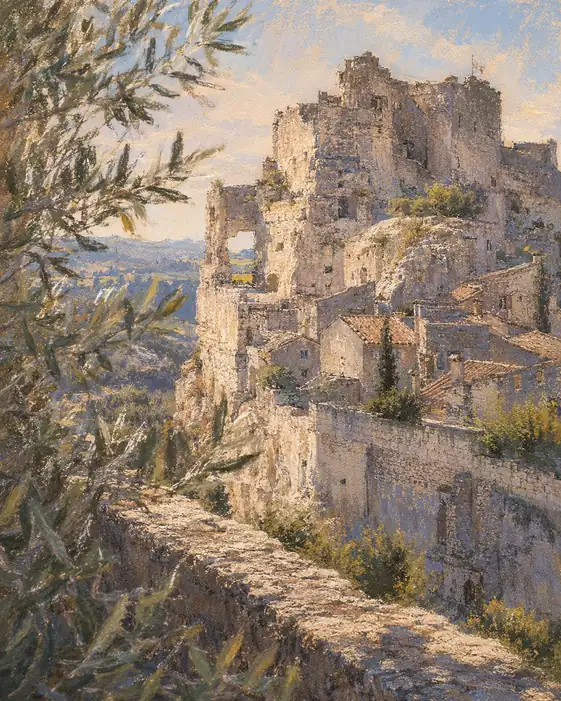
1. Introduction This oil painting features an ancient Roman amphitheater illuminated by the intense sunlight of Southern Europe. The massive stone structure occupies most of the canvas in a dynamic composition that emphasizes its monumental scale. In the upper left corner, tree branches hang down, adding an organic accent to the inorganic stone walls. The work fuses the historical weight of the architecture with the transient expression of light, resulting in a piece that exudes a timeless, monumental beauty. 2. Description The facade of the amphitheater is colored with warm sandy and ochre tones, glowing as it receives the direct rays of the sun. Regular rows of arches across two levels create a rhythmic pattern, with deep shadows falling inside them to enhance the contrast. At the bottom of the frame, a stone pavement extends with scattered fragments of weathered stone. The background sky is a clear blue, which serves to further accentuate the bright hues of the masonry. 3. Analysis In terms of color, the artist complexly layers yellow, orange, and pale purple to represent the intricate reflections of light on the stone surfaces. The brushwork employs an impressionistic technique of broken color, creating a rhythmic vibration across the canvas. The light filtering through the foreground leaves onto the walls suggests temporal changes within the static architecture. This clear contrast between light and shadow effectively dramatizes the physical volume of the amphitheater. 4. Interpretation and Evaluation This piece reinterprets the lost glory of antiquity from a modern perspective, elevating it into an art of light. Formal stability and dynamic brushwork coexist, showcasing the artist's excellent sense of composition and color. The technical ability to simultaneously depict the solidity of stone and the lightness of the air is highly commendable. Although the subject is a classic historical ruin, the vivid handling of light establishes it as an original and compelling landscape painting. 5. Conclusion While it initially appears to be a classic landscape, a closer look at the details reveals a modern resonance born from the complex layering of colors. One is first overwhelmed by the majesty of the massive building, but gradually becomes captivated by the play of fine particles of light. Ultimately, this work achieves a high-quality expression by harmonizing historical memory with contemporary sensibility through the medium of light.
Same Subcategory
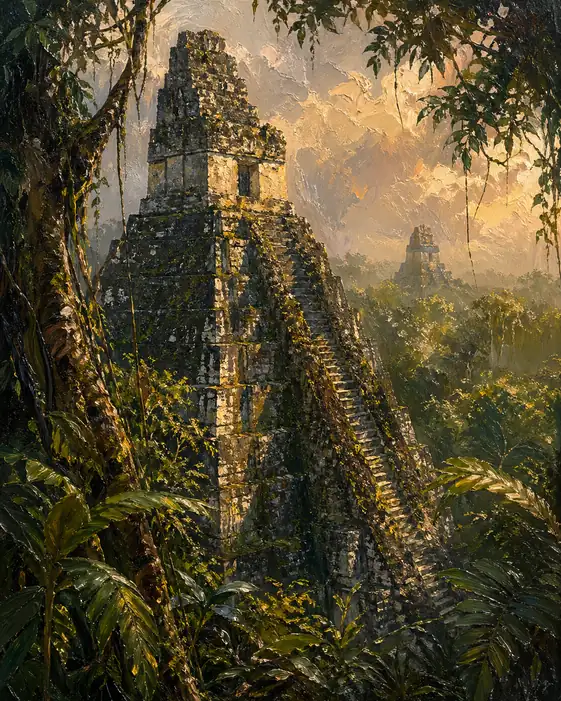 Guardians of the Sunlit Empire
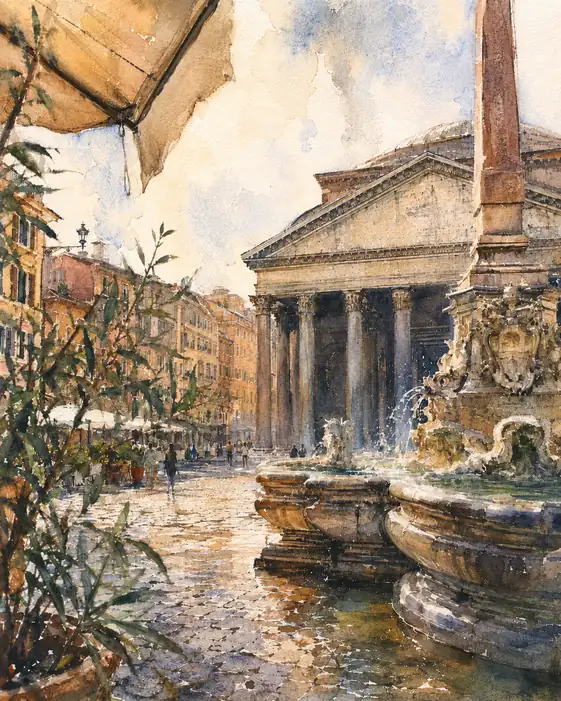 Golden Afternoon at the Pantheon
Similar Artworks
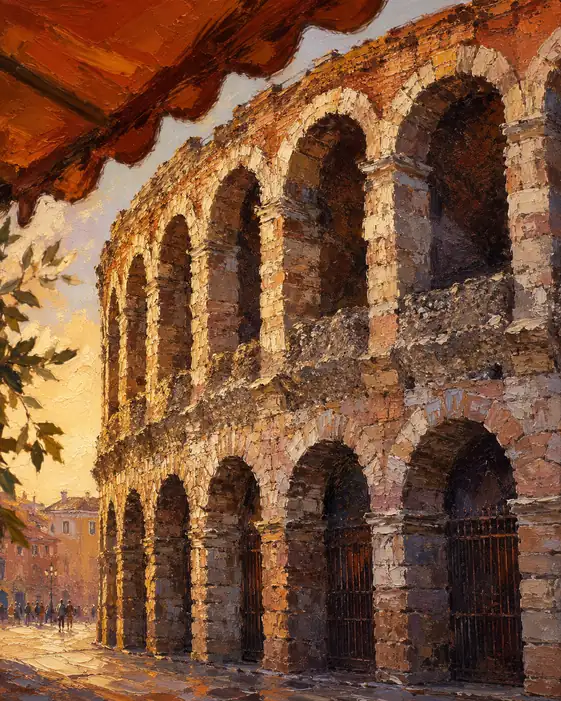 Where Stones Remember the Sun
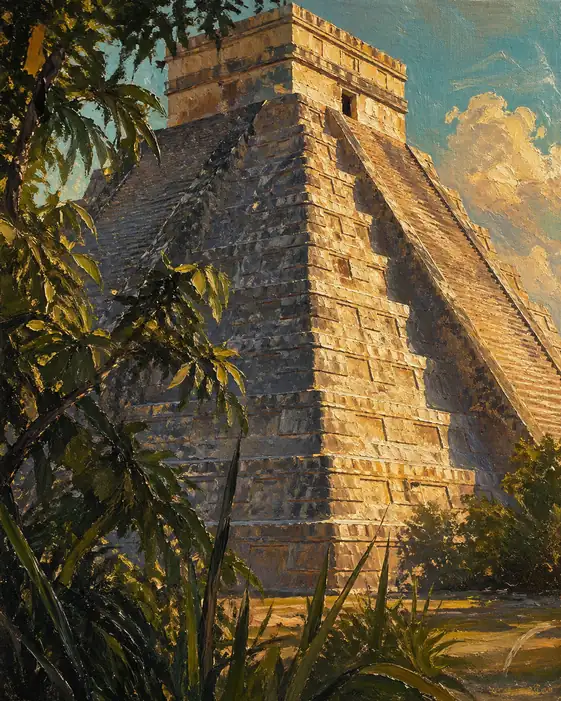 Echoes of the Golden Empire
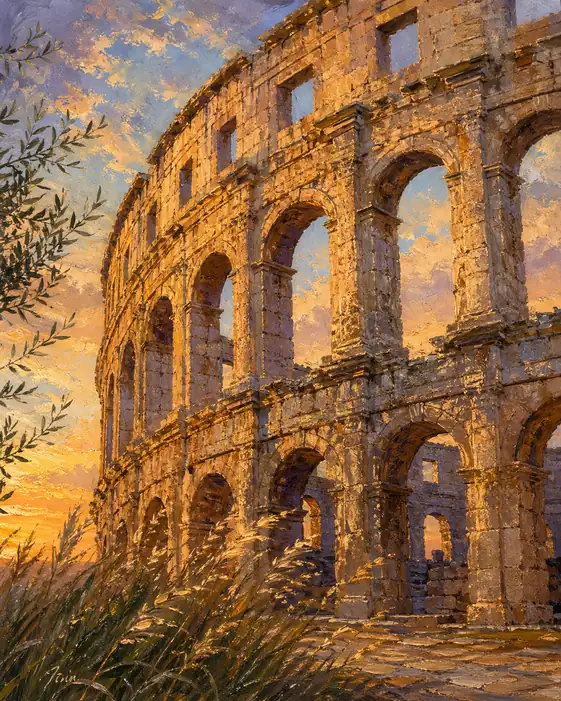 Echoes of Empire in the Golden Hour
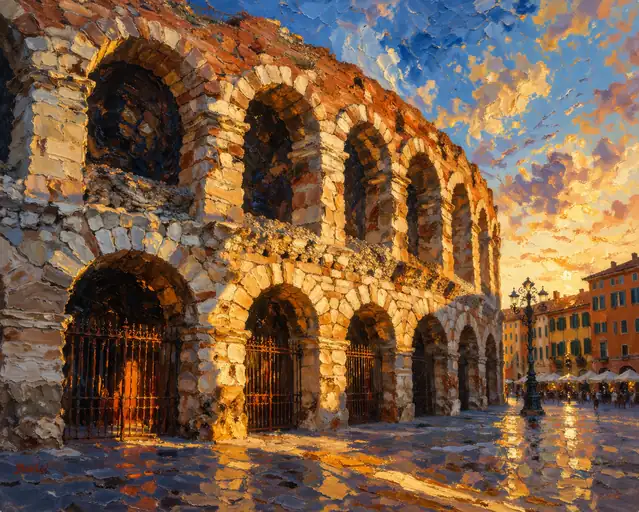 Verona's Arena in Flames
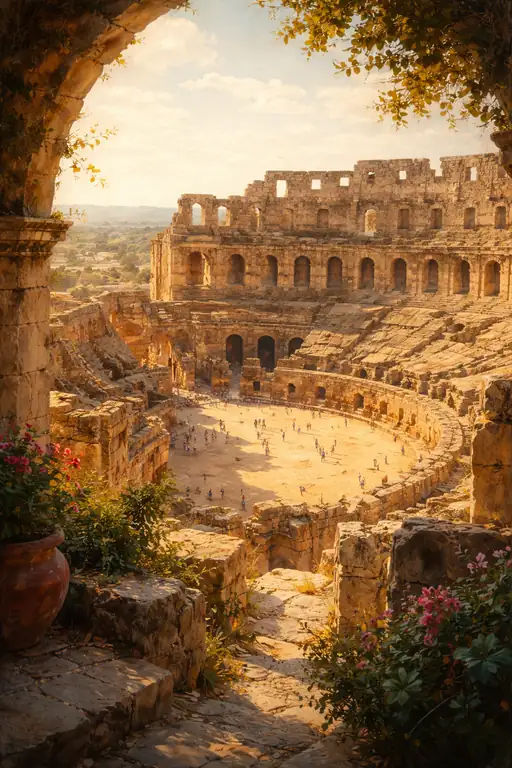 The Sunlit Arena of Time
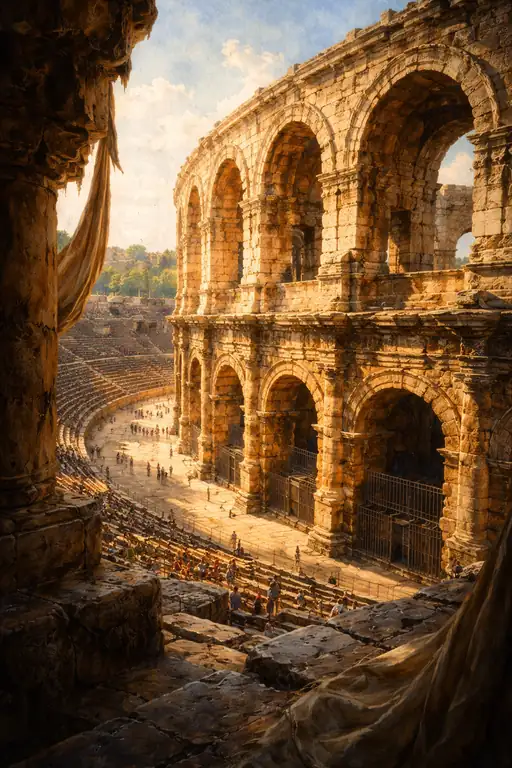 A Glimpse Through Time's Window
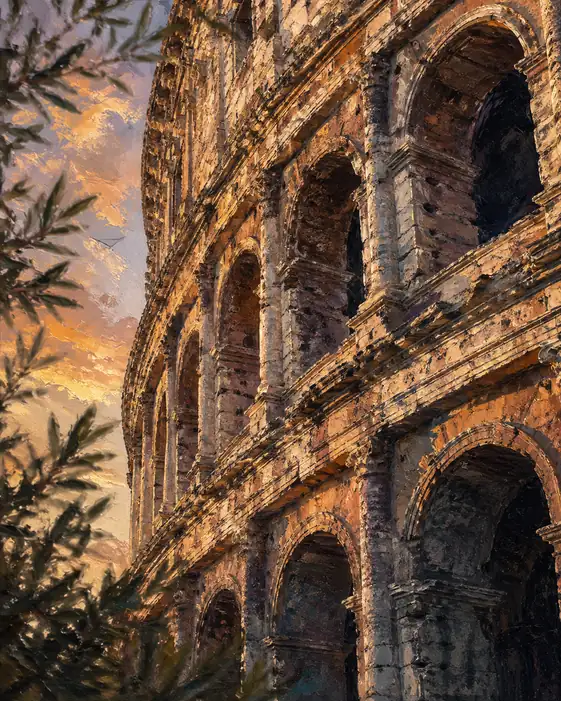 Stone of the Ages, Light of the Moment
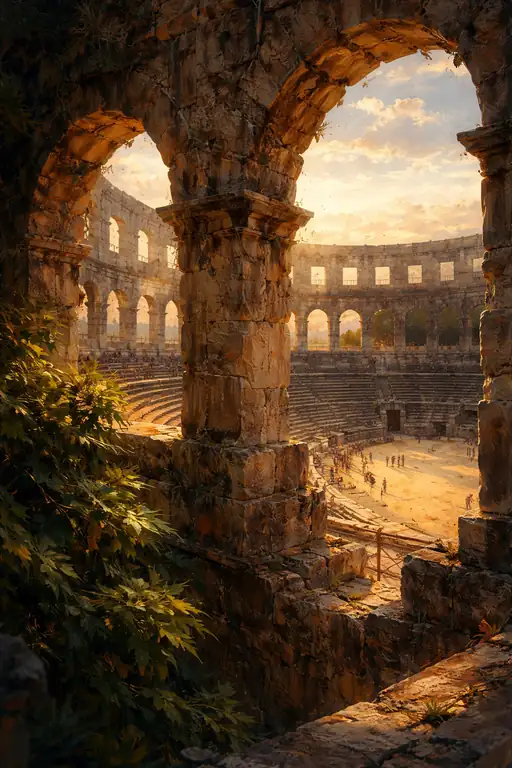 Twilight at the Colosseum
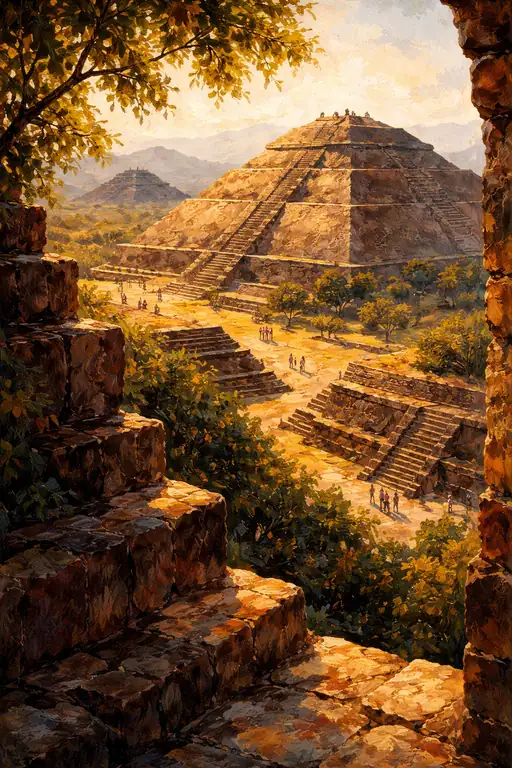 Echoes of the Sun: Steps of the Ancients
 Memories in Stone: The Sunlit Citadel