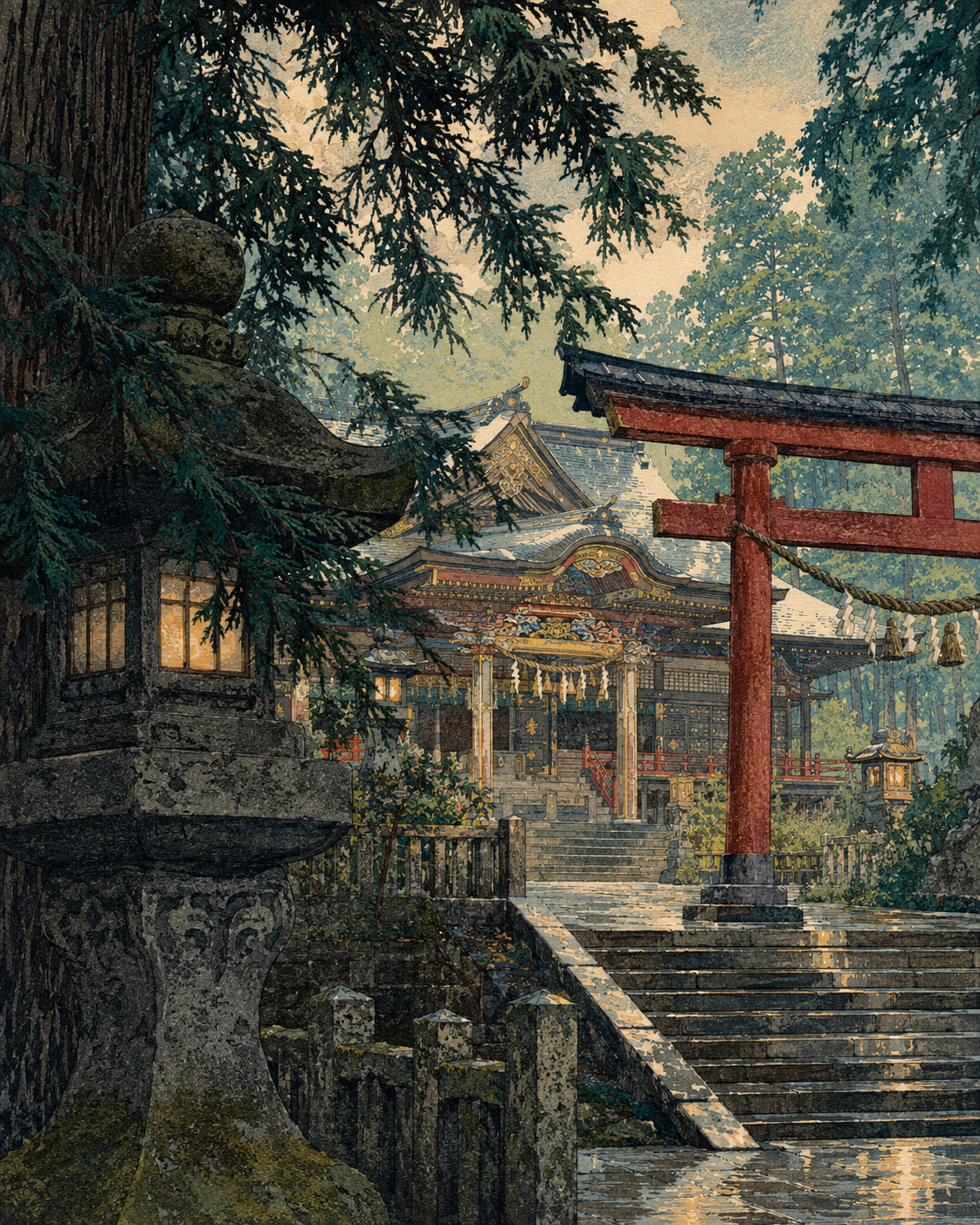
Sanctuary of the Ancient Light
Critique
1. Introduction This evocative landscape painting captures the solemn and mystical atmosphere of a Shinto shrine nestled deep within a primeval forest. A massive, moss-covered stone lantern in the left foreground and a vibrant vermilion torii gate on the right serve as symbolic portals into the sacred grounds. The shrine buildings, standing gracefully at the top of a stone staircase, exude a sense of timeless dignity amidst the towering evergreens. This work masterfully embodies the spiritual harmony between Japanese tradition and the natural world through its meticulous detail and sophisticated lighting. 2. Description In the lower left foreground, a large stone lantern is depicted with incredible textural detail, its internal lamp casting a warm, inviting glow that illuminates the surrounding foliage. To the right, a traditional red torii gate adorned with a sacred shimenawa rope provides a strong vertical anchor to the composition. Central stone steps lead upward to the ornate main hall, which features intricate architectural carvings and reflects the soft, ambient light. In the background, a dense forest of cedar trees creates a multilayered screen of green, with dappled sunlight filtering through the canopy. 3. Analysis The color palette is grounded in the deep greens of the forest and the cool greys of the weathered stone, punctuated by the striking red of the torii and the golden radiance of the lantern. The artist employs a high degree of precision, using fine, stipple-like strokes to render the mossy textures and the complex grain of the woodwork. The handling of light is particularly noteworthy; the interplay between the artificial glow of the lamp and the natural dappled sunlight creates a tangible sense of humidity and depth. The balanced composition provides a feeling of stability and reverence. 4. Interpretation and Evaluation This artwork represents a contemporary reinterpretation of traditional aesthetic values centered on the worship of nature. Technically, the artist demonstrates exceptional skill in integrating the rigid geometric forms of the architecture with the organic, fluid shapes of the forest. The juxtaposition of the lantern’s warm light, representing human presence, and the vast, shadowy forest, representing the eternal, evokes a profound sense of peace. The painting successfully captures not just a physical location, but the very essence of silence and the sanctity of the space, achieving a remarkable narrative quality. 5. Conclusion While the painting initially appears as a detailed piece of realism, closer inspection reveals a sophisticated use of light and shadow that enhances its lyrical atmosphere. By combining the solidity of stone with the vitality of the trees and the transparency of the evening light, the artist has manifested the universal allure of the sanctuary. Ultimately, this work serves as a reminder of the spirit of harmony and prayer that defines these sacred spaces. The image of the warm light shining from the depths of the forest remains a lasting portrait of tranquility and spiritual strength.
Same Subcategory
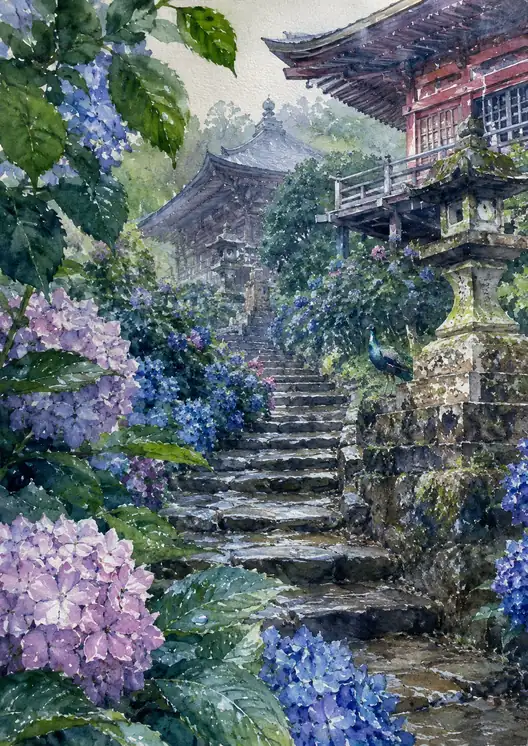 Where the Peacock Dreams in Azure
Similar Artworks
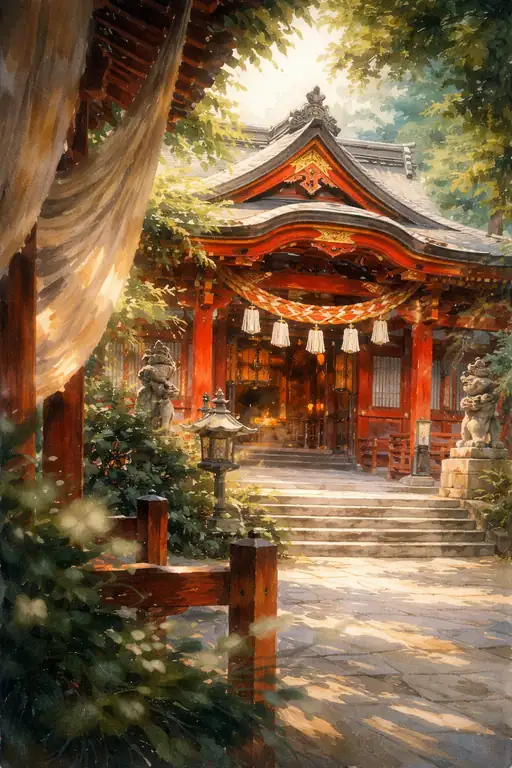 Sunlight Upon the Vermilion Pillars
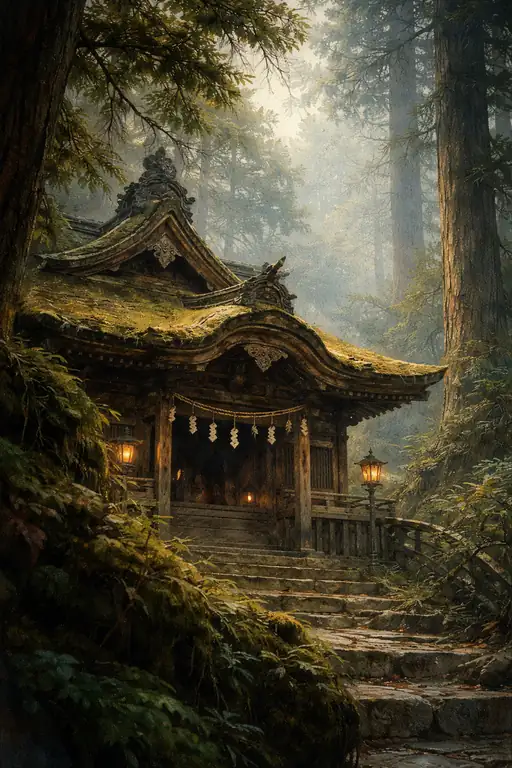 Sanctuary in the Shadows
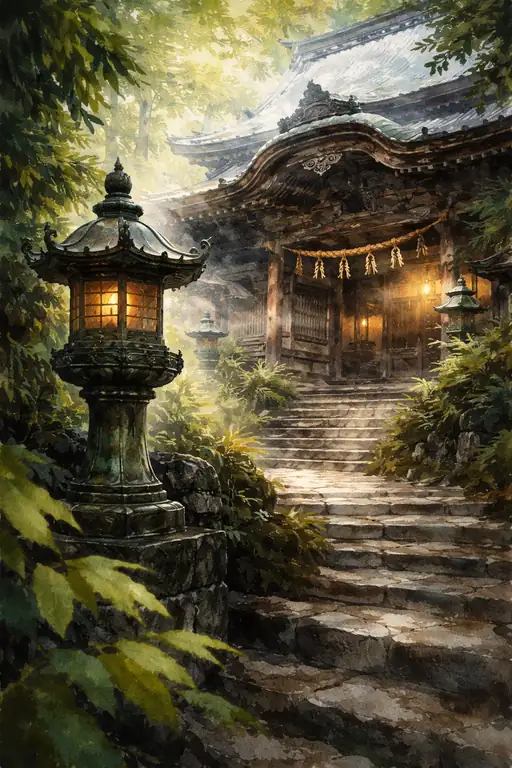 Sanctuary of the Silent Forest
 The Radiant Path of a Thousand Gates
 Awakening the Sacred Path
 Echoes of Eternity in the Mossy Mist
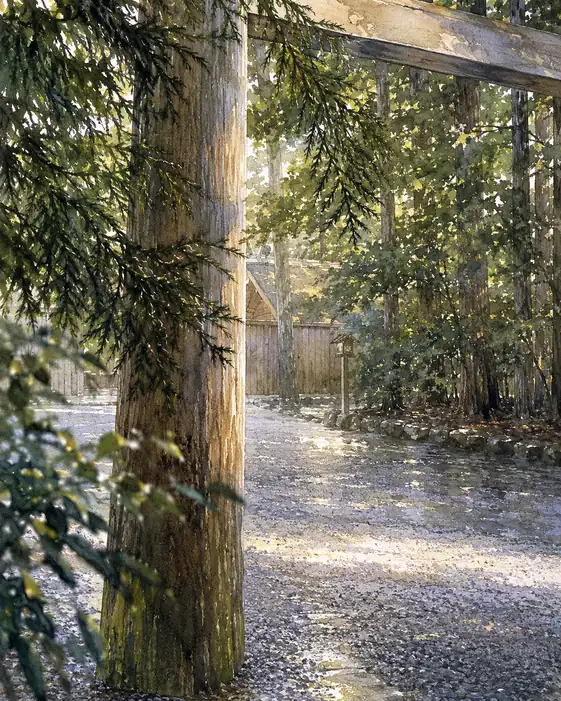 Sunbeams Dancing on the Path of Gods
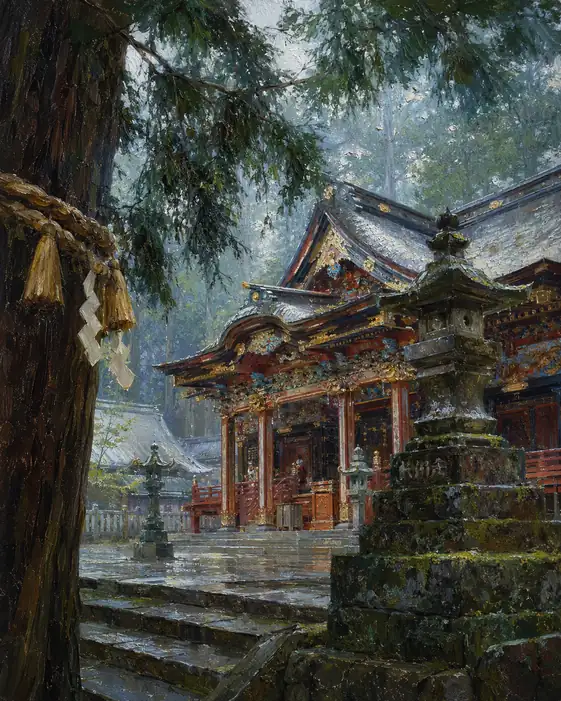 Whispers of the Misty Sanctuary
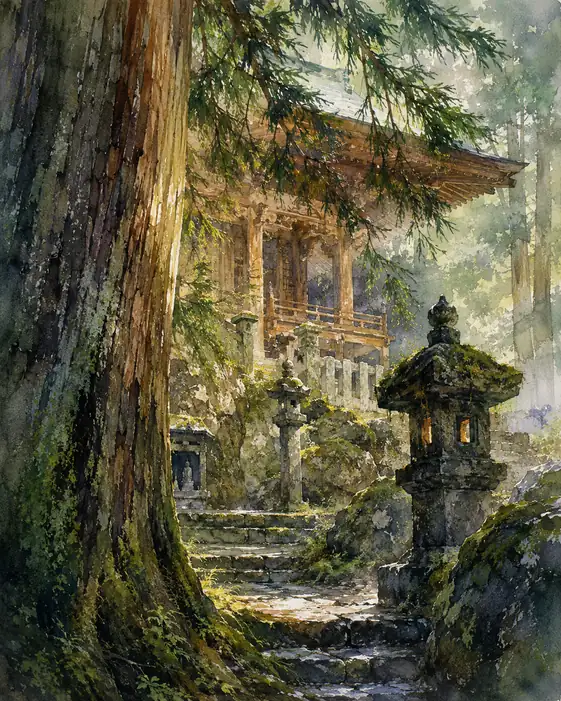 Sanctuary of the Ancient Cedars
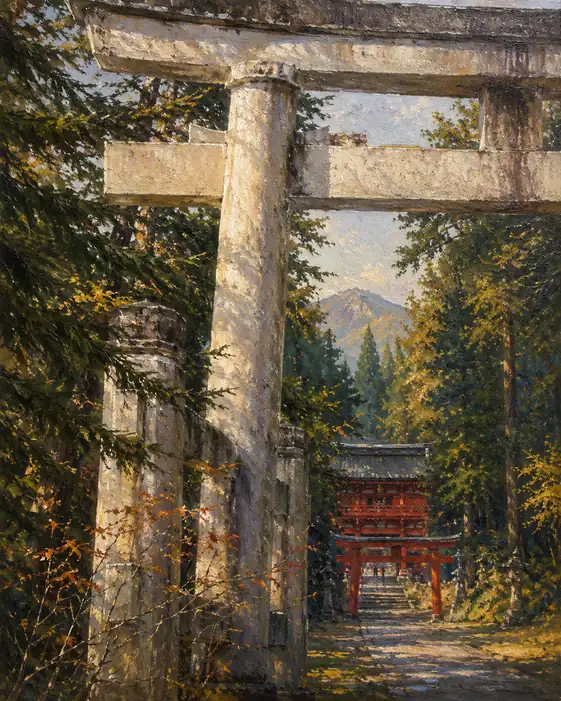 Passage Through the Sacred Shadows