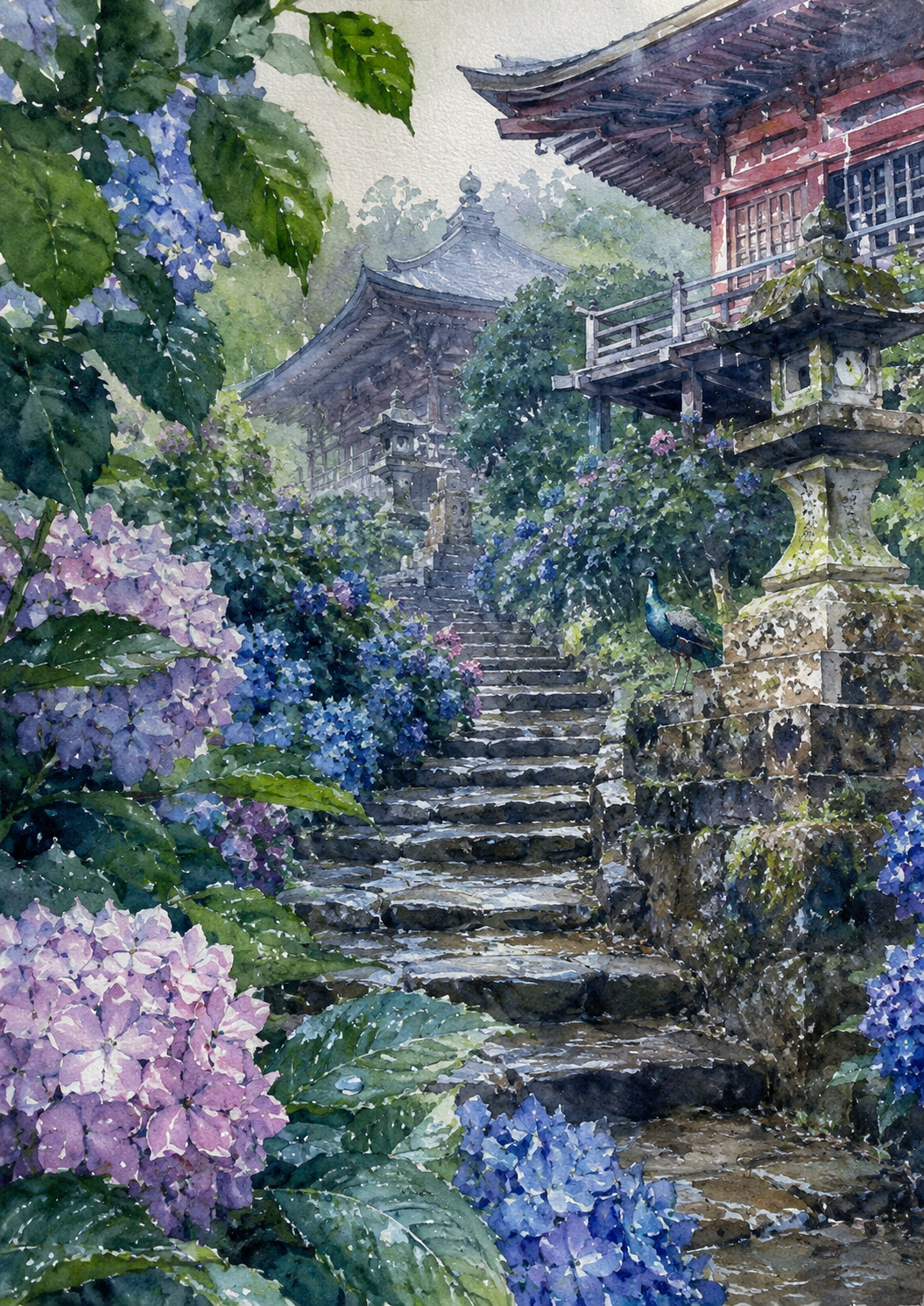
Where the Peacock Dreams in Azure
Critique
1. Introduction This watercolor painting presents a lush, atmospheric scene of a traditional Japanese temple garden during the rainy season. The work skillfully combines architectural elements with vibrant botanical life, creating a sense of seasonal beauty and spiritual tranquility. The viewer is invited into a world where nature and cultural heritage coexist in a damp, fragrant harmony. The overall mood is one of profound stillness, punctuated by the vivid colors of the blooming environment. 2. Description In the foreground, large hydrangea blossoms in shades of lavender and cerulean are depicted with exceptional detail, their leaves glistening with moisture. A stone staircase winds upward toward the roofs of temple buildings, which are partially veiled in a light mist among the verdant hills. To the right, a peacock sits regally upon a moss-covered stone structure, its plumage adding a touch of exotic elegance to the serene setting. Every surface, from the weathered wood to the porous stone, is covered in a fine sheen of rain. 3. Analysis The composition is built around a strong diagonal path formed by the ascending stone steps, which provides a clear sense of depth and movement. The artist uses a wide range of green and blue tones to convey the coolness of a rainy day, while the intricate textures of the stone and wood are rendered with precision. The framing of the scene with overhanging leaves in the upper-left corner adds a sense of immersion and intimacy, drawing the viewer deeper into the garden. 4. Interpretation and Evaluation This painting demonstrates a masterful command of watercolor techniques, particularly in the rendering of light on wet surfaces. The choice of the rainy season as a theme allows for a rich exploration of color and texture, from the soft petals of the hydrangeas to the rugged, mossy stones. The inclusion of the peacock serves as a striking focal point, suggesting a place of special significance where nature is revered. The balance between man-made structures and organic growth is handled with great sensitivity. 5. Conclusion Through its meticulous detail and evocative atmosphere, the work successfully captures the essence of a hidden sanctuary. The balance between the vibrant flora and the weathered architecture creates a compelling visual narrative of endurance and renewal. The initial impression of a crowded garden matures into an appreciation for the orderly yet organic beauty of the temple grounds. This painting stands as a testament to the artist's ability to translate sensory experience into a lasting visual form.
Same Subcategory
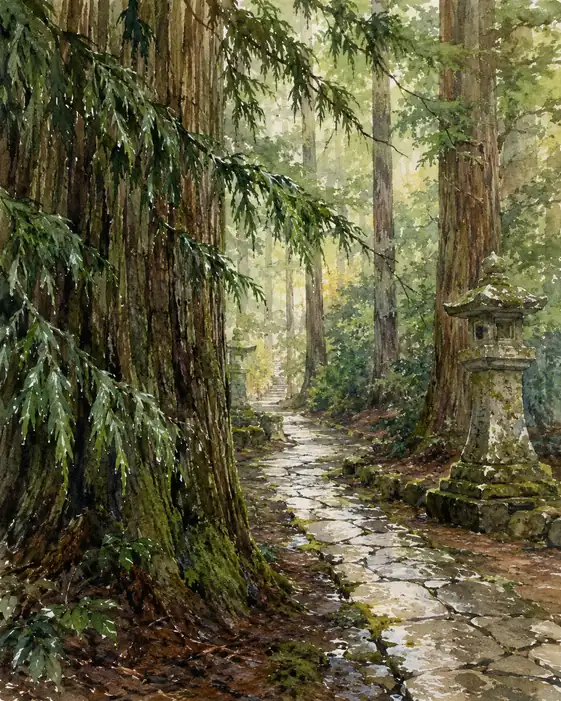 Whispers of the Sacred Grove
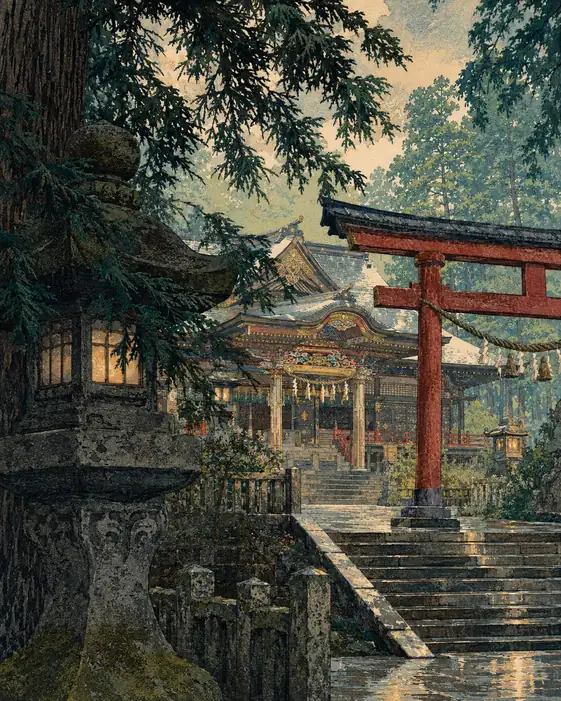 Sanctuary of the Ancient Light
Similar Artworks
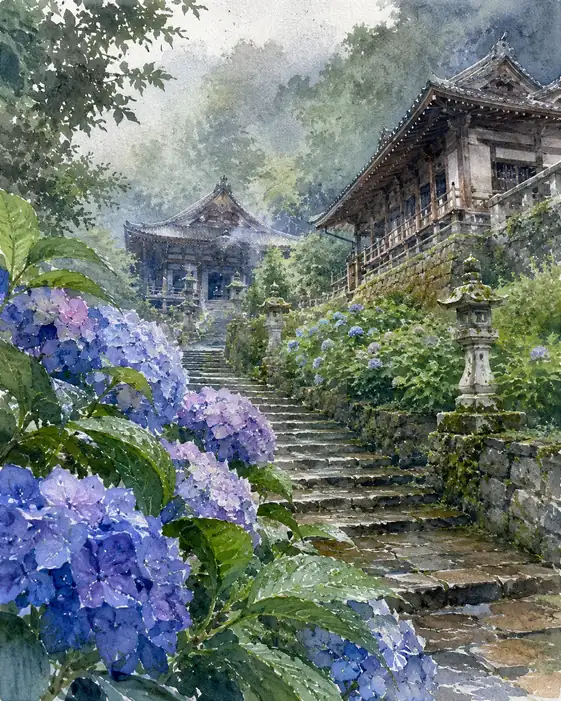 Lullaby in the Azure Rain
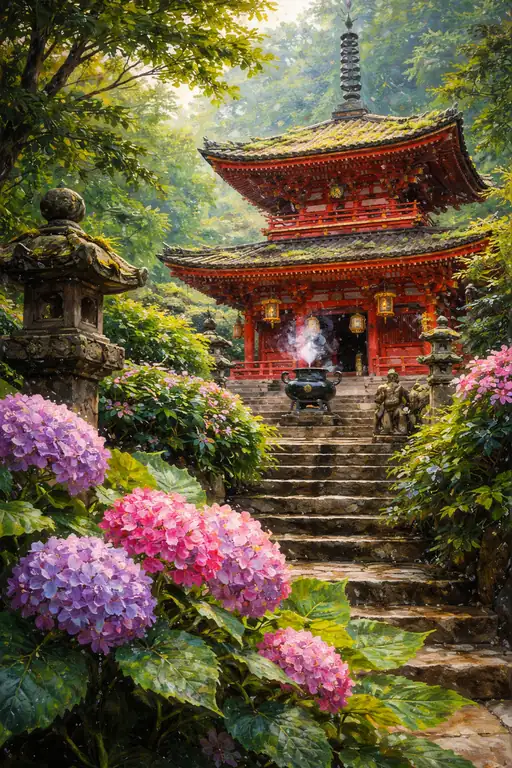 Rain's Blessing on the Vermilion Sanctuary
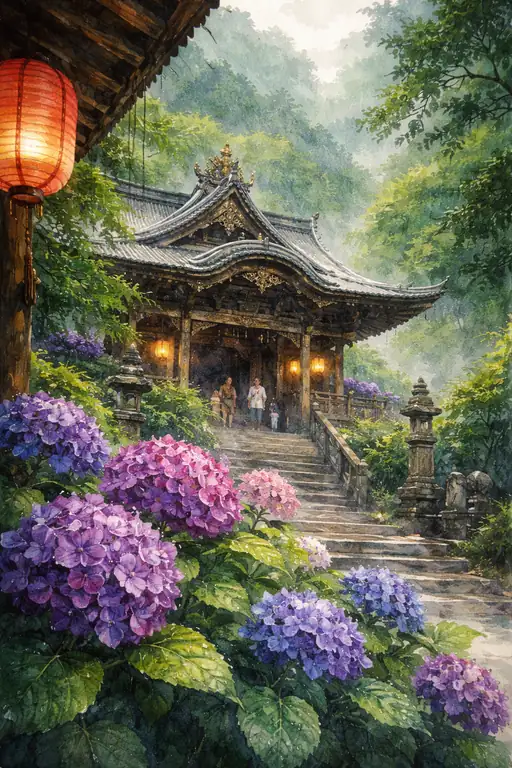 Hydrangea Steps to Tranquility
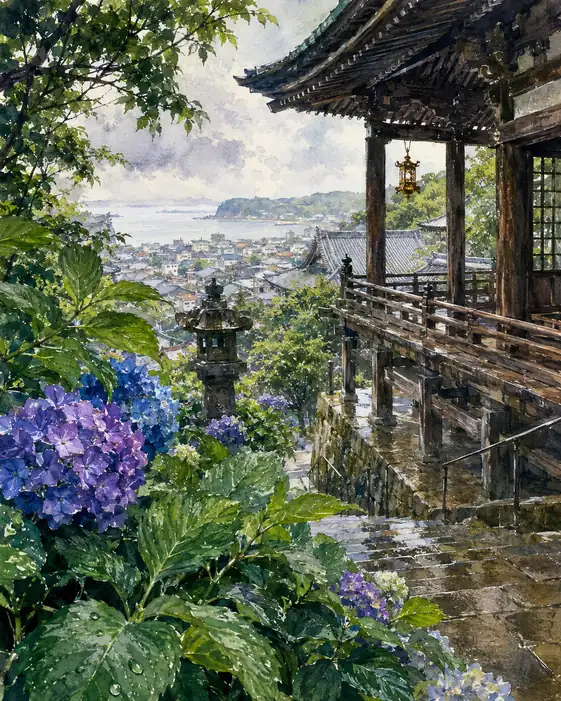 Hydrangeas at the Temple Overlook: A Watercolor Dream of Onomichi
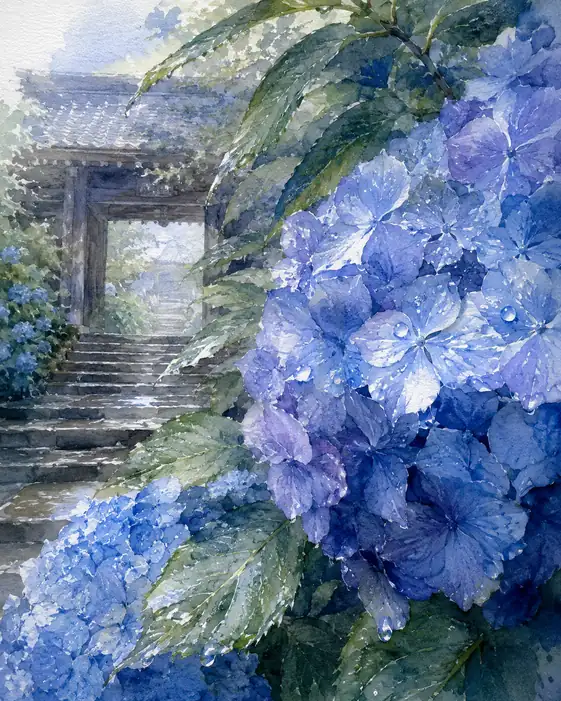 Floral Ephemera: Hydrangeas at the Temple Gate
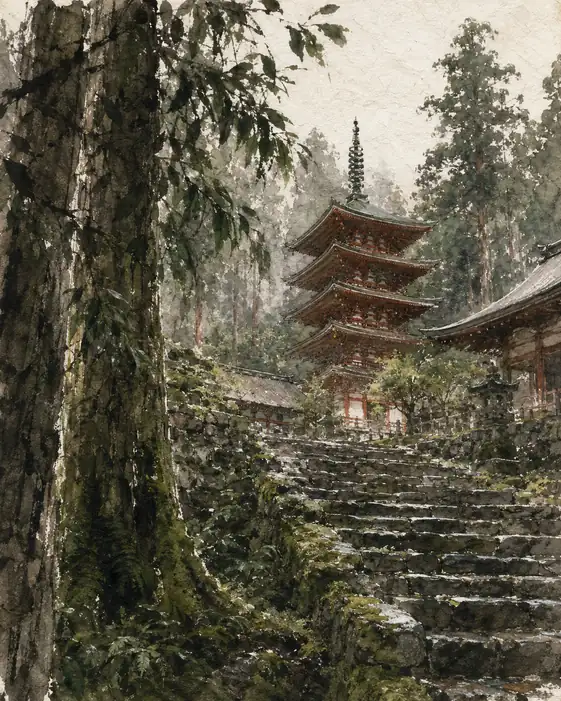 Echoes of Eternity in the Mossy Mist
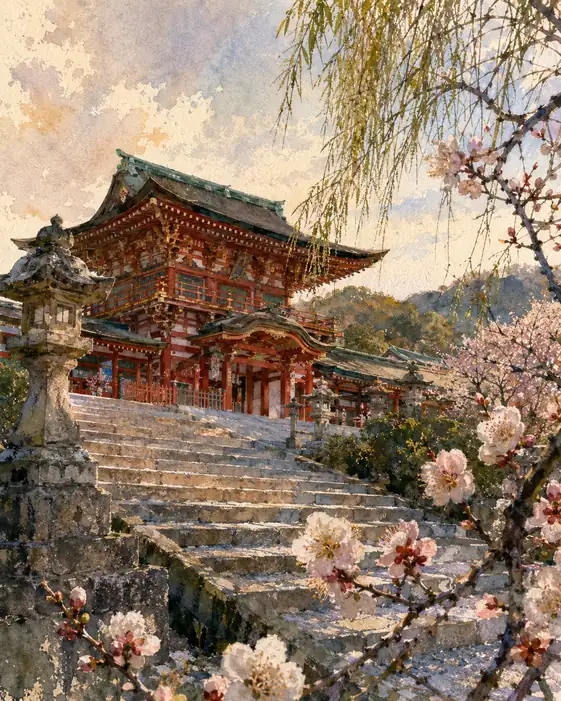 Eternal Glow of the Sacred Spring
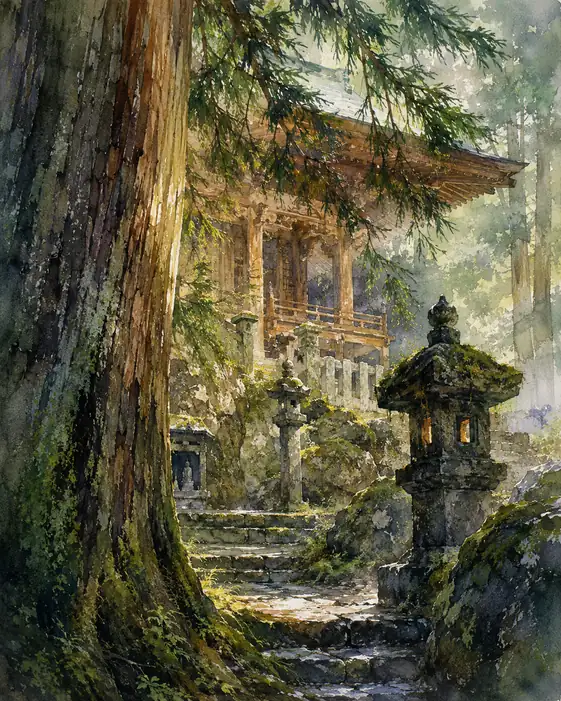 Sanctuary of the Ancient Cedars
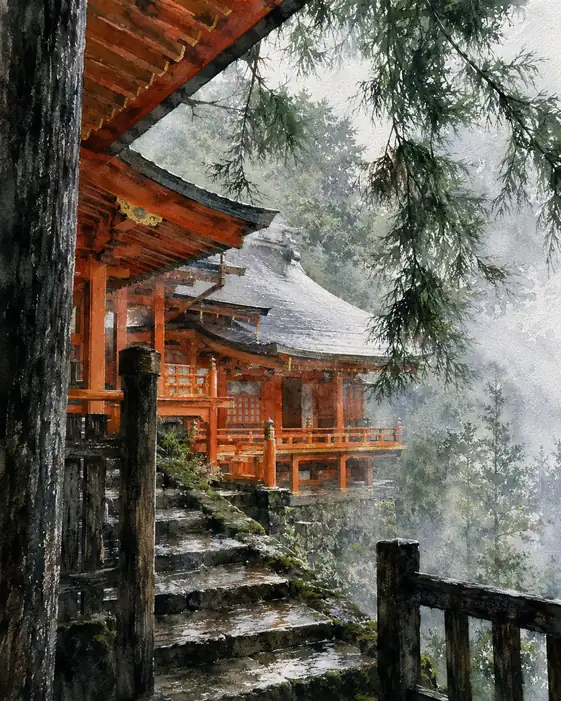 Sanctuary Veiled in Misty Rain
 The Sacred Silence of the Mist