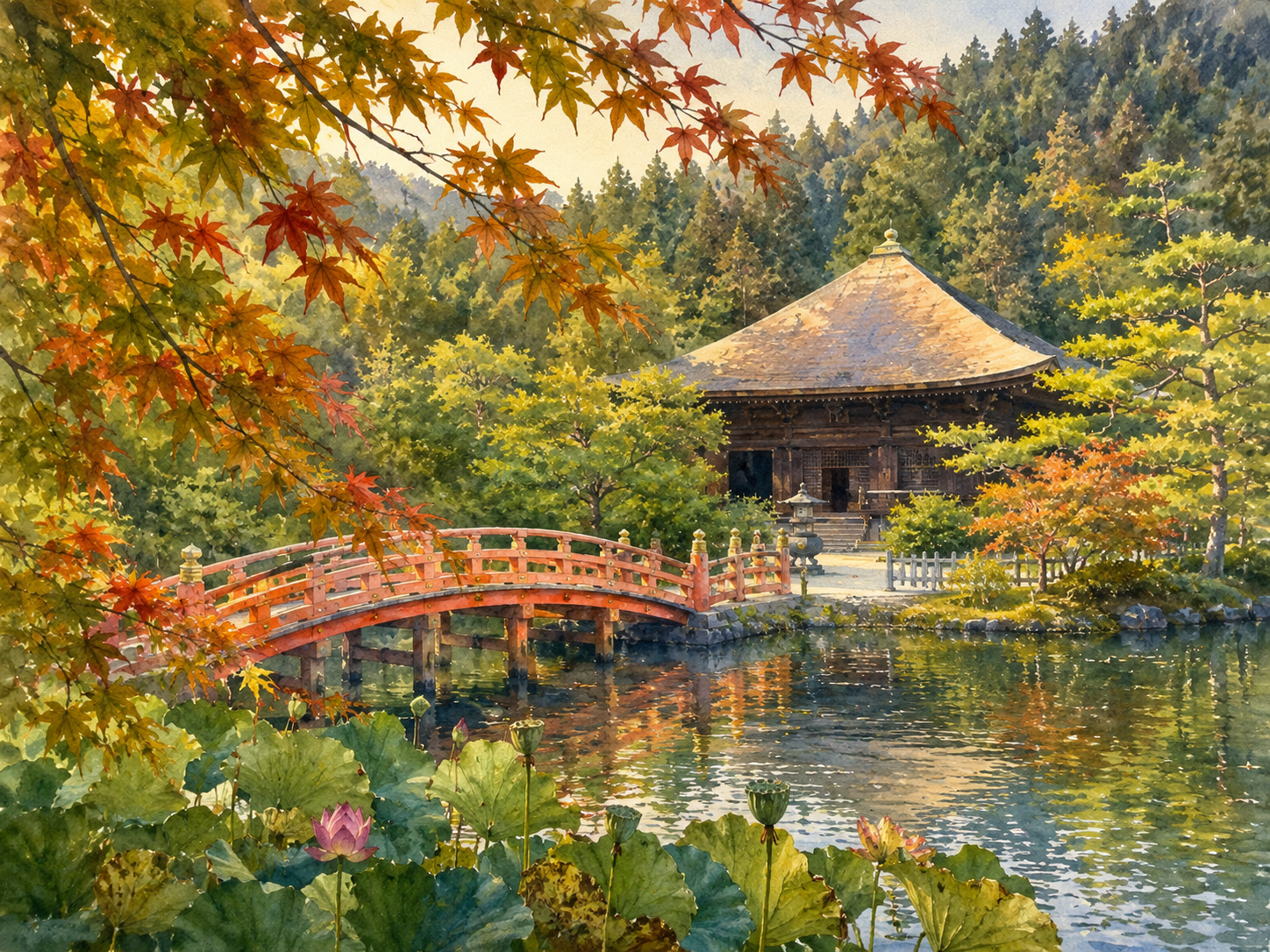
Whispers of the Crimson Autumn
Critique
1. Introduction This painting presents a harmonious scene of a traditional Japanese garden during the peak of autumn, capturing the serene atmosphere of a cultural sanctuary. The composition is elegantly framed by vibrant maple leaves, which guide the viewer's eye into a meticulously balanced landscape of water, wood, and stone. The work emphasizes the transient beauty of nature through its delicate handling of light and seasonal color. 2. Description In the immediate foreground, large, detailed lotus leaves and a single blossoming pink lotus flower emerge from the edge of a calm pond. A classic vermilion-colored curved bridge spans the middle ground, its graceful arch reflected clearly in the water alongside the surrounding greenery. To the right, a traditional wooden temple building with a weathered hipped roof stands nestled within a dense forest of evergreen and deciduous trees. The upper and left sections of the frame are dominated by overhanging maple branches, their leaves displaying a brilliant transition from golden yellow to fiery red. 3. Analysis The artist utilizes a framing technique where the autumn foliage acts as a natural window, creating a sense of depth and intimacy within the scene. The use of light is subtle, with soft highlights on the bridge and the temple roof suggesting a bright but diffused daylight. The execution demonstrates a high level of technical proficiency, particularly in the layered washes that define the distant forest and the fine, precise brushwork used for the lotus pods and maple leaves. The color palette is characterized by a sophisticated contrast between the warm, saturated reds of the bridge and the cool, receding greens of the background. 4. Interpretation and Evaluation The painting is an exceptional example of landscape art that successfully integrates traditional aesthetic principles with modern technical skill. The balance between the man-made structures and the organic forms of the garden is maintained with great sensitivity, resulting in a composition that feels both stable and alive. The realistic depiction of the lotus leaves in the foreground provides a tactile quality that grounds the more ethereal aspects of the misty background. This work evokes a profound feeling of quiet contemplation, celebrating the enduring elegance of Japanese heritage and its deep connection to the environment. 5. Conclusion Through its delicate brushwork and thoughtful arrangement of elements, the painting successfully translates the fleeting atmosphere of an autumn garden into a permanent visual meditation. The interaction between the vibrant seasonal colors and the enduring architecture creates a narrative of continuity and change. The final impression is one of remarkable craftsmanship and a deep-seated reverence for the subtle, layered beauty found in the intersection of nature and human artifice.
Same Subcategory
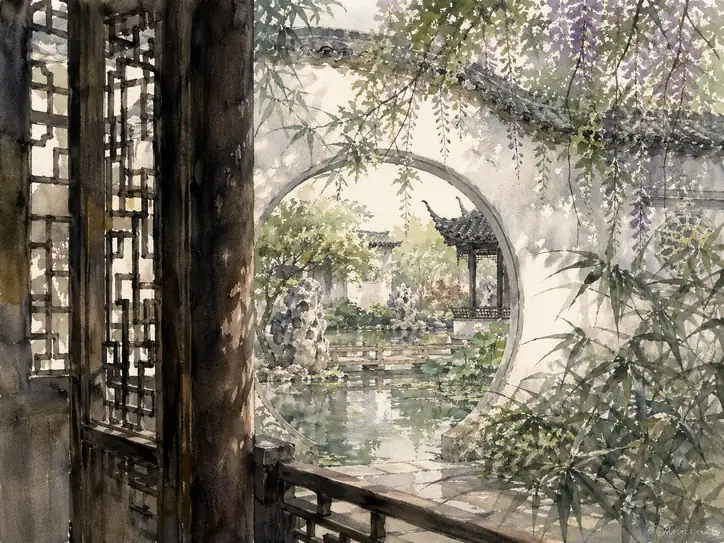 Through the Moon Gate: A Whisper of Serenity
Similar Artworks
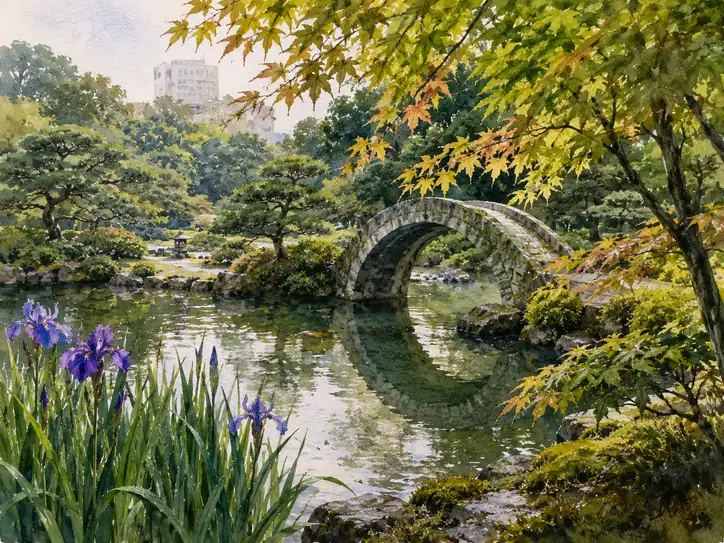 Where the Heart Finds Its Circle
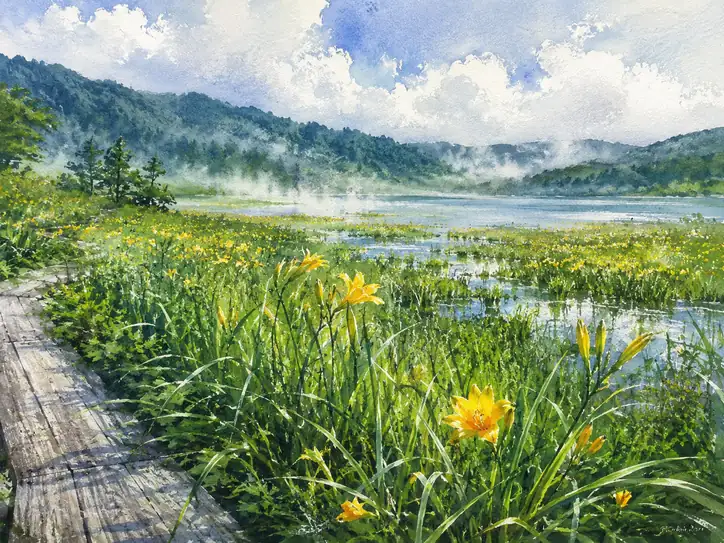 Yellow Symphony on the Summer Marsh
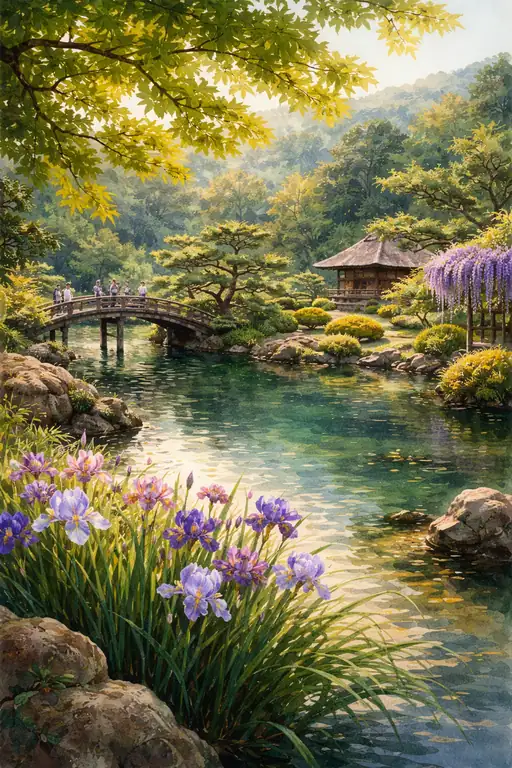 Serenade of the Summer Garden's Reflection
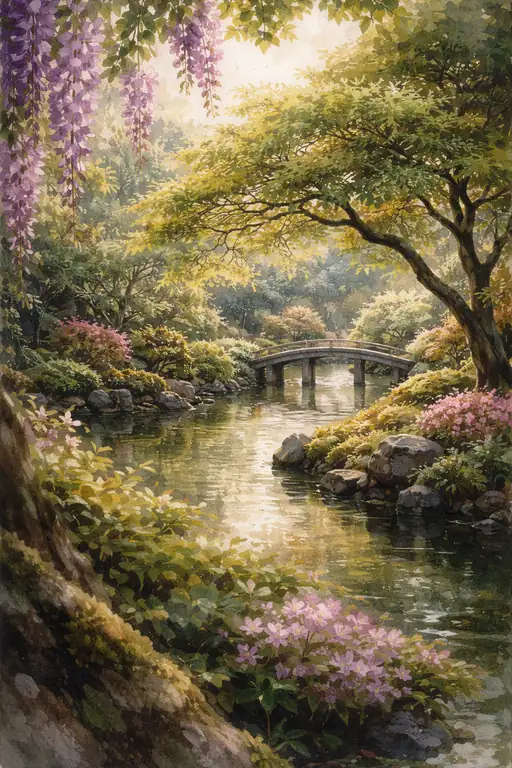 Twilight Beneath the Wisteria Bridge
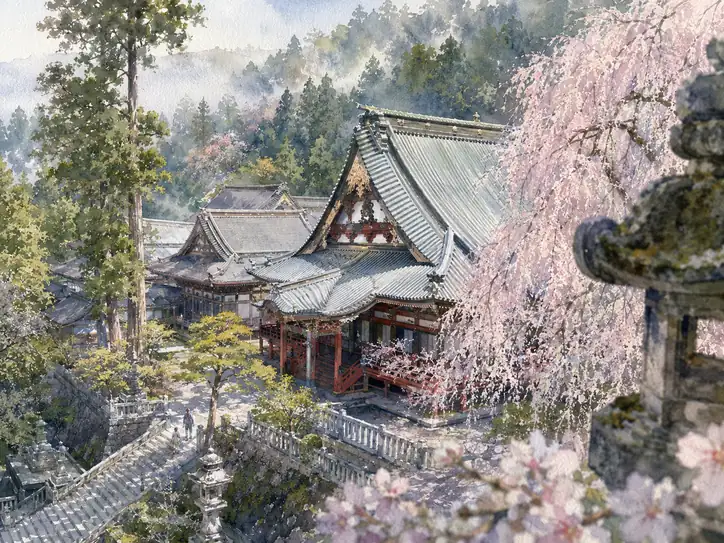 Whispers of the Weeping Sakura
 Solitude by the Fog-Bound Pond
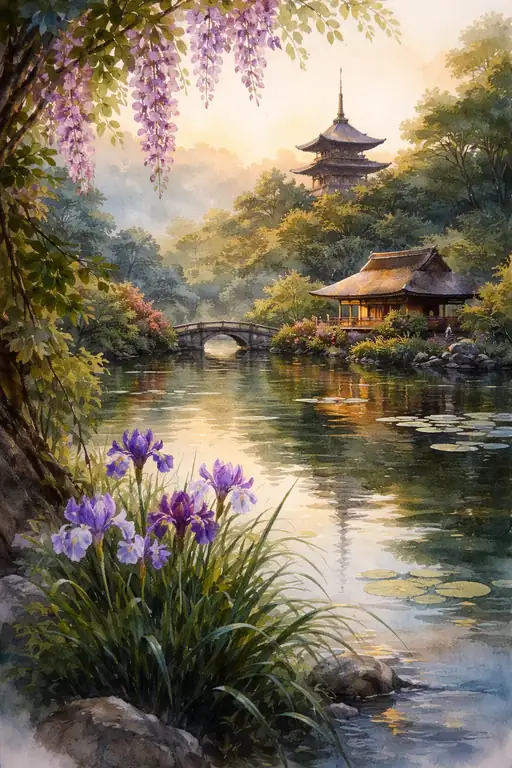 Sunset Harmony in the Temple Garden
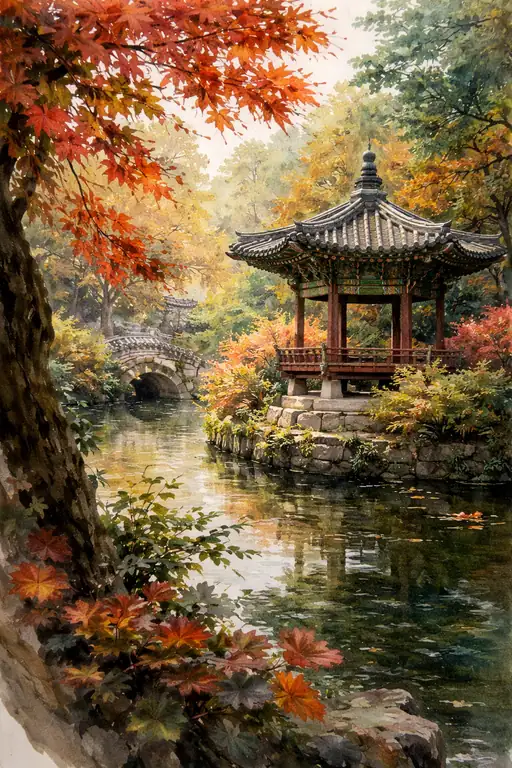 Crimson Leaves Reflected in Autumn's Mirror
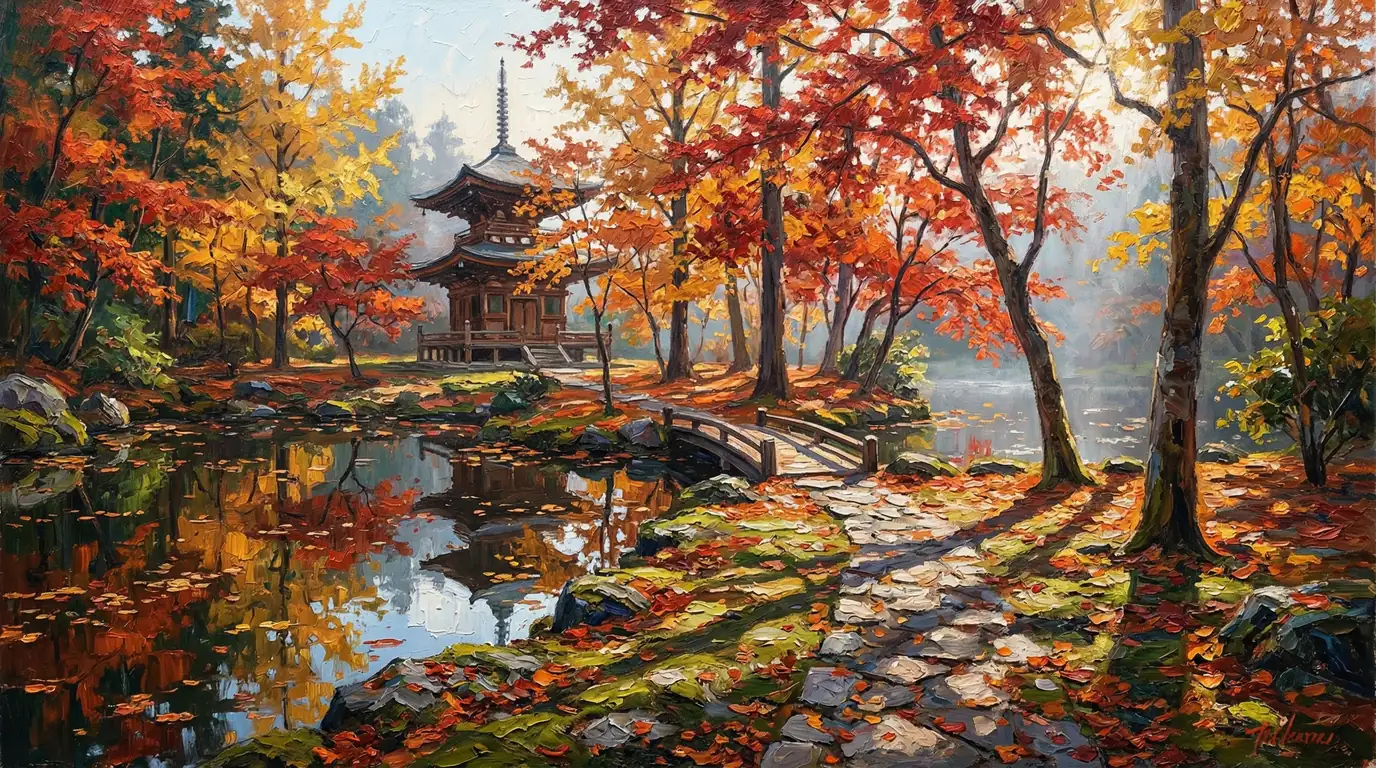 Symphony of Autumn Colors
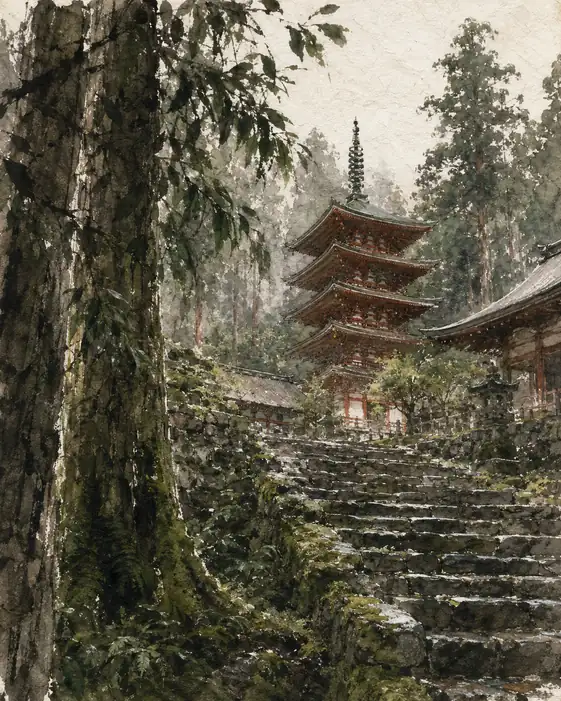 Echoes of Eternity in the Mossy Mist