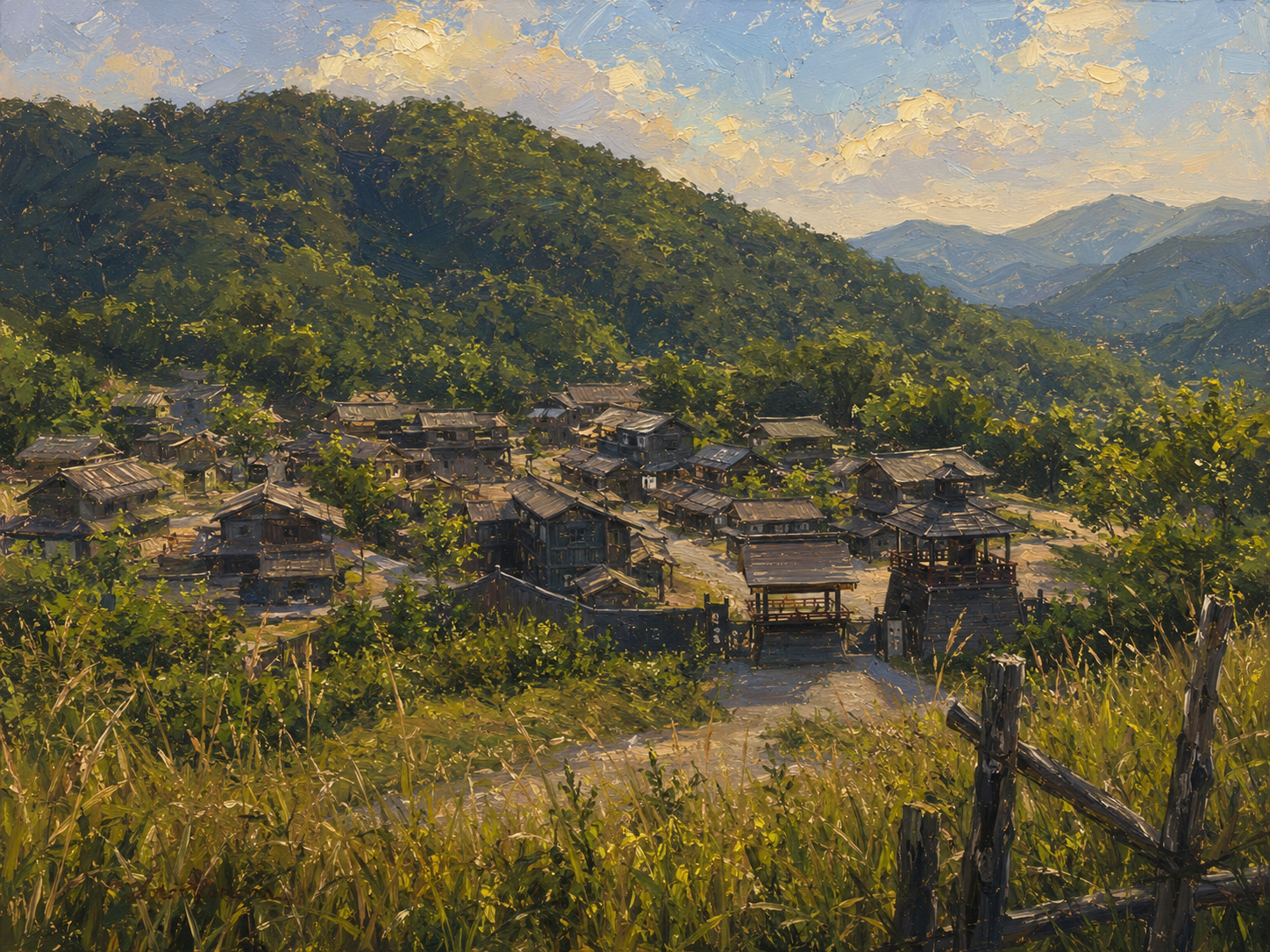
Mountain Village in the Golden Hour
Critique
1. Introduction This painting looks down from a grassy slope onto a village gathered among mountains. Foreground grasses and a rough fence establish the viewer's height, while roofs, paths, and gate-like structures cluster below. The surrounding hills hold the settlement within a broad basin, and distant blue ridges deepen the space. Late light touches the roads and rooftops, quietly setting human scale against the larger sweep of the landscape. 2. Description The scene includes the clustered roofs, fence, sloping path, wooded hills, and late light. Forms are described with loose but controlled brushwork, so individual details remain readable without becoming rigid. The viewpoint places the viewer close to the foreground while keeping a clear path into the surrounding space. 3. Analysis The composition depends on the foreground grasses frame human settlement within a broad mountain basin. Color is handled with a balanced range of warm and cool notes, and the light is used to separate planes of depth. The technique favors visible strokes, giving the surface an active texture while preserving spatial order. 4. Interpretation and Evaluation The work suggests an attentive encounter with a specific environment rather than a generalized scenic view. Its strengths lie in descriptive clarity, coherent composition, and a color structure that supports mood without excess. The originality is modest but effective, especially in the way ordinary natural or architectural features are shaped into a sustained visual experience. 5. Conclusion At first the painting may appear primarily descriptive, but closer viewing reveals careful decisions about rhythm, light, and scale. The image succeeds because its technique and composition guide observation steadily from immediate detail toward broader atmosphere. Overall, it offers a calm and well-organized example of representational painting.
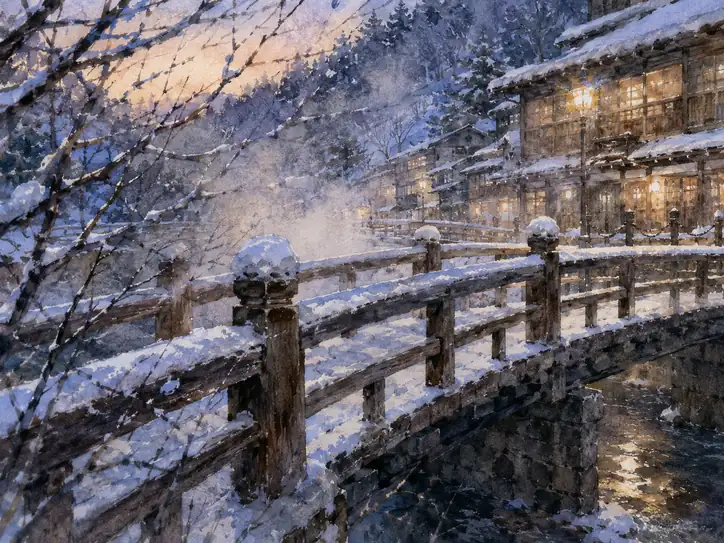 Twilight Serenity at the Snowy Inn
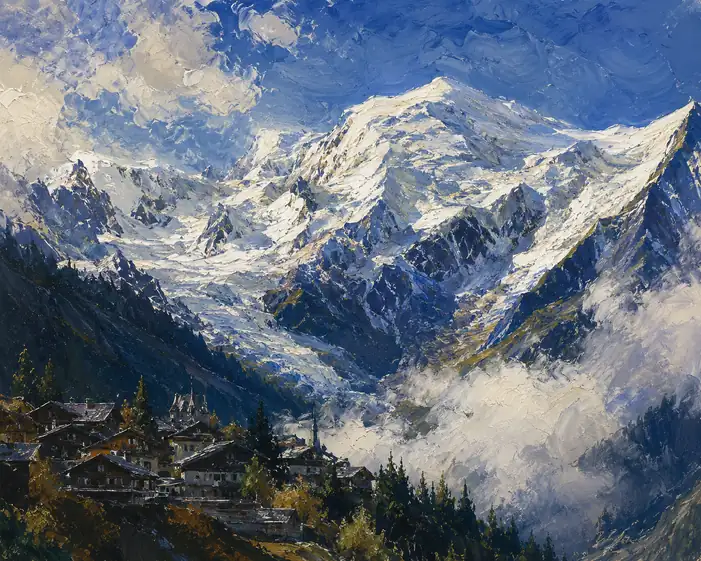 The Silent Majesty of the High Wild
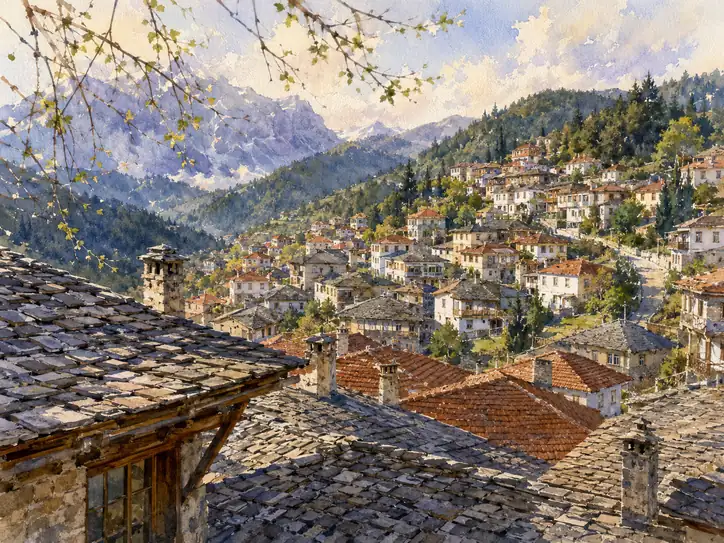 Warmth Beneath the Silent Peaks
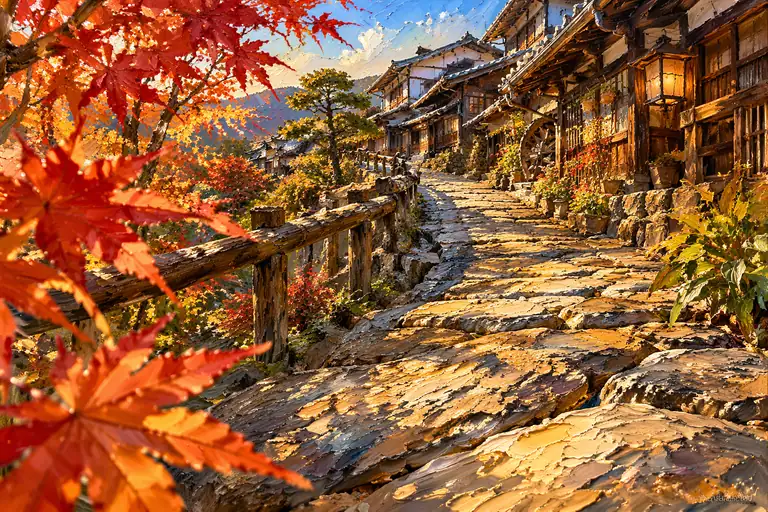 Ascent to the Autumn Skies
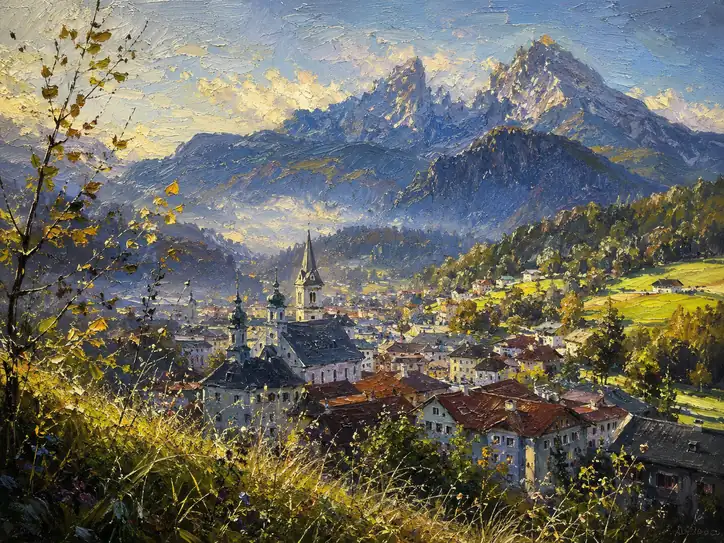 Peace Sheltered by the Giants
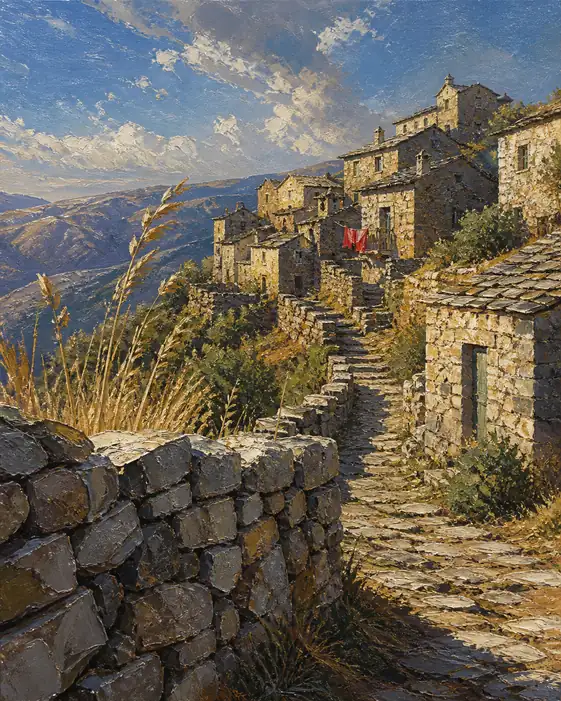 The Ascent of Sunlit Stone
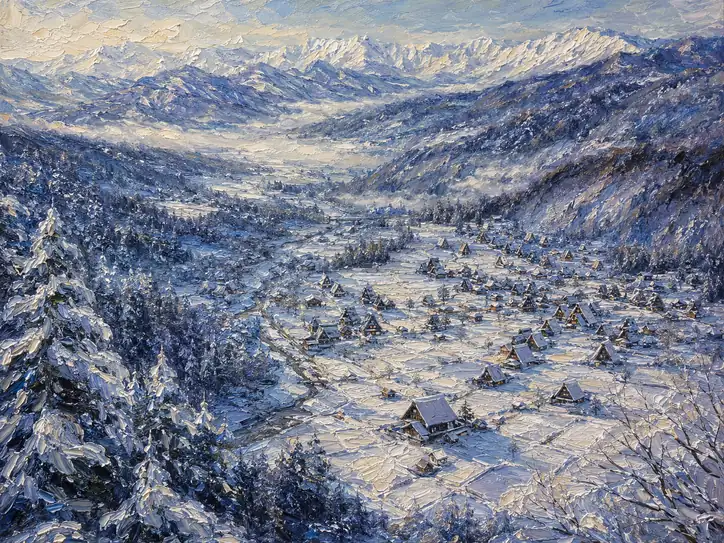 Warmth Beneath the Frozen Thatch
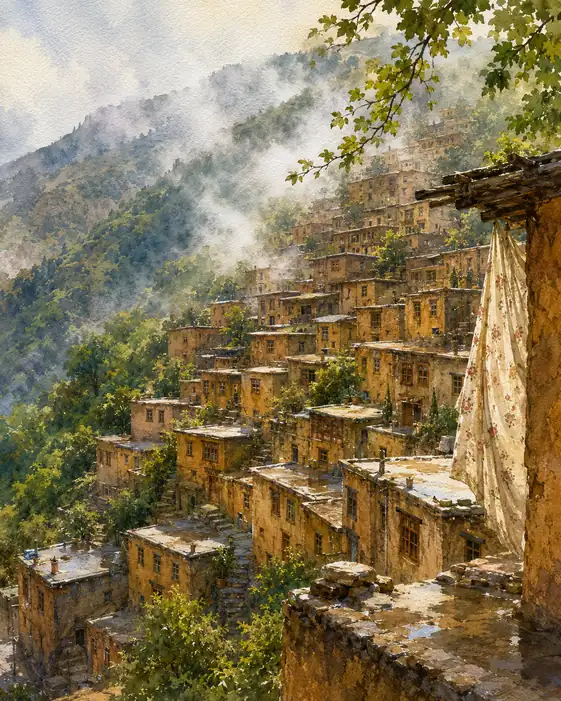 Where the Mountains Breathe
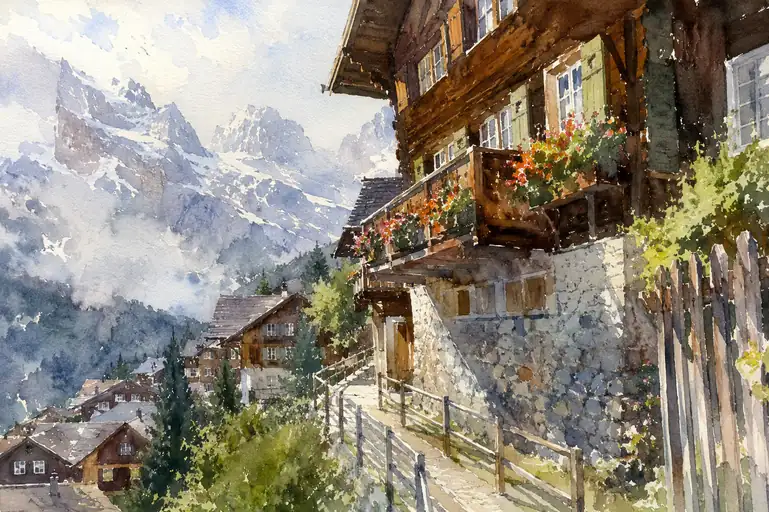 A Path to the Sky’s Embrace
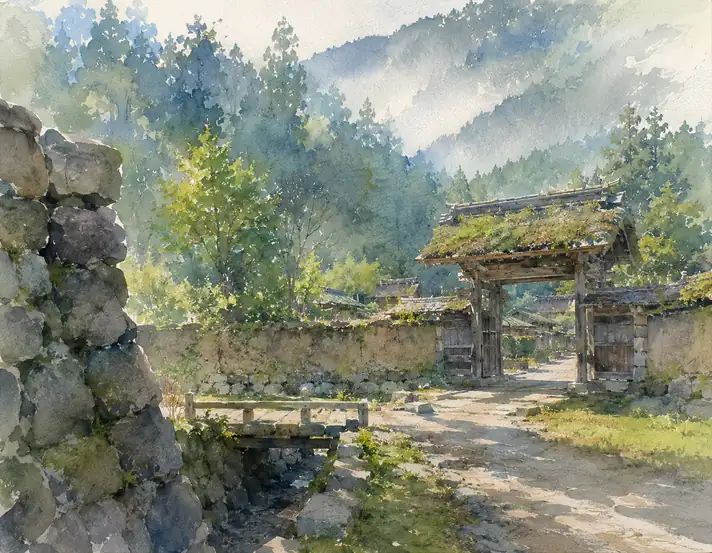 The Silent Gate Where Time Lingers
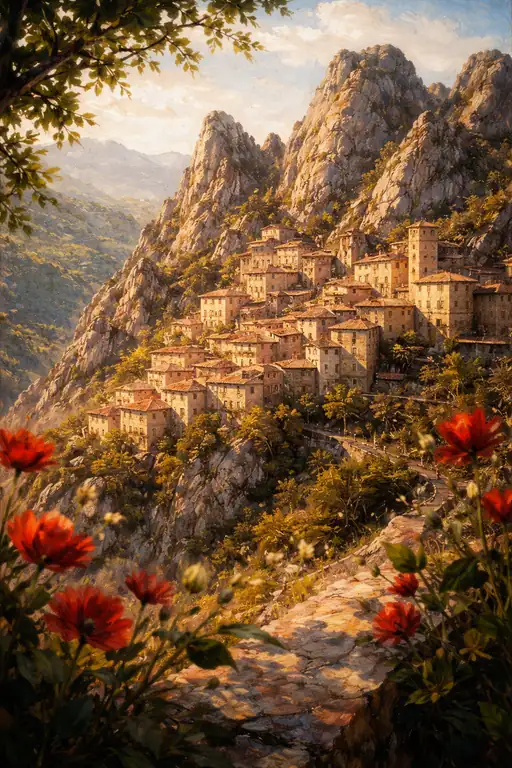 Crimson Ascent
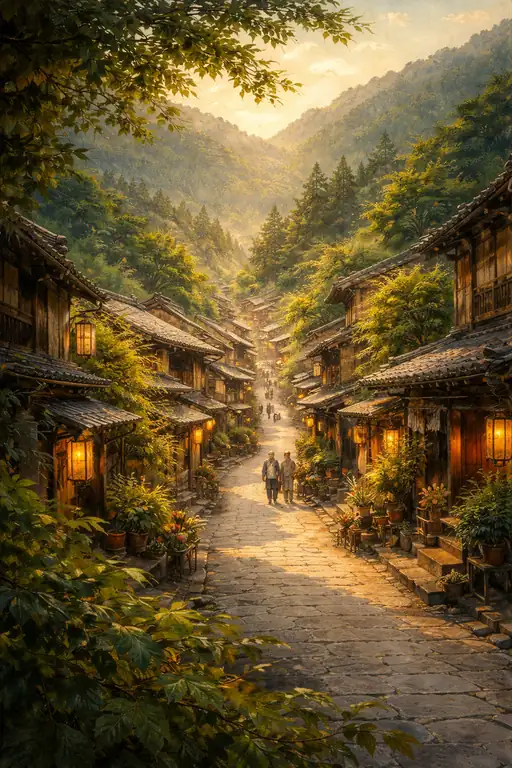 The Warm Embrace of Yesterday's Valley