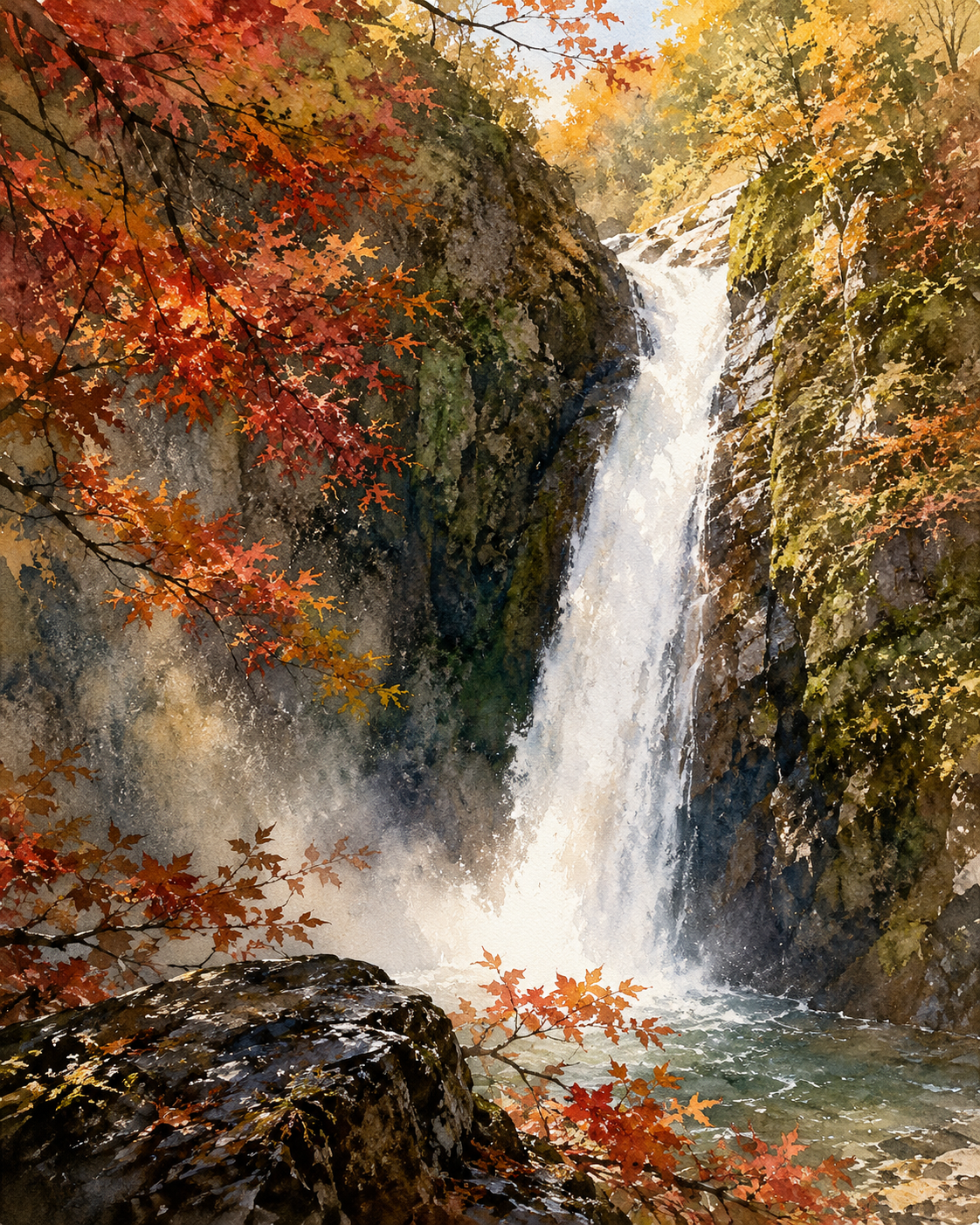
Autumn Cascade in the Crimson Gorge
Critique
Introduction This painting presents a waterfall descending through autumn leaves and rock walls. The date, exact medium, and dimensions cannot be confirmed from the image alone. It is best approached as a landscape study that gives equal attention to place, weather, and pictorial design. Description The scene includes the white falling water, red foliage, gray cliffs, and foaming basin. Forms are described with loose but controlled brushwork, so individual details remain readable without becoming rigid. The viewpoint places the viewer close to the foreground while keeping a clear path into the distance. Analysis The composition depends on the vertical fall is intensified by warm leaves around the edges. Color is handled with a balanced range of warm and cool notes, and the light is used to separate planes of depth. The technique favors visible strokes, giving the surface an active texture while preserving spatial order. Interpretation and Evaluation The work suggests an attentive encounter with a specific environment rather than a generalized scenic view. Its strengths lie in descriptive clarity, coherent composition, and a color structure that supports mood without excess. The originality is modest but effective, especially in the way ordinary natural features are shaped into a sustained visual experience. Conclusion At first the painting may appear primarily descriptive, but closer viewing reveals careful decisions about rhythm, light, and scale. The image succeeds because its technique and composition guide observation steadily from immediate detail toward broader atmosphere. Overall, it offers a calm and well-organized example of landscape painting.
Same Subcategory
 Dance of the Sunlit Cascade
Similar Artworks
 Echoes of the Autumn Cascade
 Autumn Whispers Through the Mist
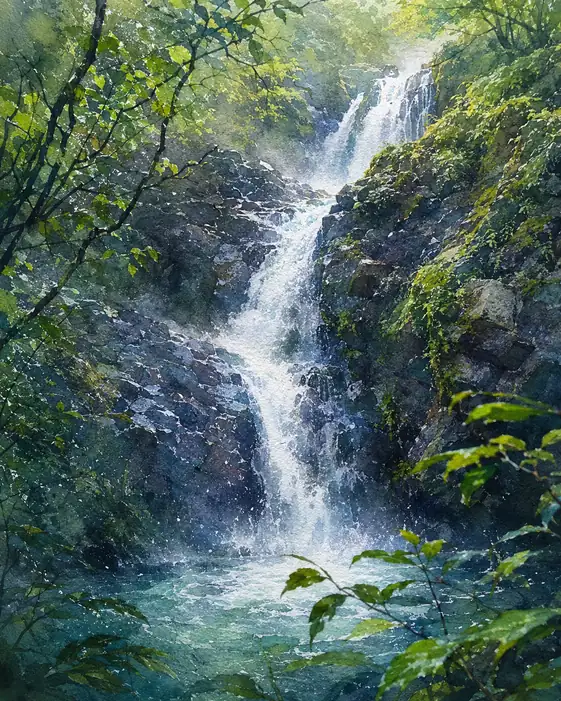 Melody of the Hidden Valley
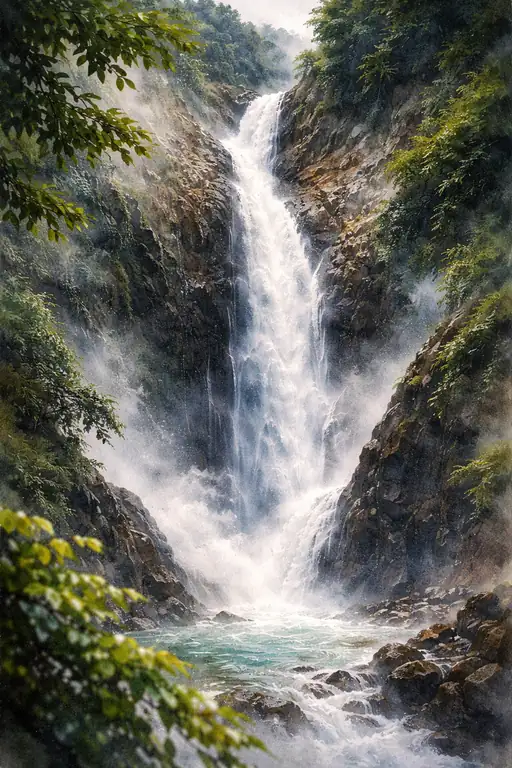 Cascading Veil: The Forest's Pulse
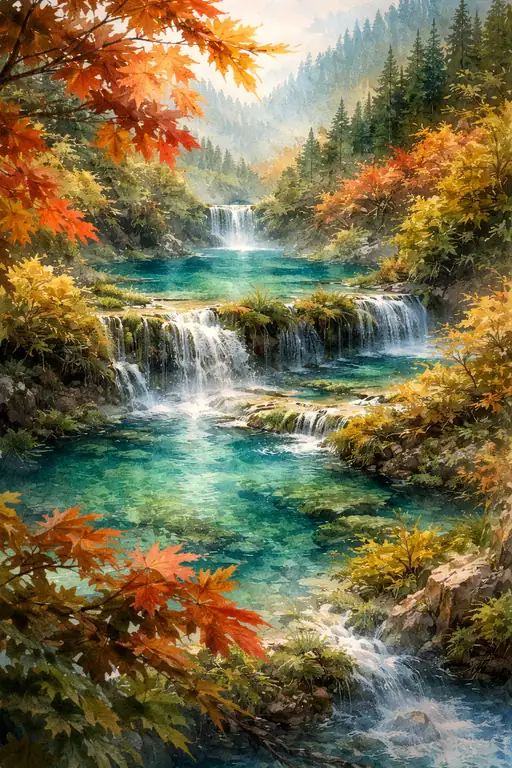 Cascade of Autumn: The Emerald Pool
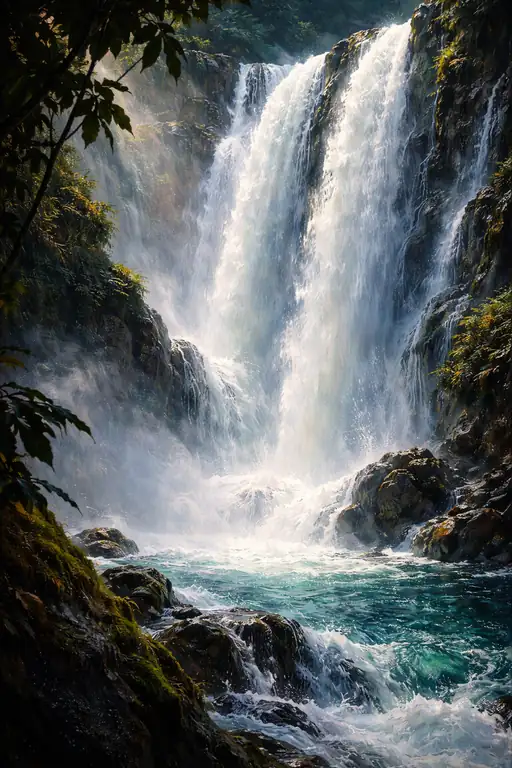 Echoes of the Vertical Roar
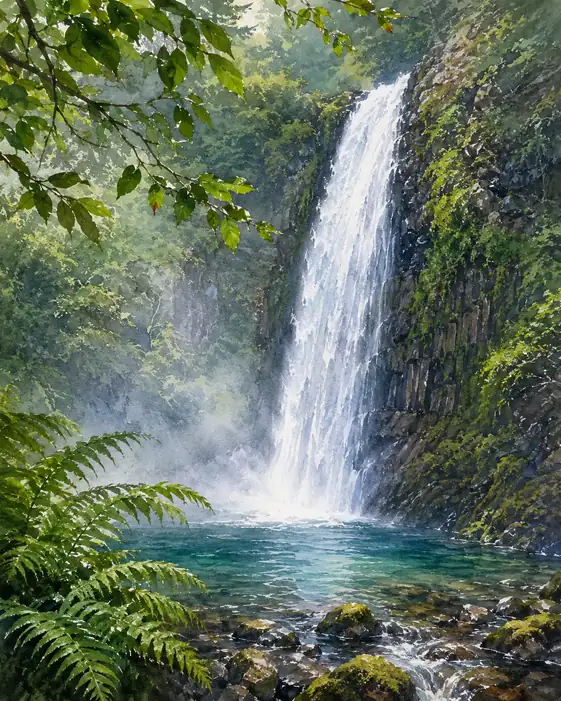 The Forest's Cool Breath
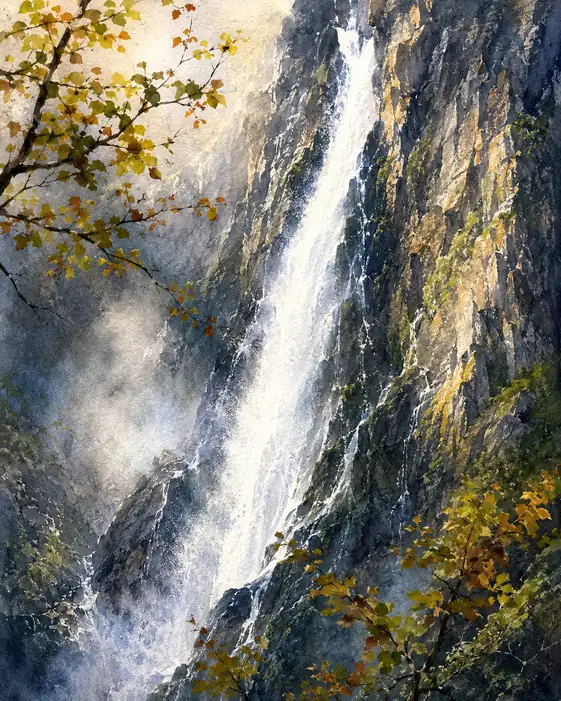 Breath of Light Amidst the Ancient Stone
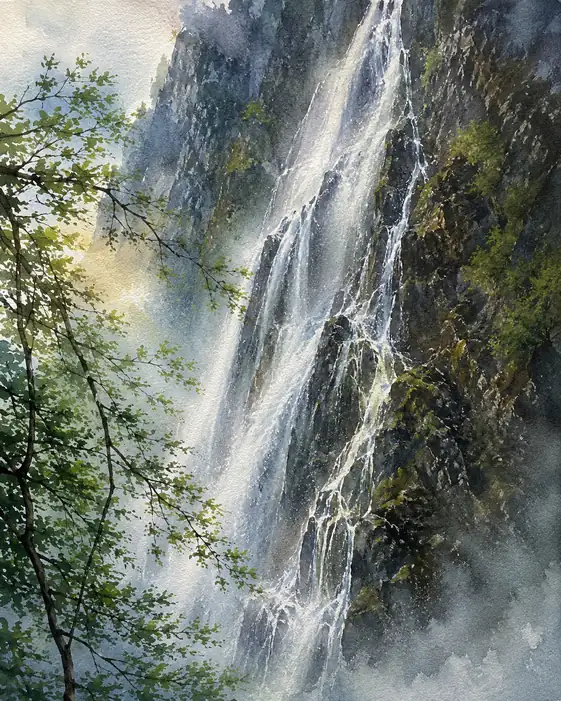 The Mountain's Silver Thread
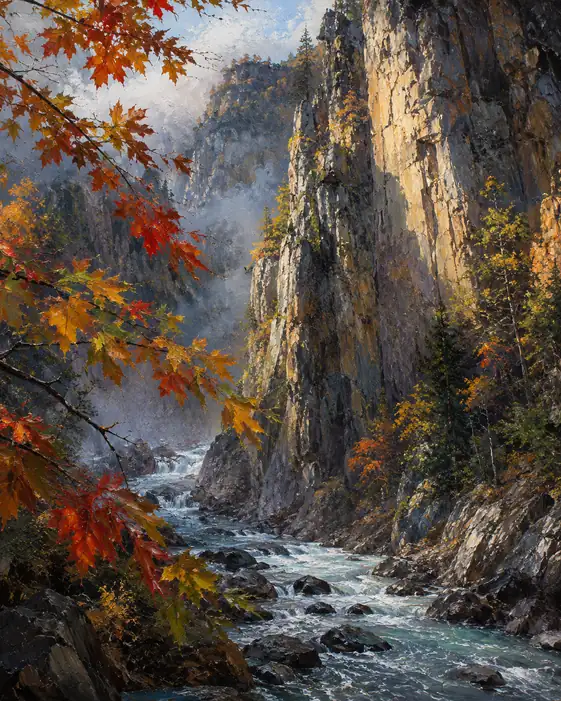 Autumn Whispers in the Sunlit Gorge