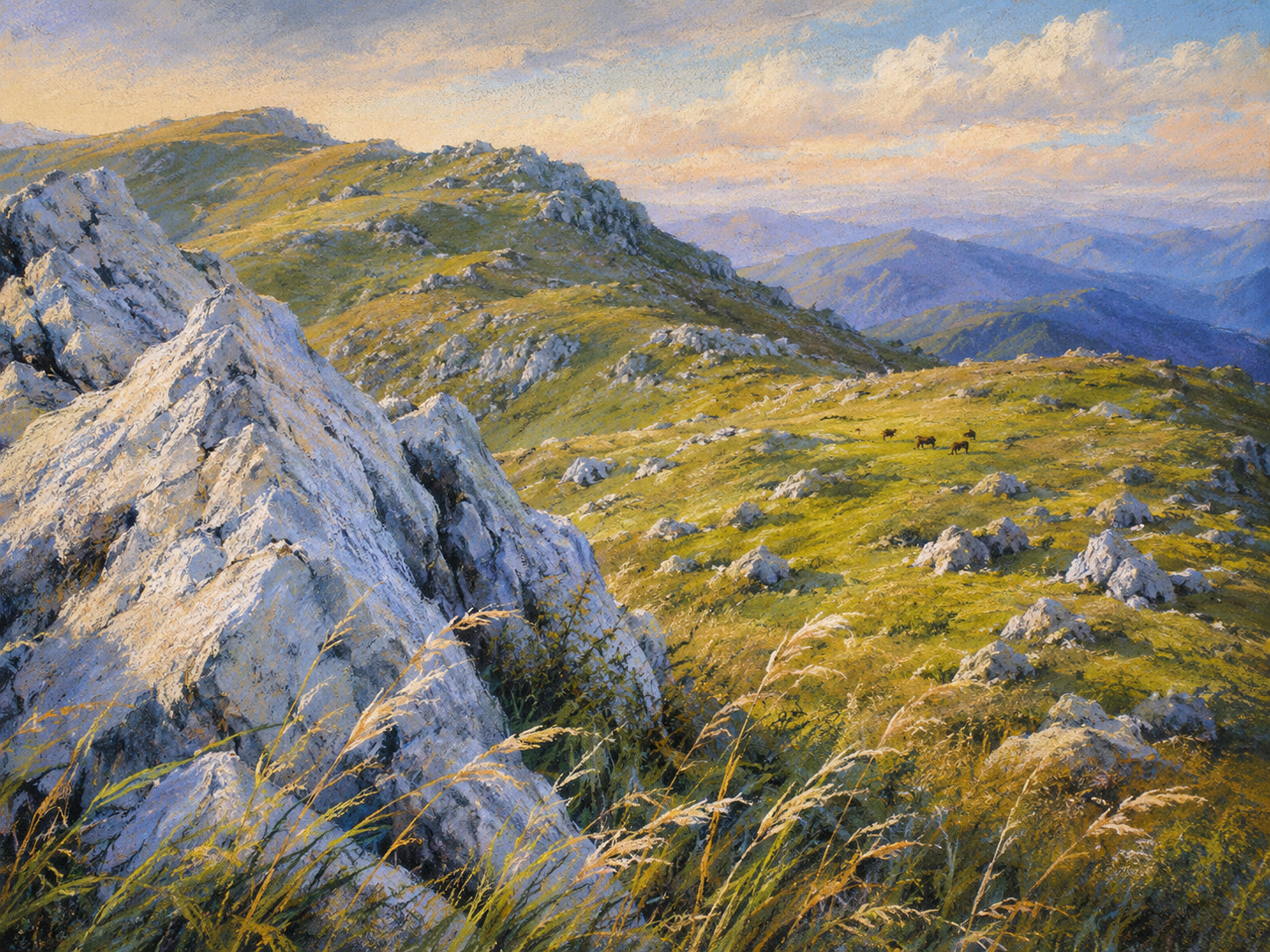
Sunlight on the Highland Stones
Critique
1. Introduction This work represents a high mountain pasture in clear light, with pale rocks, rough grass, and distant blue ranges. Its exact location, date, and medium cannot be confirmed from the image alone, yet the painting is evidently concerned with open air, elevation, and the measured spread of terrain. 2. Description A large white rock formation occupies the left foreground, its fractured planes catching the sun with almost chalky brightness. Across the middle ground, scattered stones punctuate a broad meadow where a few dark grazing animals appear at small scale. Beyond, rolling ridges fade into blue distance beneath a sky filled with thin clouds and warm evening light. 3. Analysis The composition balances mass and openness. The heavy foreground rock provides a firm anchor, while the sloping pasture leads the eye laterally and then outward toward the far mountains. Color is restrained but effective: cool shadows in the stone meet yellow-green grass and lavender distance, and short, granular brushwork gives the surface both dryness and light. 4. Interpretation and Evaluation The painting values spaciousness over incident. Its descriptive power lies in the precise relation between rock, grass, and atmosphere, while the tiny animals clarify scale without turning the scene into anecdote. Composition, color, and technique remain closely integrated, and the quiet originality of the work comes from treating a simple upland view with notable structural care. 5. Conclusion An initial impression of pastoral calm gradually becomes a recognition of how rigorously the terrain has been organized. The work is convincing because it joins luminous color, solid drawing, and an unforced sense of breadth.
Same Subcategory
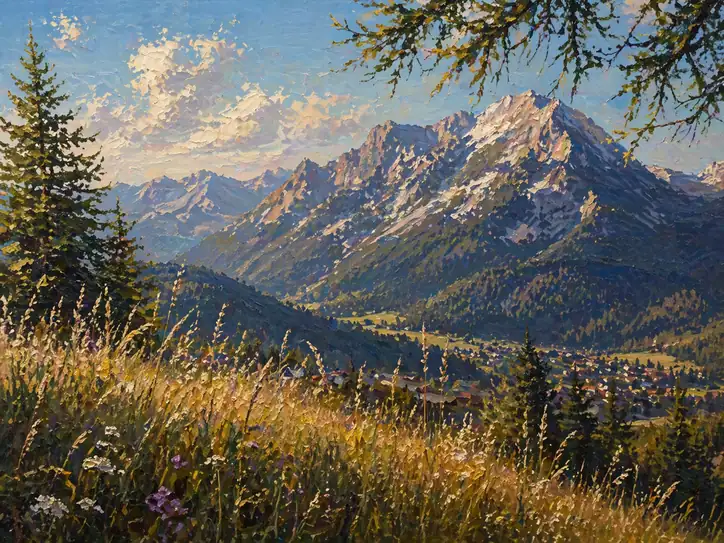 Mountain Vista
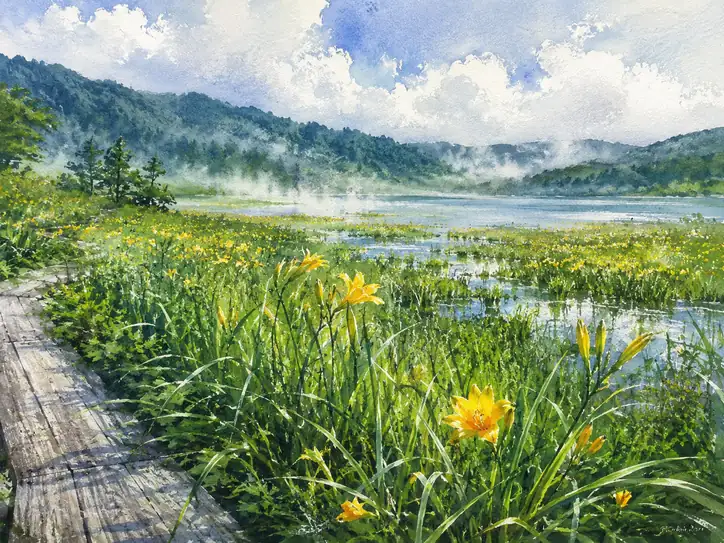 Yellow Symphony on the Summer Marsh
Similar Artworks
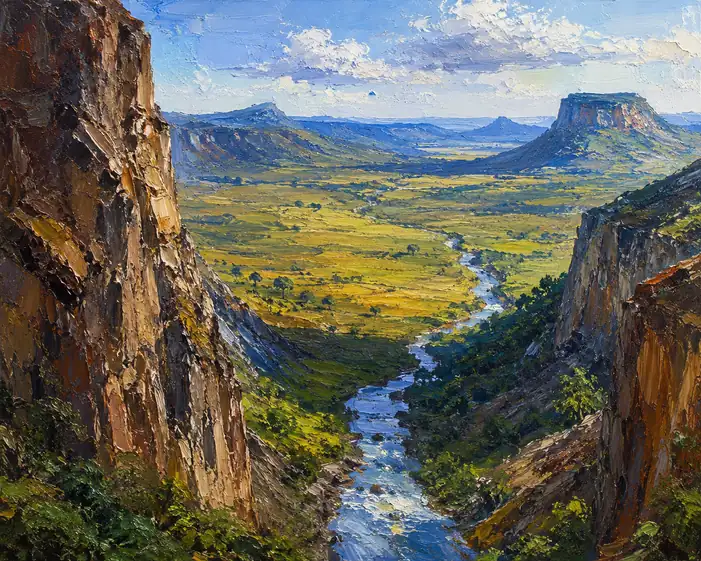 Corridor of the Ancient Earth
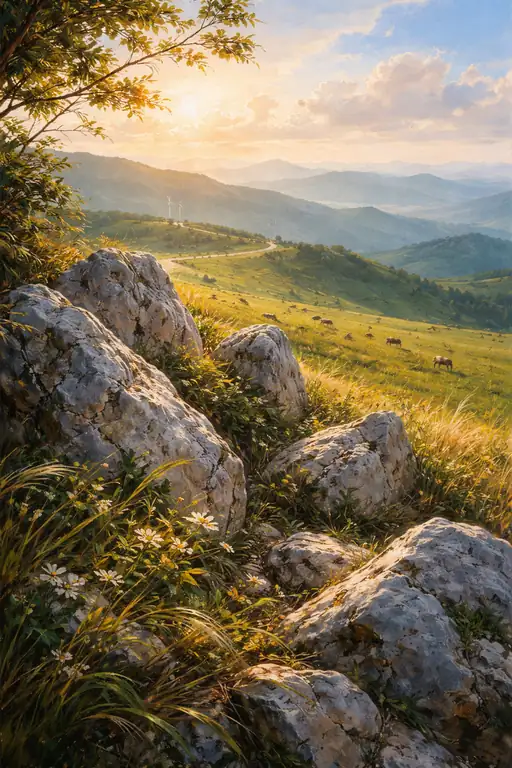 Whispers of Earth in the Golden Light
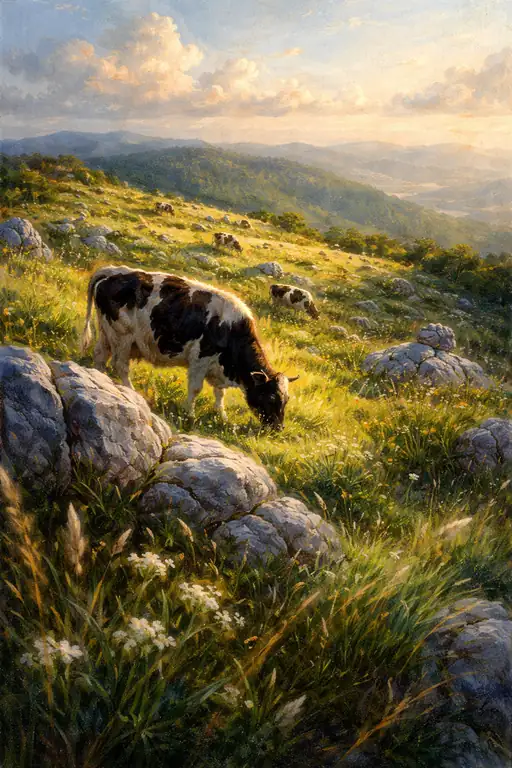 Quiet Rhythms of the Endless Pasture
 Wind Across the Highland Trail
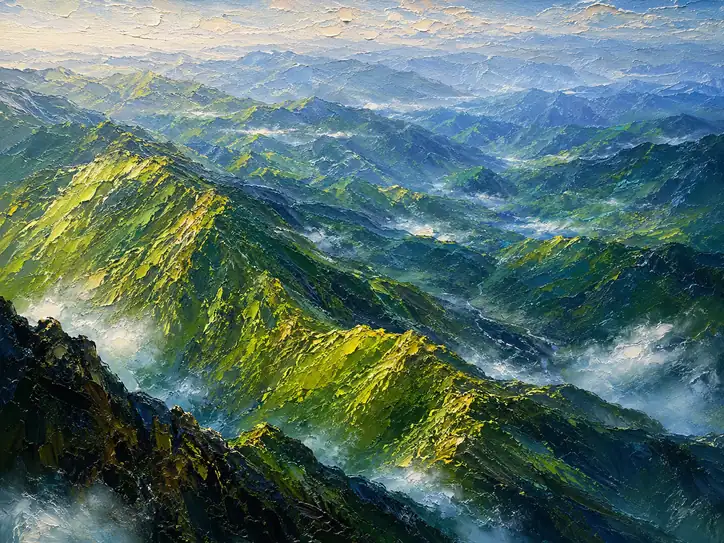 The Titan's Golden Crest
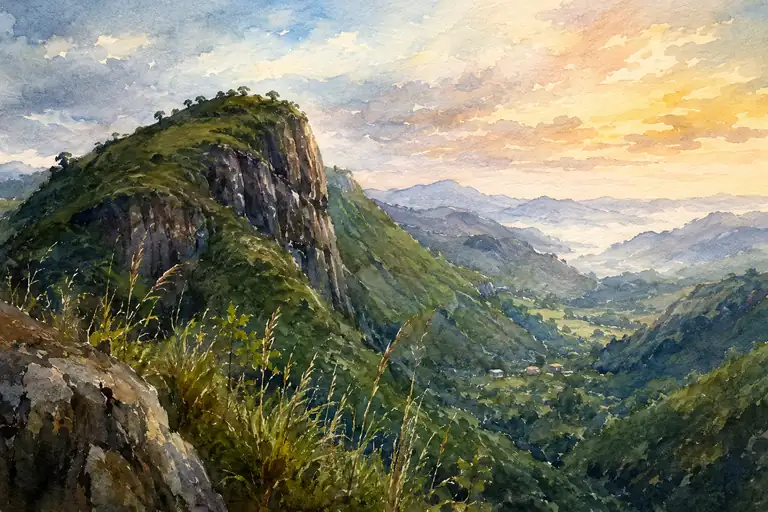 Whispers of the Waking Valley
 Whispering Breezes Over Lavender
 Golden Hour Over the Caldera
 Where Time Flows Softly
 Whispers of the Golden Wind