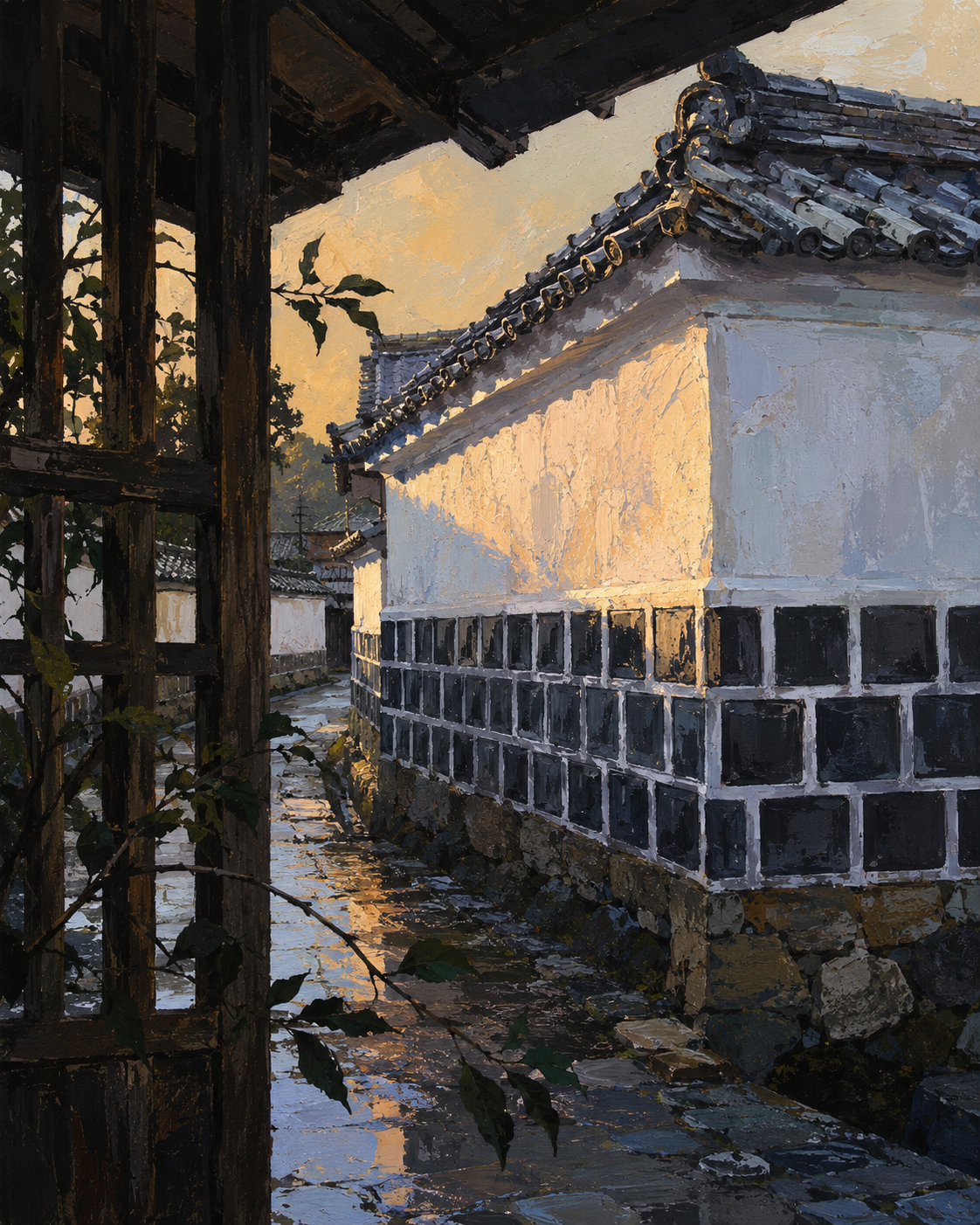
Stillness in the Rain-Washed Alley
Critique
1. Introduction This painting depicts a narrow lane between traditional walls after rain, observed in warm evening light. The subject is modest, yet the scene gains presence through the meeting of architecture, moisture, and shadow. Its quiet mood turns an ordinary passage into a place of concentrated attention. 2. Description A white plaster wall with dark tiled roofing occupies the right side and catches the low sun across a broad surface. On the left, a heavy wooden gate or frame stands in shadow, with thin branches and leaves crossing the view. The stone path bends inward through puddles and reflections toward smaller buildings in the distance. 3. Analysis The composition is built from a contrast between enclosure and recession. Strong diagonals in the wall base, roofline, and wet path guide the eye inward, while the deep shadow at the left edge stabilizes the brighter middle ground. Thick, textured brushwork on plaster and stone gives the surfaces tactile weight, and the warm ocher light is set against cool grays and blacks. 4. Interpretation and Evaluation This work may be interpreted as an observation of stillness after activity, when weather and light briefly redefine familiar space. The painting shows skill in descriptive texture, perspective control, and tonal balance, and it avoids sentimentality by keeping the human presence indirect. Its originality lies in finding visual richness within a narrow and seemingly unremarkable corner. 5. Conclusion At first glance the image appears to record a lane, yet closer study discloses a careful orchestration of light, surface, and direction. The work transforms a transitional space into a coherent pictorial structure through measured composition, nuanced color, and assured handling of materials. That deepened understanding changes the scene from local view to sustained visual study.
Same Subcategory
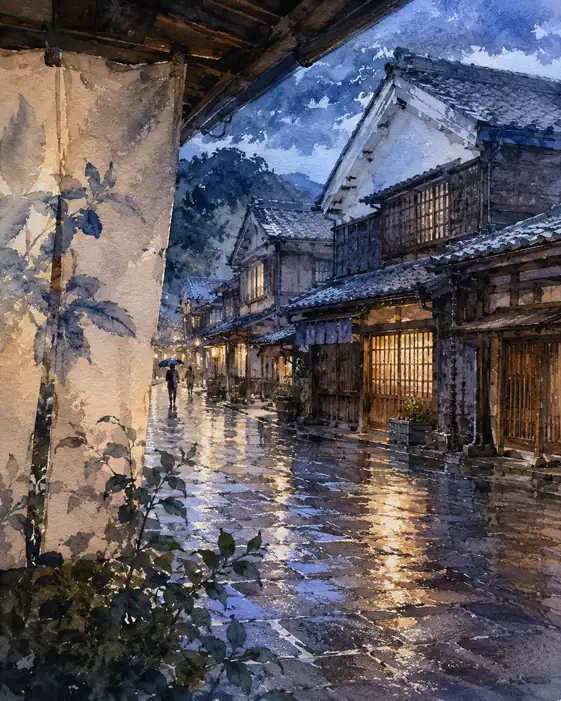 Light Dwelling in the Rain
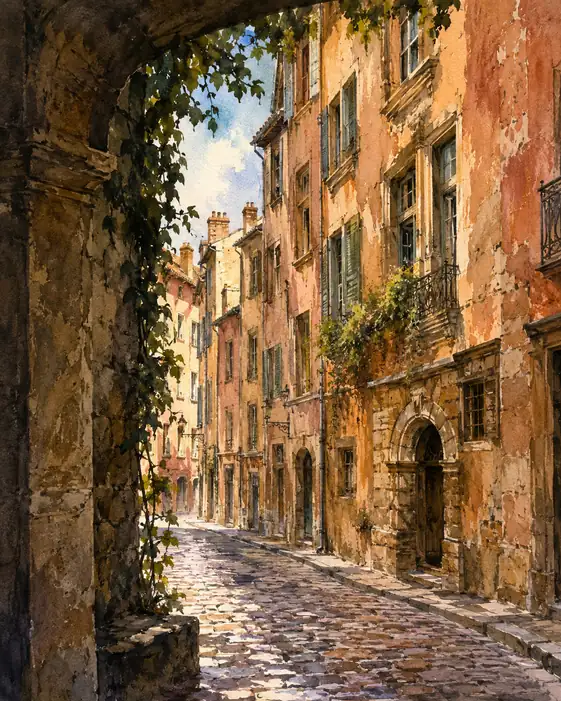 Golden Afternoon in the Mediterranean Alley
Similar Artworks
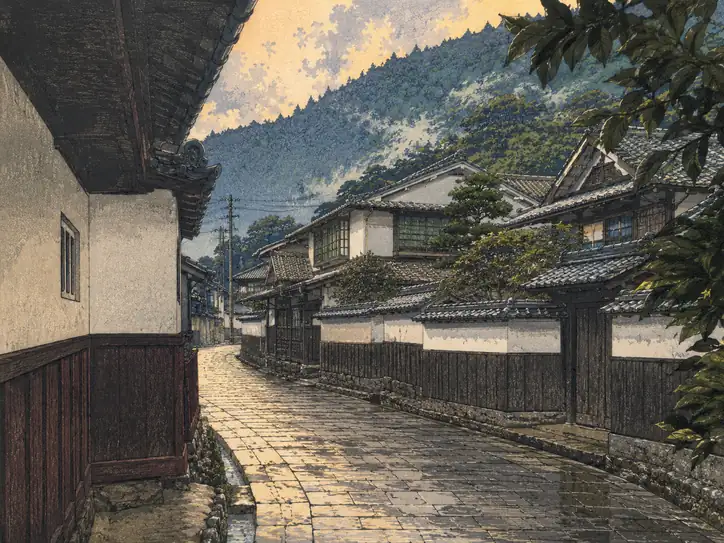 Whispers of the Eternal Village
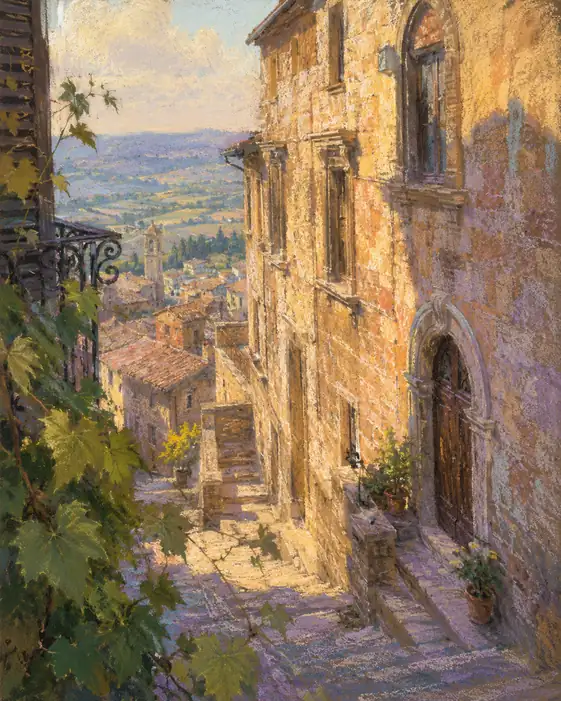 Stairway to the Tuscan Sky
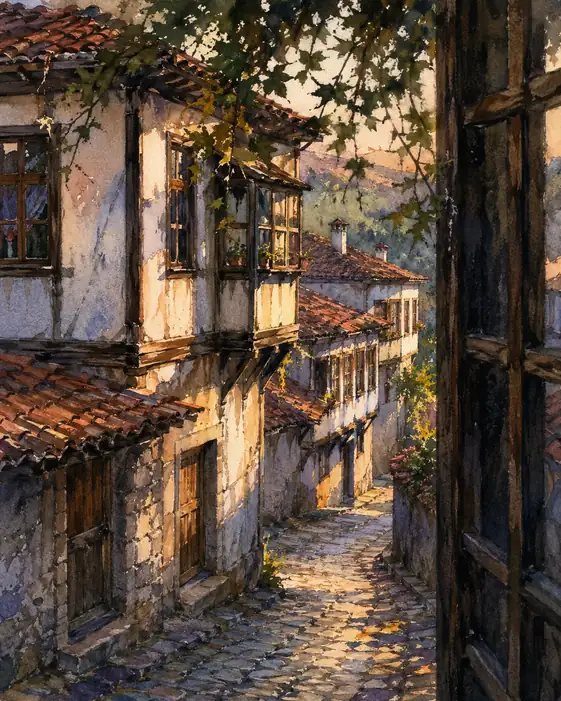 Path of Nostalgia: Where Sunlight Rests on Cobblestones
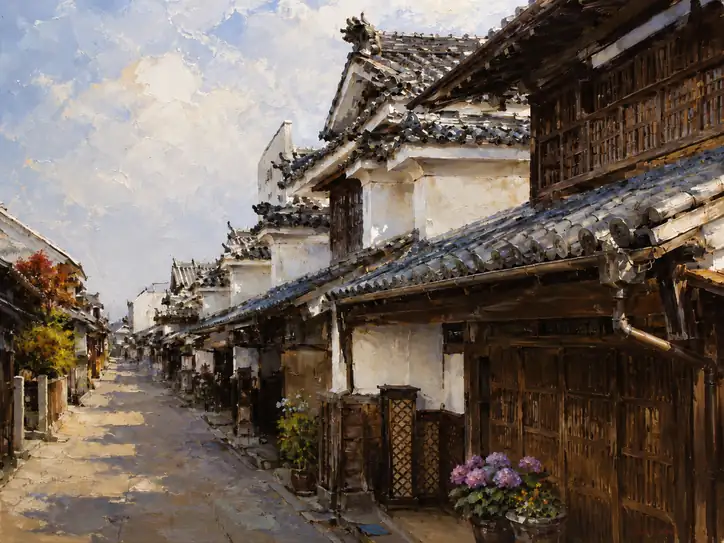 Pathway Through the White-Walled Silence
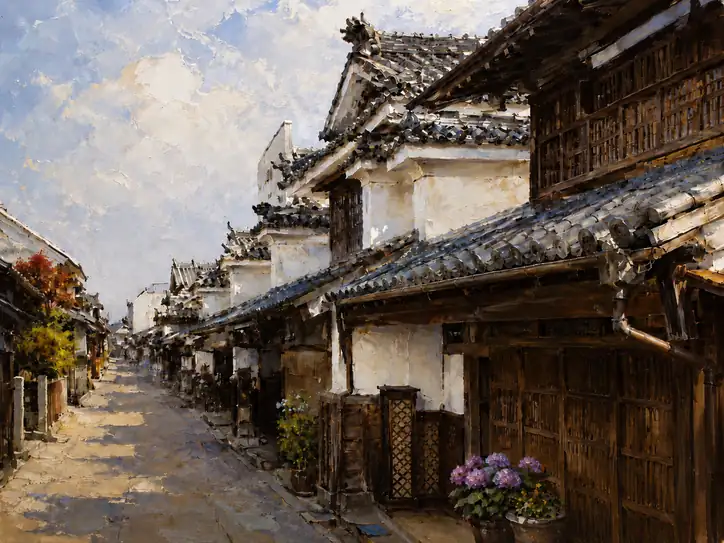 Hydrangeas in the Whispering Alley
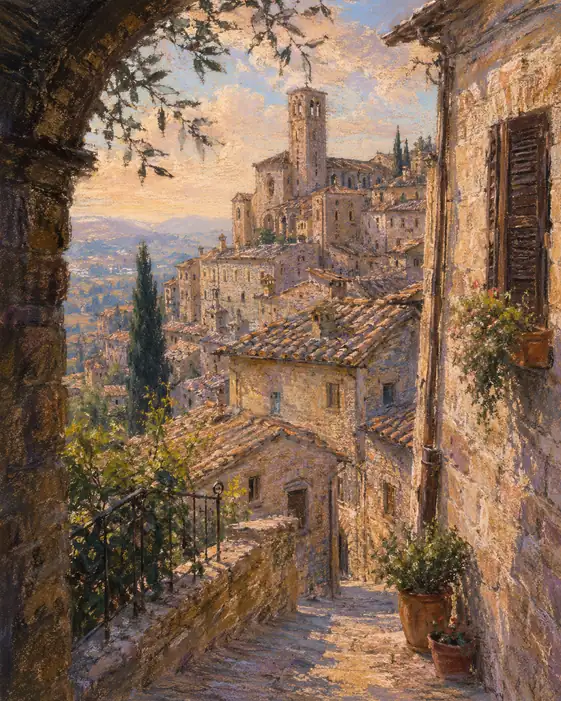 The Golden Gate to Assisi
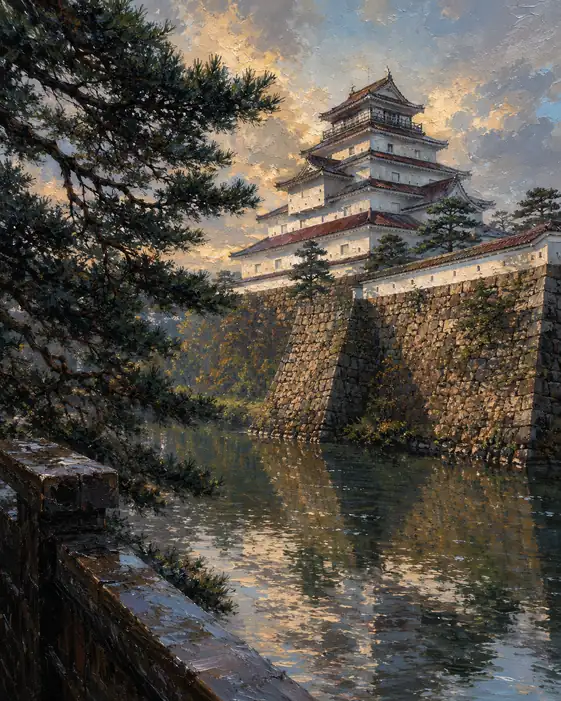 Sentinel of the Golden Twilight
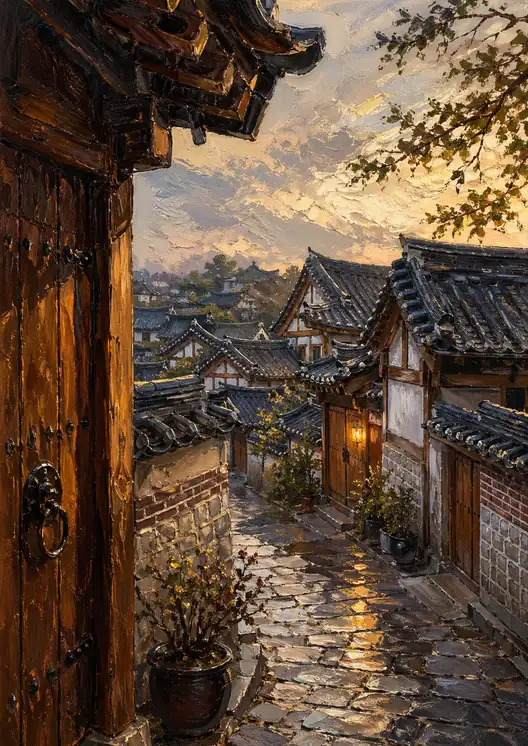 Nostalgic Glow of the Old Village
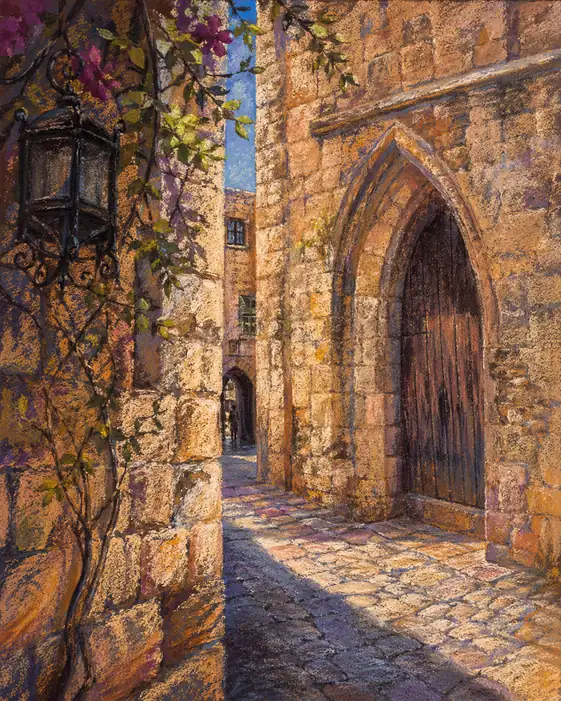 The Silent Watch of the Stone Corridor
 Whispers of the Sunbaked Alleys