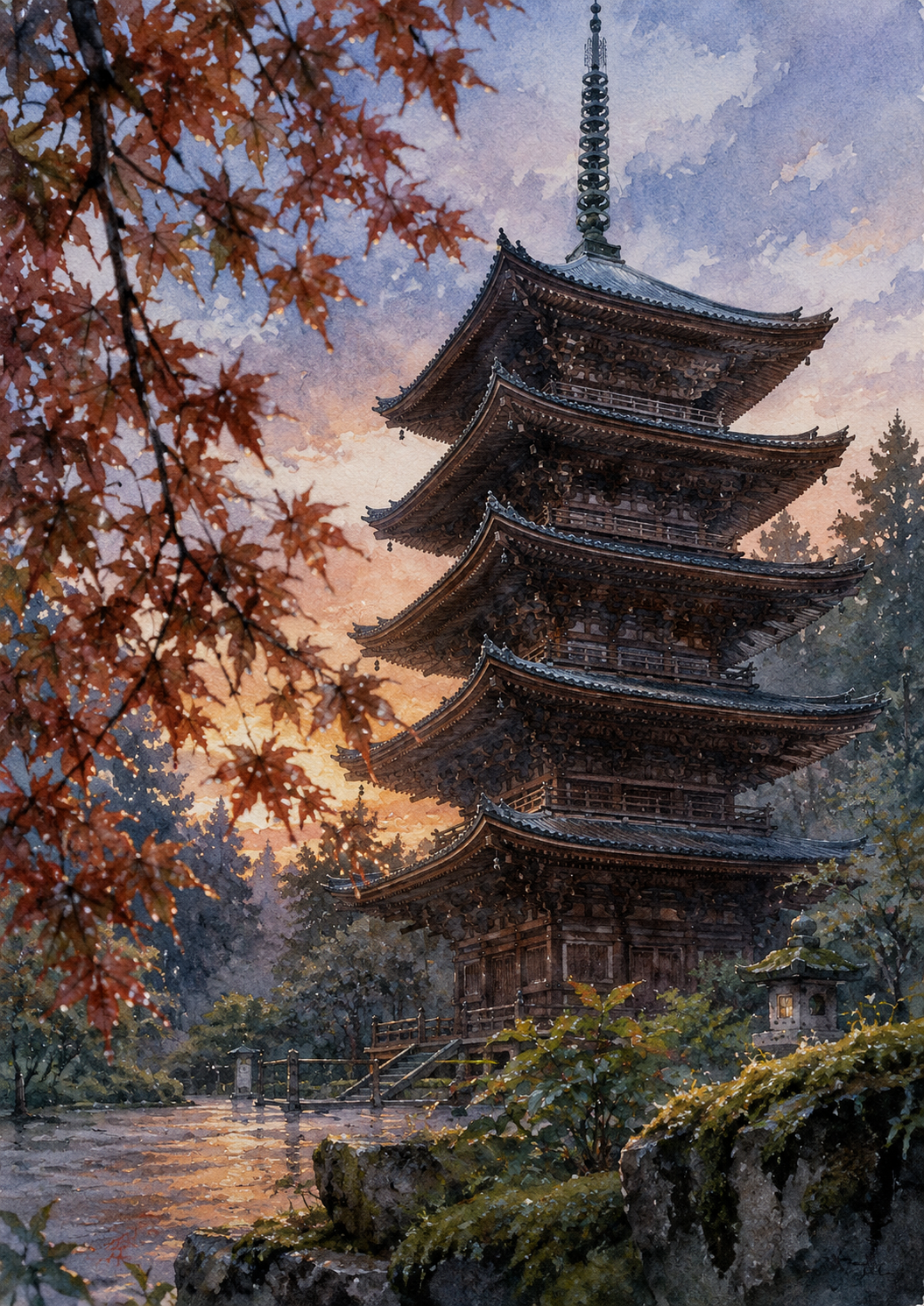
Autumn twilight, the Pagoda’s Silent Prayer
Critique
1. Introduction This painting presents a five-storied pagoda rising within a temple precinct at dusk. The scene combines architectural gravity with a seasonal atmosphere shaped by red maple leaves and recent rain. Its quiet tone invites sustained viewing rather than immediate spectacle. 2. Description The pagoda occupies the right half of the composition and is seen from a low vantage point that emphasizes its height. In the left foreground, dense branches of autumn leaves descend like a curtain, partially veiling the building. A stone lantern, wet ground, mossy rocks, and dark trees complete the setting under a sky of lavender and pale orange. 3. Analysis The composition depends on a strong contrast between the vertical mass of the pagoda and the diagonal spread of foliage. Careful drawing of the eaves and brackets gives the structure authority, while softer washes in the sky and background trees create atmospheric recession. The color scheme balances warm rust and amber with cool violet and blue, and the reflective surfaces enrich the light. 4. Interpretation and Evaluation The work may be read as an image of endurance placed within a transient season. Architectural precision, controlled perspective, and nuanced color transitions demonstrate notable skill, while the framing leaves prevent the subject from becoming merely documentary. Its originality lies less in unusual subject matter than in the measured fusion of monumentality and intimacy. 5. Conclusion At first the image appears to be a straightforward temple view, yet closer attention reveals a subtle study of time, weather, and structure. The painting turns a familiar motif into a reflective encounter through strong draftsmanship, balanced composition, and sensitive handling of color. That shift from scenic appreciation to formal understanding gives the work its lasting value.
Same Subcategory
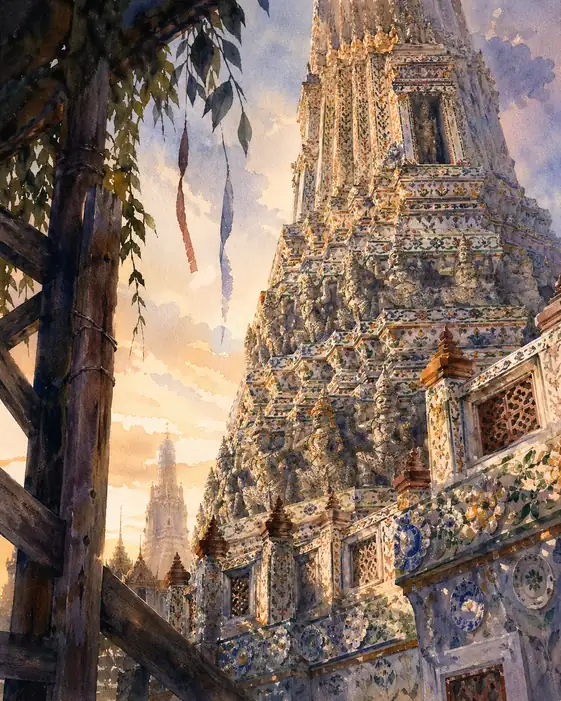 Spire of the Eternal Light
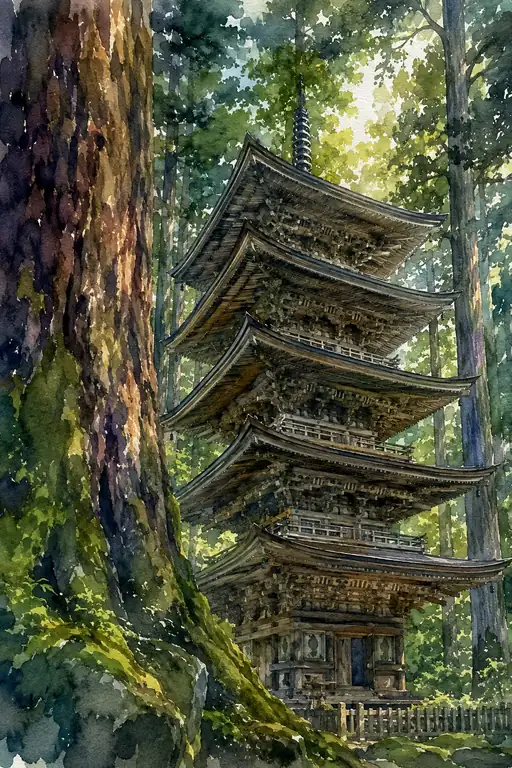 Sacred Rhythm of the Cedar Forest
Similar Artworks
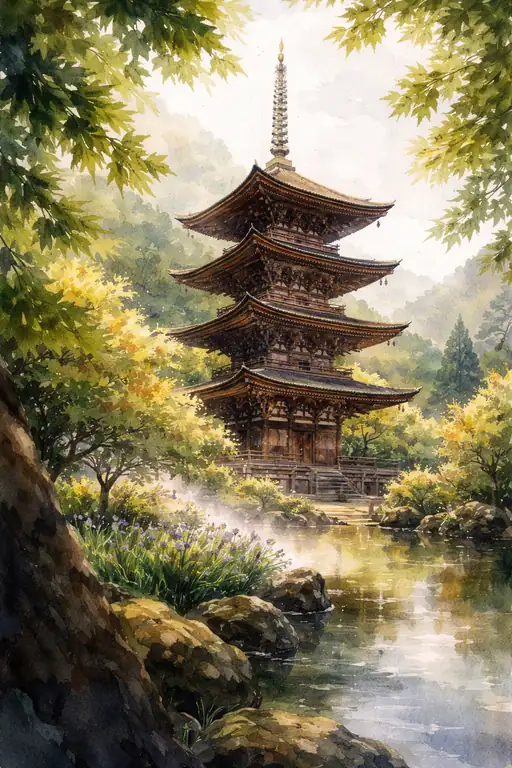 Reflection of the Silent Pagoda
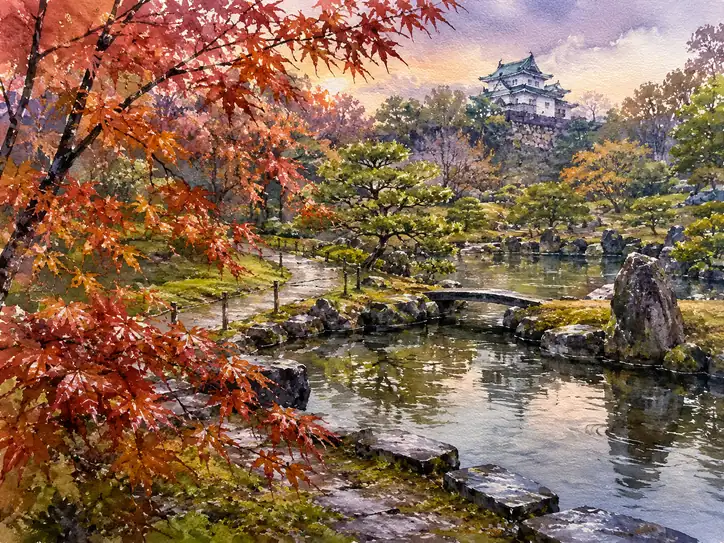 Ephemeral Fire of the Autumn Court
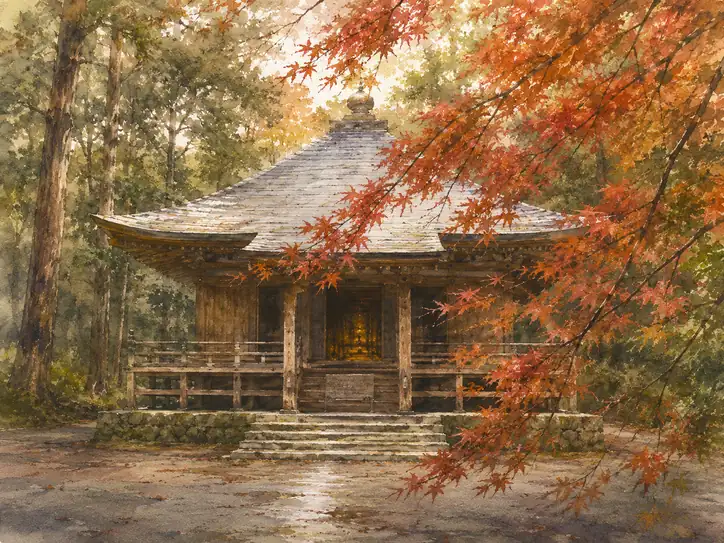 Golden Glow in the Maple Shadows
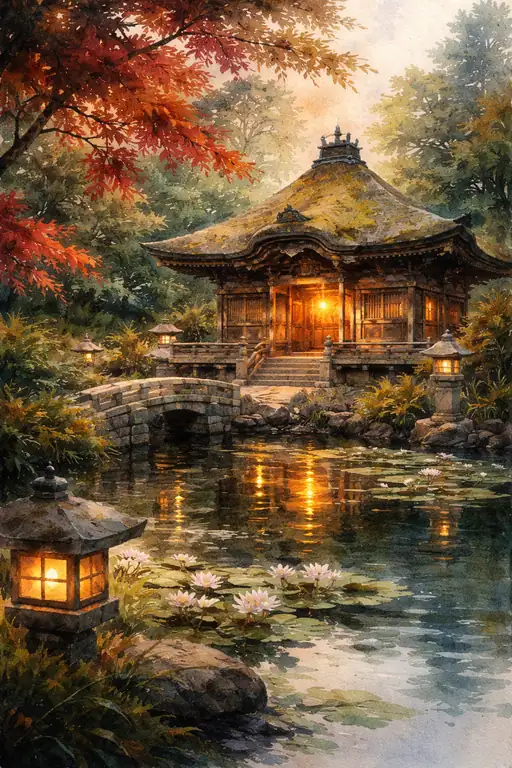 The Radiant Heart of the Twilight Sanctuary
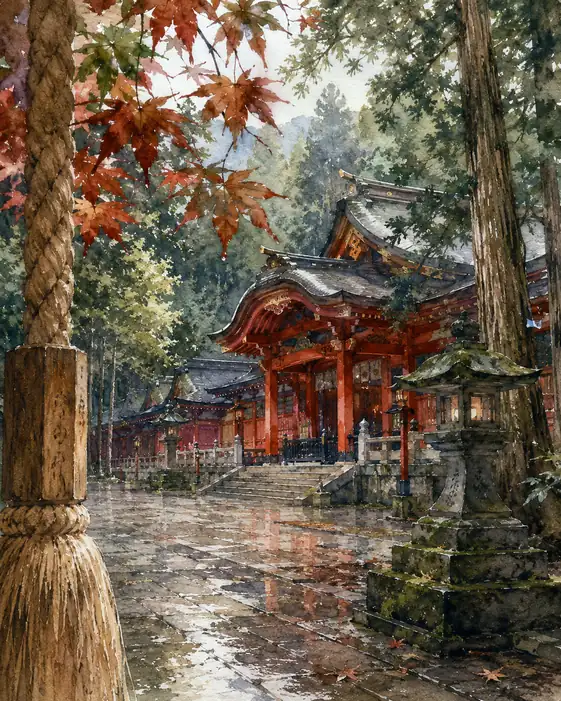 Serenity in the Autumn Rain
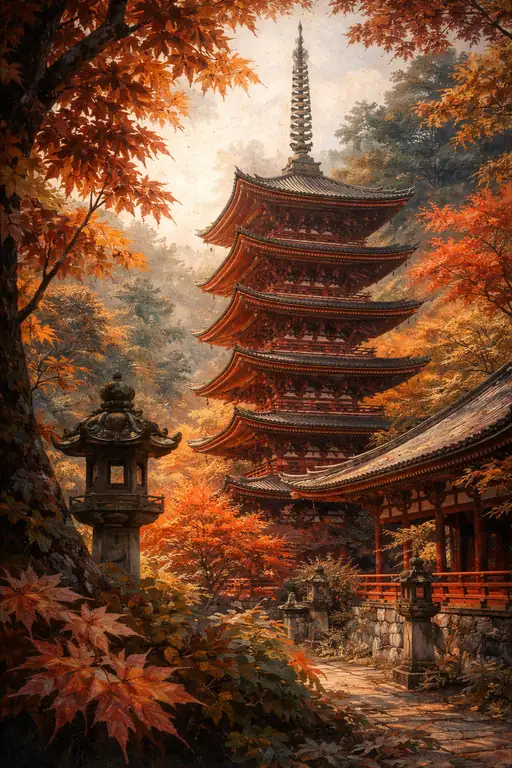 Autumn's Golden Reverie
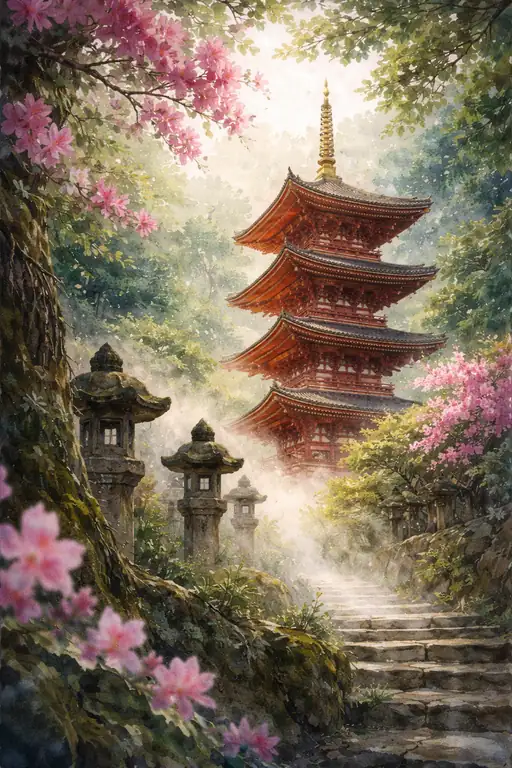 Sacred Pagoda Rising from the Morning Mist
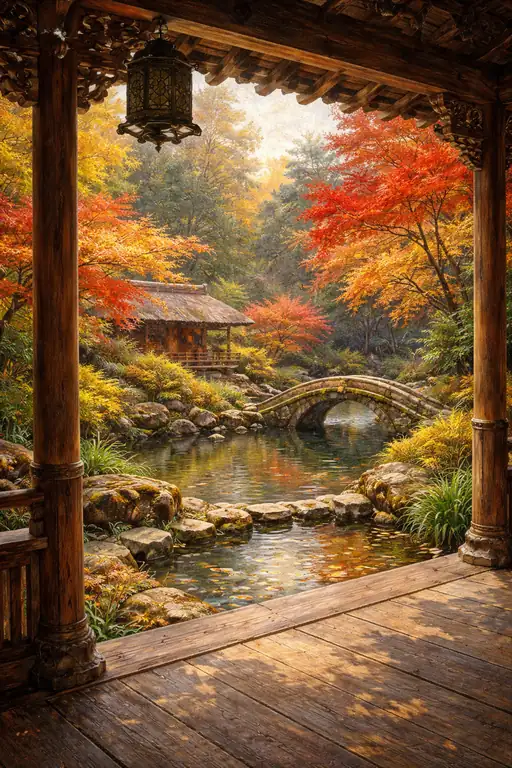 Crimson Reflections
 A Single Ripple in Twilight
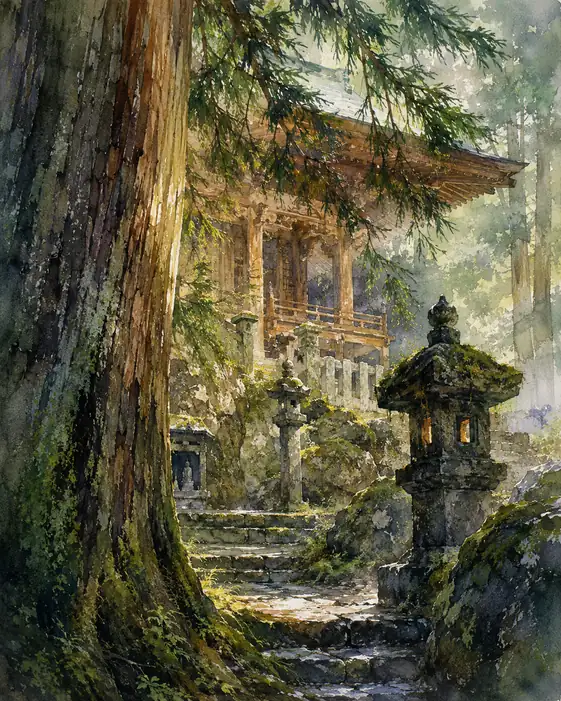 Sanctuary of the Ancient Cedars