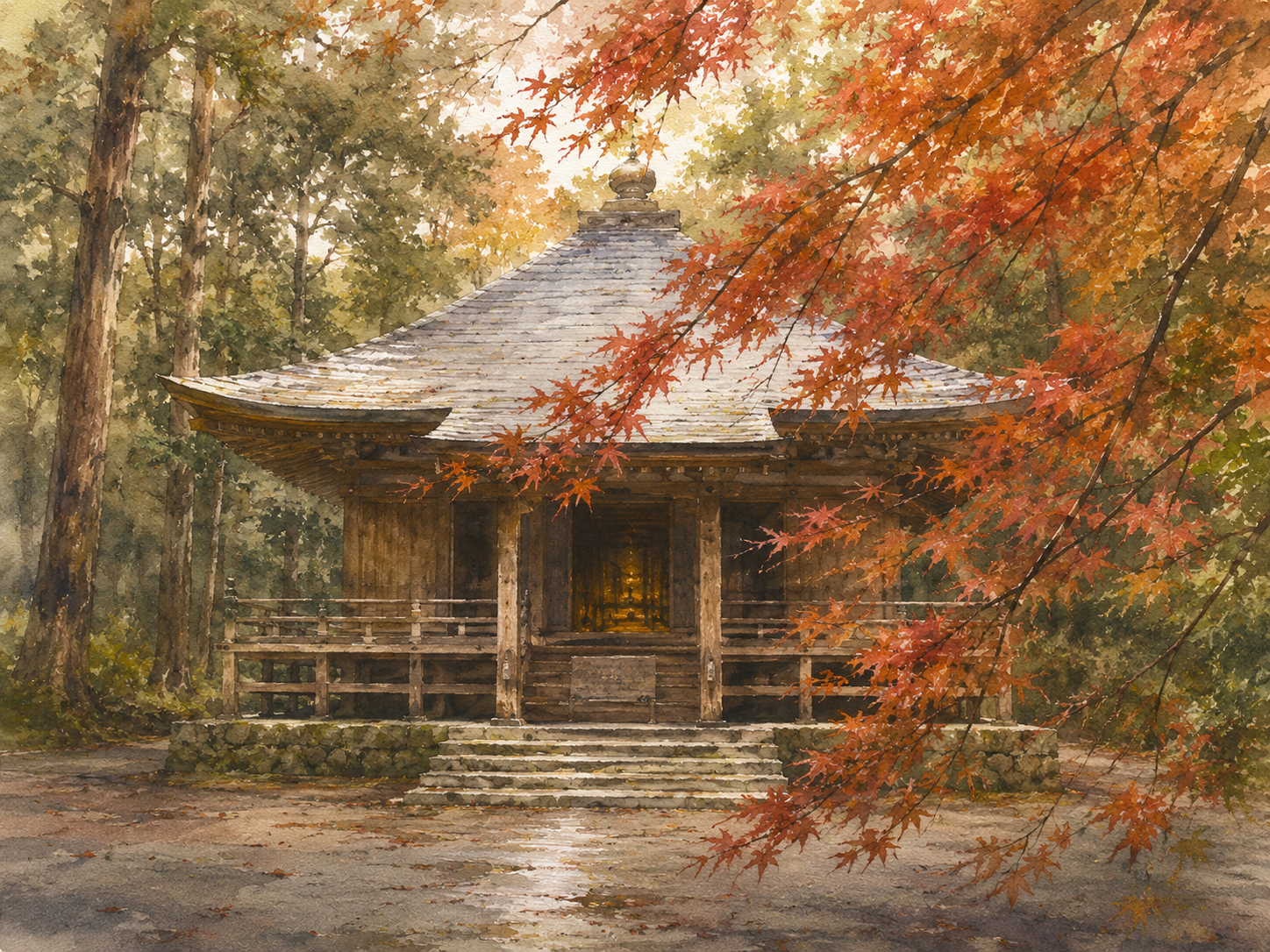
Golden Glow in the Maple Shadows
Critique
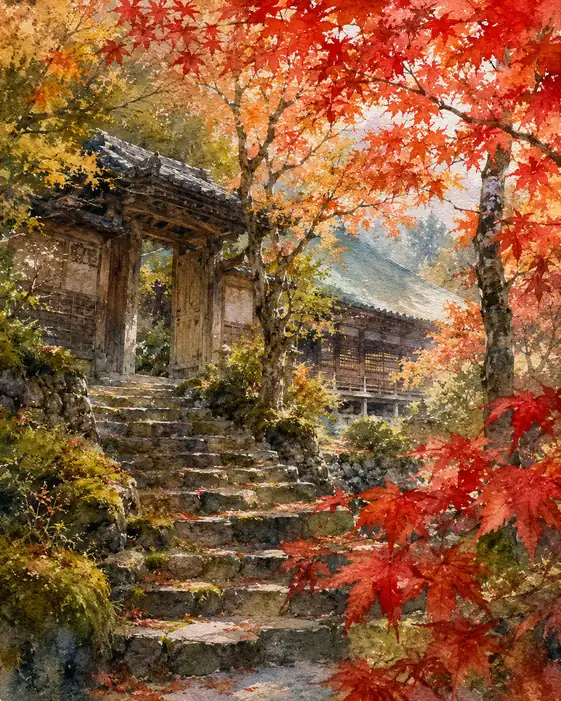
1. Introduction This painting depicts a small wooden hall set within an autumn forest. The frontal arrangement gives the subject dignity, while overhanging maple branches and a damp foreground soften the scene and make it feel inhabited by weather and time. 2. Description The building stands at the center behind a short flight of stone steps and a low platform. Tall trees rise in the background, and broad red-orange branches enter from the upper right, partly veiling the roof and facade. A warm light glows inside the central opening, while the ground in front appears wet and faintly reflective. 3. Analysis The composition is built on a stable central axis, yet it avoids rigidity through the diagonal spread of leaves across the upper half. Gray roof planes, brown timber, muted greens, and autumn reds are arranged in clear layers, producing contrast without noise. The brushwork remains economical, describing aged wood, soft distance, and moist air without excessive detail. 4. Interpretation and Evaluation The painting suggests that the meaning of the site comes from atmosphere as much as from architecture. Its strengths lie in the steady structure of the building, the careful framing by foliage, and the measured color relationships that keep the image contemplative. The motif is traditional, but the technical handling gives it freshness and quiet concentration. 5. Conclusion The first impression is that of a neatly observed wooden hall, yet extended viewing reveals a more complex union of season, light, and spatial restraint. The work succeeds as a composed and thoughtful image of shelter, memory, and autumn stillness.
Same Subcategory
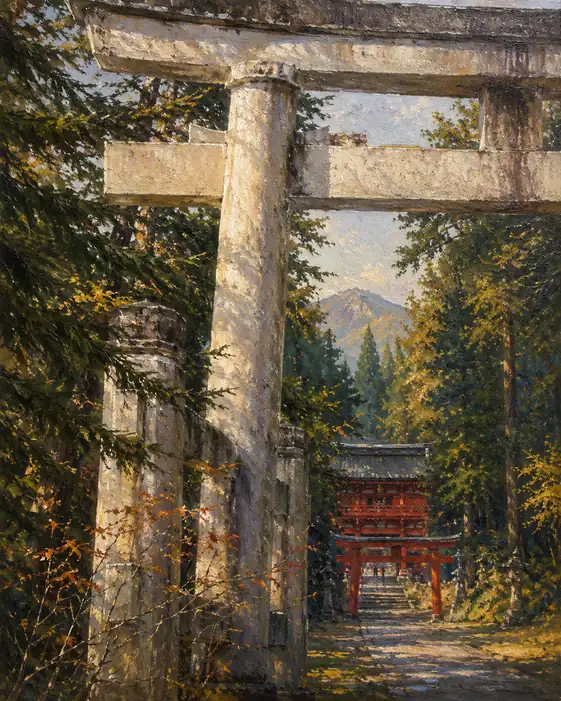 Passage Through the Sacred Shadows
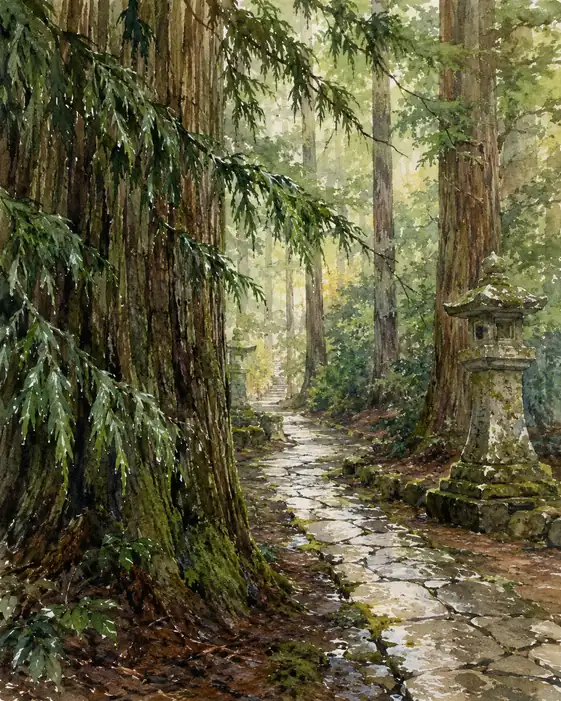 Whispers of the Sacred Grove
Similar Artworks
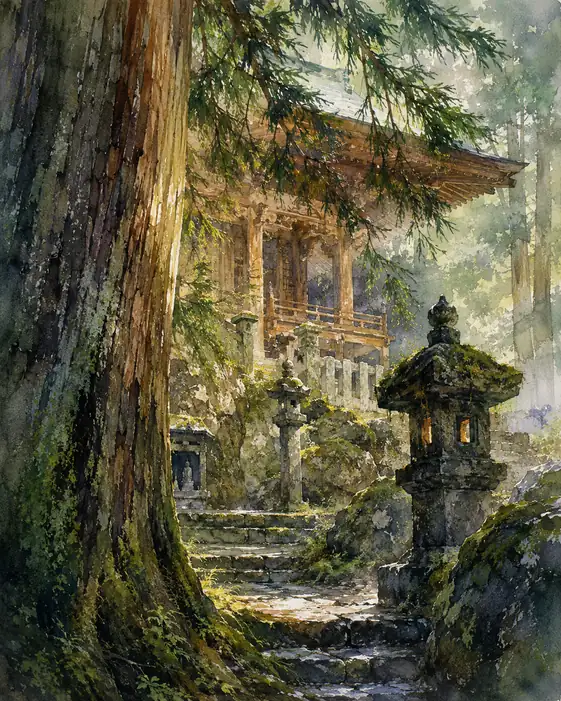 Sanctuary of the Ancient Cedars
 The Crimson Threshold of Silence
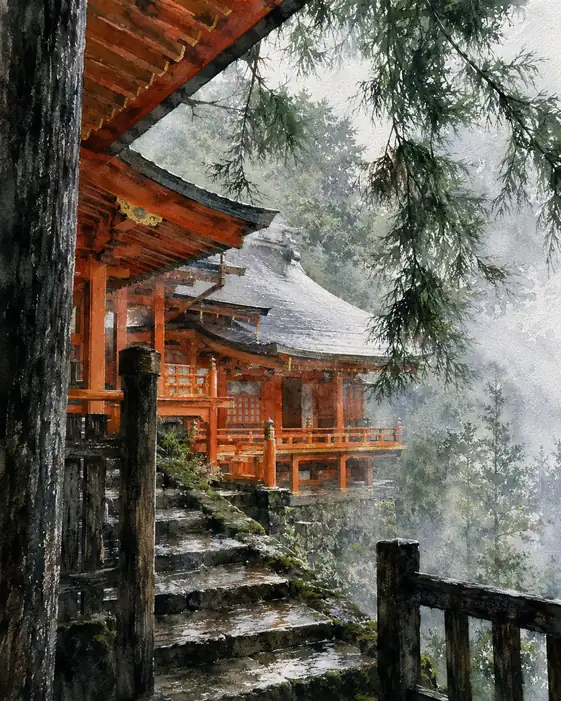 Sanctuary Veiled in Misty Rain
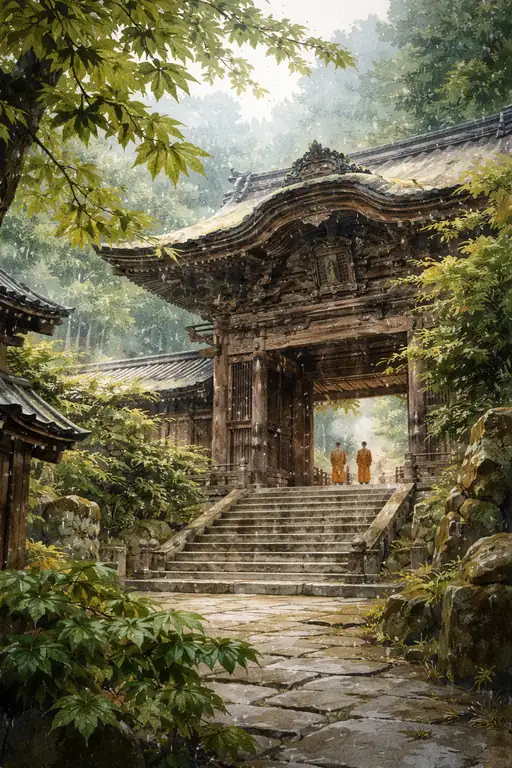 Rain's Serenade in the Sacred Grove
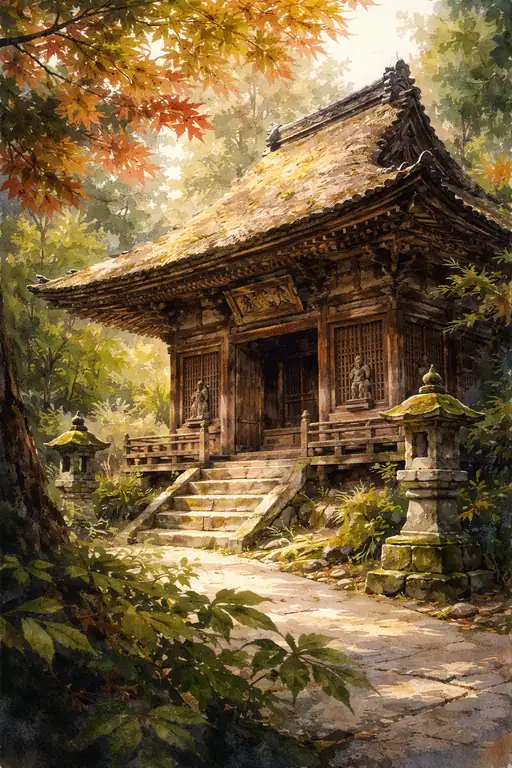 Sunlight Through the Crimson Gate
 Awakening the Sacred Path
 Sanctuary of the Silent Forest
 Autumn twilight, the Pagoda’s Silent Prayer
 Whispers of Autumn: The Mossy Gate in the Mist
 Guiding Light in the Mystic Mist