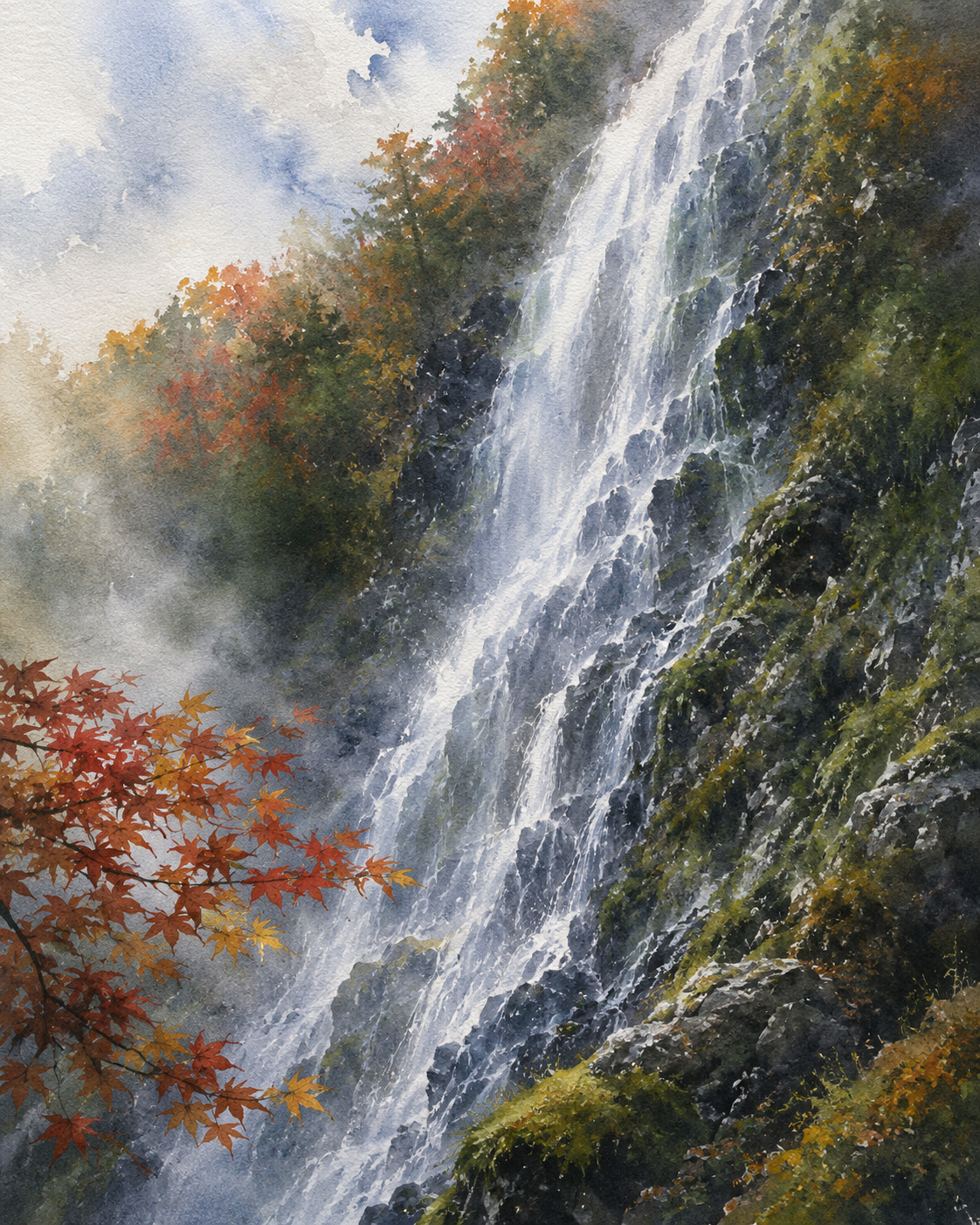
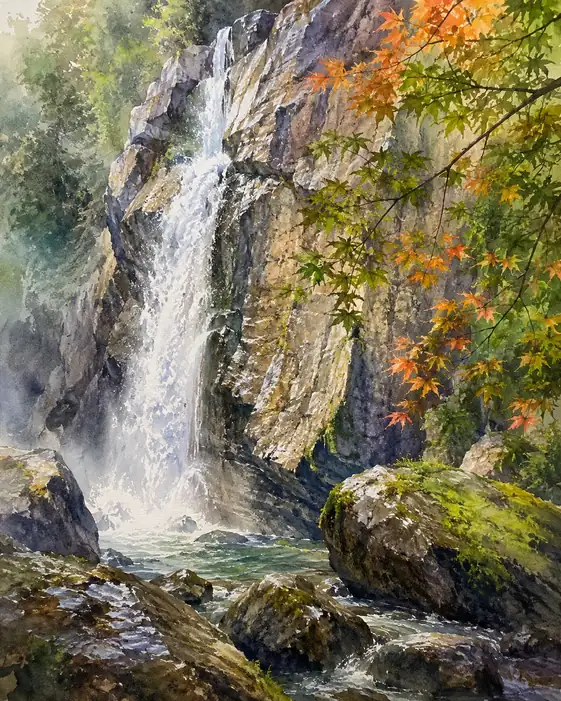
Echoes of the Autumn Cascade
Critique
1. Introduction This painting presents a steep waterfall descending along a rocky slope in autumn. The image is dominated by moving water, drifting mist, and dark stone, yet its force is moderated by a clear compositional order. 2. Description A cascade runs diagonally from the upper right toward the lower left, breaking into several white streams as it follows the irregular cliff. Mossy rock surfaces surround the water, while mist gathers at the left side of the scene. In the lower foreground, red and orange maple leaves extend into the image as a seasonal accent. 3. Analysis A strong diagonal structure gives the painting its energy. Bright water is set against dark rock, and the soft vapor between them heightens the contrast between weight and lightness. The color range is restrained, relying on gray, green, and white, so the warmer leaves become a precise counterpoint rather than a distraction. Brushwork shifts effectively between diffuse atmosphere and sharper stone edges. 4. Interpretation and Evaluation The work does not present nature as mere spectacle. Instead, it studies how motion can be made legible through structure, tonal control, and selective detail. The depiction of water is persuasive, the composition remains stable despite the dramatic subject, and the autumn foliage adds originality through timing and emphasis rather than through excess. 5. Conclusion At first glance the painting reads as a forceful view of falling water, but closer attention reveals a disciplined arrangement of texture, color, and spatial rhythm. It is most convincing as a balanced meditation on natural power and seasonal change.
Same Subcategory
 Breath of Light Amidst the Ancient Stone
 Echoes of the Fall: A Golden Cascade at Twilight
Similar Artworks
 Cascade of Autumn: The Emerald Pool
 Autumn Whispers Through the Mist
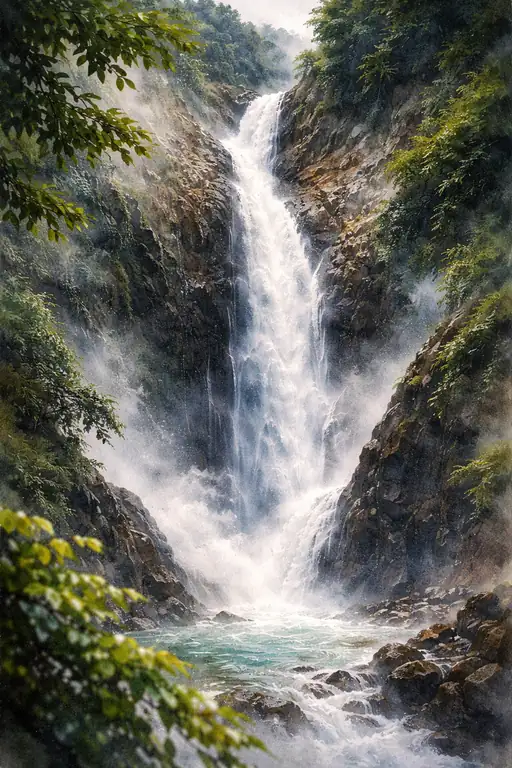 Cascading Veil: The Forest's Pulse
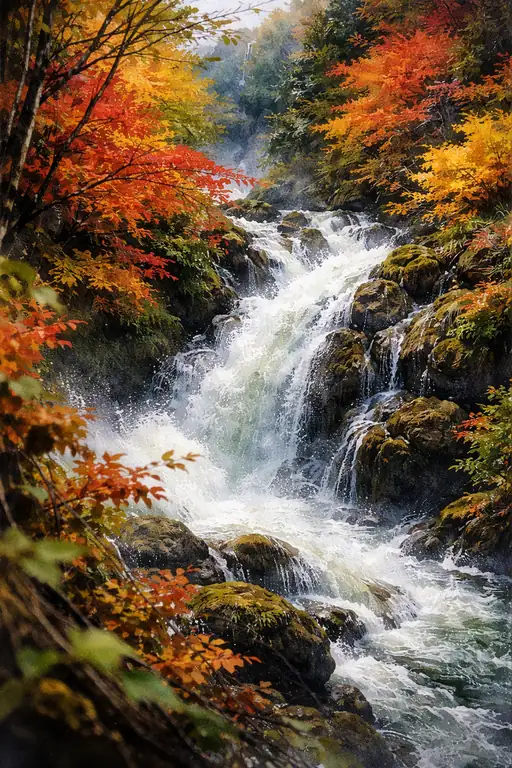 The Crimson Canopy and the Crashing White
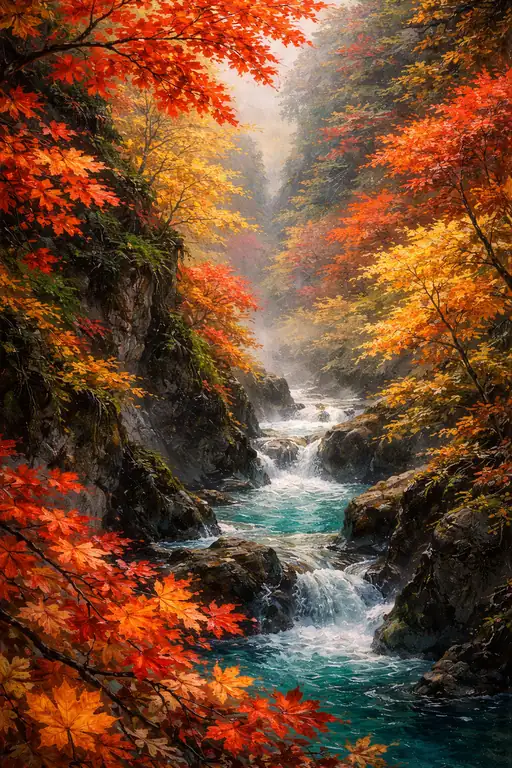 Burning Valley: The Current of Timelessness
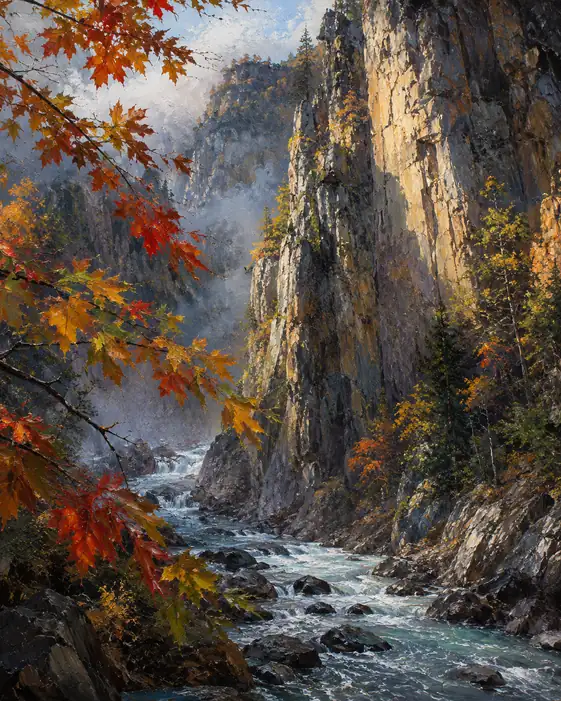 Autumn Whispers in the Sunlit Gorge
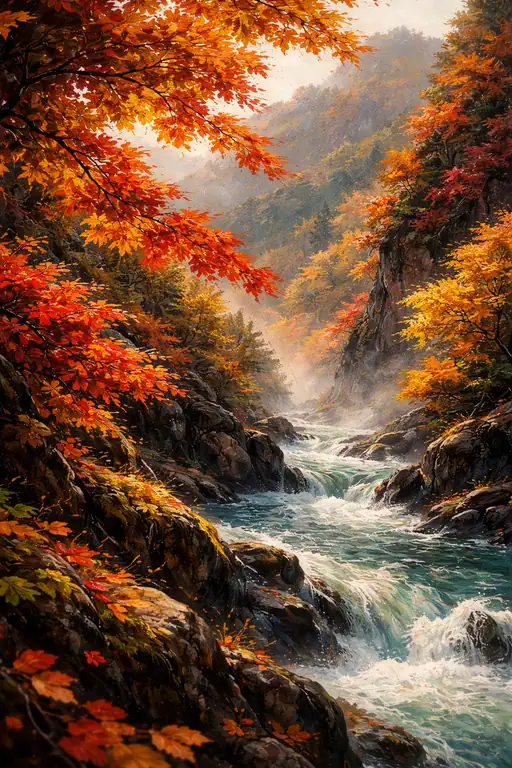 Autumn's Fleeting Power
 The Dragon's Breath and My Autumn Song
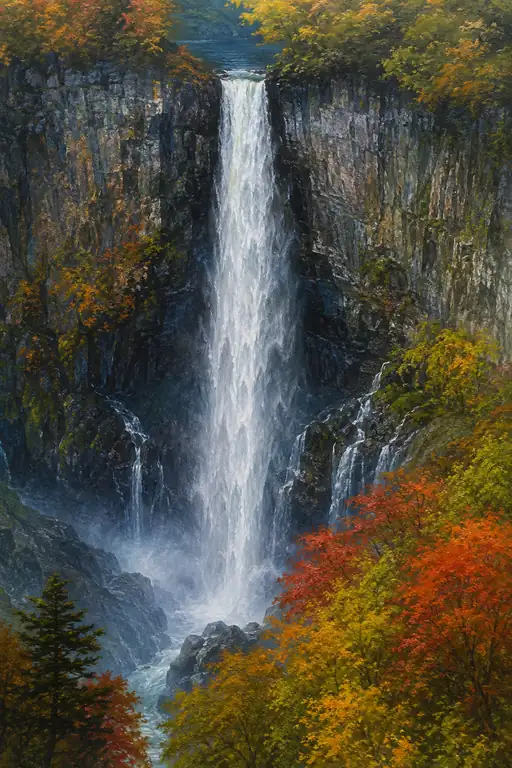 Symphony of Stone and Torrent
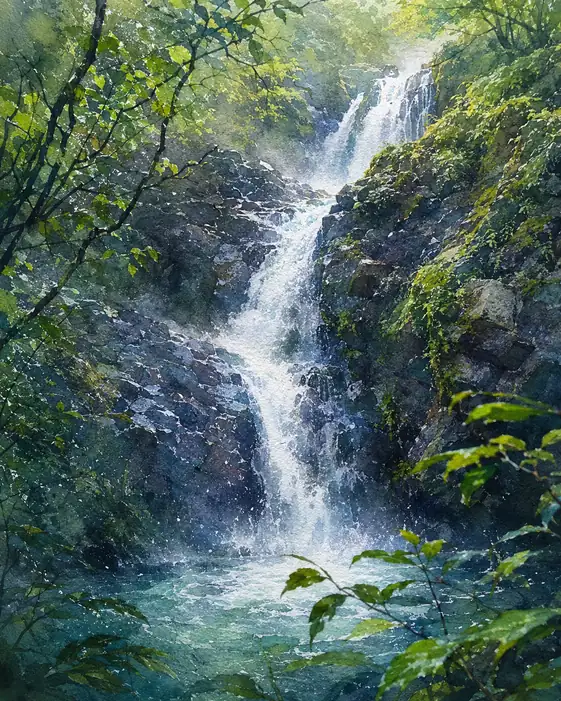 Melody of the Hidden Valley