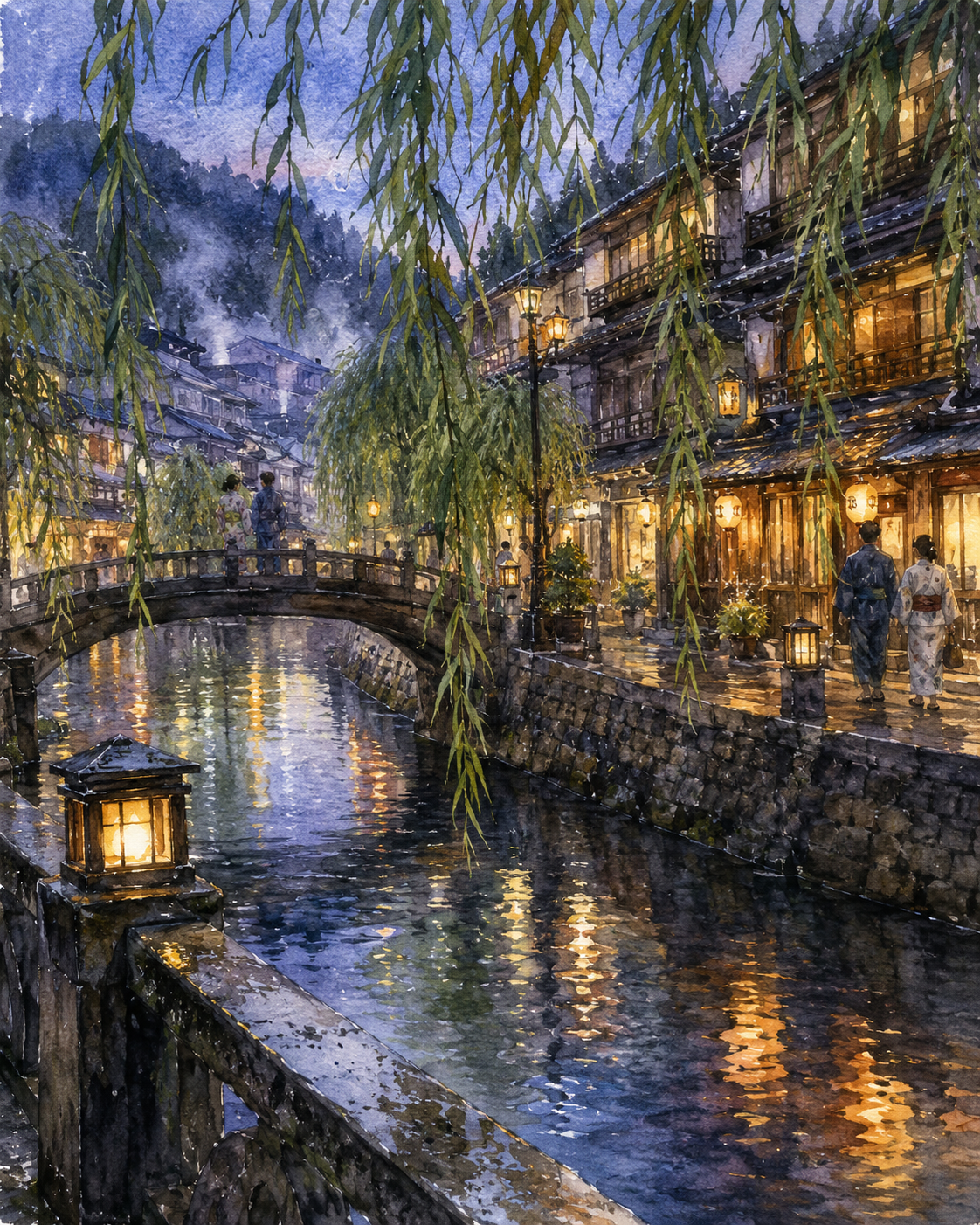
Whispers of the Rain-Washed Evening
Critique
1. Introduction This painting presents a canal-side town at dusk after rain, where willow branches, wooden facades, and lantern light define the scene. The subject is familiar, yet it is organized with enough care to turn a picturesque street into a sustained study of atmosphere. 2. Description An arched bridge crosses the canal near the middle ground, while figures in traditional dress walk along the right-hand street and pause on the bridge. Warm lamps glow from inns and lanterns, and their reflections ripple across the dark water. Long willow leaves descend from above and partially veil the view. 3. Analysis The composition relies on layered depth. The foreground railing and lantern establish a close vantage point, the bridge gathers attention at the center, and the buildings guide the eye into the distance. Cool violets and blue grays dominate the sky, water, and shadow, while amber light creates a measured contrast. The broken watercolor texture also suits wet stone, mist, and reflective surfaces. 4. Interpretation and Evaluation The work suggests a meeting of movement and stillness. Human presence animates the setting, but the town is remembered less as a crowded site than as a place shaped by evening moisture and light. Its strongest qualities are the control of reflections, the persuasive perspective, and the balanced use of decorative elements such as willow branches without losing structural clarity. 5. Conclusion At first glance the scene appears simply charming, but closer attention reveals a careful orchestration of space, color, and weather. The painting ultimately leaves an impression of quiet continuity between architecture, water, and passing life.
Same Subcategory
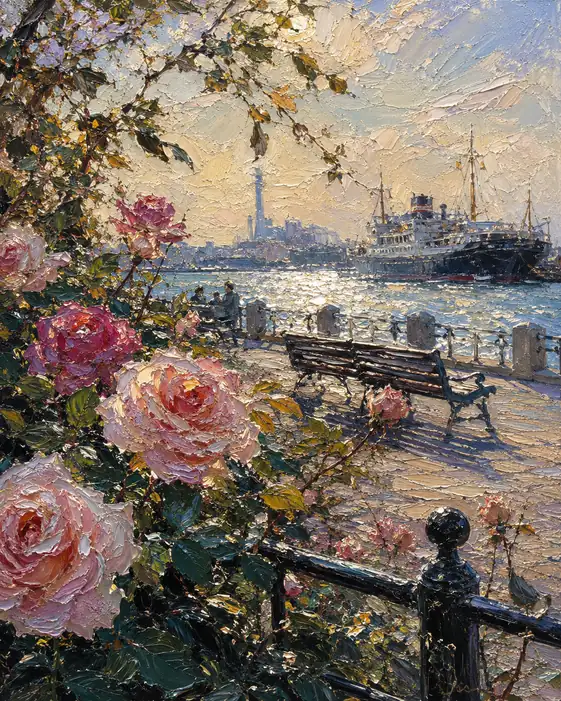 Roses Whispering to the Sea
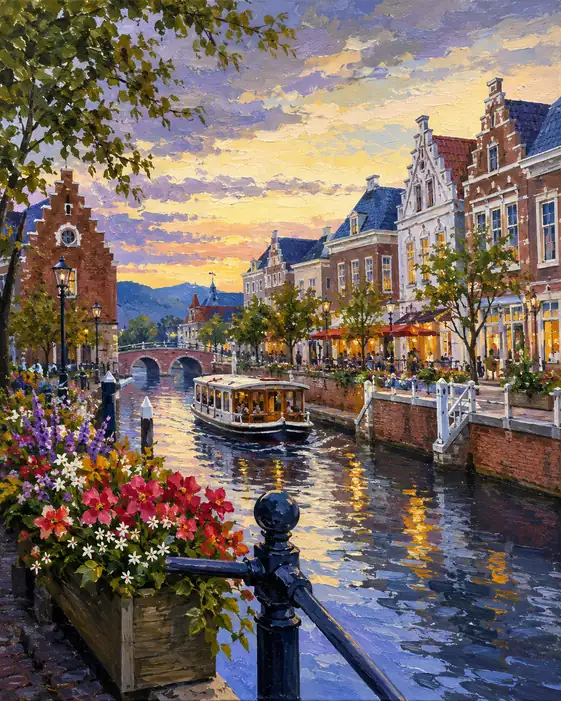 Twilight Glow along the Amsterdam Canal
Similar Artworks
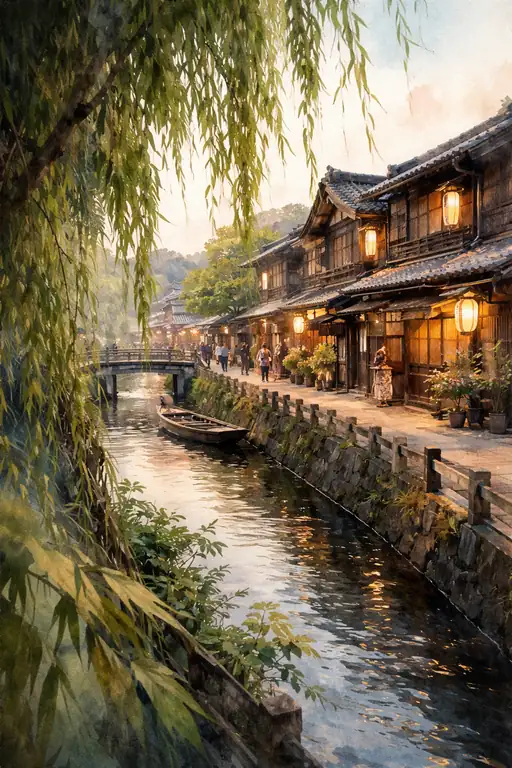 Dusk at the Old Waterway
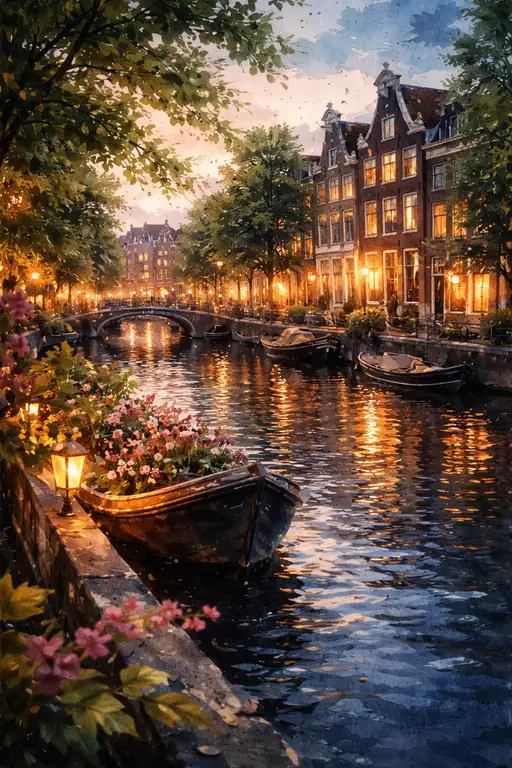 Embrace of the Evening
 Retro Ripples on the Taisho Canal
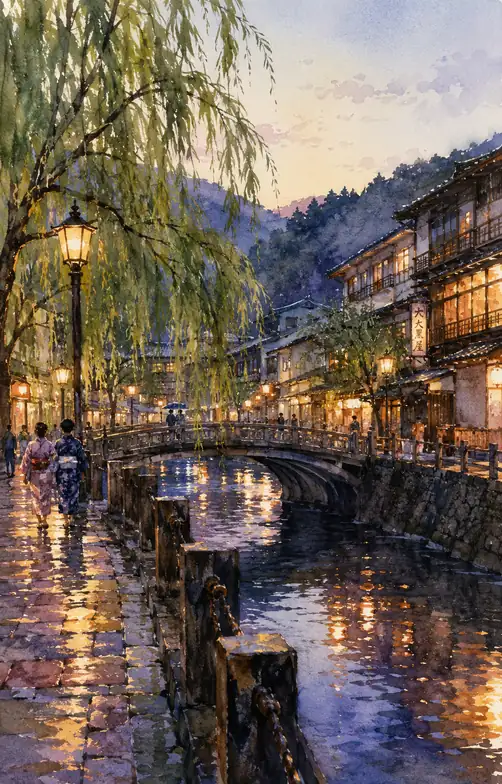 Two Yukata Follow the Lantern River
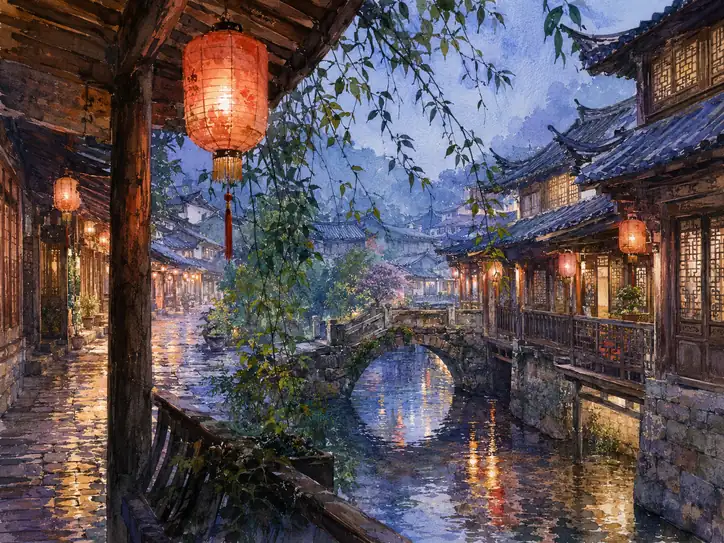 Whispers of the Scarlet Lantern
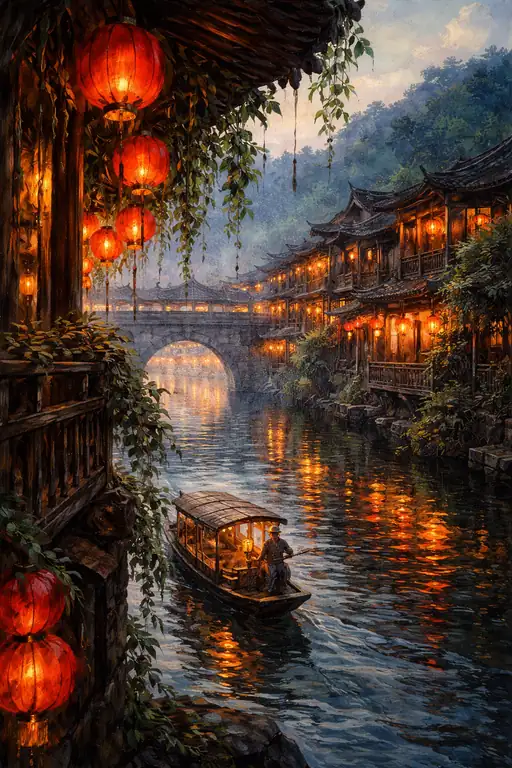 Luminous Echoes of the Canal
 Rowing Through the Corridor of Memory
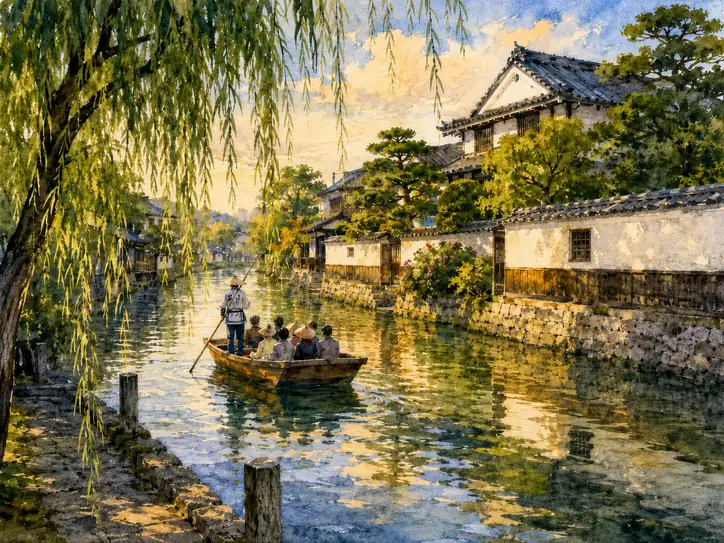 Golden Ripples of Yesterday
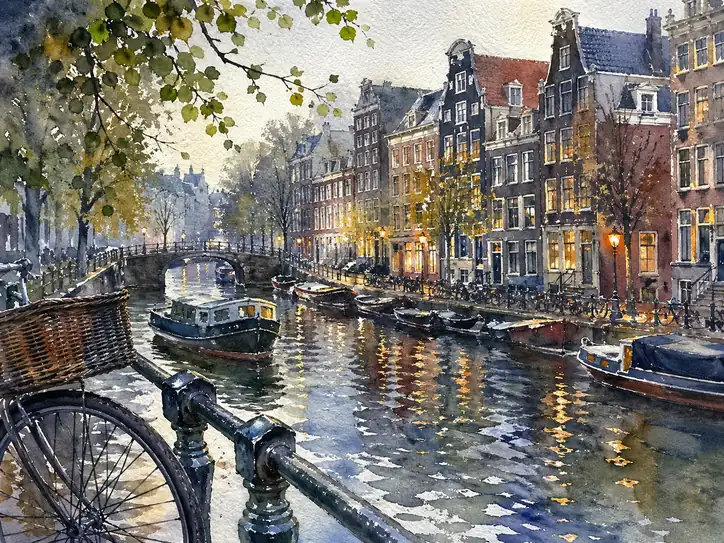 Twilight Echoes on the Canal
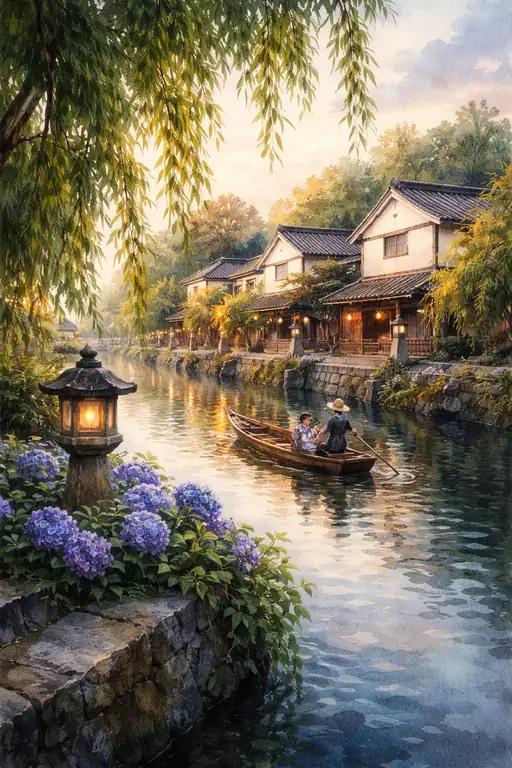 Twilight Drifting Along the Purple Bank