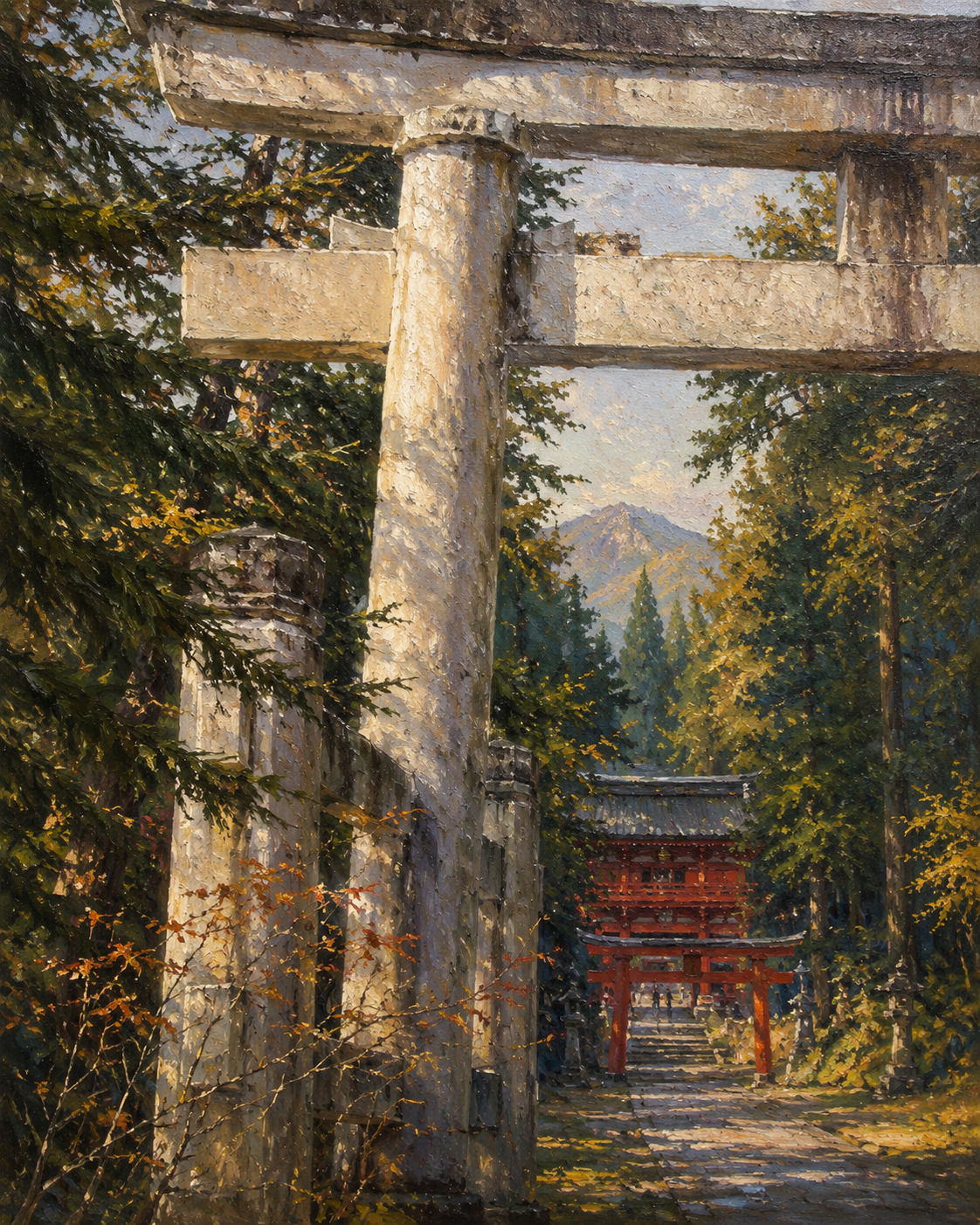
Passage Through the Sacred Shadows
Critique
1. Introduction The work appears to be a landscape painting with architectural elements, probably representing a shrine approach within a wooded setting. Its title, date, and exact medium cannot be confirmed from the image alone, and the specific site also remains unverified. 2. Description A large pale gate dominates the foreground, its vertical columns and horizontal beams framing the view inward. Behind it, a red structure stands along a stone path, surrounded by dense trees touched with warm seasonal color. Through the opening, a distant mountain rises in muted light. 3. Analysis The composition depends on layering and framing. Massive architectural forms in the front establish scale, the receding path pulls the eye inward, and the brighter red accent provides a focal counterweight to the surrounding greens and browns. Thick, broken brushwork gives the stone and foliage a tactile surface. 4. Interpretation and Evaluation The scene is effective because it combines monumentality with intimacy. Perspective is handled with confidence, the color contrast between pale stone, dark trees, and red architecture is vivid without becoming harsh, and the painterly technique lends weight to each material. The image is not radically unconventional, yet it shows strong descriptive power and compositional intelligence. 5. Conclusion What first reads as a simple architectural view becomes a measured meditation on passage, distance, and enclosure. The painting leaves a lasting impression through its control of space, light, and structural rhythm.
Same Subcategory
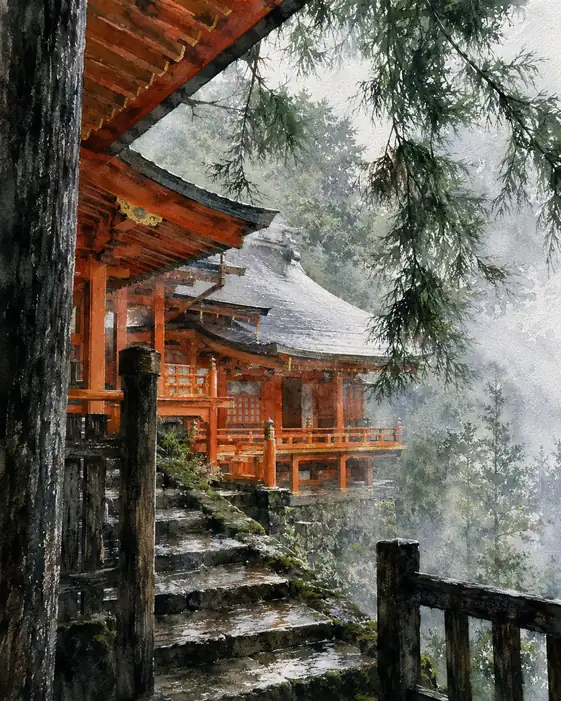 Sanctuary Veiled in Misty Rain
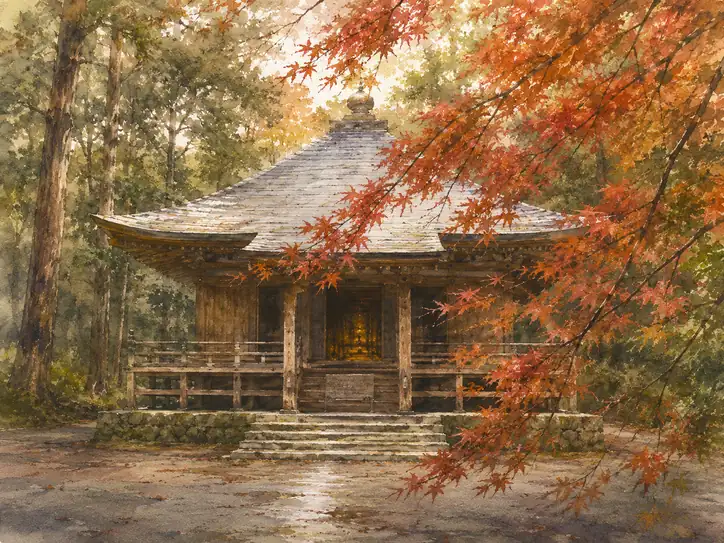 Golden Glow in the Maple Shadows
Similar Artworks
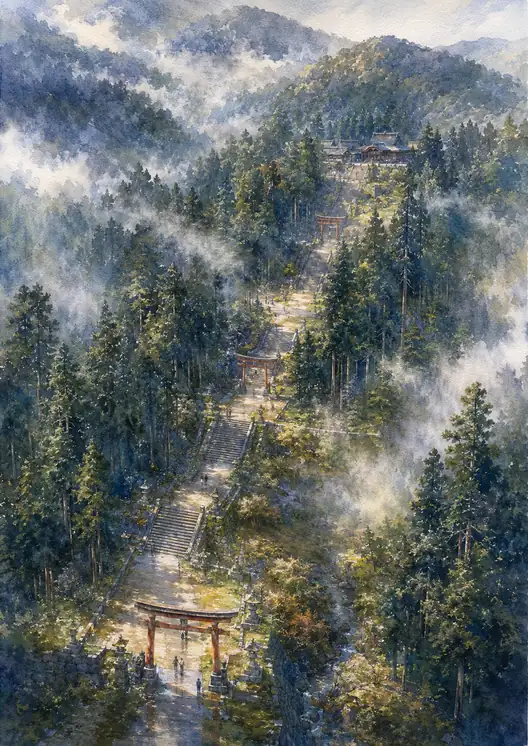 Silent Steps through the Sacred Forest
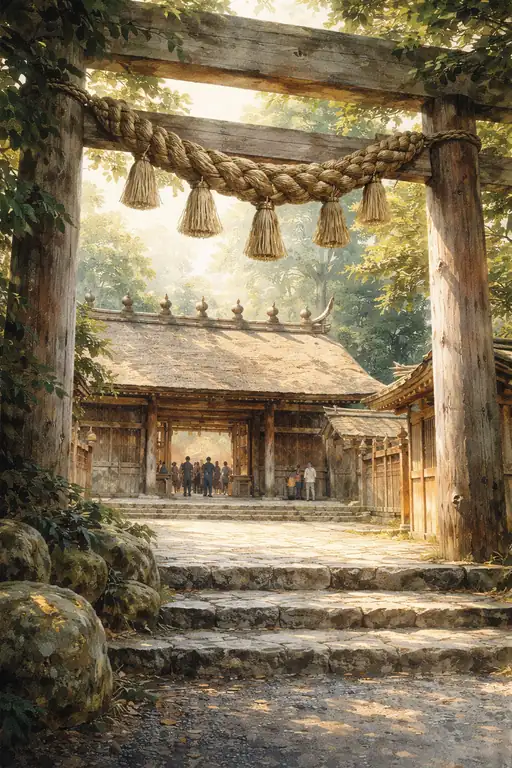 Awakening the Sacred Path
 Sanctuary in the Shadows
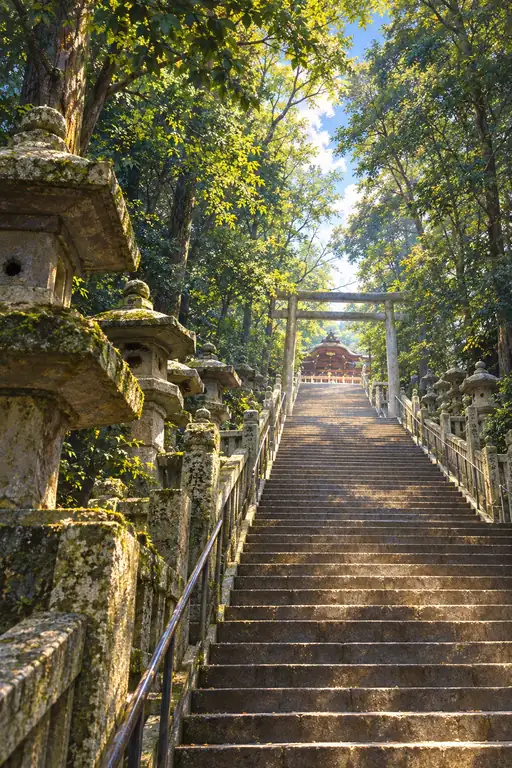 Whispering Lanterns of the Cedar Stair
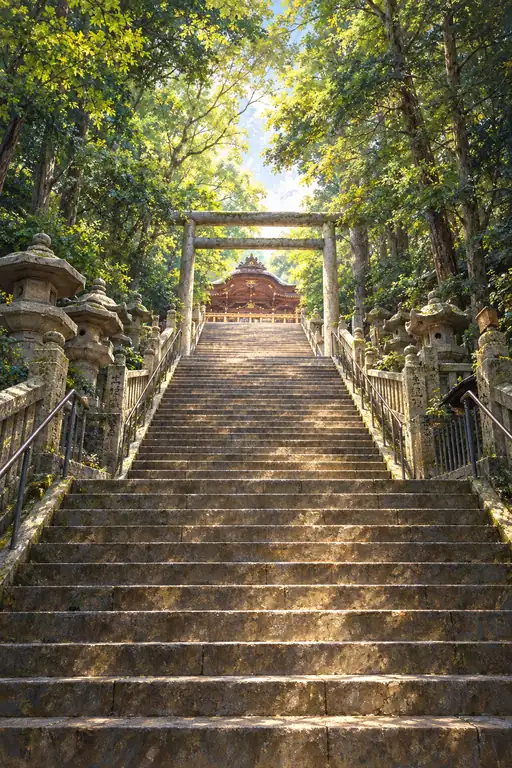 Stairway to the Mountain Shrine
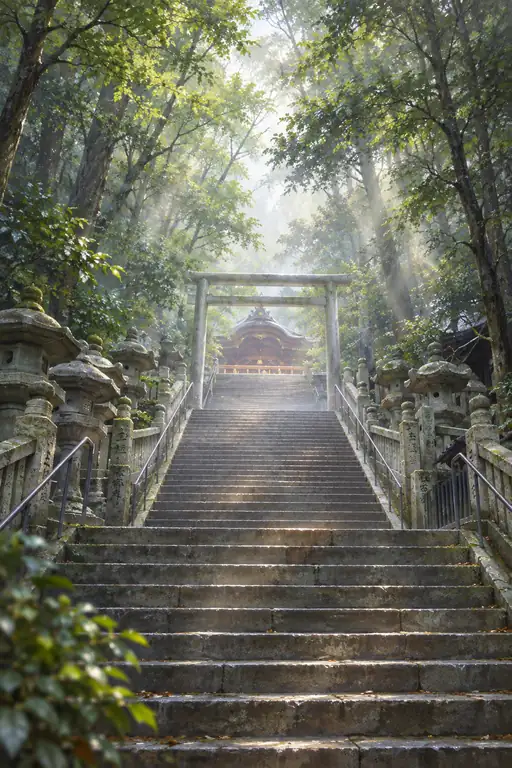 Beams of Light upon the Ancient Stair
 Dawn Piercing the Sacred Canopy
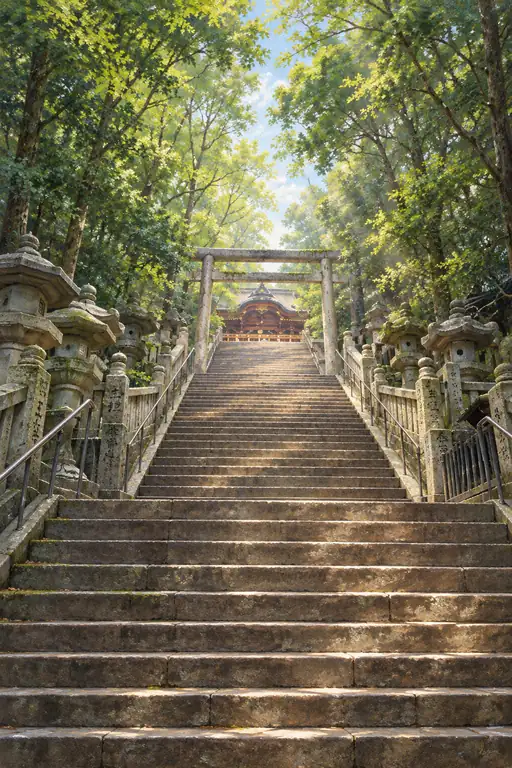 Gateway of Sunlit Devotion
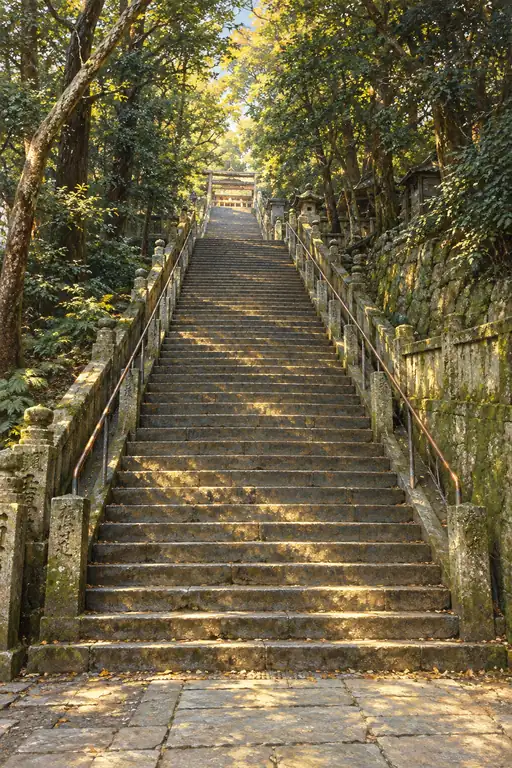 Ascent Through Ancient Sunbeams
 Path to the Sunlit Torii