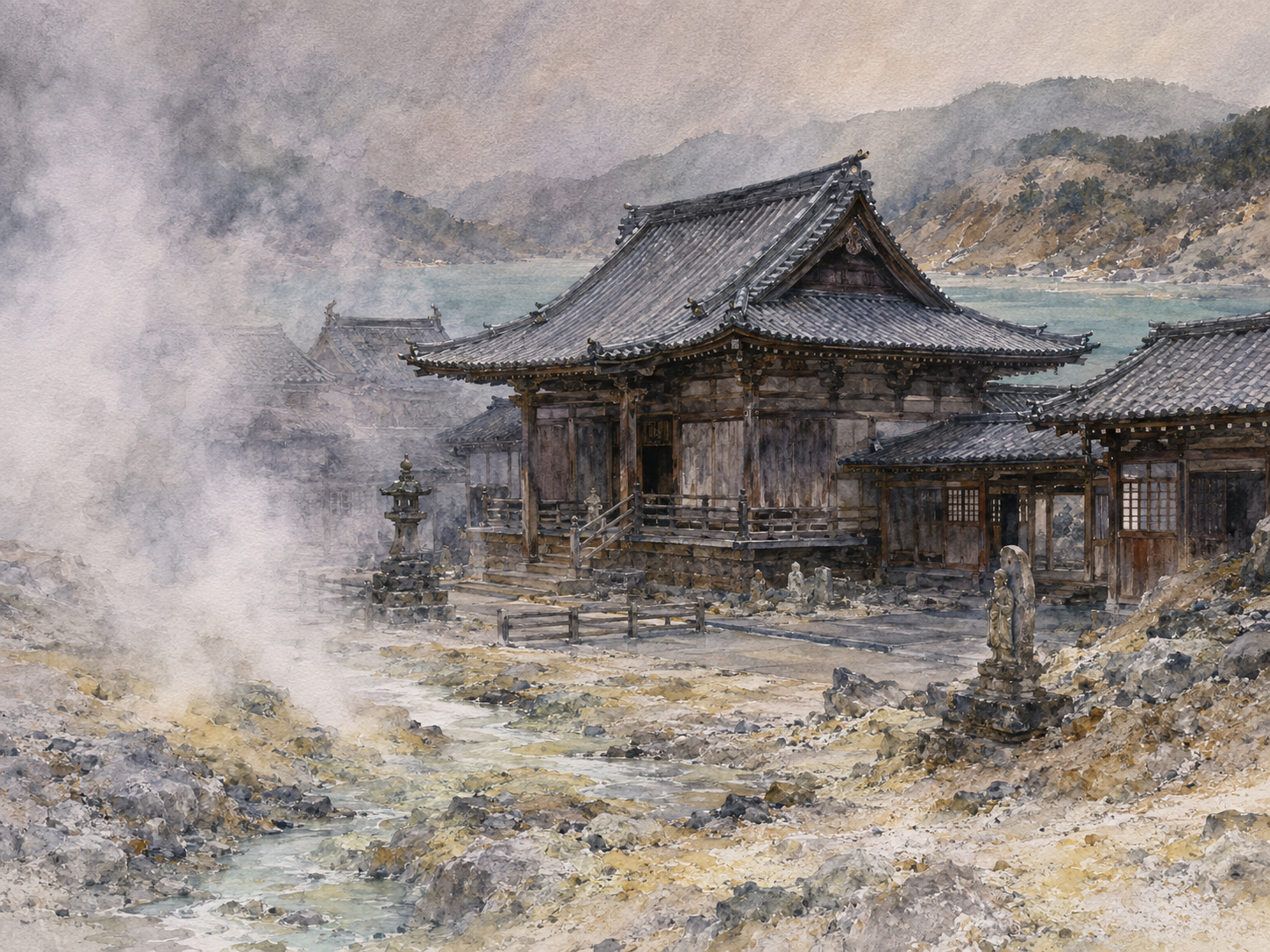
Sanctuary Amidst the Vapors
Critique
1. Introduction This work presents a temple precinct set within a geothermal landscape, where wooden buildings, stony ground, and drifting steam share the same shallow basin. The image combines architectural order with unstable natural conditions, creating a view that is calm in structure but unsettled in atmosphere. 2. Description A large tiled hall occupies the center, flanked by lower structures on both sides. In the left foreground, a heavy column of vapor rises from a rocky channel of pale water and partially veils smaller buildings behind it. Stone lanterns, low fences, statues, and worn paths articulate the middle ground, while a lake and subdued mountains extend across the background under a light gray sky. 3. Analysis The composition is organized around the central roof mass, which provides stability against the diffuse movement of steam. Horizontal eaves and steps are contrasted with the vertical lift of vapor and the irregular scatter of stones in the foreground. The palette remains restrained, relying on grays, browns, faded greens, and off-white tones, so texture becomes a primary expressive element. Watercolor-like handling softens transitions and allows distance, moisture, and weathering to merge into one visual field. 4. Interpretation and Evaluation The image can be understood as a study of coexistence between ritual space and an active natural environment. Architecture does not dominate the site; instead, it appears adapted to surrounding heat, mineral deposits, and mist. The work is convincing in its depiction of material differences between timber, tile, stone, and vapor, and its composition is carefully balanced despite the asymmetry of the setting. Its originality lies in presenting spiritual architecture through atmosphere and erosion rather than ceremony. 5. Conclusion At first, the central building seems to provide the sole focus of attention. Closer viewing reveals that steam, streambed, and surrounding terrain are equally important to the meaning of the scene. The work ultimately shifts from a simple architectural view to a broader reflection on place, endurance, and environmental condition.
Same Subcategory
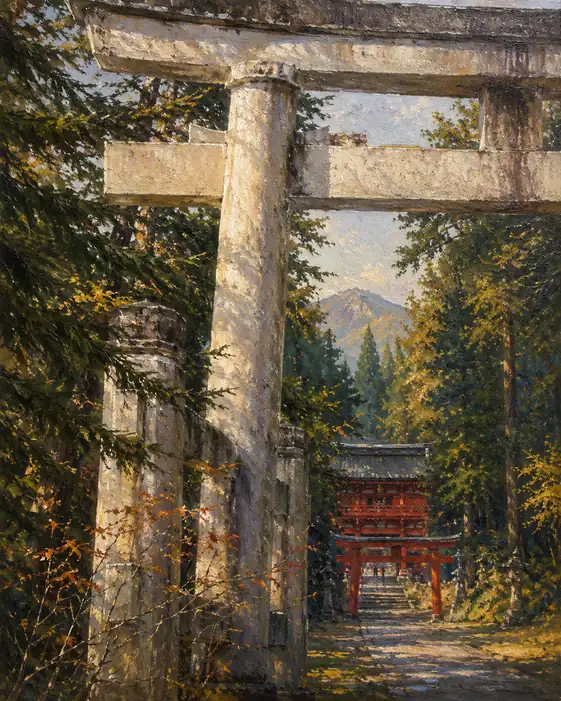 Passage Through the Sacred Shadows
Similar Artworks
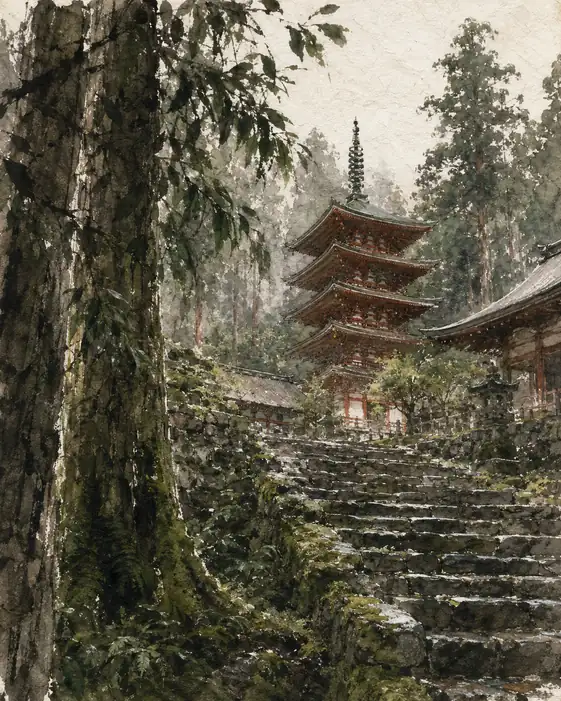 Echoes of Eternity in the Mossy Mist
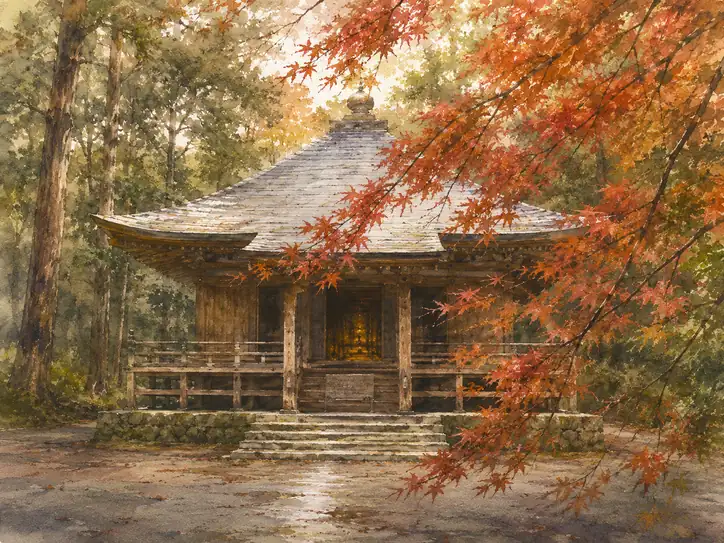 Golden Glow in the Maple Shadows
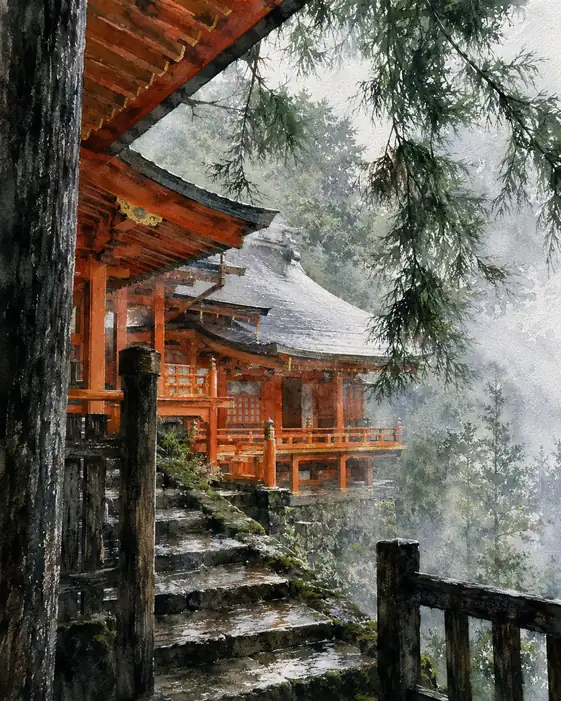 Sanctuary Veiled in Misty Rain
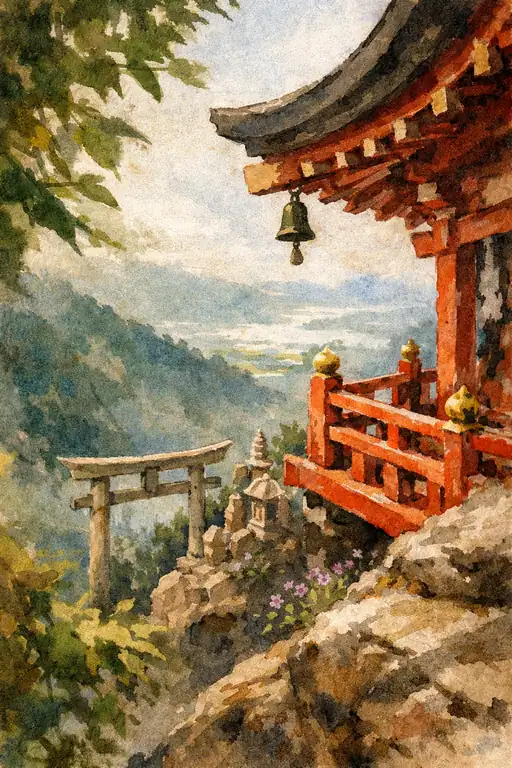 Echoes from the Misty Heights
 Sanctuary Above the Clouds
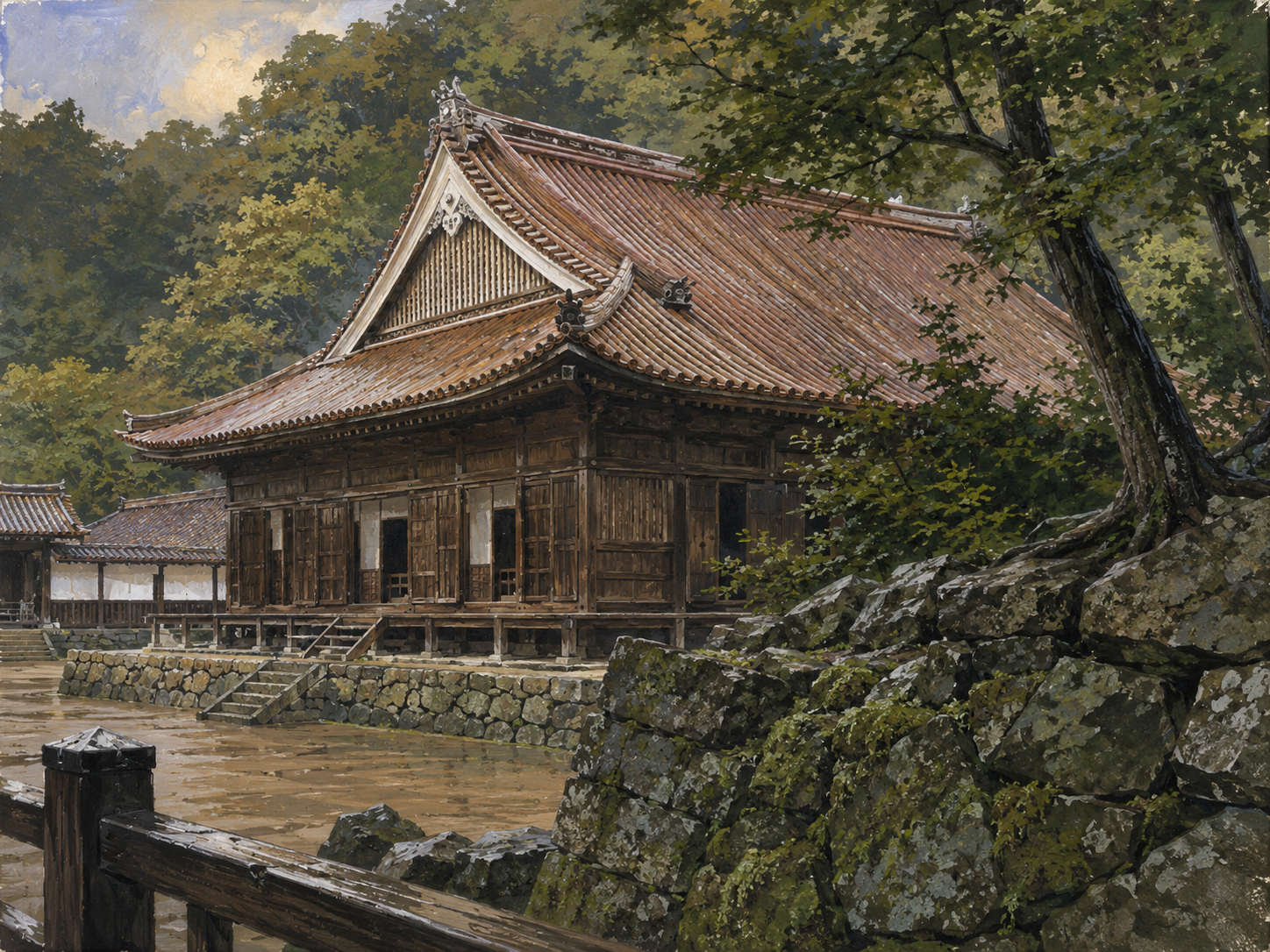 Eternity in the Moss-Covered Hall
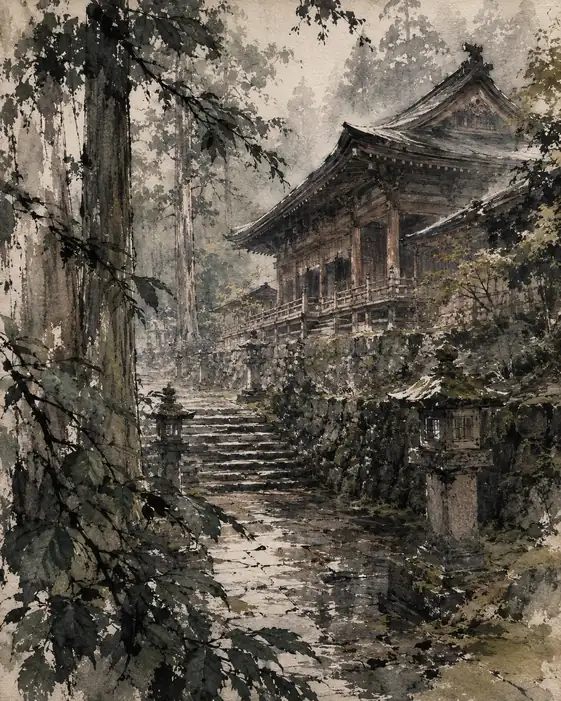 The Sanctuary of Eternal Stillness
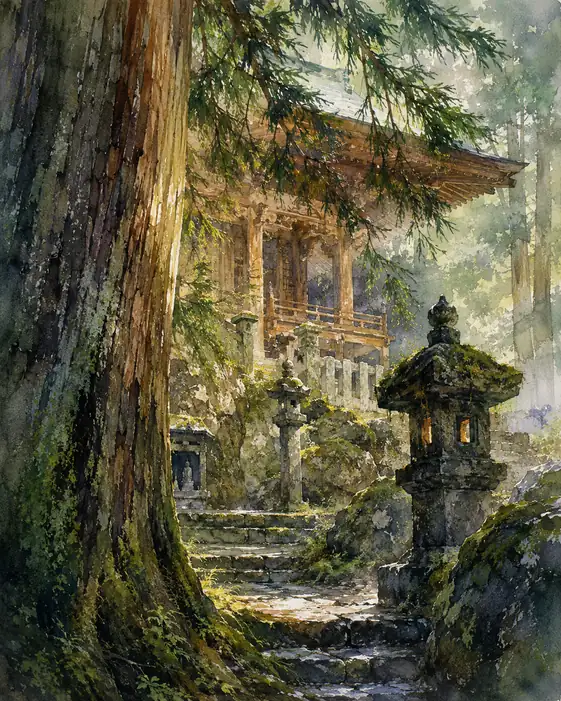 Sanctuary of the Ancient Cedars
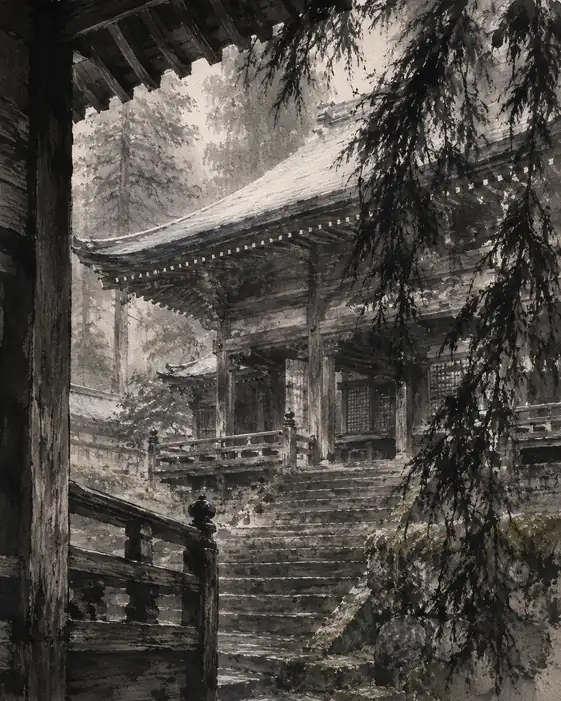 The Sacred Silence of the Mist
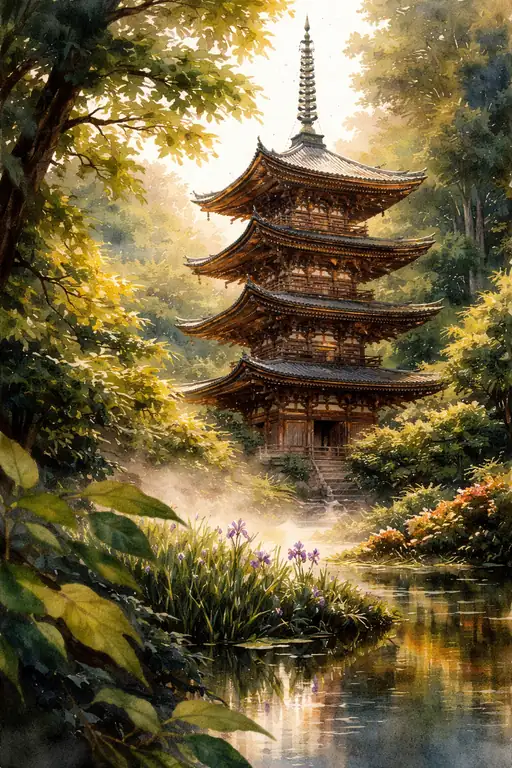 Sacred Resonance in the Morning Mist