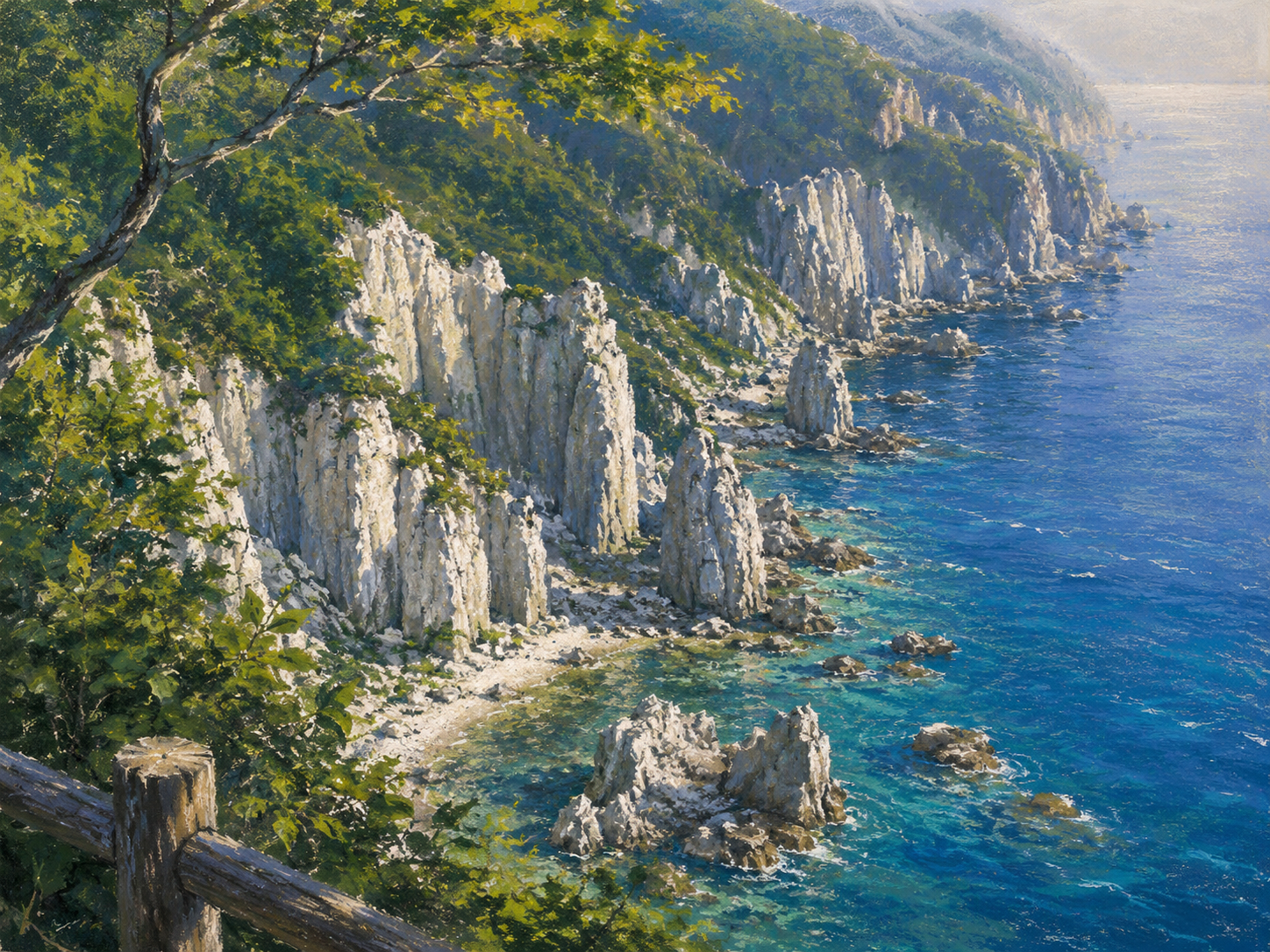
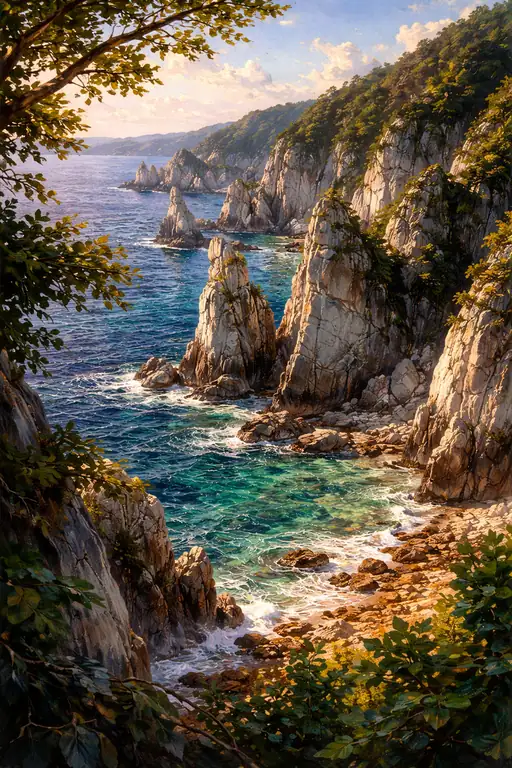
Breath of the Sapphire Horizon
Critique
1. Introduction This work depicts a bright coastal escarpment seen from an elevated path, joining dense foliage, white cliffs, and clear water in a broad descending view. The scene emphasizes openness and clarity, yet it is anchored by near vegetation that keeps the landscape intimate and physically approachable. 2. Description A leaning tree branch and leafy shrubs frame the upper and left sides of the composition, while a wooden rail appears in the lower foreground. Below, pale rock faces drop sharply toward a narrow shore and scattered sea stacks. The water shifts from transparent green near the coast to deeper blue farther out, and the headland recedes in a long curve toward a hazy distance. 3. Analysis The image is built on a strong diagonal recession from the foreground foliage to the far shoreline. Vertical cliff forms are repeated at varying scales, giving rhythm to the coast and helping the eye move steadily into depth. Light is used selectively: sunlit limestone stands against cooler shadowed greens, while the sea provides a broad, luminous field that stabilizes the busy landforms. Broken brushwork suggests leaves, stone, and ripples without overdefining them. 4. Interpretation and Evaluation The work can be read as an affirmation of coastal abundance shaped by careful observation rather than dramatic exaggeration. Its descriptive strength lies in the clear differentiation of rock, vegetation, and water. Composition, color, and technique support one another effectively, and the image is especially successful in translating a high vantage point into a readable spatial order. Its originality rests in allowing the foreground foliage to act as both frame and active participant in the structure. 5. Conclusion At first, the brilliant blue sea may seem to command the whole image. With sustained viewing, the cliffs and vegetation emerge as equal partners in the composition. The scene resolves into a balanced study of depth, light, and the meeting of land and water.
Same Subcategory
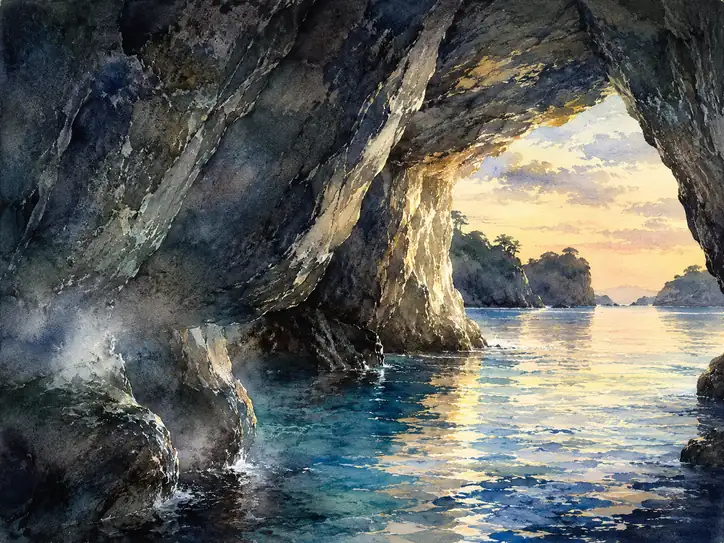 Beyond the Silent Threshold
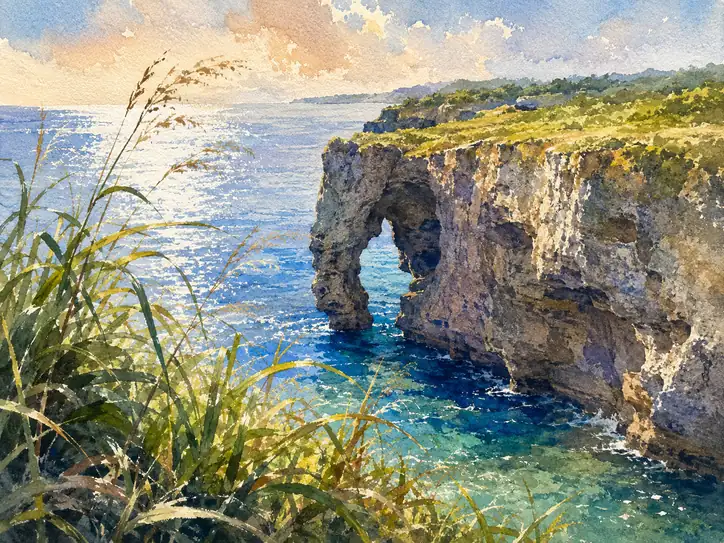 Glance of the Sea through the Stone Arch
Similar Artworks
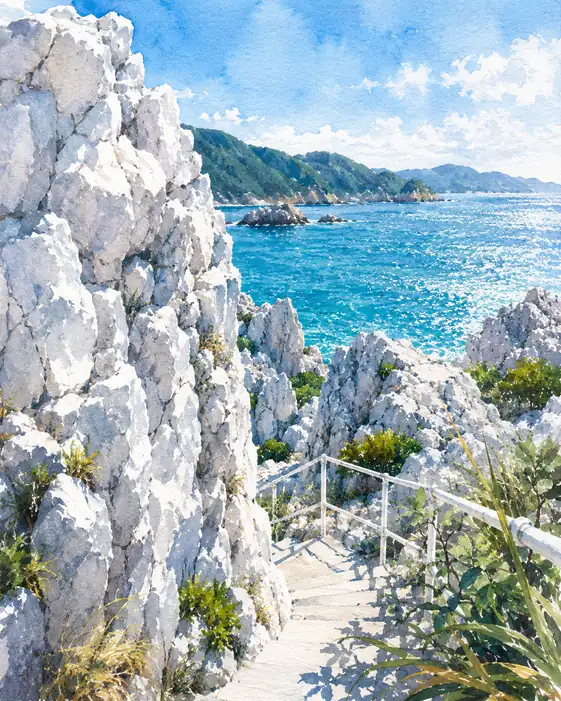 Sunlight on the Limestone Shores
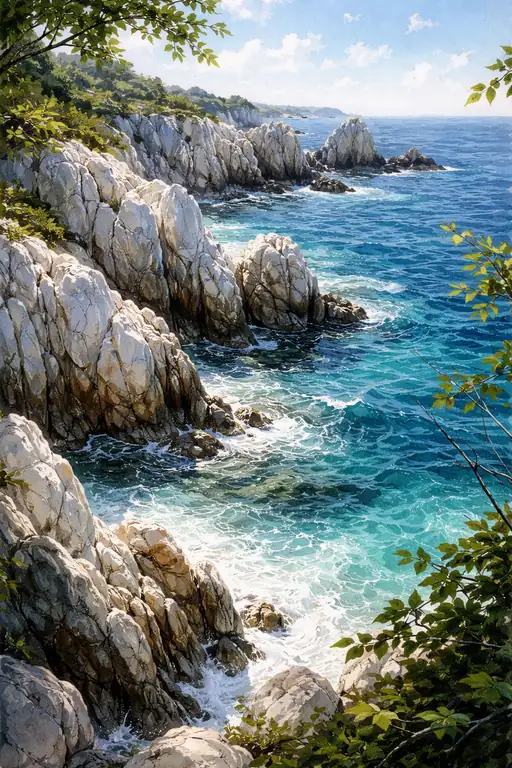 Solitude on the Sunlit Cliffs
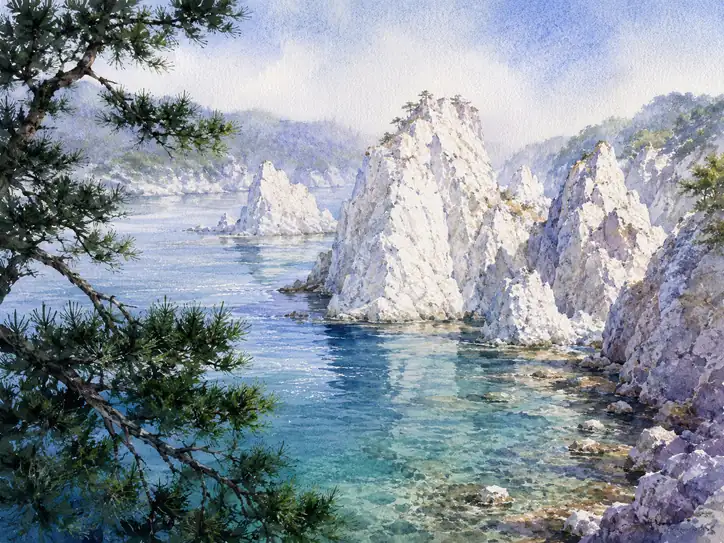 The Shore of White Silence
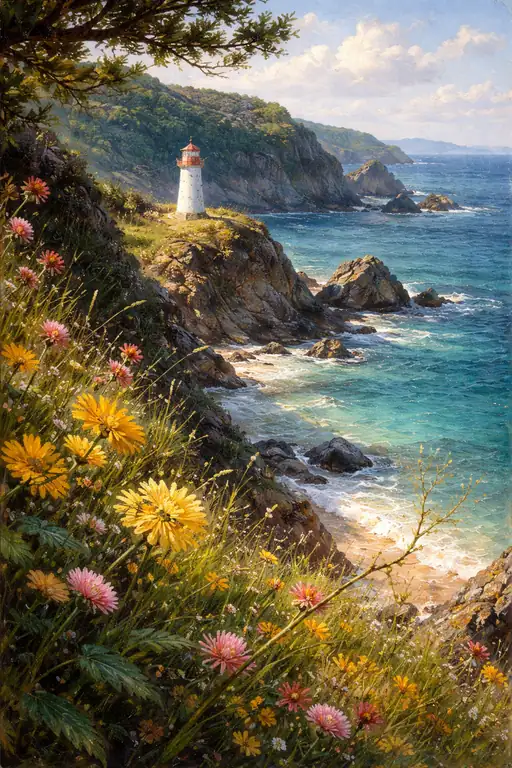 Sentinel Above the Blossoms
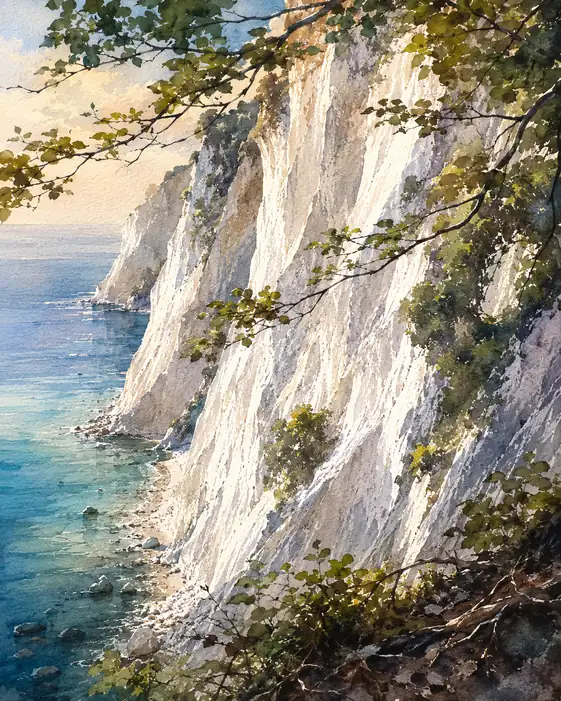 Where the Chalk Cliffs Embrace the Blue
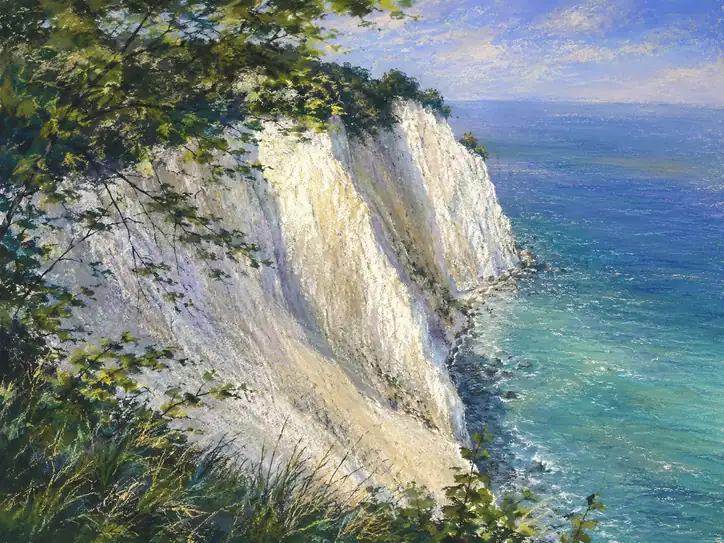 The Silent Giant of the Azure Sea
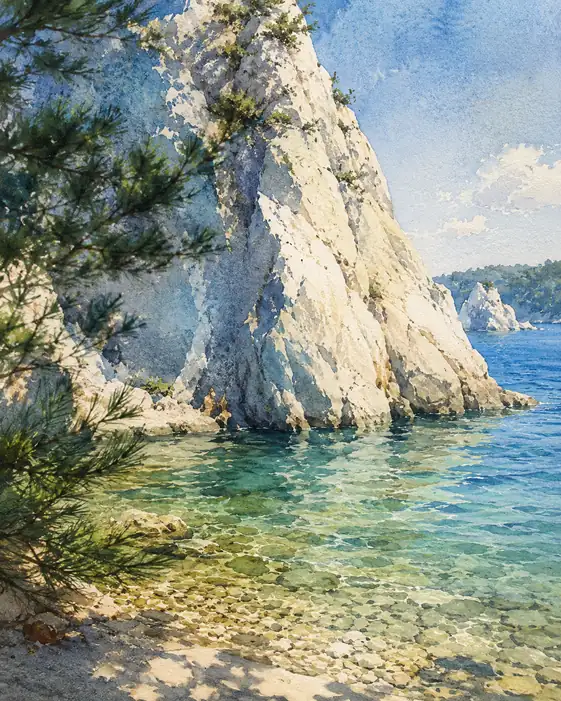 Symphony of the Crystalline Shore
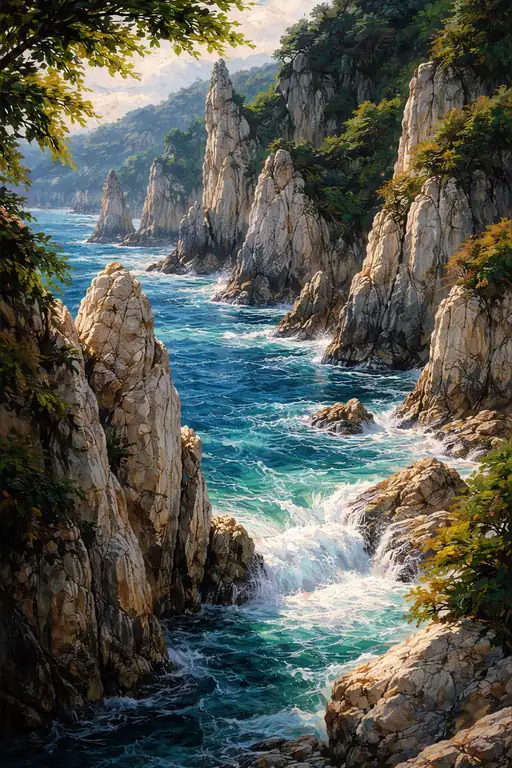 Emerald Roar: The Cliff's Edge
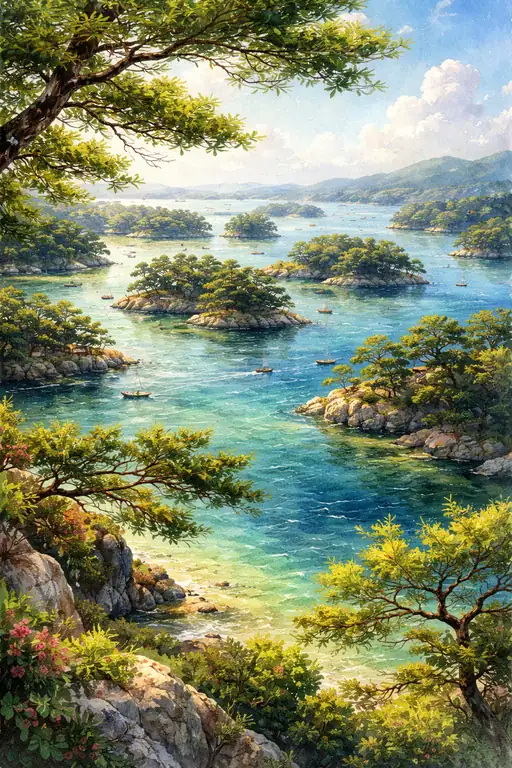 Sails Drifting in the Turquoise Haven
 Echoes from the Turquoise Silence