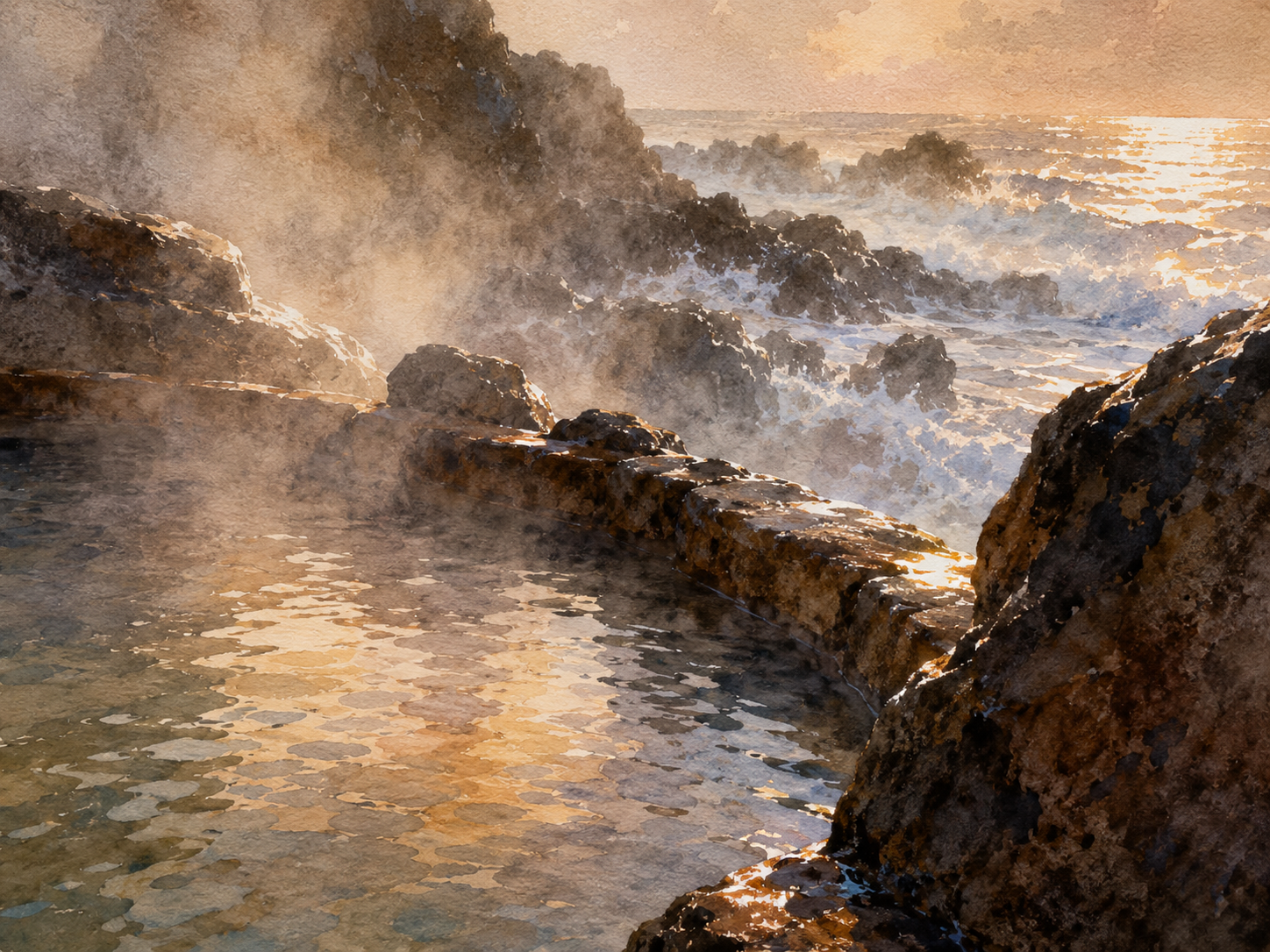
Breath of the Boiling Tide
Critique
1. Introduction This work presents a rocky shoreline at low sun, where a quiet basin in the foreground meets a turbulent open sea beyond. Steam, spray, and reflected light combine to make the coastal setting appear both observed and unstable, balancing a sense of shelter with the force of nature. 2. Description Dark rocks enclose a shallow pool across the lower half of the image, its surface broken by pale gold reflections. Behind it, jagged outcrops receive waves that burst into white foam and drifting mist. The horizon runs high and calm under a warm sky, while the light falls from the right and touches the water, the ledges, and the edges of the spray. 3. Analysis The composition is organized through contrast between stillness and agitation. The horizontal pool forms a temporary resting space, but the diagonal rock ledge and repeated wave shapes drive the eye toward the surf. Browns, grays, ochres, and silver blues are layered with broken washes, allowing texture and moisture to emerge together. The softened vapor also obscures outlines, so depth is created as much by atmosphere as by drawing. 4. Interpretation and Evaluation The image can be understood as a study of a liminal place where sea, stone, heat, and light briefly meet in equilibrium. Its descriptive power lies in the handling of spray, reflective surfaces, and mineral texture. The composition is persuasive because it stages a clear transition from contained water to open impact, while the restrained color structure keeps the scene coherent. Originality arises from treating a harsh coast as a site of fragile calm rather than spectacle alone. 5. Conclusion At first, the breaking surf seems to dominate the scene. Closer viewing shows that the quiet pool is equally important, because it gives measure to the surrounding force. The work finally reads as a carefully ordered meditation on instability, light, and coastal space.
Same Subcategory
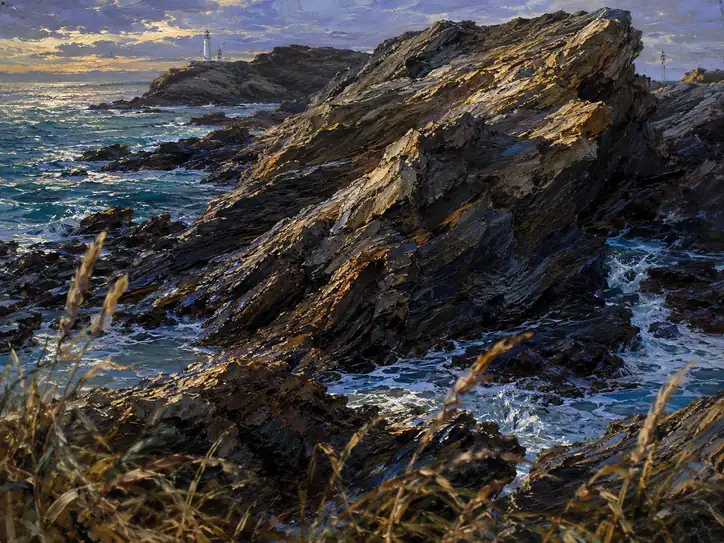 The Golden Bastion Against the Tide
Similar Artworks
 The Shore's Golden Dream
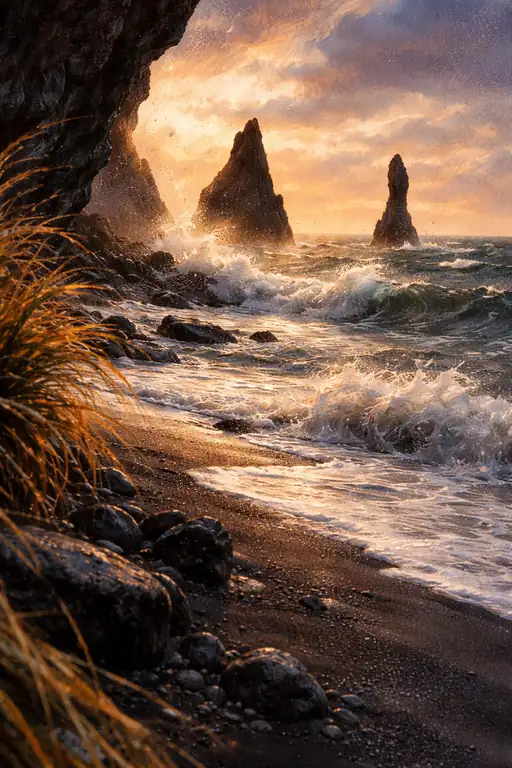 Golden Rays upon the Rugged Shore
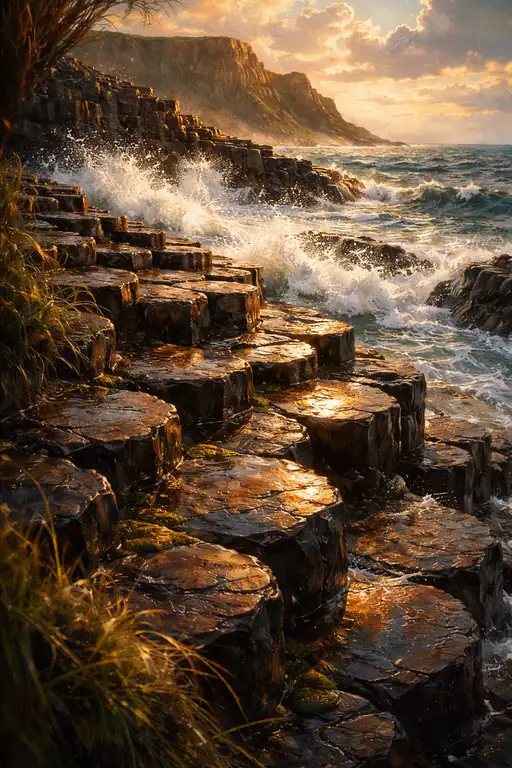 The Geometric Dance of the Tides
 Lighthouse Watching Ocean Spray Under a Dawn Sky
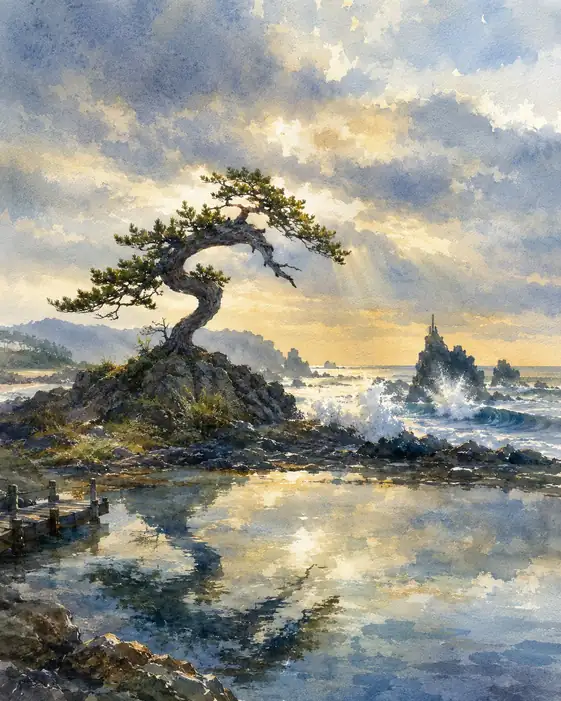 I Learned to Bend from the Sea
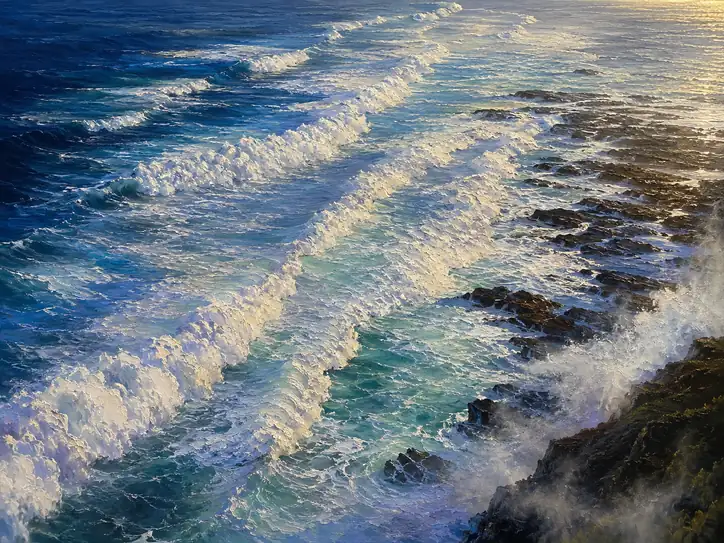 The Rhythmic Surge of Blue
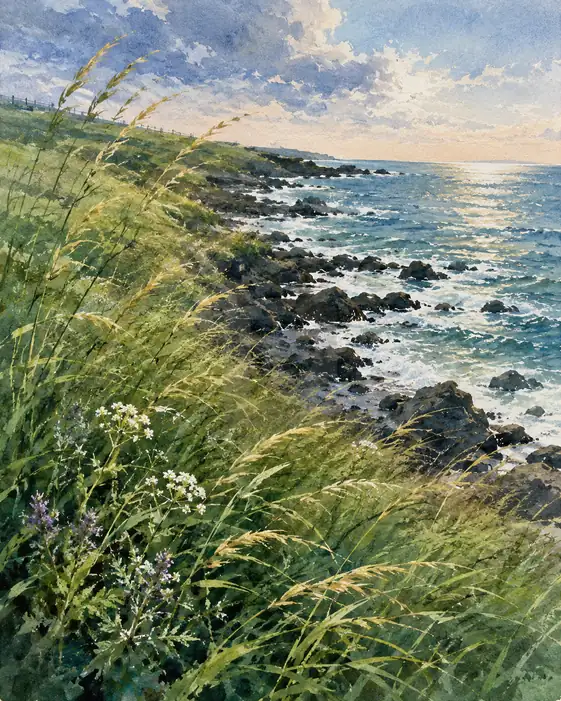 Whispers of the Sunlit Breeze
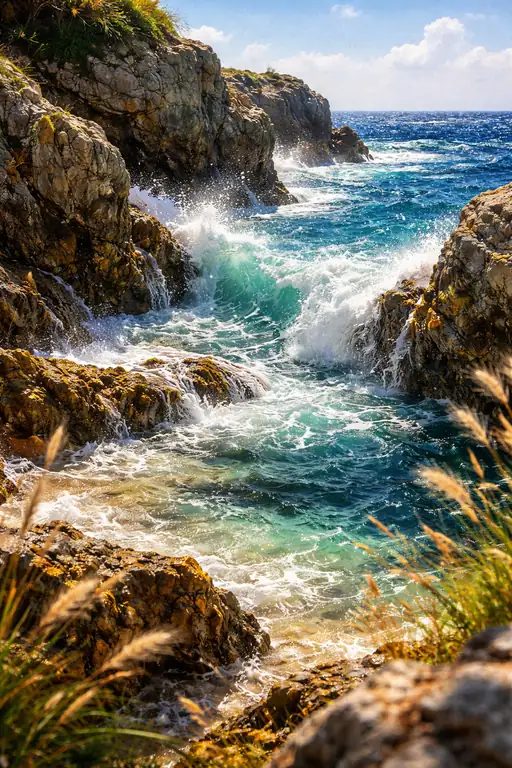 Crashing Waves on Rugged Cliffs
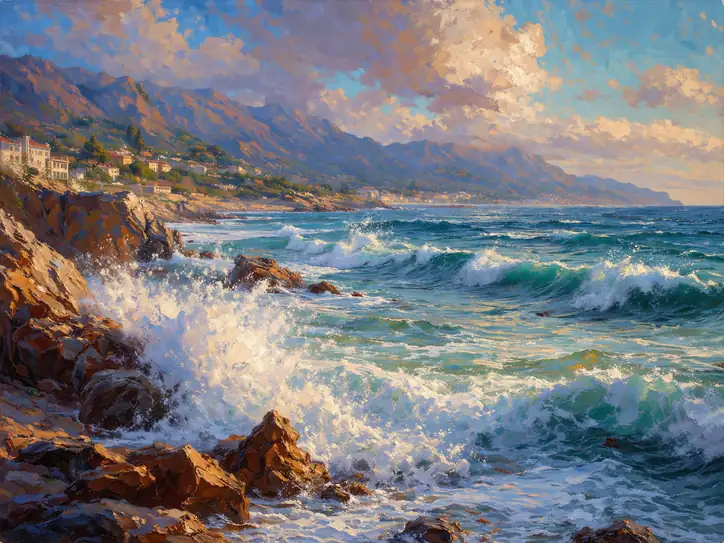 The Majestic Dance of the Golden Shore
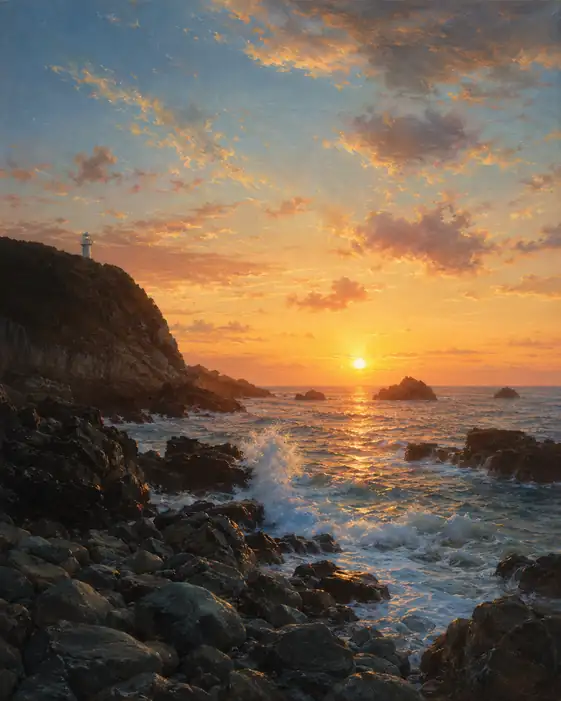 Twilight Glow Embracing the Rocky Coast and Distant Beacon