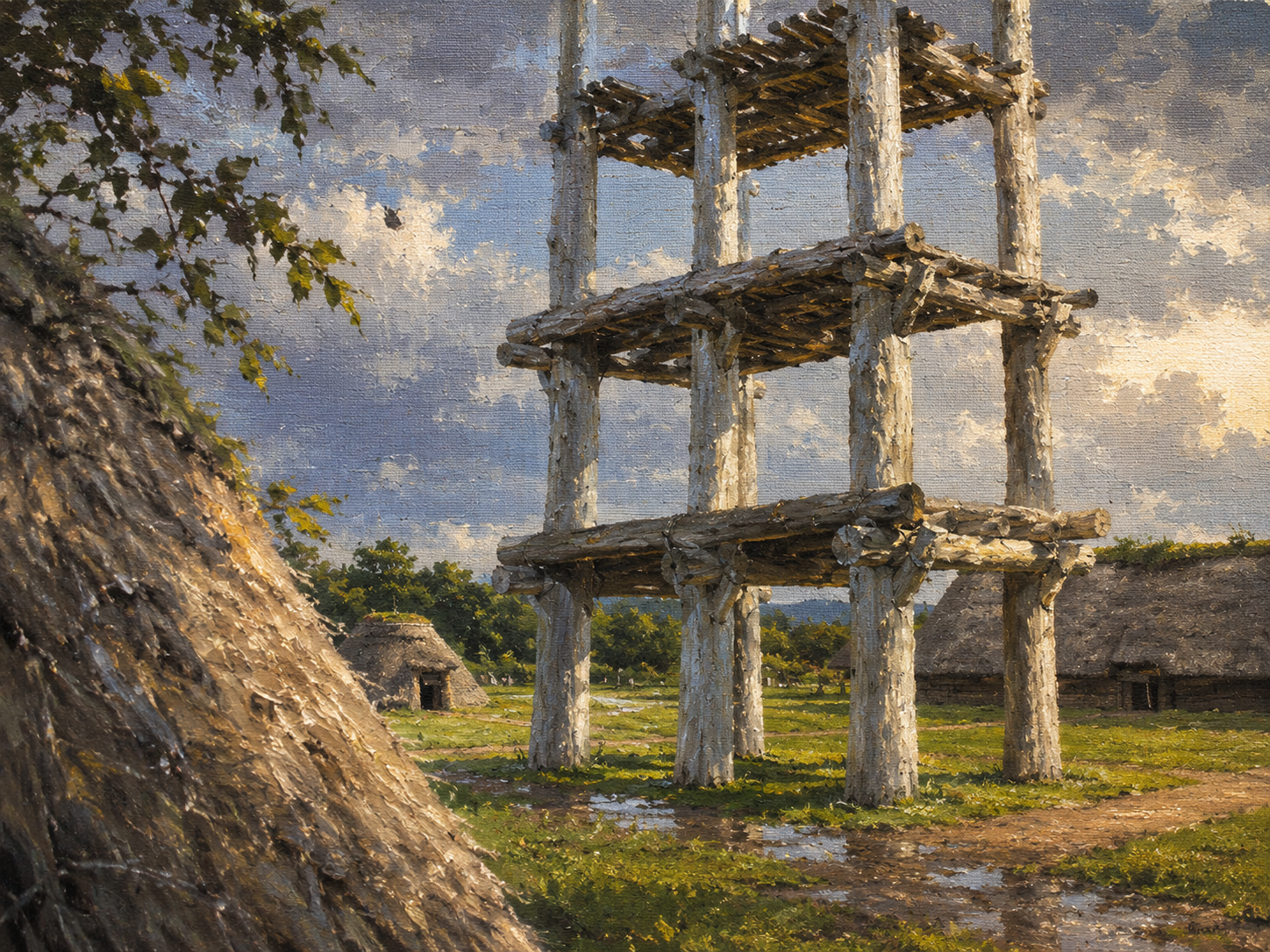
Ancestral Pillars in the Clearing
Critique
1. Introduction This work depicts a rural clearing dominated by a tall timber structure built from heavy logs. Around it stand low thatched buildings, wet ground, and bright sky, giving the scene the character of a settlement view in which construction, weather, and daily use are closely connected. 2. Description At the center rises a three-tiered wooden frame supported by thick vertical posts and crossed beams. A sloping earthen bank fills the left foreground, while leafy branches hang from above. Behind the structure lie small huts, patches of grass, and shallow puddles that catch the light. 3. Analysis The composition is organized through the opposition of the steep bank and the upright geometry of the tower. Repeated posts and platforms create rhythm, and the open spaces between them keep the form visually light. Broken brushwork records bark, mud, cloud, and grass with clear material differences, while warm sunlight against gray-blue sky stabilizes the palette. 4. Interpretation and Evaluation The precise function of the structure cannot be confirmed from the image alone, yet the painting clearly presents it as the focus of communal space. The work is effective in its depiction of timber surfaces, in the coherence of its composition, and in the measured use of color and technique to connect monumentality with ordinary ground. Its originality lies in treating a utilitarian form as the center of a calm historical landscape. 5. Conclusion At first, the tall frame appears as a striking isolated object. Closer viewing reveals that bank, huts, puddles, and sky are carefully arranged to explain its presence. The image moves from curiosity about a structure toward a fuller understanding of built space within a lived environment.
Same Subcategory
 Echoes of Light on the Terraces
 The Gentle Light of Home
Similar Artworks
 Echoes of the Thatched Village
 Timeless Grandeur: Weathered Corinthian Columns
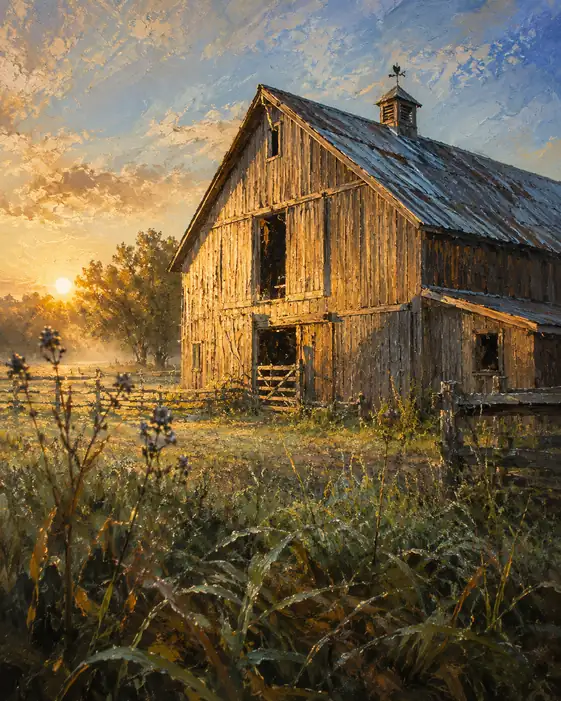 Prologue of the Morning Dew
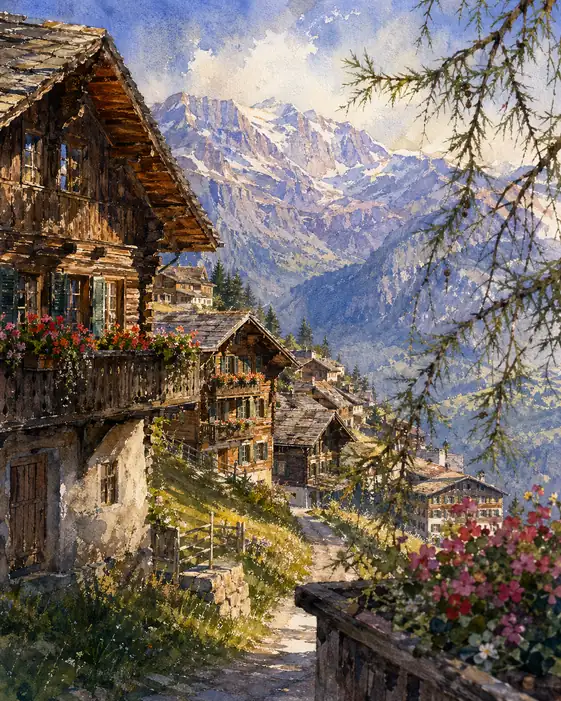 Luminous Alpine View with a Chalet Balcony
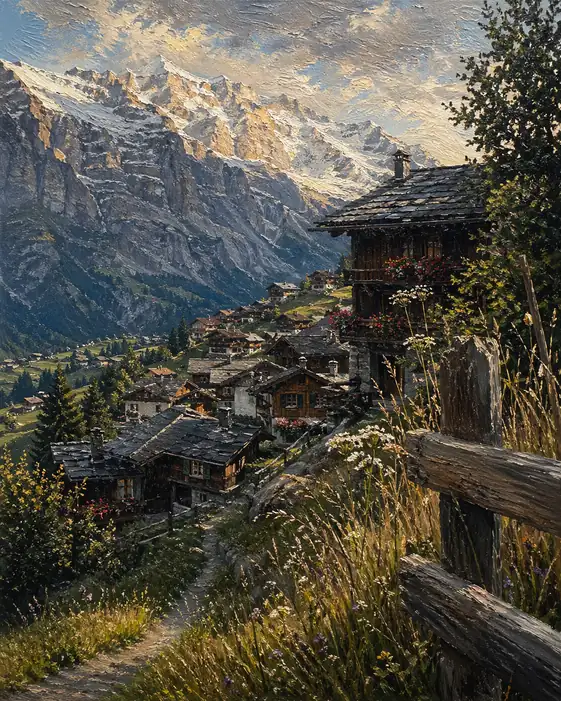 Red Geraniums Against the Pale Mountain Sky
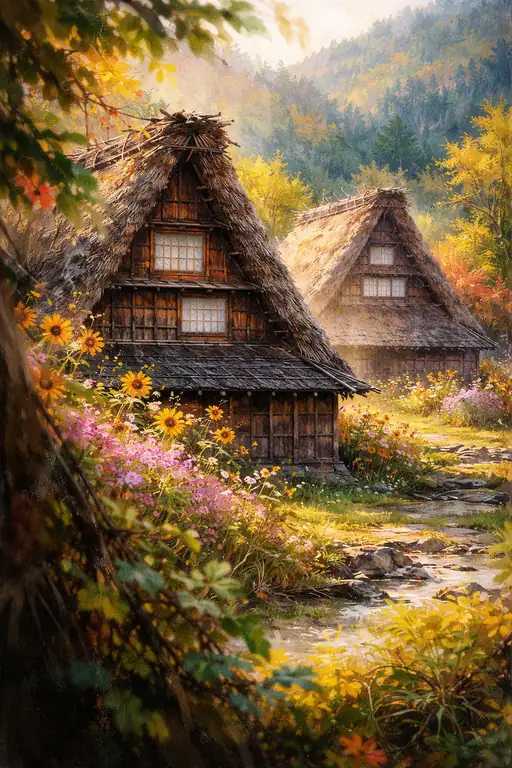 A Warm Hearth in the Misty Valley
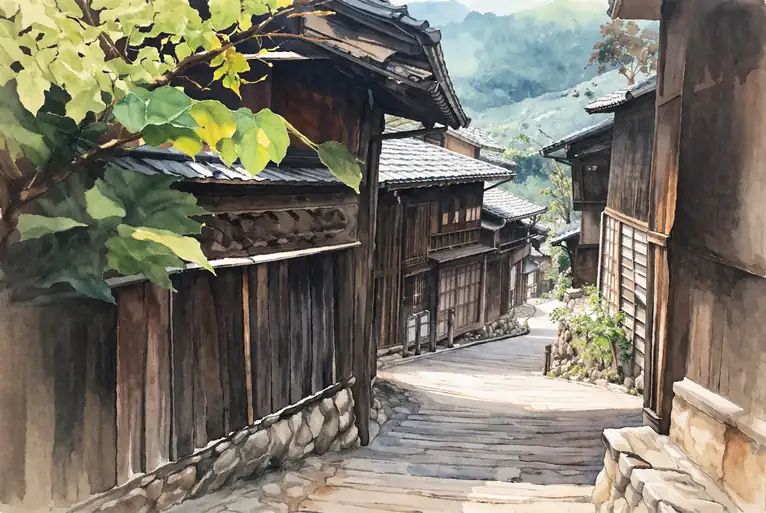 Echoes of the Sloping Town
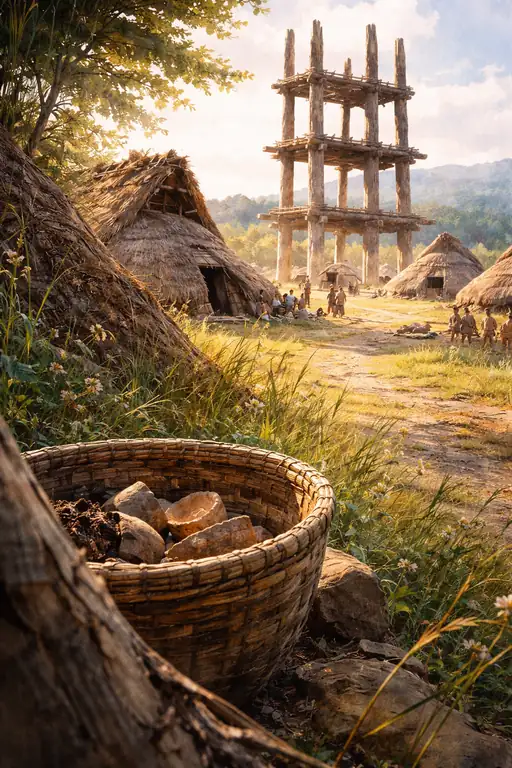 Whispers of the Ancient Valley
 Crown of the Highland Whispers
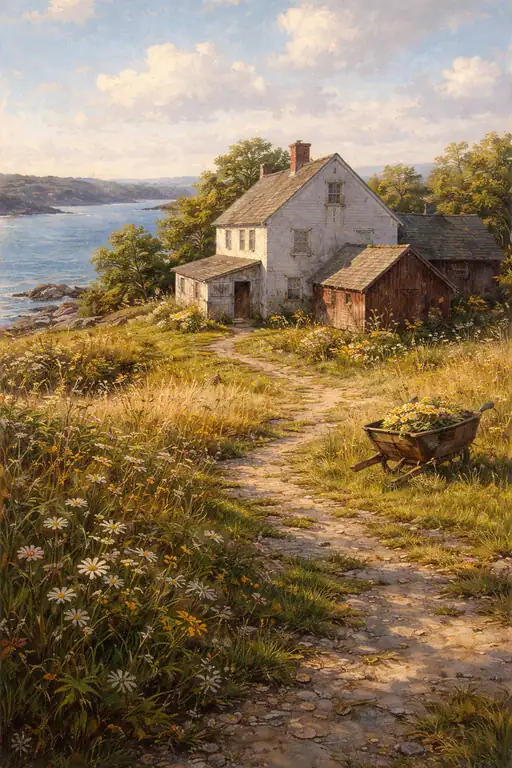 Sanctuary at the World's Edge