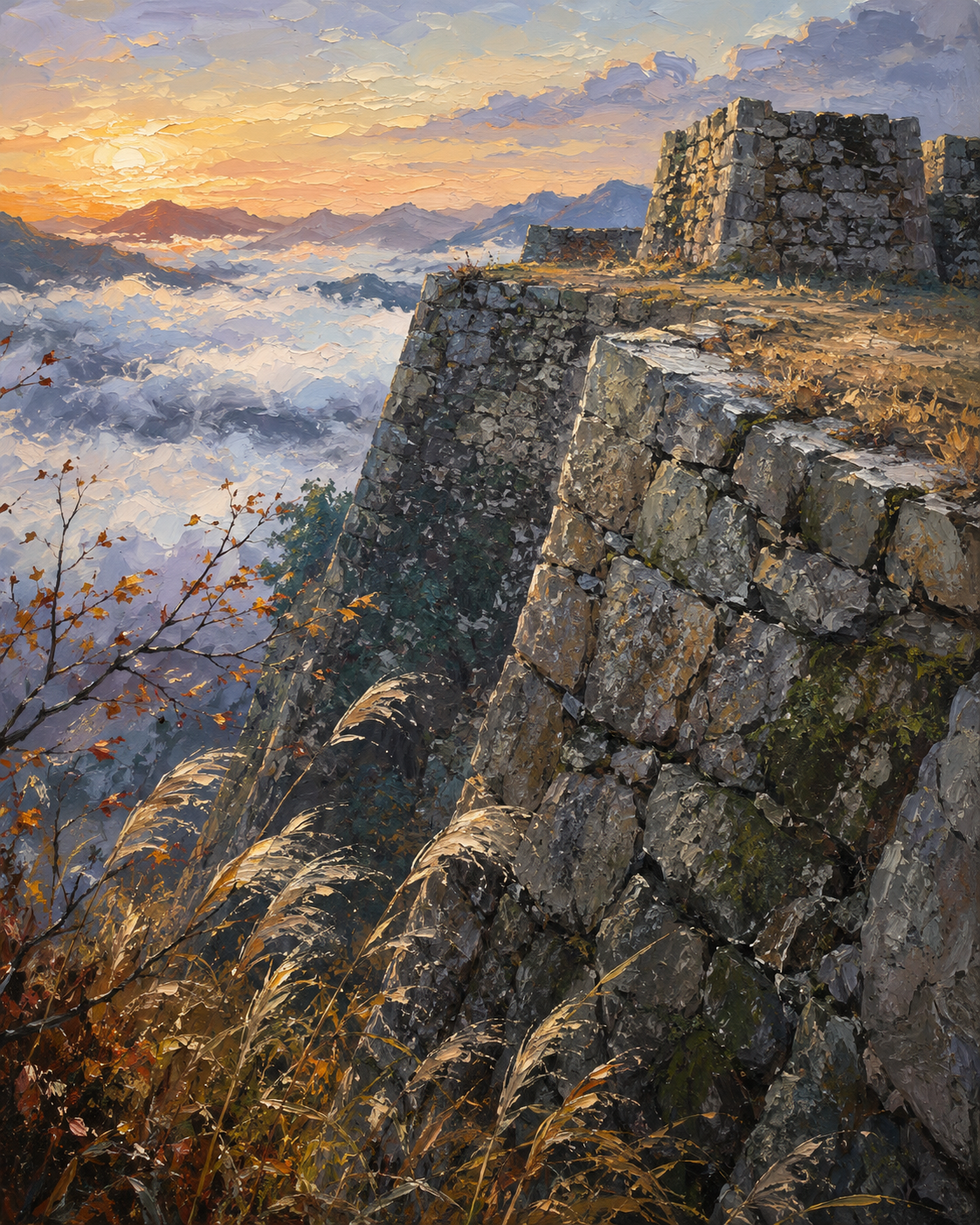
Bastion Floating in the Morning Mist
Critique
1. Introduction This work presents a mountain landscape at dawn, with stone ramparts above a sea of clouds. The image joins a ruined architectural fragment to a vast atmosphere, so the scene reads as both a record of place and a study of height, distance, and light. 2. Description A massive wall of fitted stones occupies the right foreground and descends sharply toward the lower edge. To the left, cloud banks fill the valleys, while layered ridges recede toward the horizon under a rising sun. Dry grasses and thin autumn branches frame the ledge and sharpen the sense of exposed elevation. 3. Analysis The composition depends on the contrast between the weight of masonry and the instability of mist. Diagonal edges in the wall carry the eye downward, while the low sun opens the view across the mountains. Thick handling gives rock, cloud, and sky tactile surface, and the balance of warm golds with cool violets organizes depth. 4. Interpretation and Evaluation The work can be understood as an image of endurance within a changing natural field. The remains of fortification suggest human intention and defense, yet the surrounding light and vapor reduce that certainty and emphasize transience. The painting is convincing in its texture, in the clarity of its composition, and in the way color and technique bind grandeur to close observation. Its originality lies in letting ruin and atmosphere share equal authority. 5. Conclusion At first, the sunrise and the cliff edge create a dramatic impression. Closer viewing shows that the deeper interest lies in the relation between stone, cloud, and distance. The scene shifts from spectacle toward a measured reflection on structure, exposure, and persistence.
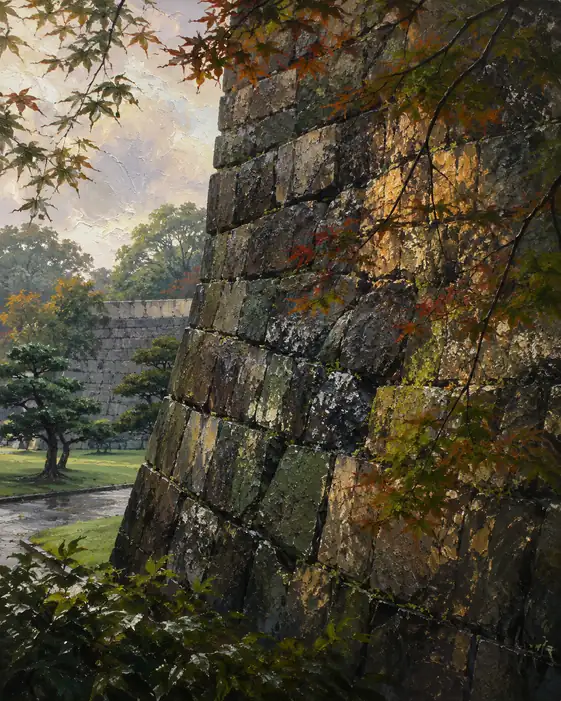 Fortress of Time and Crimson Leaves
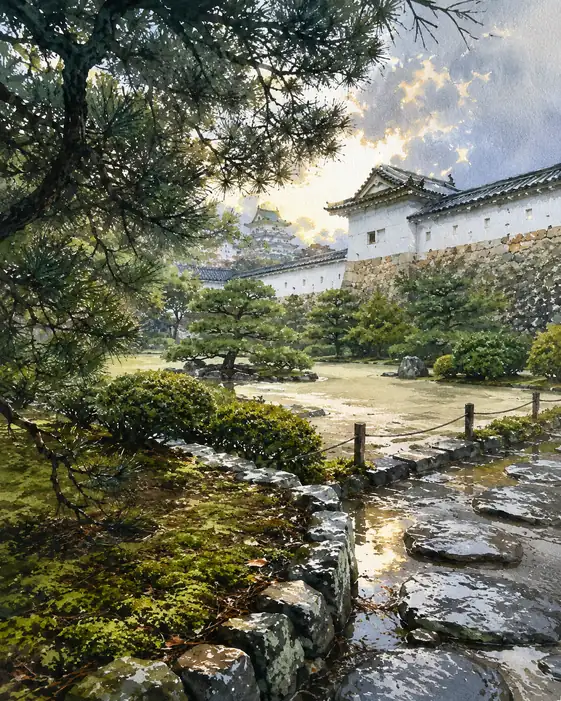 Echoes of the Rain on Castle Stones
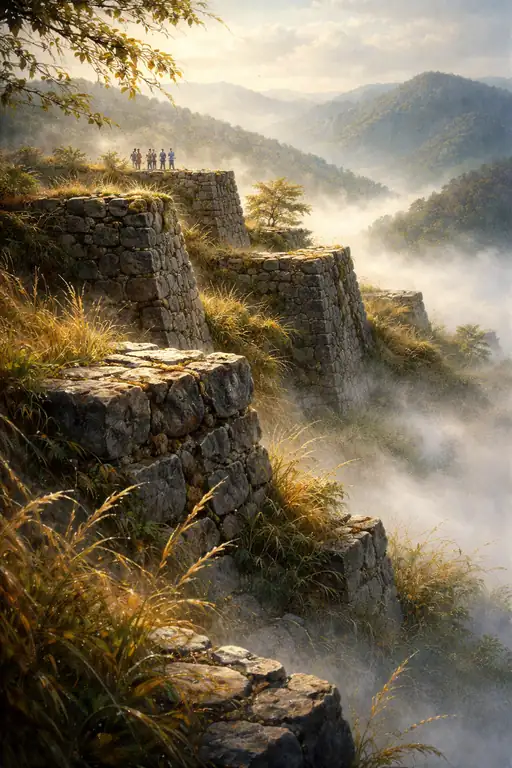 Echoes Above the Clouded Sea
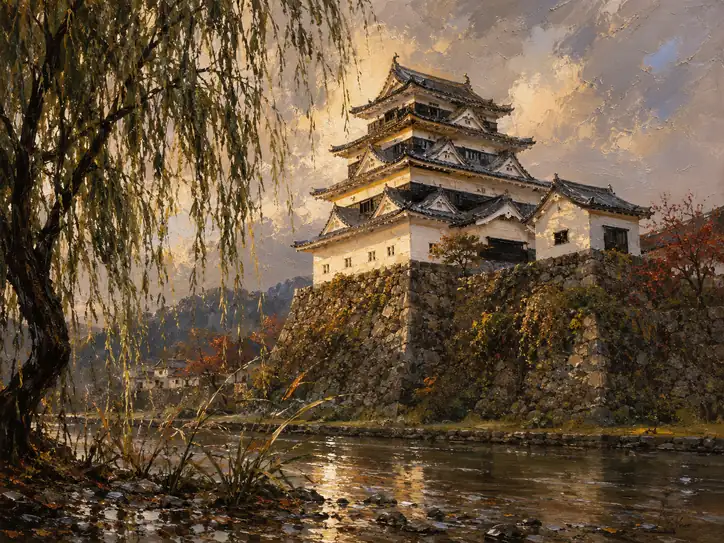 Eternal Echoes of the Golden Keep
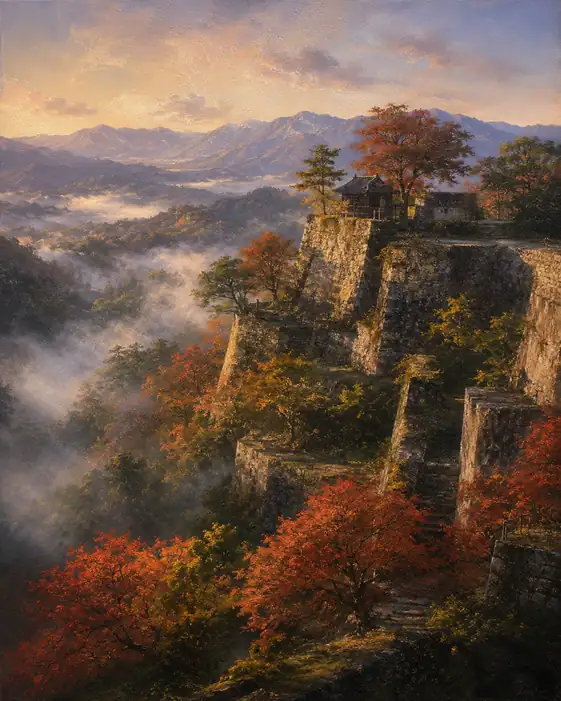 The Castle That Became Autumn
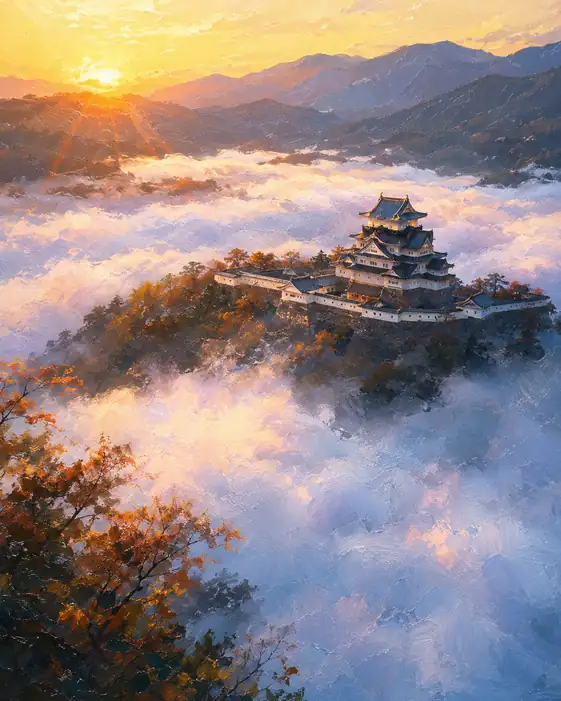 Dawn Disarms the Mountain
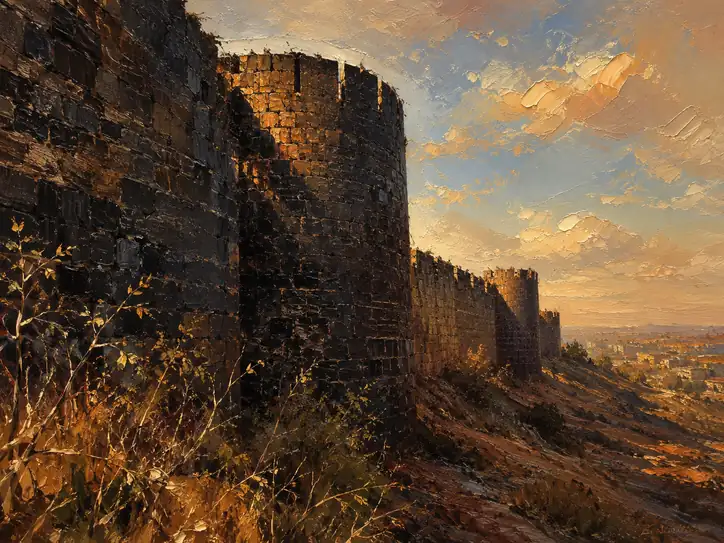 The Last Vigil at Dusk
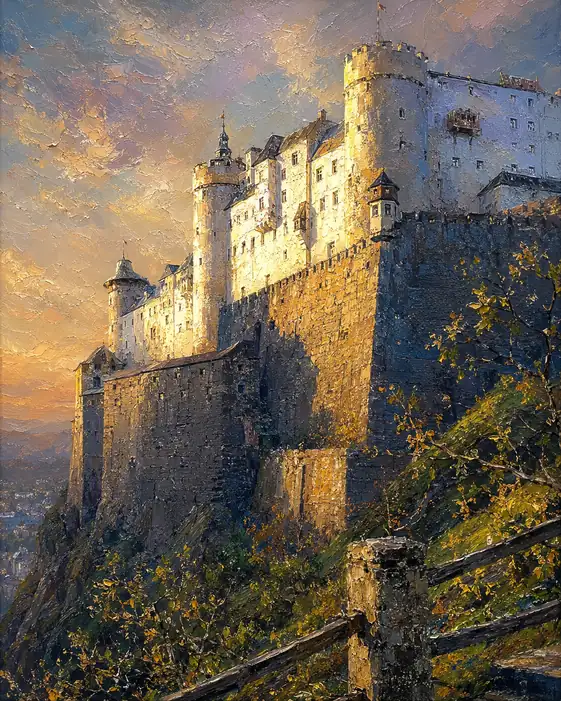 Sentinel of the Setting Sun
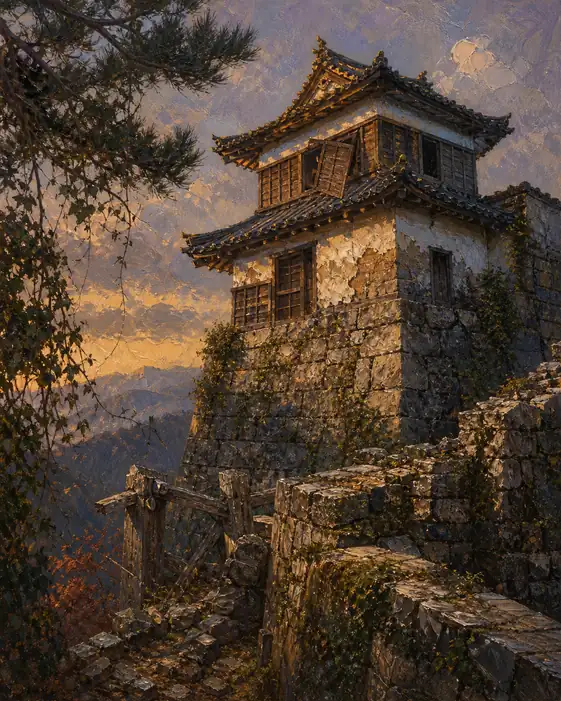 Silent Resilience on the Ancient Ramparts
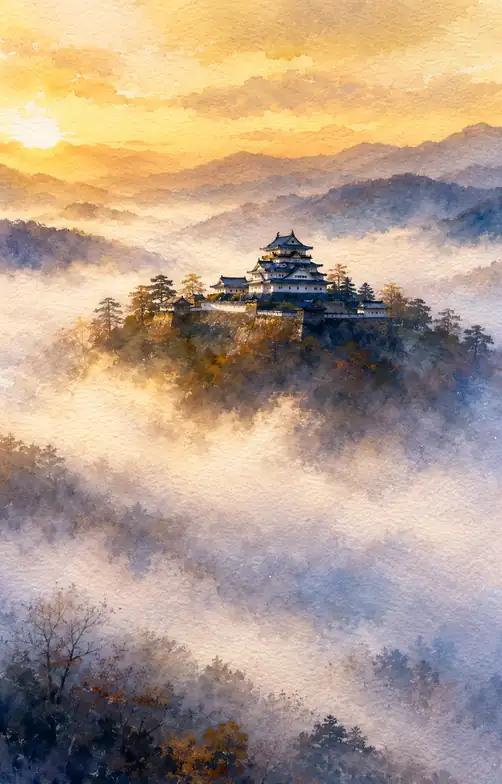 The Earth Dreams It Can Float
 Where the Mossy Bastion Sleeps
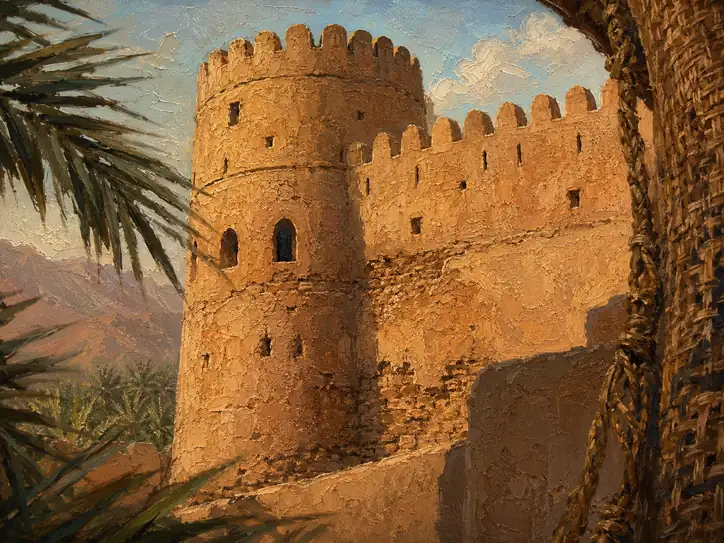 The Unyielding Guardian