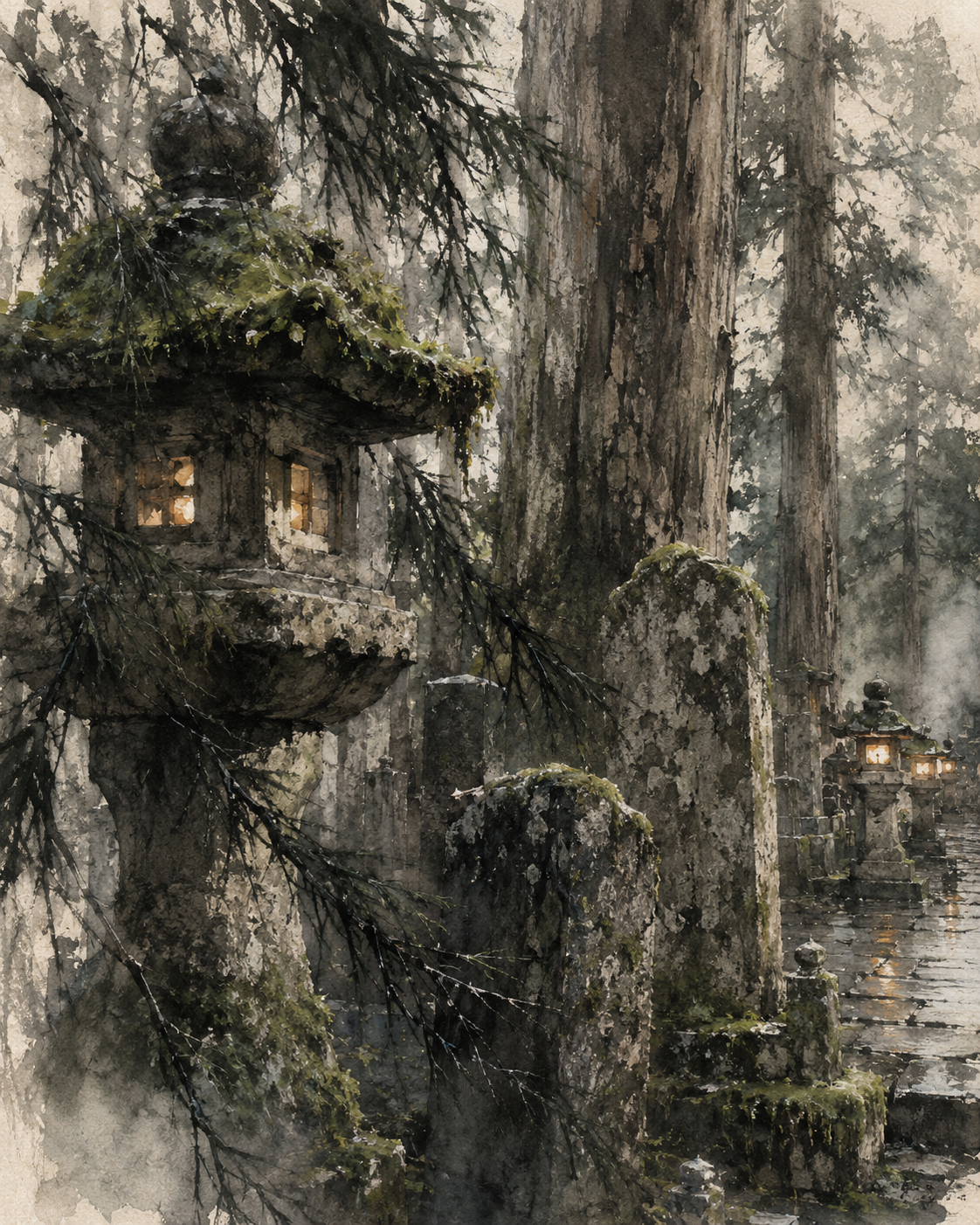
Whispers of the Moss-Covered Stones
Critique
1. Introduction This work presents a wooded stone precinct in which lantern-like structures and upright markers stand among tall trunks. Moisture, moss, and diffused light give the scene a hushed and secluded character. 2. Description At the left, a large weathered stone lantern occupies the foreground, its small openings glowing warmly from within. Additional stone elements recede along a narrow wet path to the right, where reflected light gathers in puddled surfaces. Thick tree trunks rise through mist, and moss spreads across caps, bases, and broken edges. It suggests a place shaped by ritual or memorial use. 3. Analysis The composition relies on recession and overlap. The dominant foreground lantern anchors the view, while repeated vertical markers and trees carry the eye inward. Rough brush handling describes stone, bark, moss, and damp air with related textures, and the muted range of grays, browns, and greens is punctuated by small warm lights. This limited color structure heightens atmosphere without sacrificing clarity. 4. Interpretation and Evaluation The image can be understood as a meditation on endurance and quiet maintenance. It is effective in its depiction of age, in the organization of deep space, and in the balance between detailed surfaces and obscuring mist. The technical handling of light within a subdued palette is particularly strong. Its originality lies in treating weathered stone objects not as isolated symbols but as parts of a living forest environment. 5. Conclusion At first, the glowing lanterns appear to provide the main focus. Closer viewing shows that trunks, moisture, moss, and path are equally important to the meaning of the scene. The painting shifts from picturesque mood toward a more sustained reflection on time, use, and persistence.
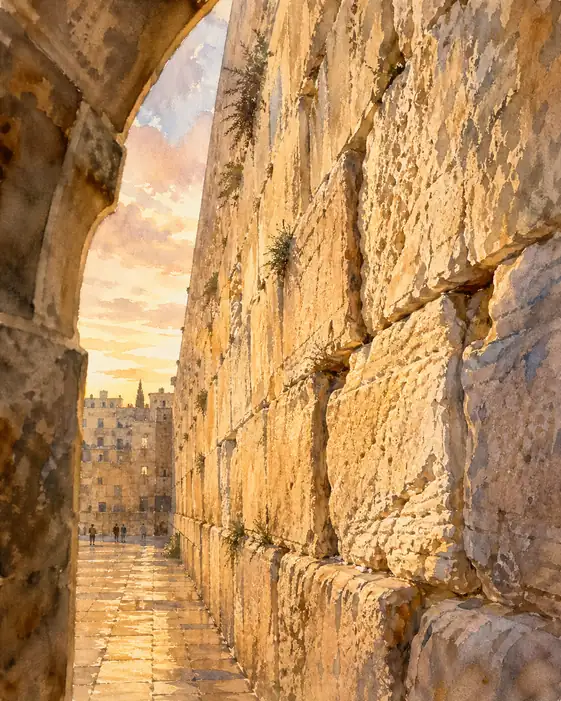 Wall of Souls: A Golden Prayer Through the Arch of Time
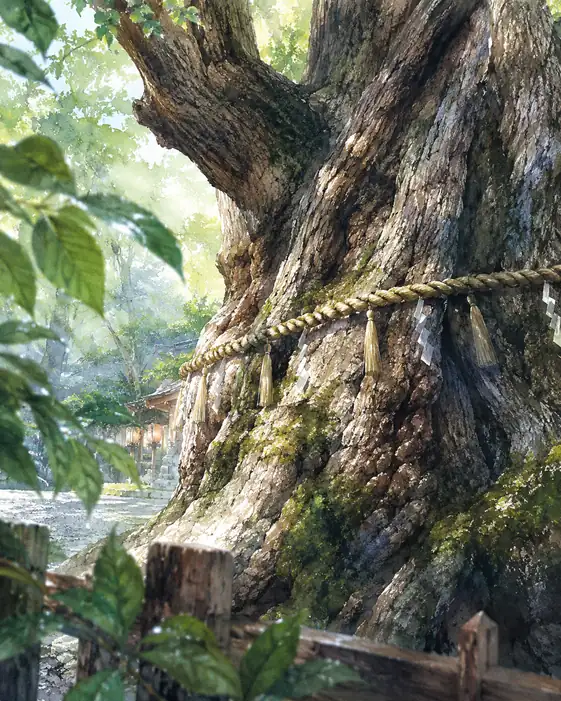 Sentinel of a Thousand Seasons
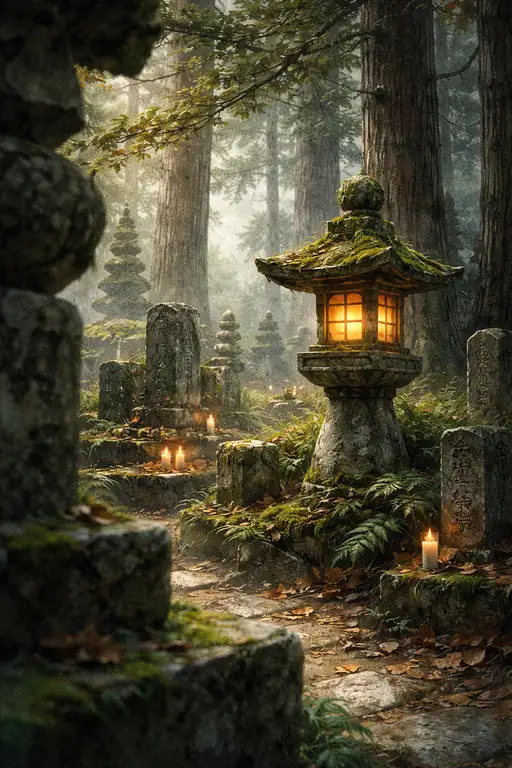 The Guardian of the Mists
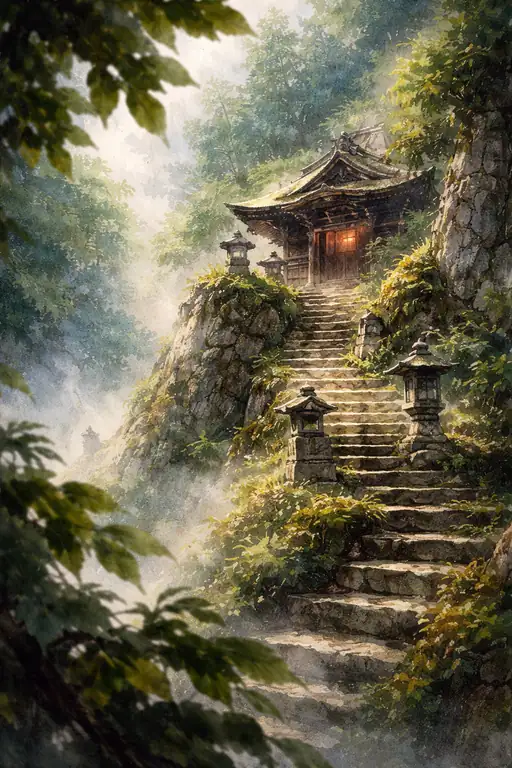 One Step Closer to the Divine
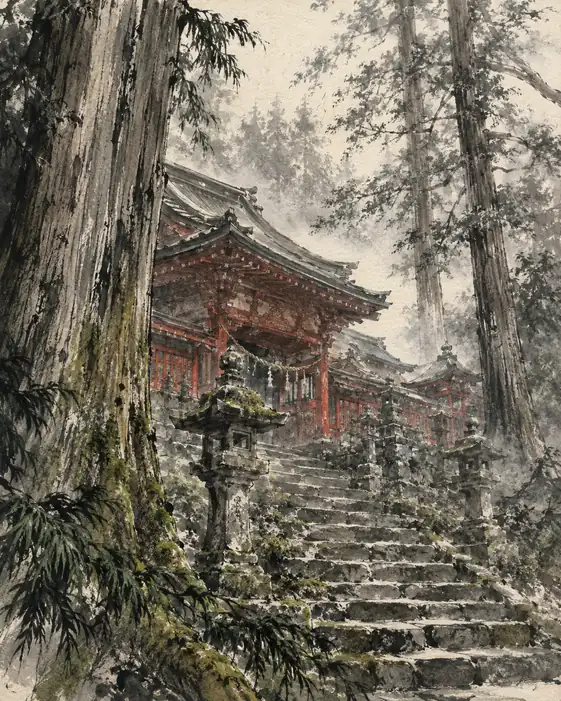 Threshold of the Ancient Silence
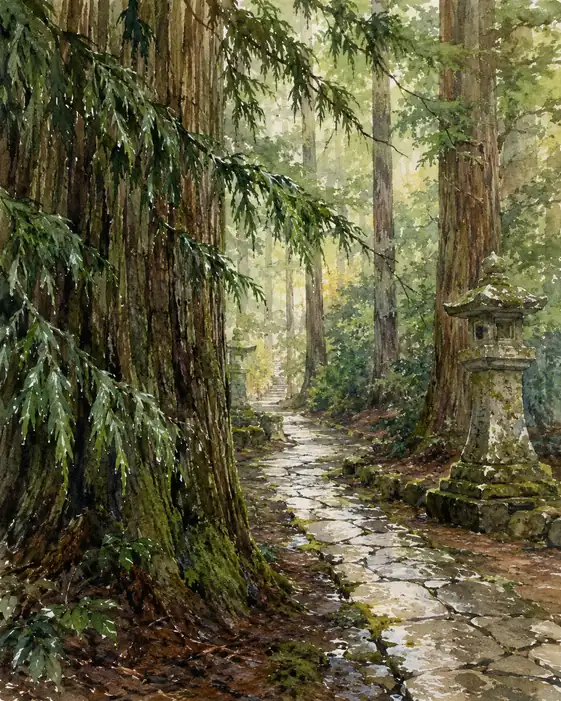 Whispers of the Sacred Grove
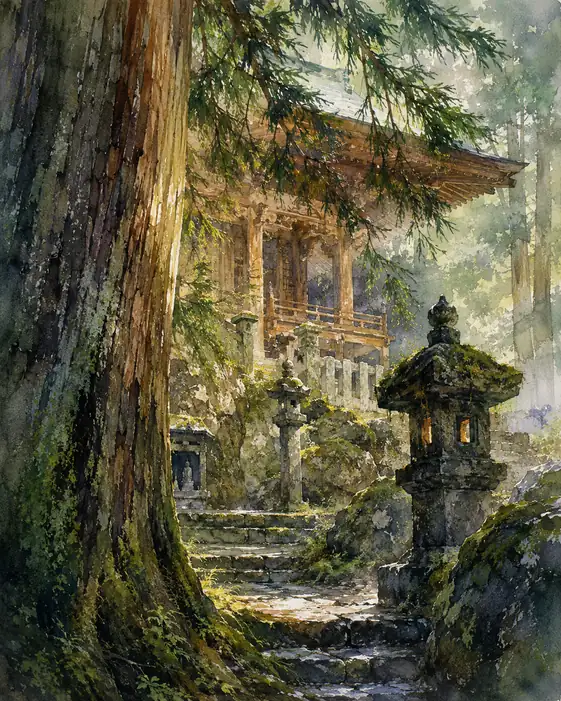 Sanctuary of the Ancient Cedars
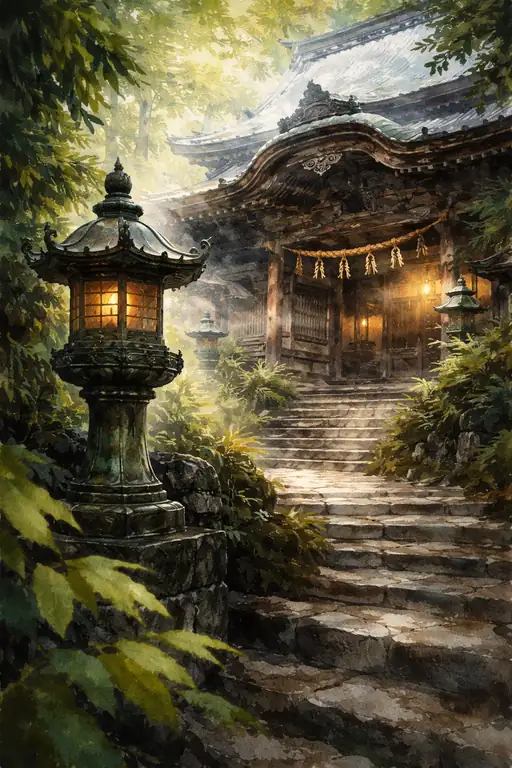 Sanctuary of the Silent Forest
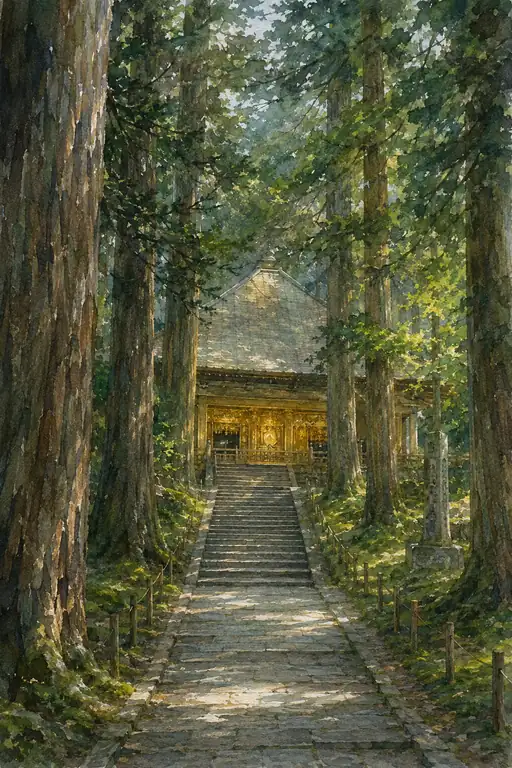 A Sanctuary of Golden Silence
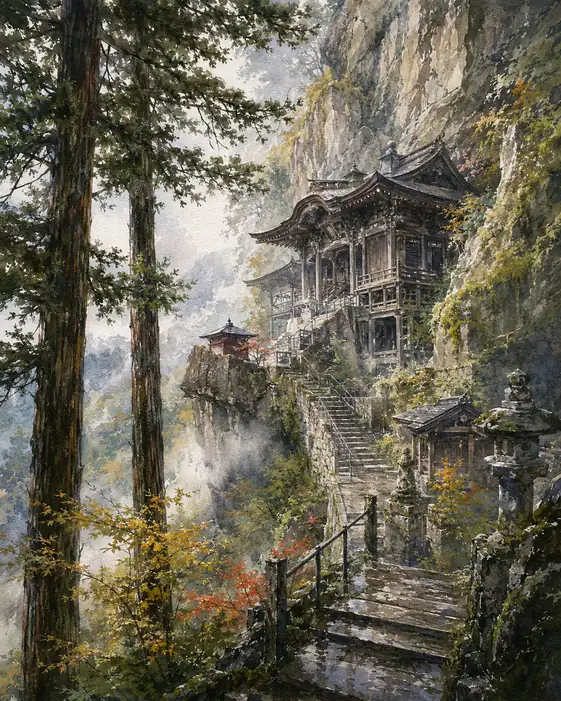 Prayer in the Mountain Mist
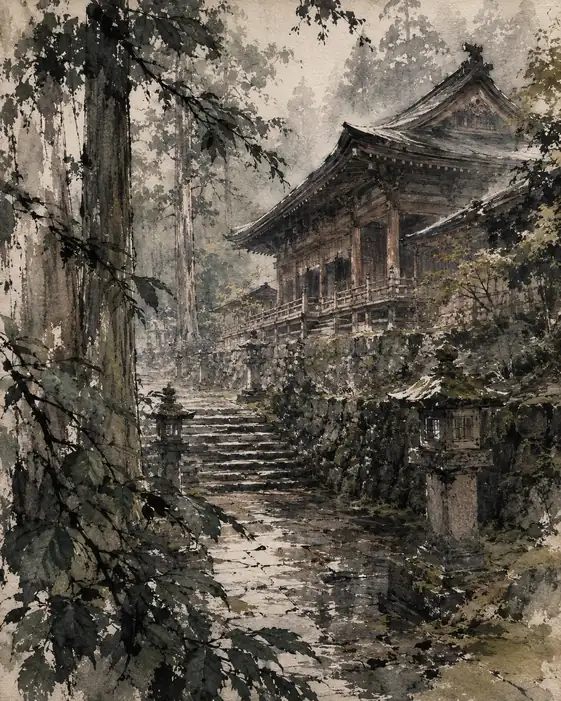 The Sanctuary of Eternal Stillness
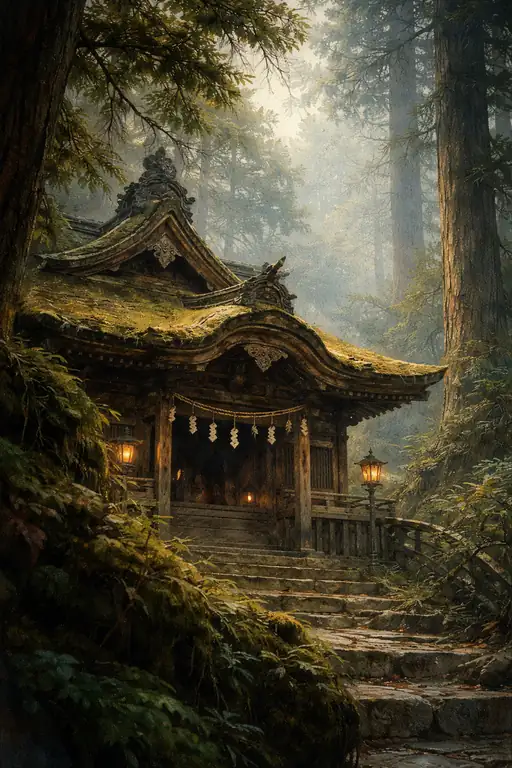 Sanctuary in the Shadows