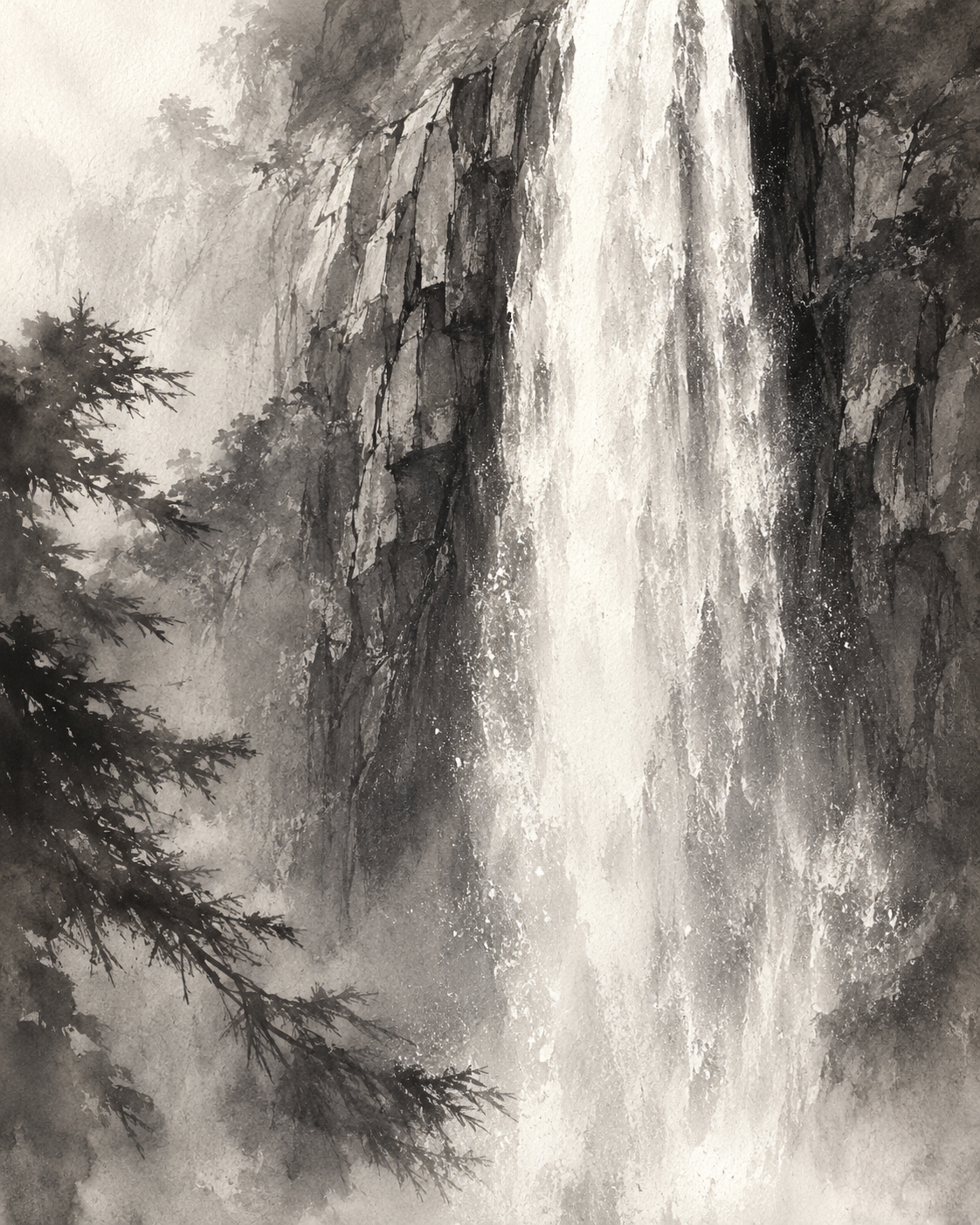
The Roar of Silence
Critique
1. Introduction This work presents a vertical landscape centered on a waterfall descending beside dark rock. The scene is reduced to black, gray, and white, and its restraint gives the image a concentrated mood. 2. Description A sheer cliff occupies most of the picture, broken by angular rock faces and light veils of mist. At the right, the waterfall pours in a bright column, scattering spray into the lower air. Dark branches enter from the left and lower foreground, softening the stone mass without interrupting the downward motion. 3. Analysis The composition depends on asymmetry and tonal contrast. The luminous fall is set against dense dark passages, so the eye reads water and cliff as mutually defining forms. Varied brush handling suggests wet spray, rough stone, and vapor, while the limited palette suppresses distraction and strengthens structural clarity. Empty misted areas also slow the gaze and enlarge the sense of height. 4. Interpretation and Evaluation The image can be understood as an exercise in concentration rather than spectacle. Its value lies in the disciplined control of ink-like tones, in the balance between description and omission, and in the technical ability to convey force without visual excess. The originality of the work rests less on unusual subject matter than on the severity of its reduction. 5. Conclusion At first, the waterfall seems to be only a dramatic vertical accent. Closer viewing shows that cliff, trees, mist, and spray are calibrated with equal care. The effect shifts from a simple natural motif to a thoughtful study of mass, movement, and silence.
Same Subcategory
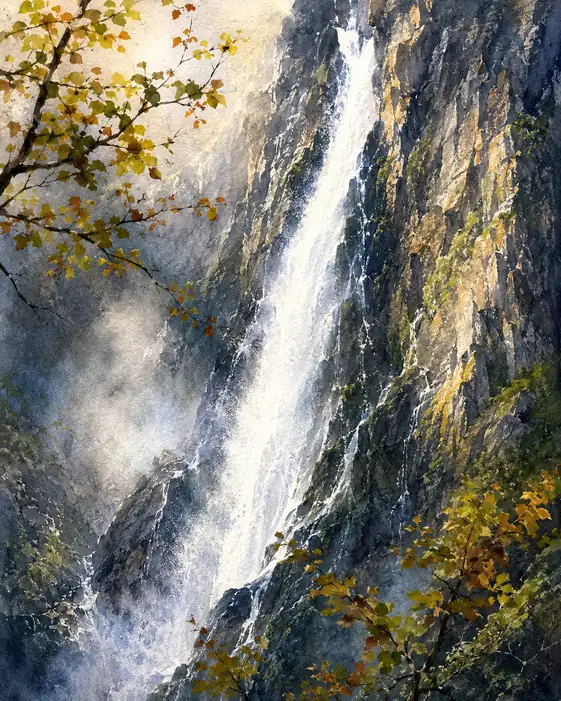 Breath of Light Amidst the Ancient Stone
Similar Artworks
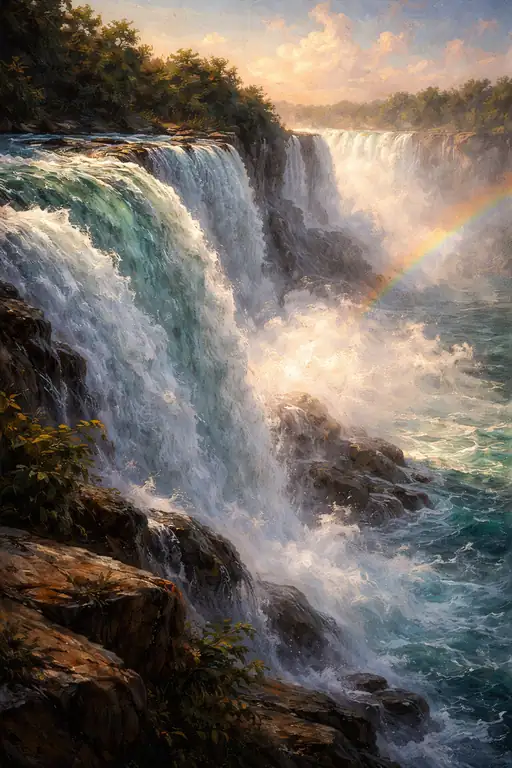 The Eternal Roar and the Fleeting Arch
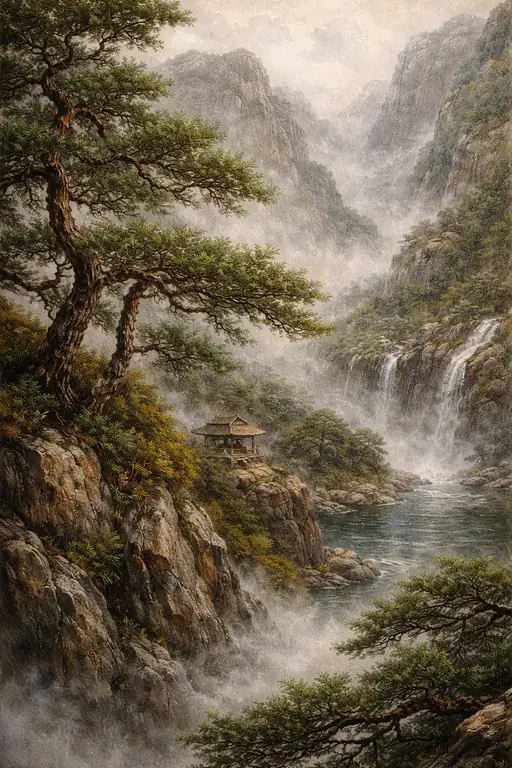 Mist over the Eternal Peaks
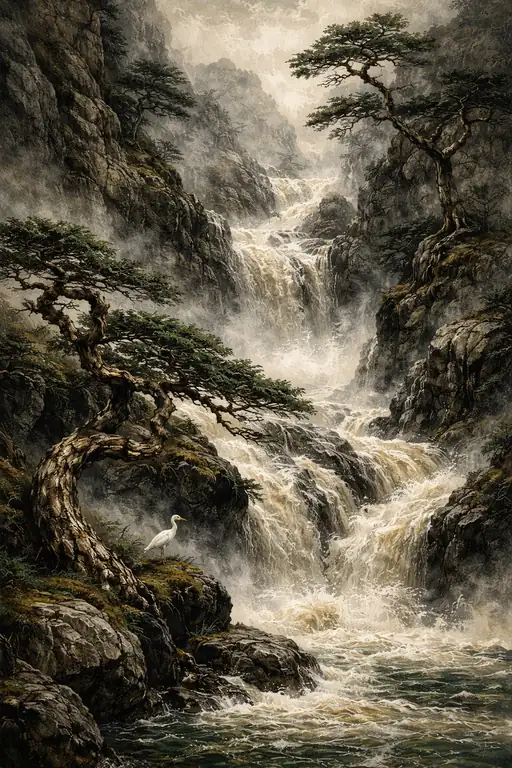 Echoes of the Eternal Peak
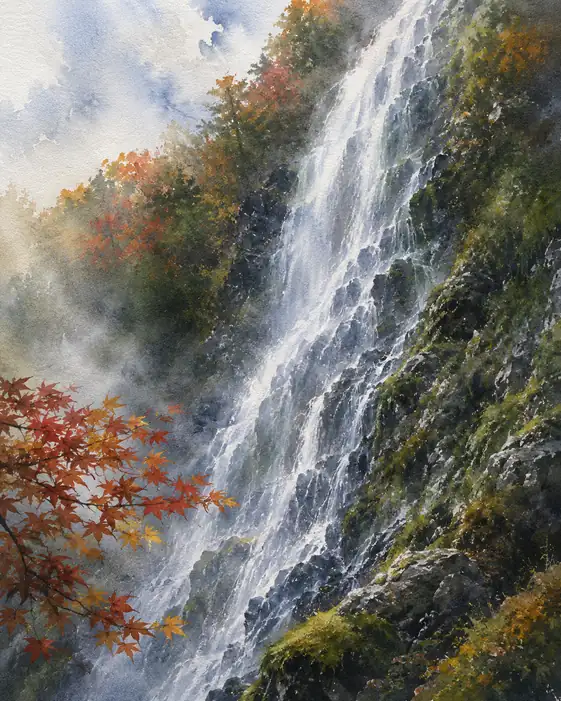 Echoes of the Autumn Cascade
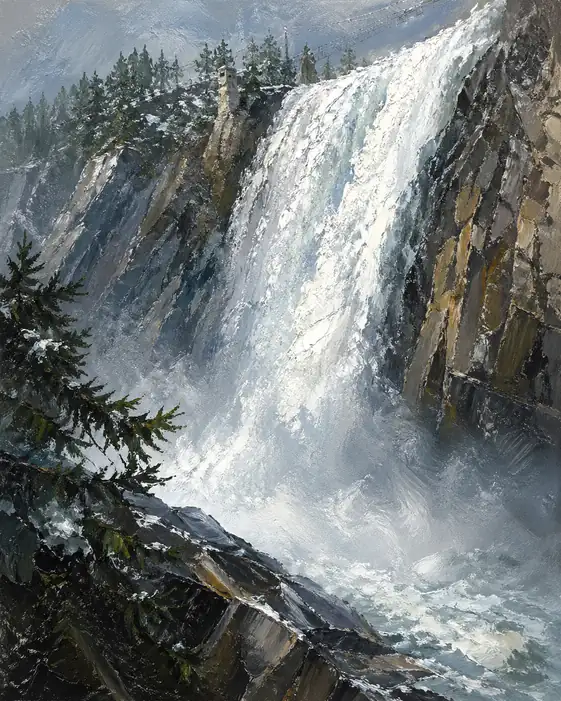 The Roar of Eternity
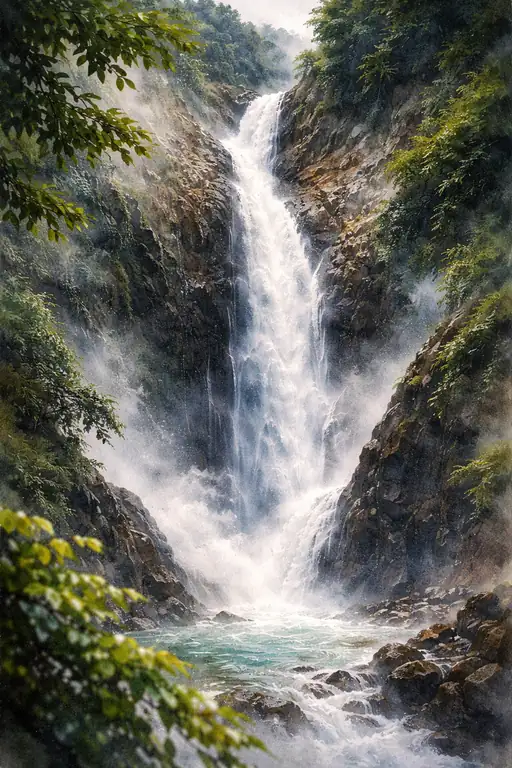 Cascading Veil: The Forest's Pulse
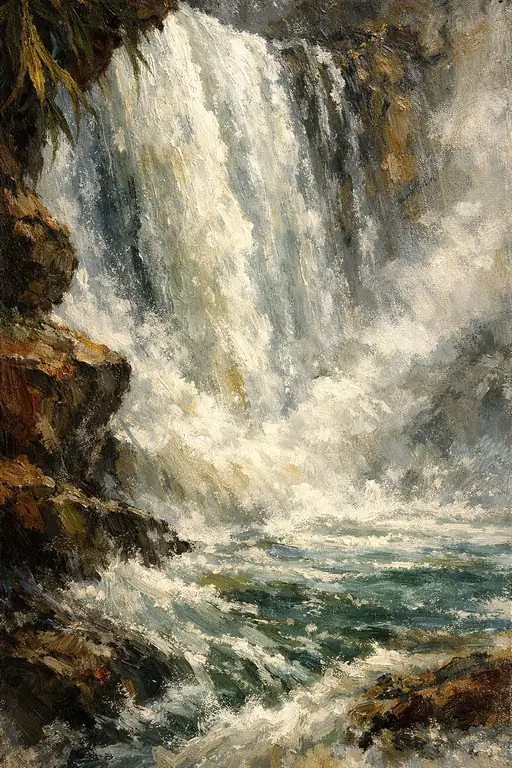 Thunderous Majesty of the Cascade
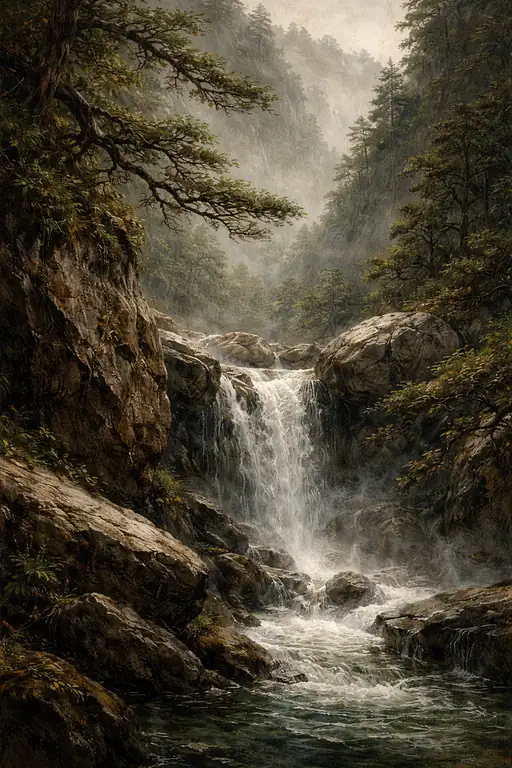 The Roar of Eternity Amidst Timeless Stones
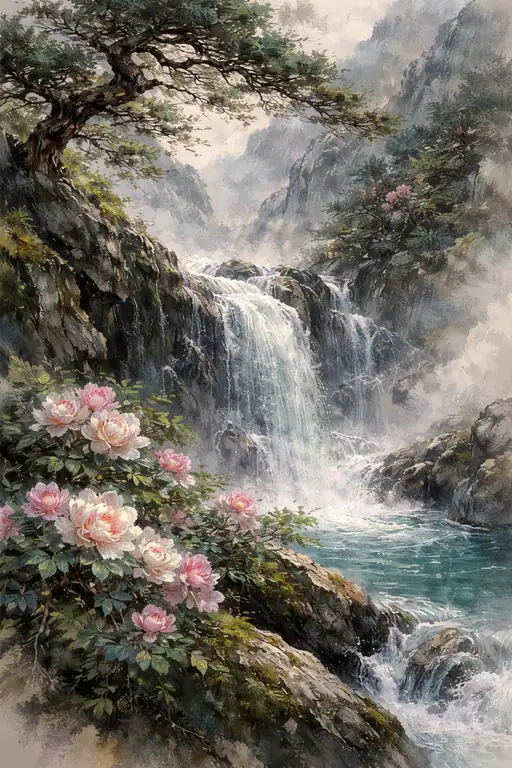 A Symphony of Mist, Pines, and Petals
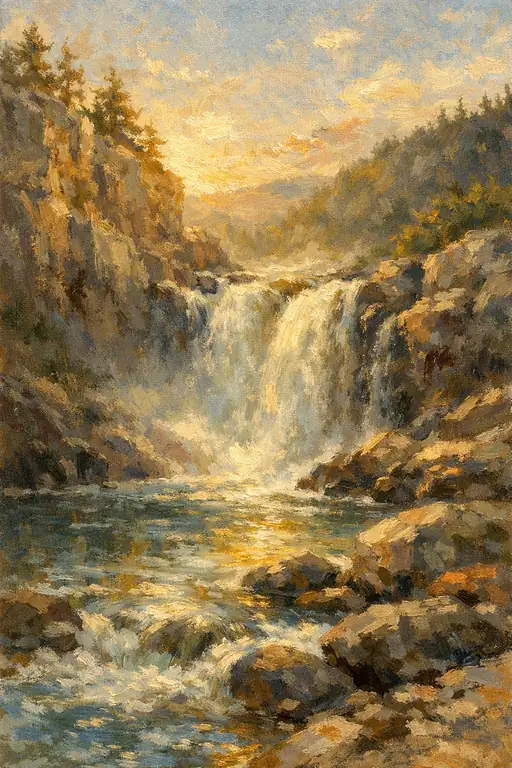 Roar of the Golden Cascade