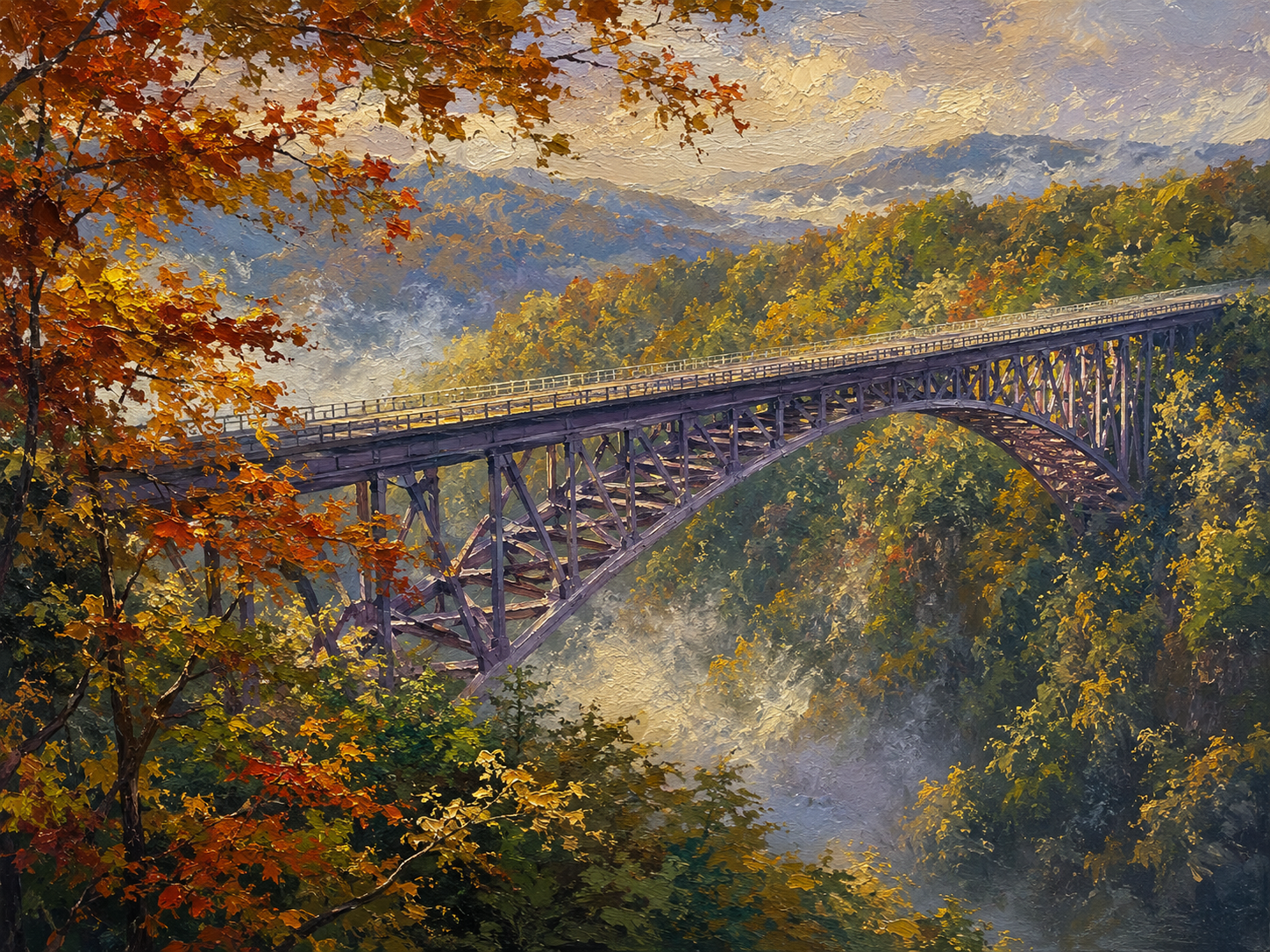
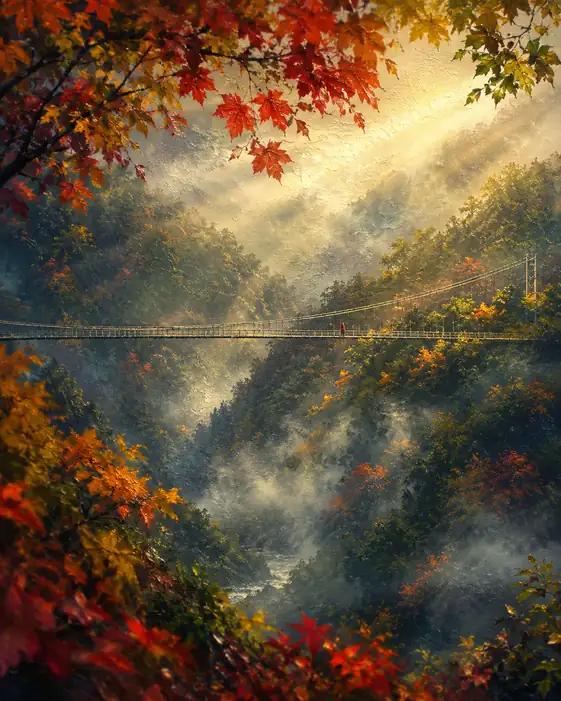
Arching Over the Golden Abyss
Critique
1. Introduction This work presents a mountain ravine crossed by a high bridge in autumn light. The subject combines expansive landscape with an engineered structure, setting natural growth and human construction into visible relation. 2. Description A broad arching bridge runs diagonally from left to right over a mist-filled gorge. Orange and russet leaves crowd the left foreground, while wooded slopes and layered blue mountains recede under a pale, textured sky. Sunlight touches the bridge deck and upper foliage, and vapor rises from the depth below. 3. Analysis The composition is organized by strong diagonals. The bridge forms the main directional line, and the framing branches at upper left counterbalance its sweep. Thick handling gives leaves, beams, and distant ridges a tactile surface, while warm oranges and golds are measured against cool blues and violets. This color contrast clarifies depth and prevents the large structure from appearing heavy. 4. Interpretation and Evaluation The image can be read as a study of passage through a grand environment. The bridge does not dominate the scene so much as connect separated masses of land, and this gives the landscape a sense of order. The work is effective in its drawing of structure, in the coherence of its composition, and in the management of color and technique. Its originality lies in joining scenic grandeur with careful attention to the bridge as a lived piece of infrastructure. 5. Conclusion At first, the autumn foliage appears to be the main attraction. Closer viewing shows that bridge, gorge, mist, and distant mountains are interdependent parts of a single design. The painting moves from seasonal charm toward a fuller understanding of landscape shaped by both light and construction.
Same Subcategory
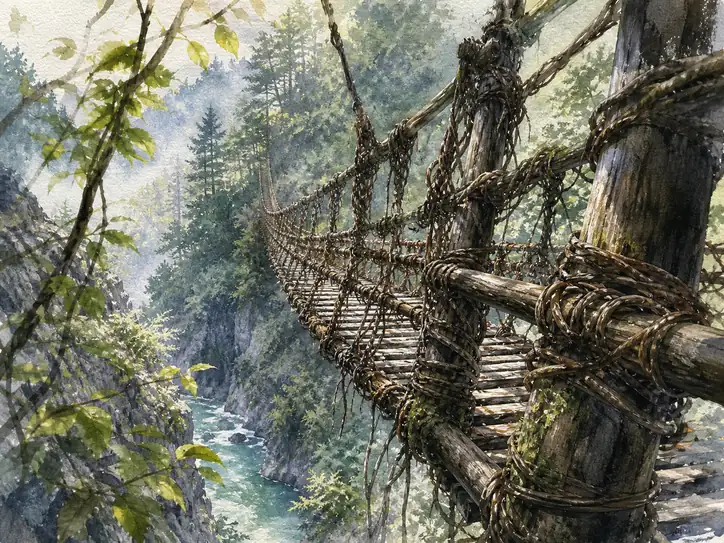 The Woven Threshold of the Misty Gorge
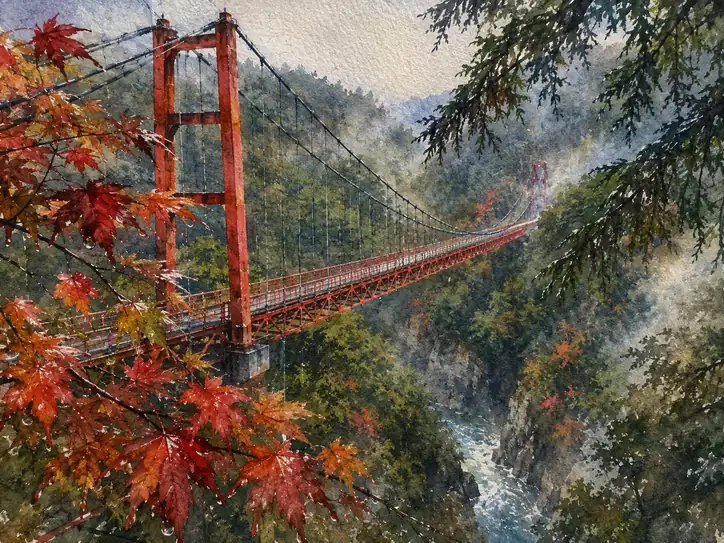 Echoes in Vermilion: A Bridge Through the Mist
Similar Artworks
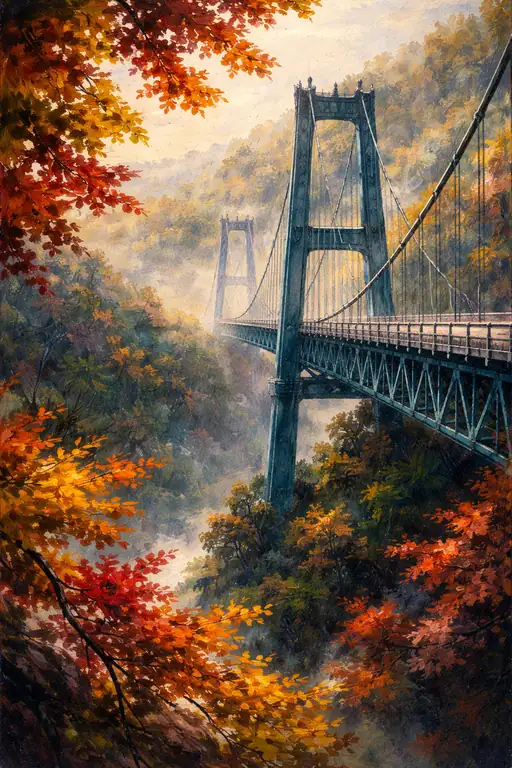 Whispers of the Misty Autumn Span
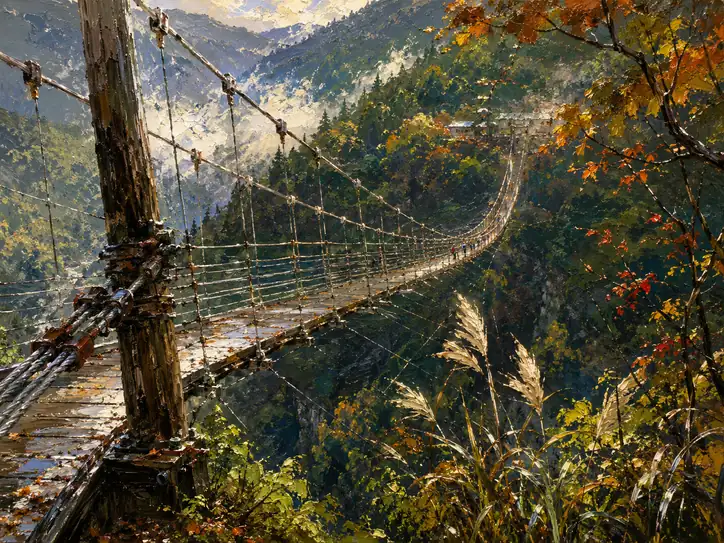 Thread Between the Peaks
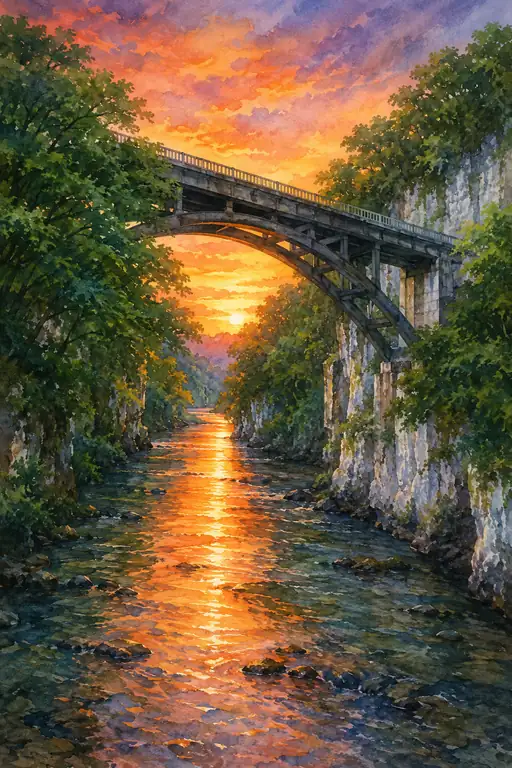 The River Carries the Last Fire
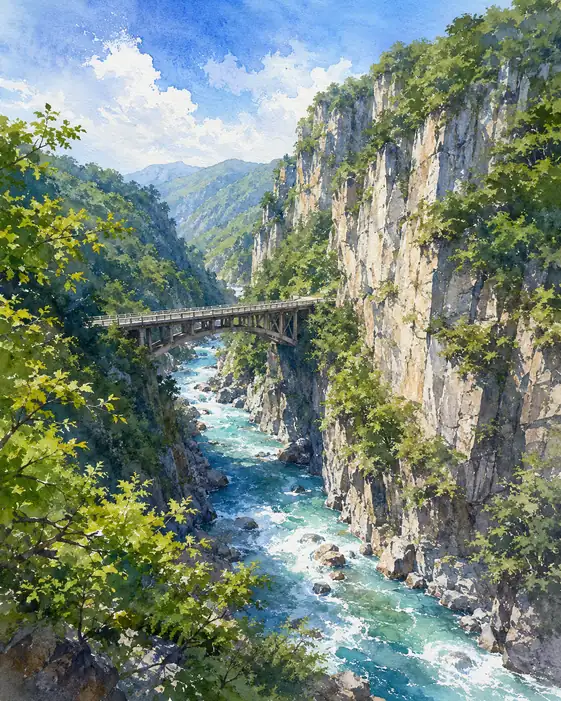 The River Remembers Summer
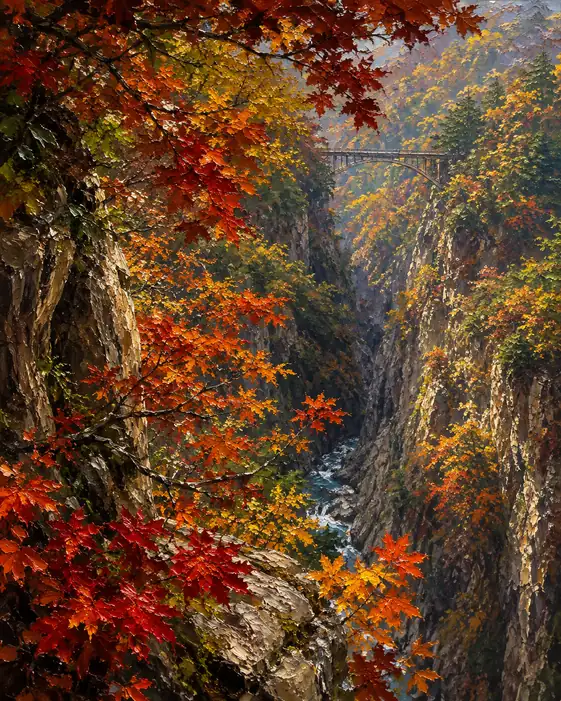 The Gorge Keeps a Distant Promise
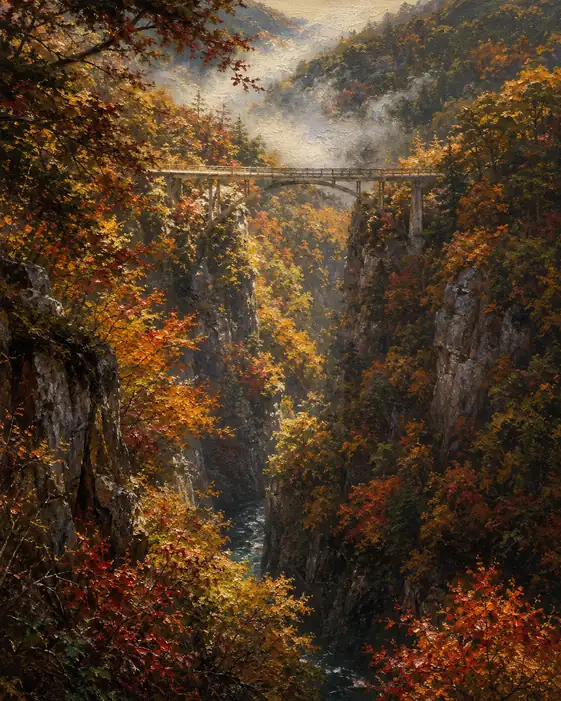 The Crossing Where Seasons Deepen
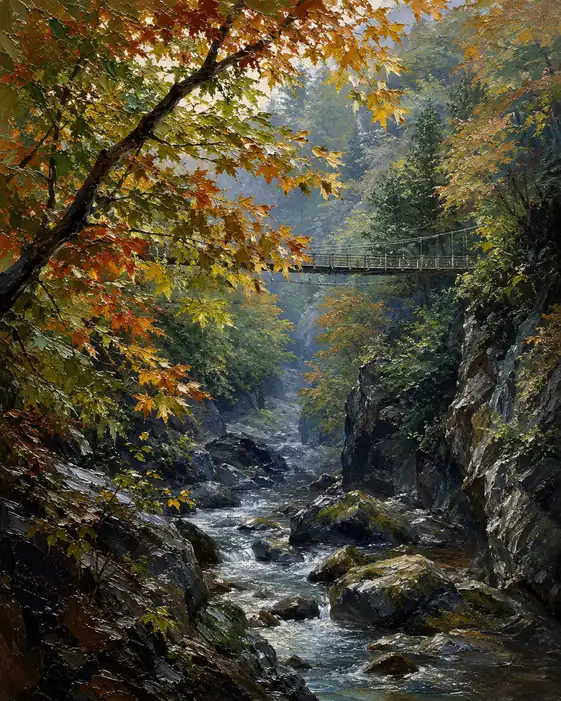 Autumn's Breath: The Hidden Crossing
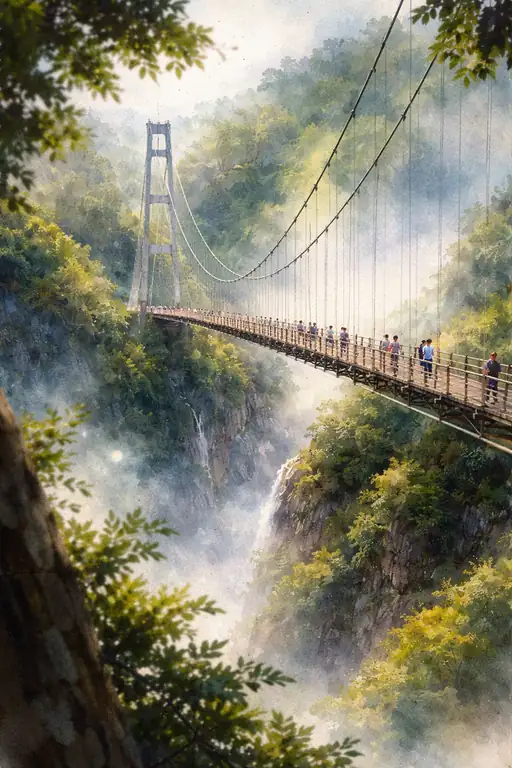 Echoes of the Mist: A Passage Through the Sky
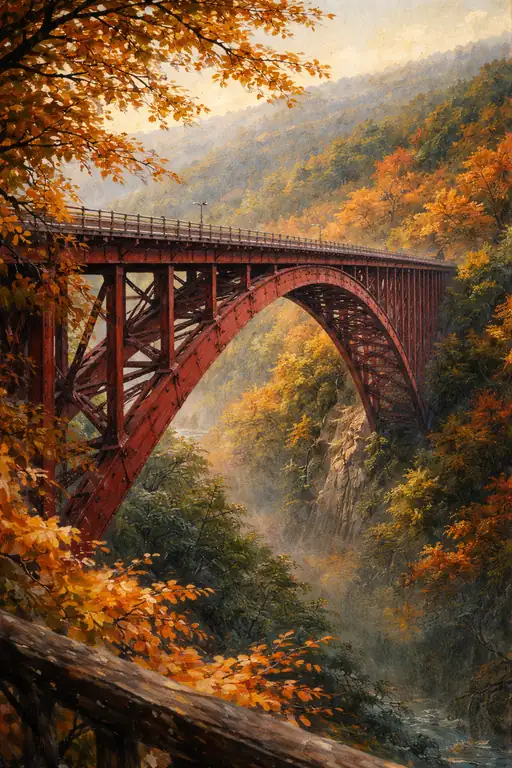 Echoes of Crimson Iron Over the Autumn Mist
 One Red Heart Above the Autumn Abyss