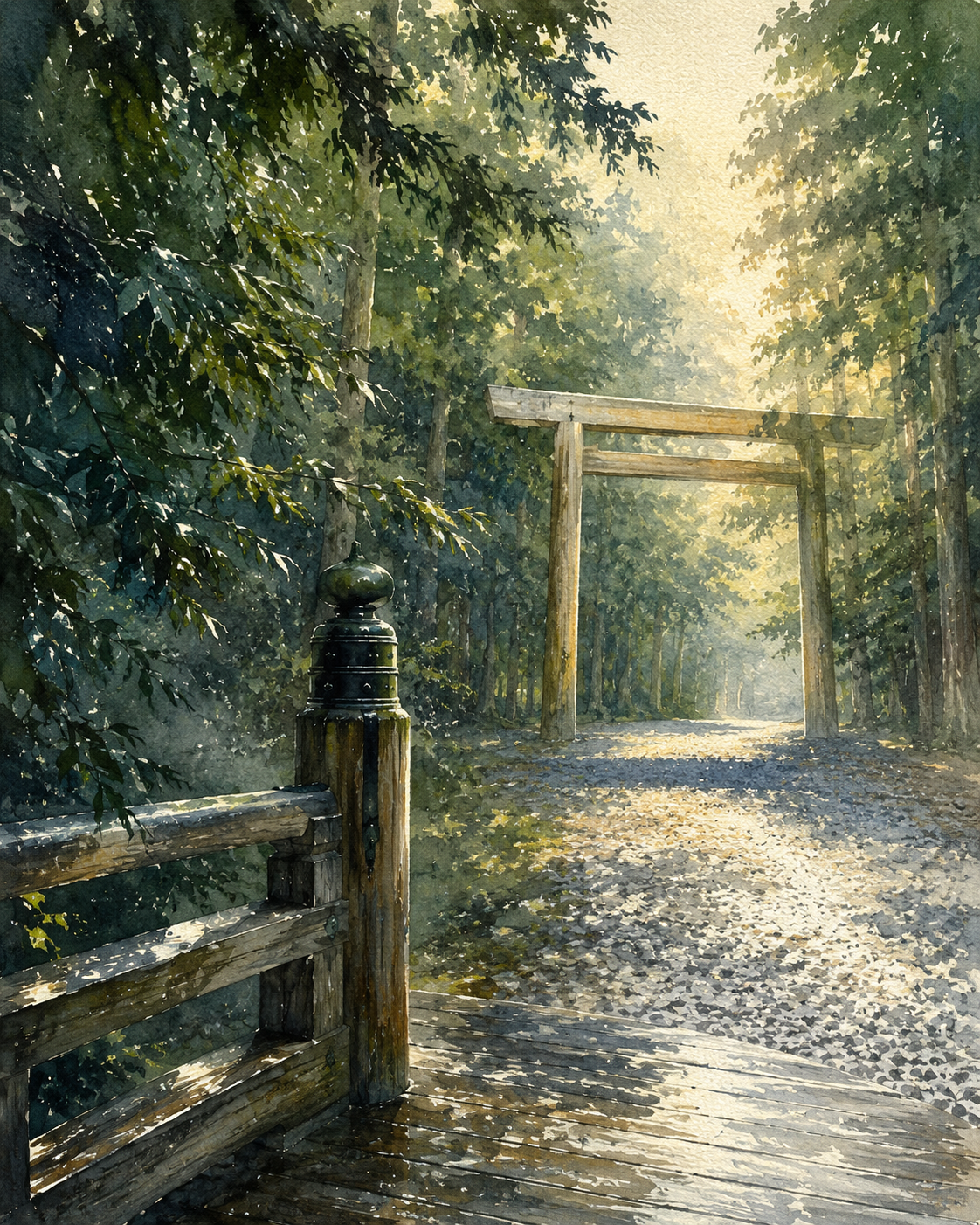
Invitation to the Divine Silence
Critique
1. Introduction This work presents a wooded path marked by two large timber gates and filtered light. The scene is quiet and structured, turning an ordinary passage through trees into a measured spatial experience. 2. Description In the foreground, a wooden railing and post occupy the left side beside a sunlit plank surface. The path then opens toward two large gates standing one behind the other, while tall trees close in on both sides. Light falls through the canopy in broken patches, leaving the gravel ground mottled with bright and dark areas. 3. Analysis The composition depends on recession along the road and on the repeated verticals of trunks and posts. Broad washes in the foliage establish a deep green enclosure, while firmer lines define the gates, railing, and path edges. The palette is restrained, relying on greens, browns, and pale gold, so the strongest effect comes from the contrast between shadowed masses and the illuminated corridor ahead. 4. Interpretation and Evaluation The painting can be understood as an image of approach, pause, and gradual transition. The gates suggest passage, yet the emphasis falls less on symbolism than on the controlled orchestration of light and depth. The work is effective in its depiction of atmosphere, in the clarity of its linear structure, and in the technique that separates wood, leaves, dust, and air. Its originality lies in finding quiet distinction within a modest motif. 5. Conclusion At first, the bright opening beyond the trees draws immediate attention. Closer viewing reveals that the full effect depends on the careful relation between railing, gates, trunks, and scattered light. The impression shifts from a simple woodland path to a more thoughtful study of movement, interval, and calm.
Same Subcategory
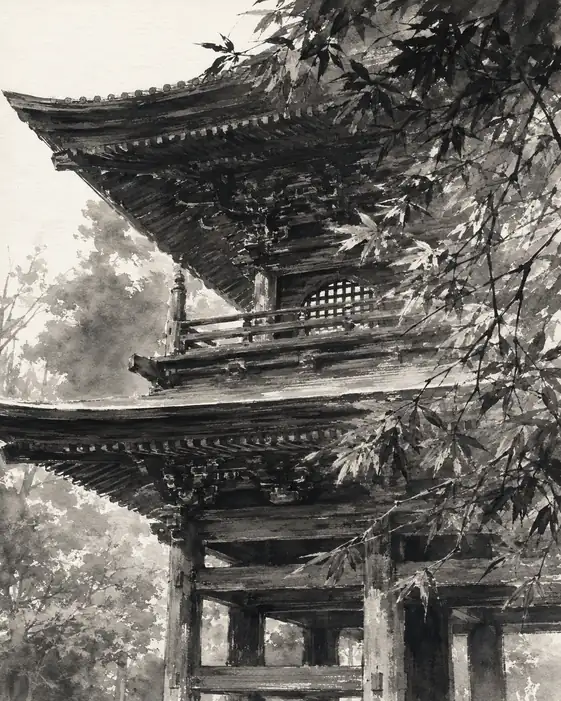 Echoes of Zen: Ancient Pagoda and the Dance of Shadowed Leaves
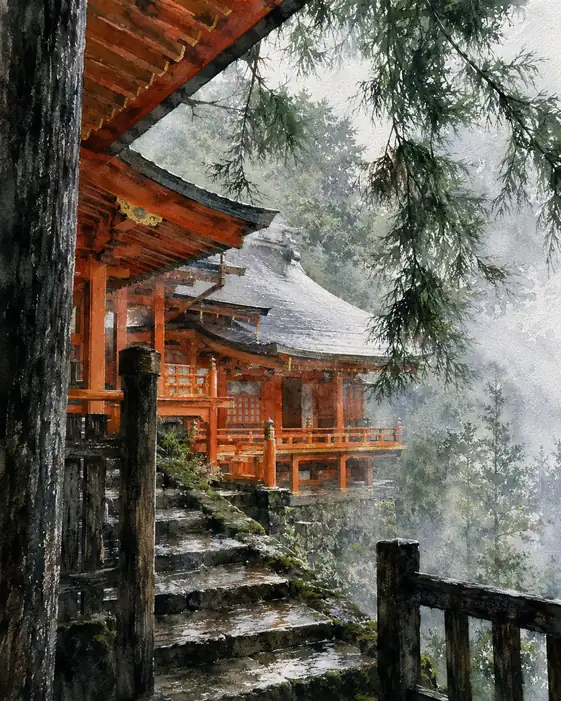 Sanctuary Veiled in Misty Rain
Similar Artworks
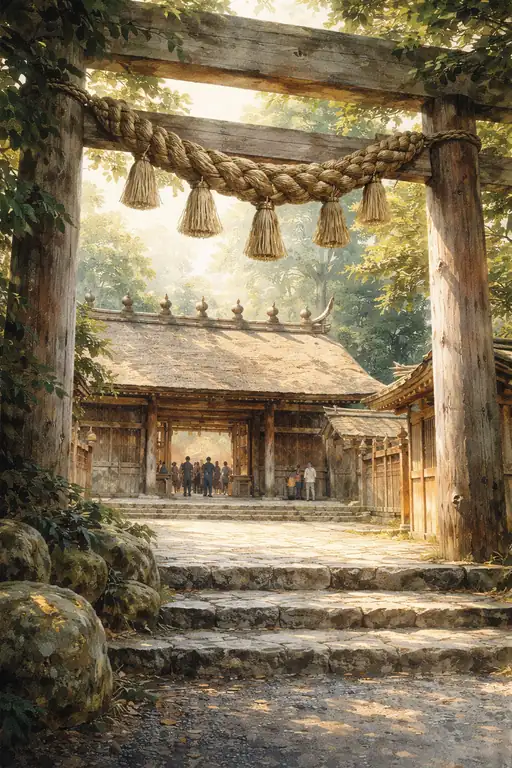 Awakening the Sacred Path
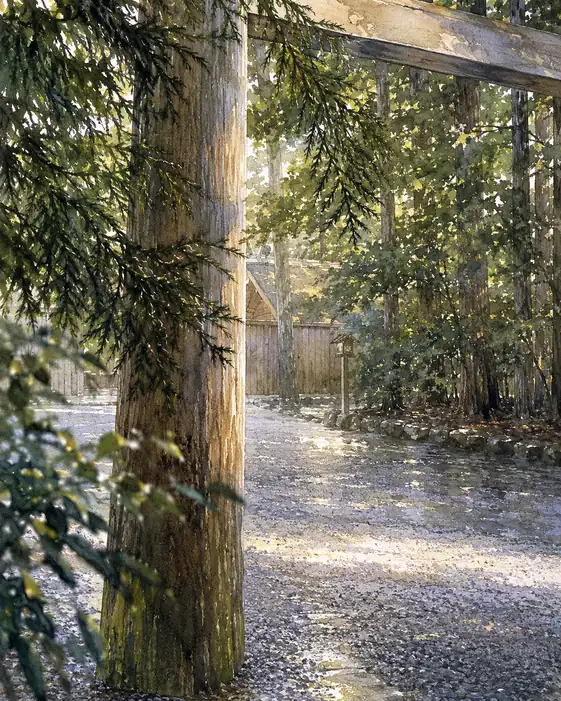 Sunbeams Dancing on the Path of Gods
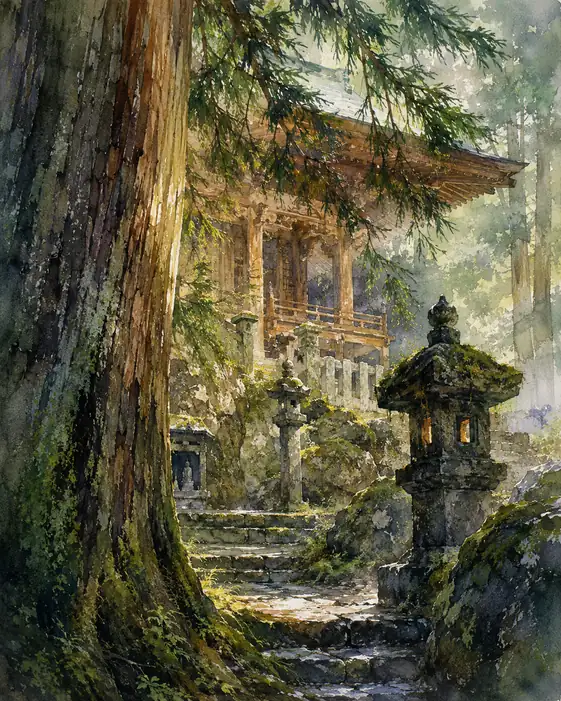 Sanctuary of the Ancient Cedars
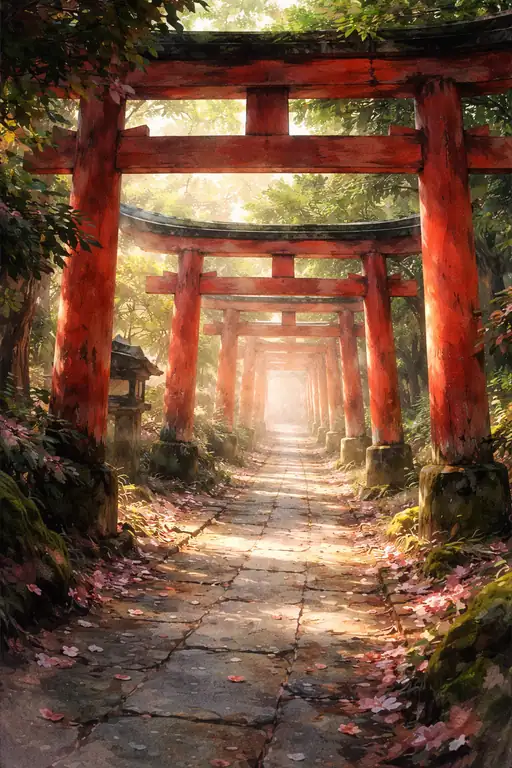 The Radiant Path of a Thousand Gates
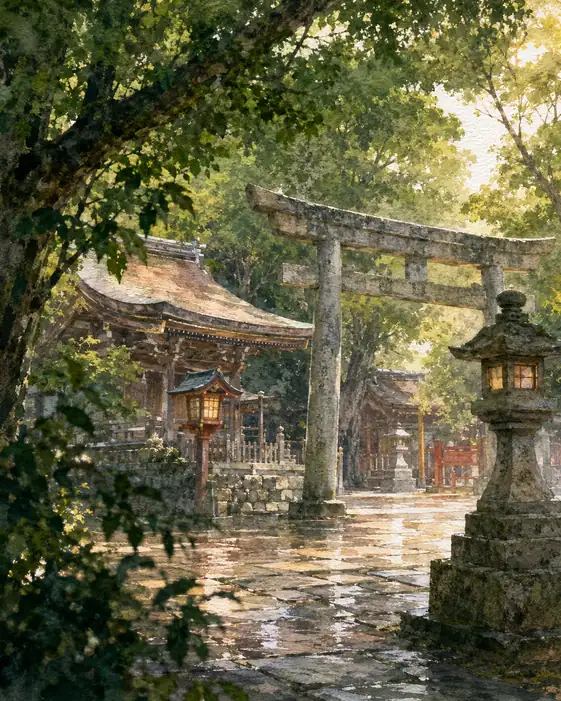 Sanctuary in the Emerald Mist
 Passage Through the Sacred Shadows
 Rain's Serenade in the Sacred Grove
 The Sacred Silence of the Moss-Covered Hall
 Threshold of the Sacred Sun
 Sanctuary of the Silent Forest