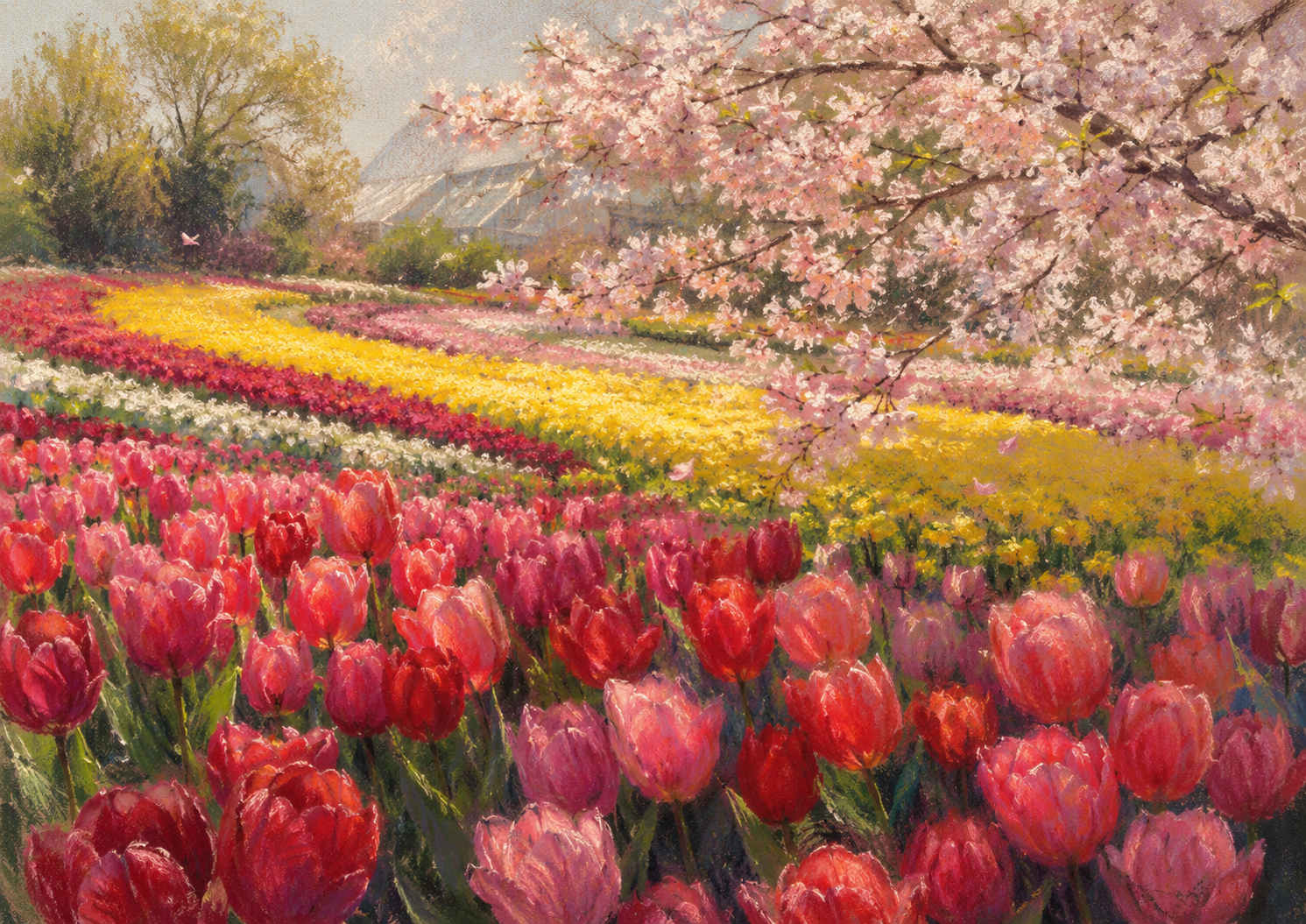
A Breath of Spring
Critique
1. Introduction This work presents a spring garden spread beneath a canopy of blossoms. Broad flower beds, a distant greenhouse, and a faint mountain form are unified within a luminous, seasonal landscape. 2. Description The foreground is filled with red, rose, and pink tulips set among dark green leaves. Across the middle ground, bands of yellow, white, and crimson flowers sweep horizontally from side to side. Overhead, pale cherry blossoms occupy the upper right, while a tall tree and hazy structures anchor the left and center distance. 3. Analysis The composition joins a close, immersive foreground to a softer and more open background. Thick touches of paint give the tulips and blossoms a dense tactile surface, while the distant forms are simplified into misty shapes. Warm pinks, reds, and golds dominate, yet they are moderated by greyed sky tones and scattered greens, which keep the image orderly. 4. Interpretation and Evaluation The painting can be understood as an image of seasonal abundance organized with notable discipline. It does not rely on a single focal object, but on the rhythm created by repeating flower bands and the framing branch above. The work is effective in its color harmony, in the descriptive clarity of its blooms, and in the technique that prevents richness from becoming confusion. Its originality lies in combining decorative fullness with a carefully measured spatial recession. 5. Conclusion At first, the scene appears to be a simple celebration of floral beauty. Closer viewing reveals a firmly controlled arrangement of layers, intervals, and light. The impression shifts from profusion alone to an appreciation of how color and structure guide the eye through the garden.
Same Subcategory
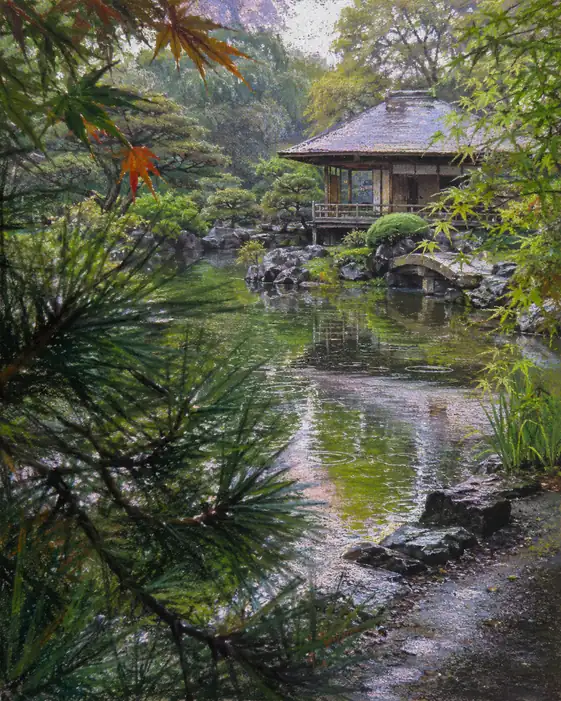 Rain-Soaked Reverie: The Garden's Silent Melody
Similar Artworks
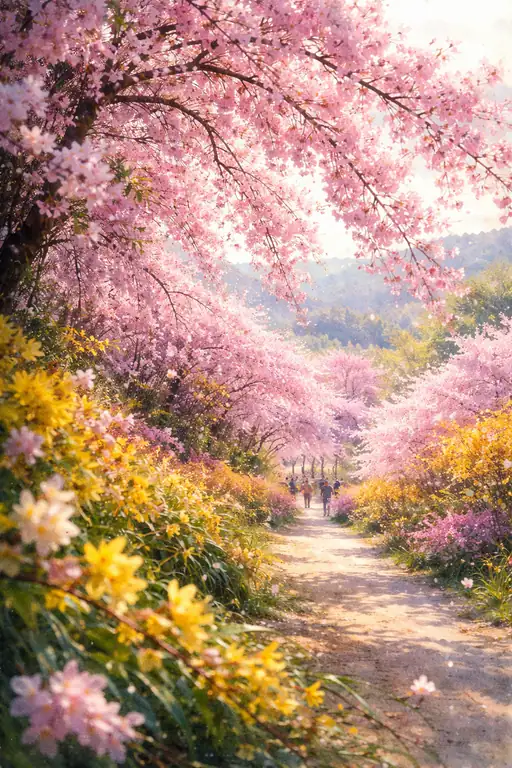 The Pathway Beneath the Spring Blossom Canopy
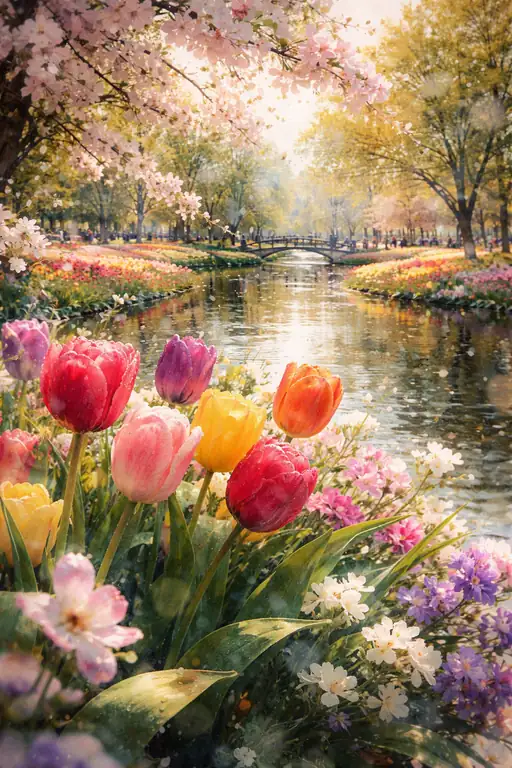 Symphony of Spring
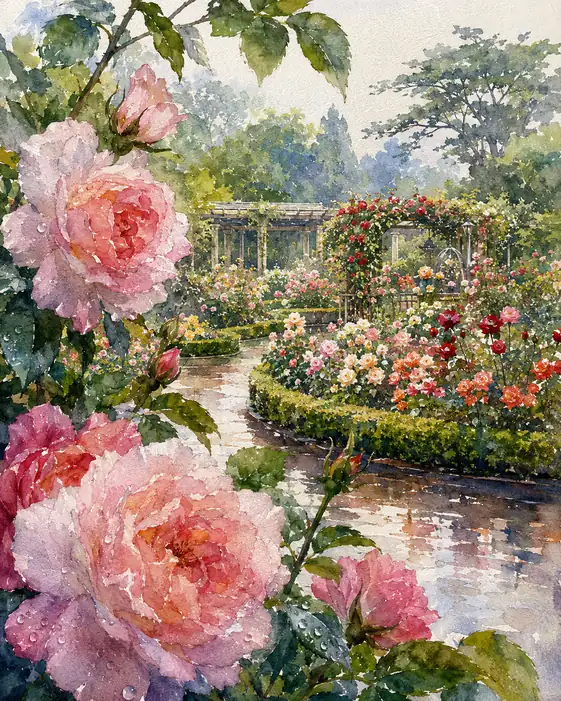 Glistening Whispers of the Morning
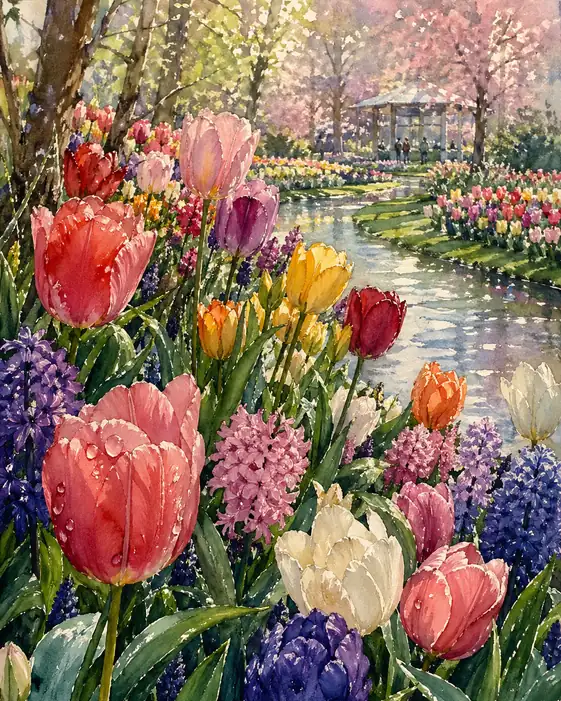 Spring’s Awakening Symphony
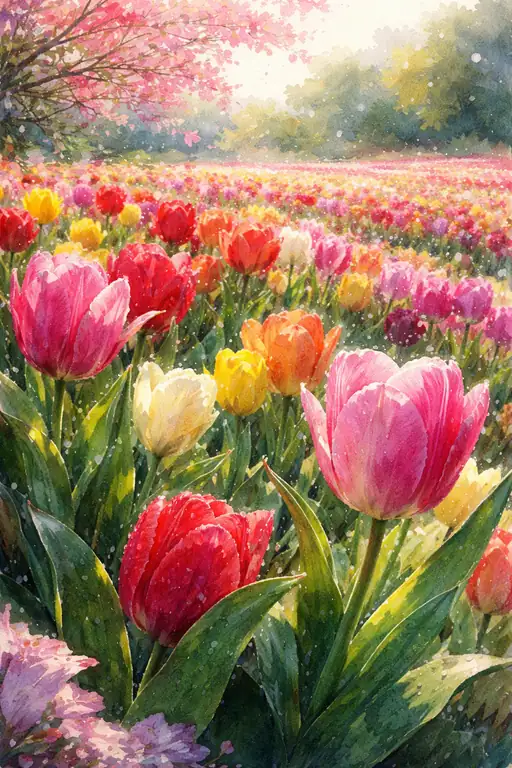 A Promise of Spring Bloom
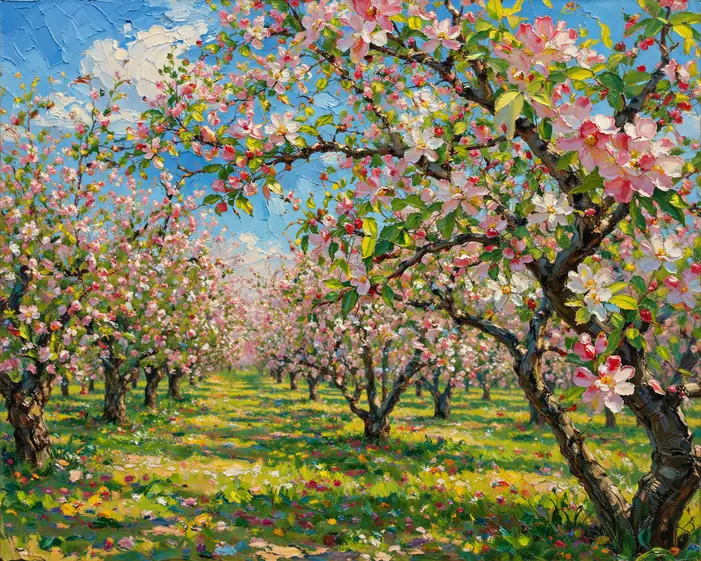 Spring's Passionate Awakening
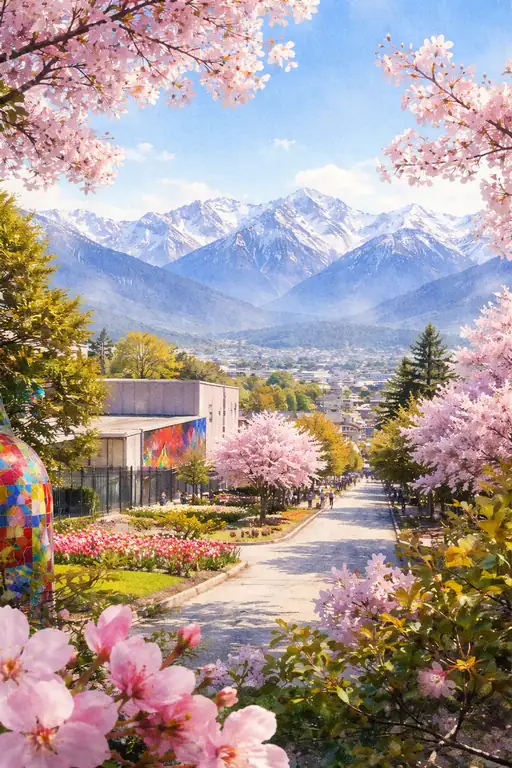 Spring's Radiant Path to the Snowy Summit
 Intimate Whispers by the Spring Water
 Gentle Gaze of a Fawn Beneath the Spring Canopy
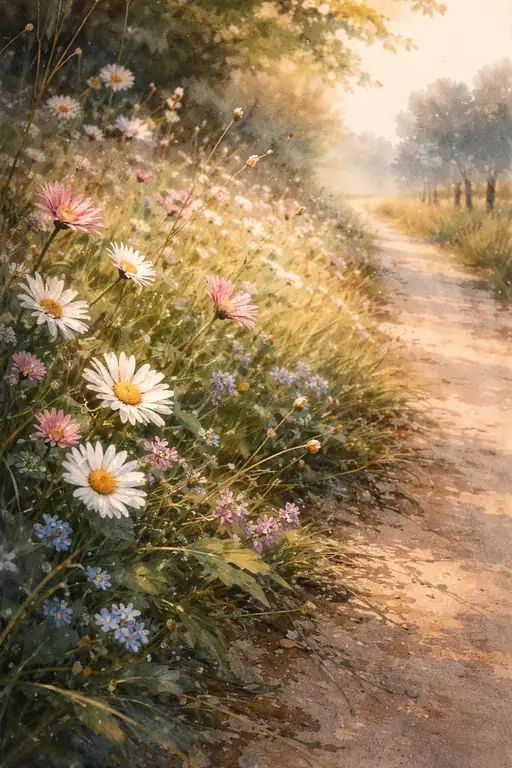 Path of Wildflowers