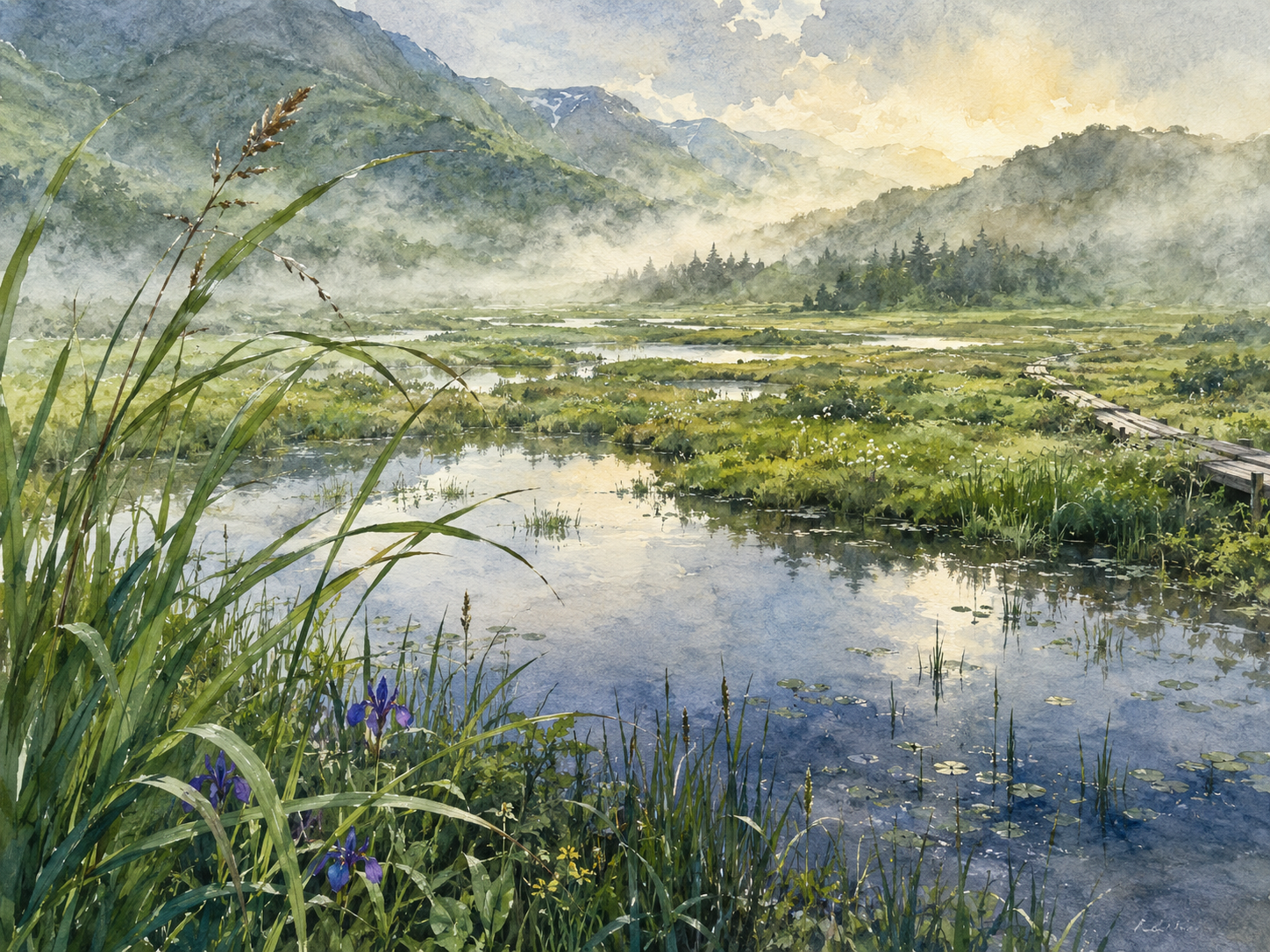
Where the Sky Rests
Critique
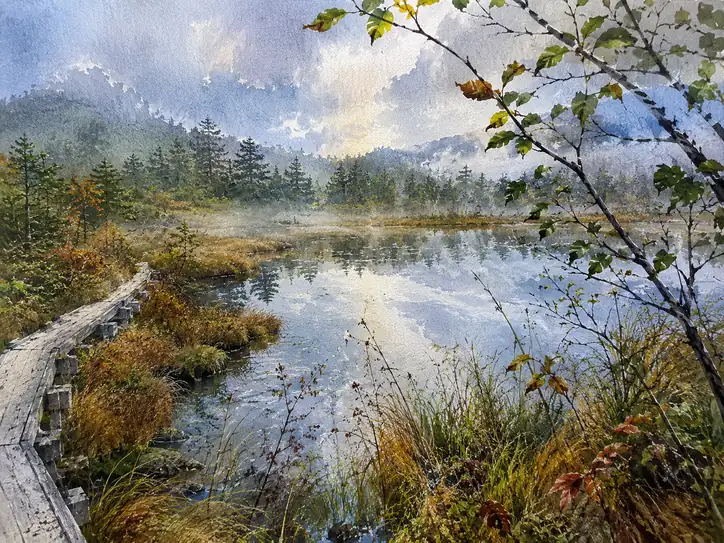
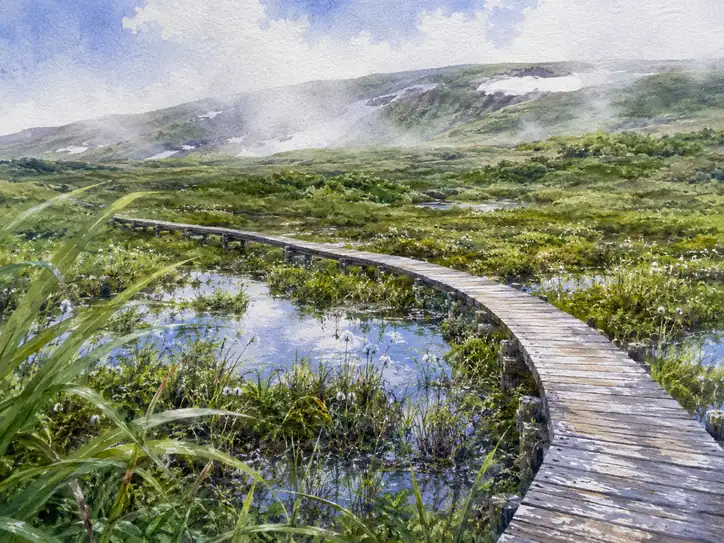
1. Introduction This work is a landscape painting presenting a broad wetland plain enclosed by mountains, woods, and morning cloud. The exact location and medium cannot be confirmed from the image alone, yet the image provides clear information about terrain, weather, and spatial organization. 2. Description The foreground is occupied by reeds, flowering plants, and a still pool scattered with water lilies. Beyond this reflective band, patches of marsh extend toward a dark line of trees, and a pale boardwalk curves from the right edge into the middle distance beneath a bright, veiled sky. 3. Analysis This arrangement gives greater weight to horizontal spread and quiet continuity than to foreground emphasis. The painter distributes attention evenly across water, grass, forest, and mountain, while mist softens the transitions between planes; delicate tonal shifts in blue, green, and cream keep the scene luminous without sharp contrast. 4. Interpretation and Evaluation The image can be understood as an affirmation of environmental breadth rather than scenic spectacle, because no single element dominates the whole. Its composition is stable, its color design is cohesive, and its descriptive handling of vapor, reflection, and plant texture is refined; the work's originality lies in the disciplined refusal of excess and in the patient articulation of a modest subject. 5. Conclusion The first impression is one of serenity, but a longer look reveals a deliberate orchestration of intervals, surfaces, and scale. The painting succeeds through restraint, showing how measured technique can give a familiar landscape sustained presence.
Same Subcategory
 Stillness of the Waking Mist
Similar Artworks
 Journey Through the Mist
 Yellow Symphony on the Summer Marsh
 Steps Through the Morning Mist
 Whispers of the Highland Boardwalk
 Whispers of the Silver Thaw
 Mirror of the Alpine Soul
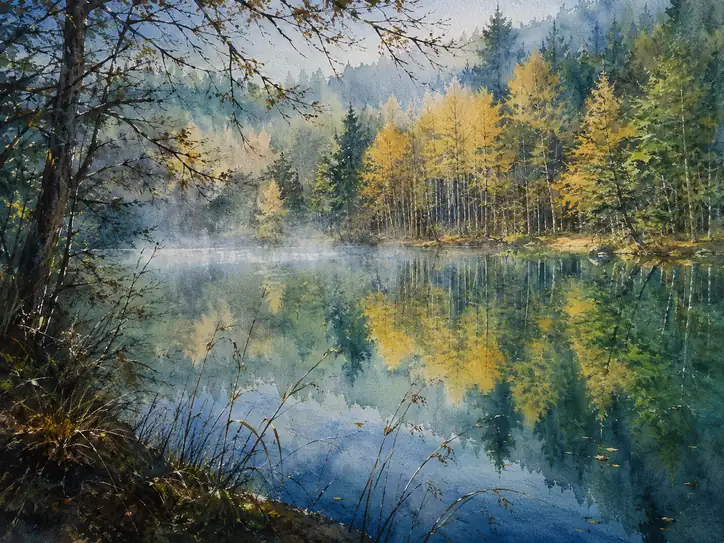 The Golden Mirror of My Soul
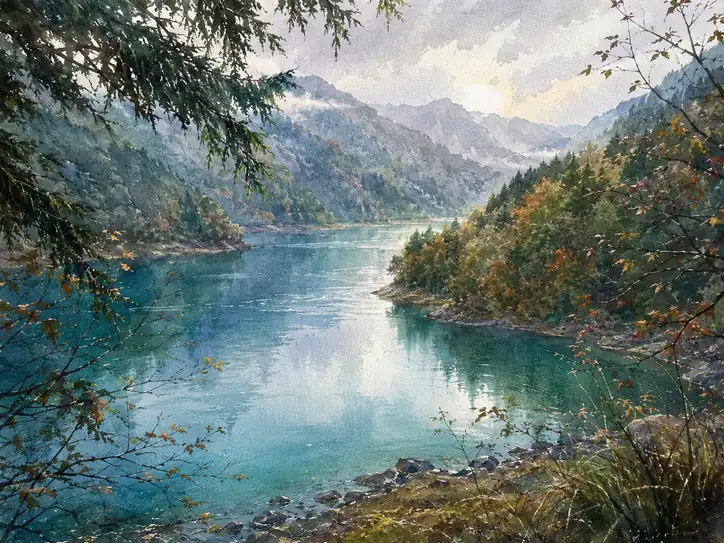 Echoes of Tranquility: The Sapphire Haven
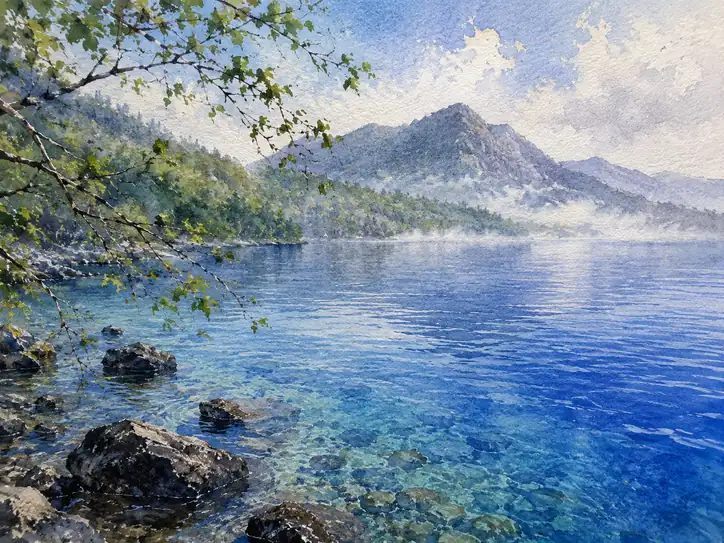 The Silence of Sapphire Depths
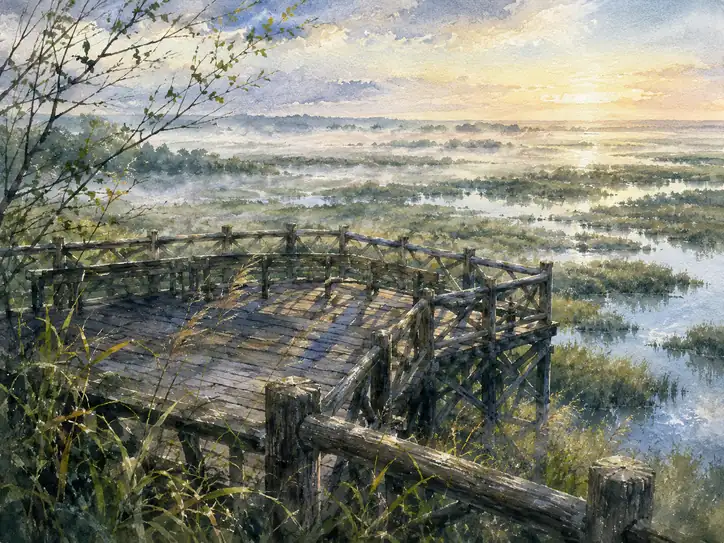 Threshold to the Silver Marsh