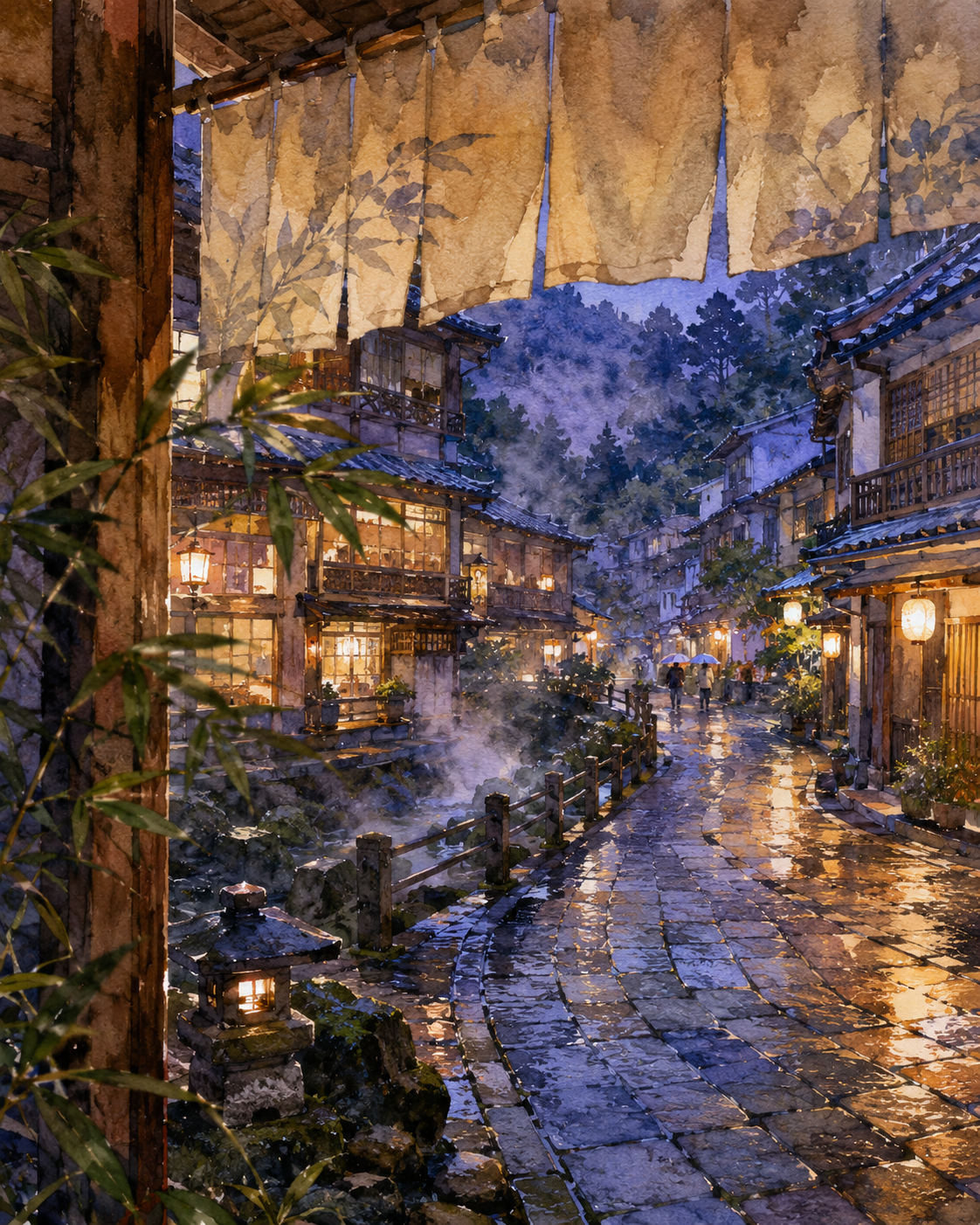
Lamps on the Rain-Kissed Road
Critique
1. Introduction This work depicts a traditional streetscape at dusk after rainfall, with a narrow canal, wooden buildings, and a gently curving stone road. The first impression is one of warmth and shelter, even though the air remains cool and damp. 2. Description The scene is framed by a hanging textile curtain and bamboo leaves in the foreground, which create the sense of looking out from a sheltered threshold. Lanterns and interior lights glow along both sides of the street, while reflections spread across the wet paving stones. Small figures with umbrellas walk in the middle distance, and steam or mist rises near the watercourse beside the path. 3. Analysis The curving road organizes the composition and carries the viewer inward through repeated lights and architectural rhythms. A contrast between golden illumination and blue-violet shadow structures the entire surface. The painter also varies focus effectively: broad washes unify the distant hillside, while sharper linear accents define railings, windows, and roof edges in the nearer buildings. 4. Interpretation and Evaluation The image suggests a town shaped by routine hospitality and evening circulation rather than spectacle. Human presence is modest, yet essential, because the figures activate scale and imply lived use of the street. The work is convincing in its spatial design, in its careful orchestration of reflected light, and in its ability to present a familiar motif with clarity rather than nostalgia alone. 5. Conclusion An initially picturesque night scene thus develops into a thoughtful study of how architecture, weather, and light together produce a shared atmosphere.
Same Subcategory
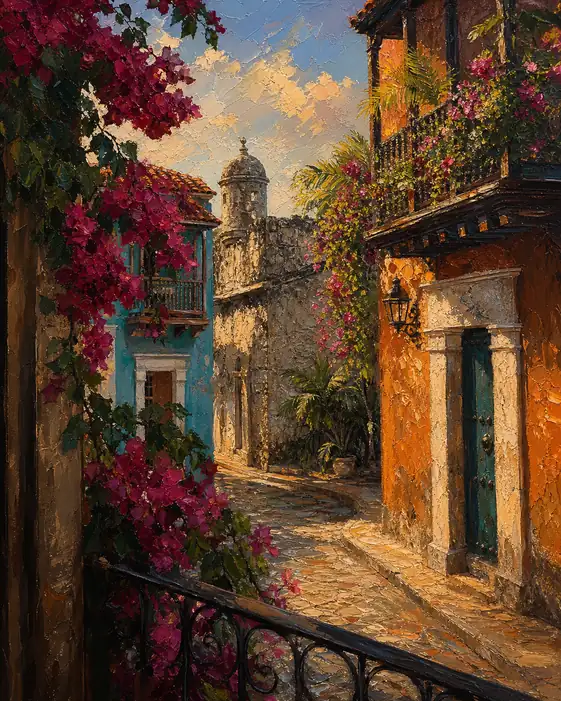 Vibrant Echoes of the Golden Alley
Similar Artworks
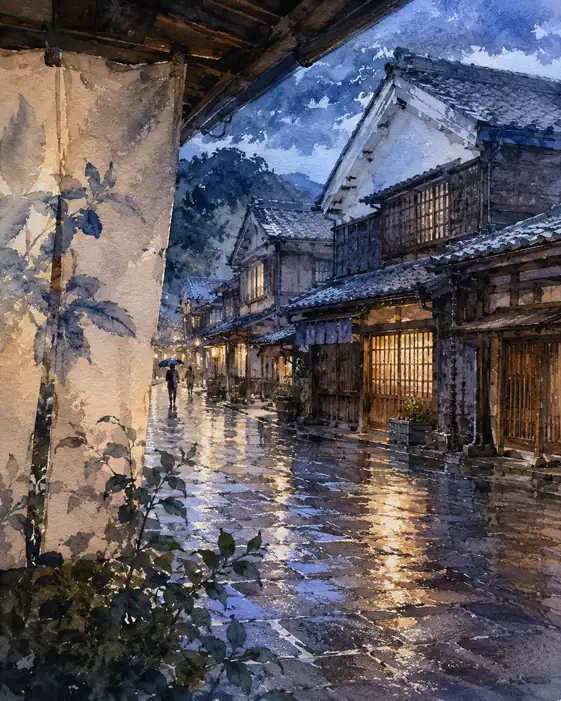 Light Dwelling in the Rain
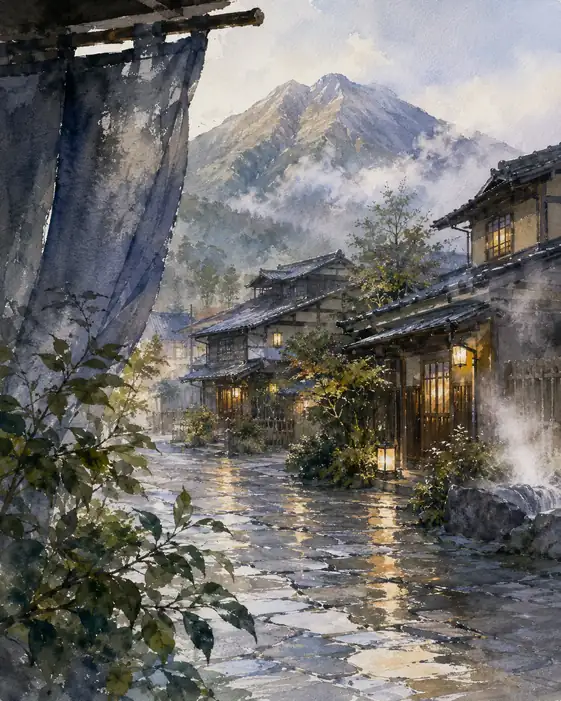 Echoes of the Mist-Bound Inn
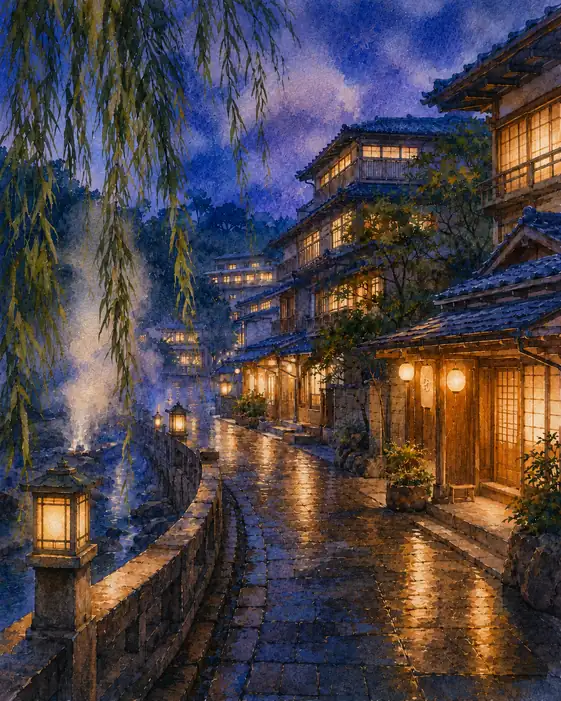 A Lullaby of Lanterns and Willow Whispers
 The Golden Windows of My Nostalgic Haven
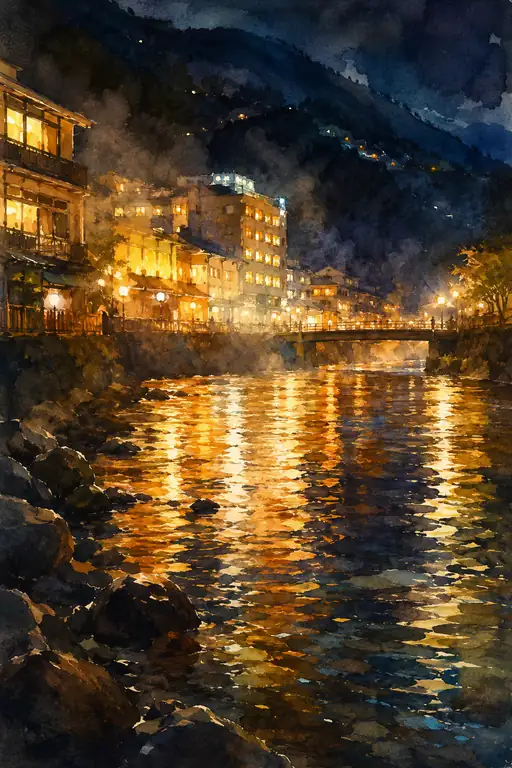 A Healing Glow in the Mist of Night
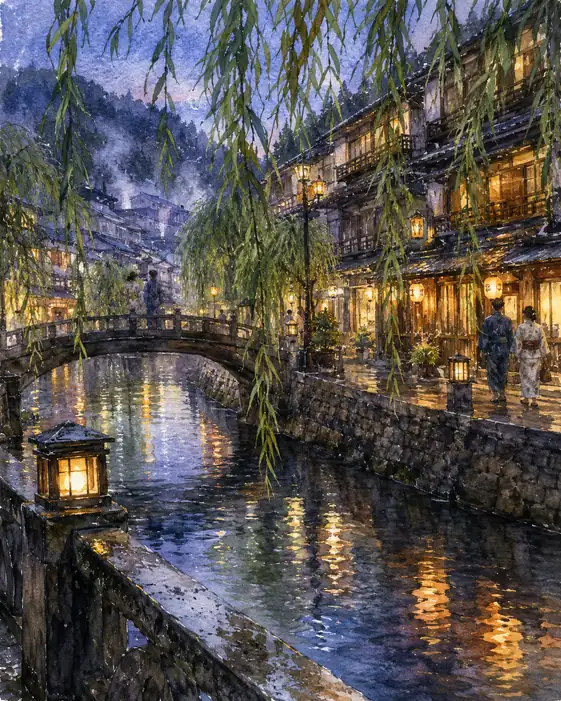 Whispers of the Rain-Washed Evening
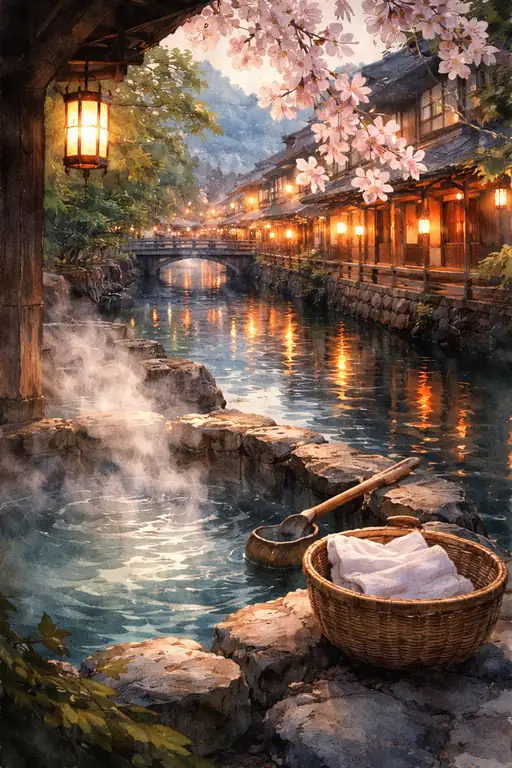 Warmth Beneath the Evening Blossoms
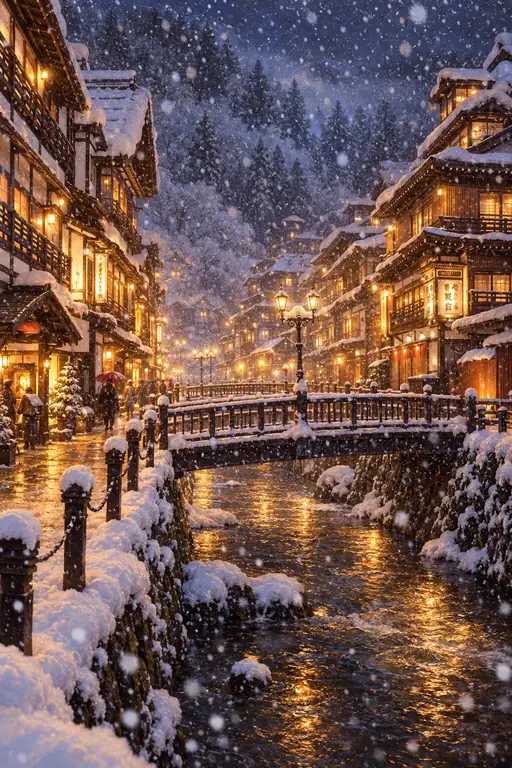 Golden Reflections upon the Snowy River Way
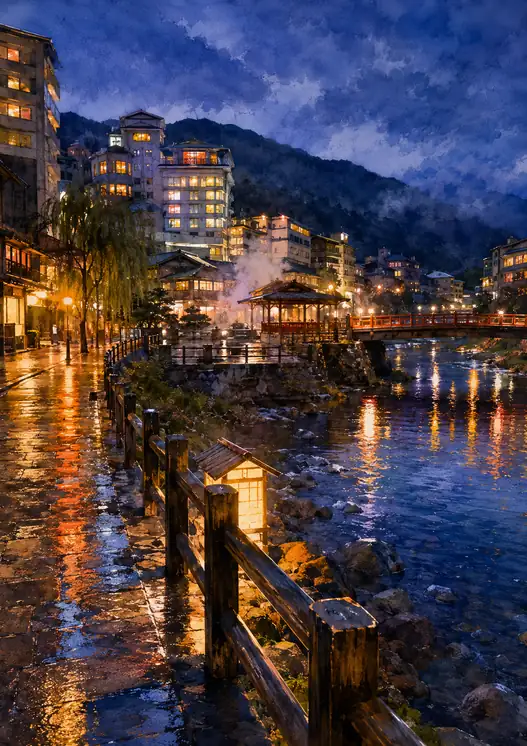 Lanterns Teach the River to Glow
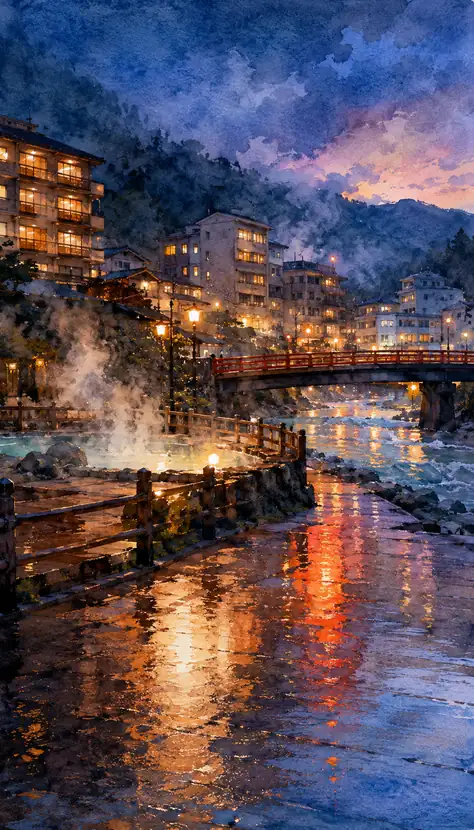 Steam Carries the Evening Home