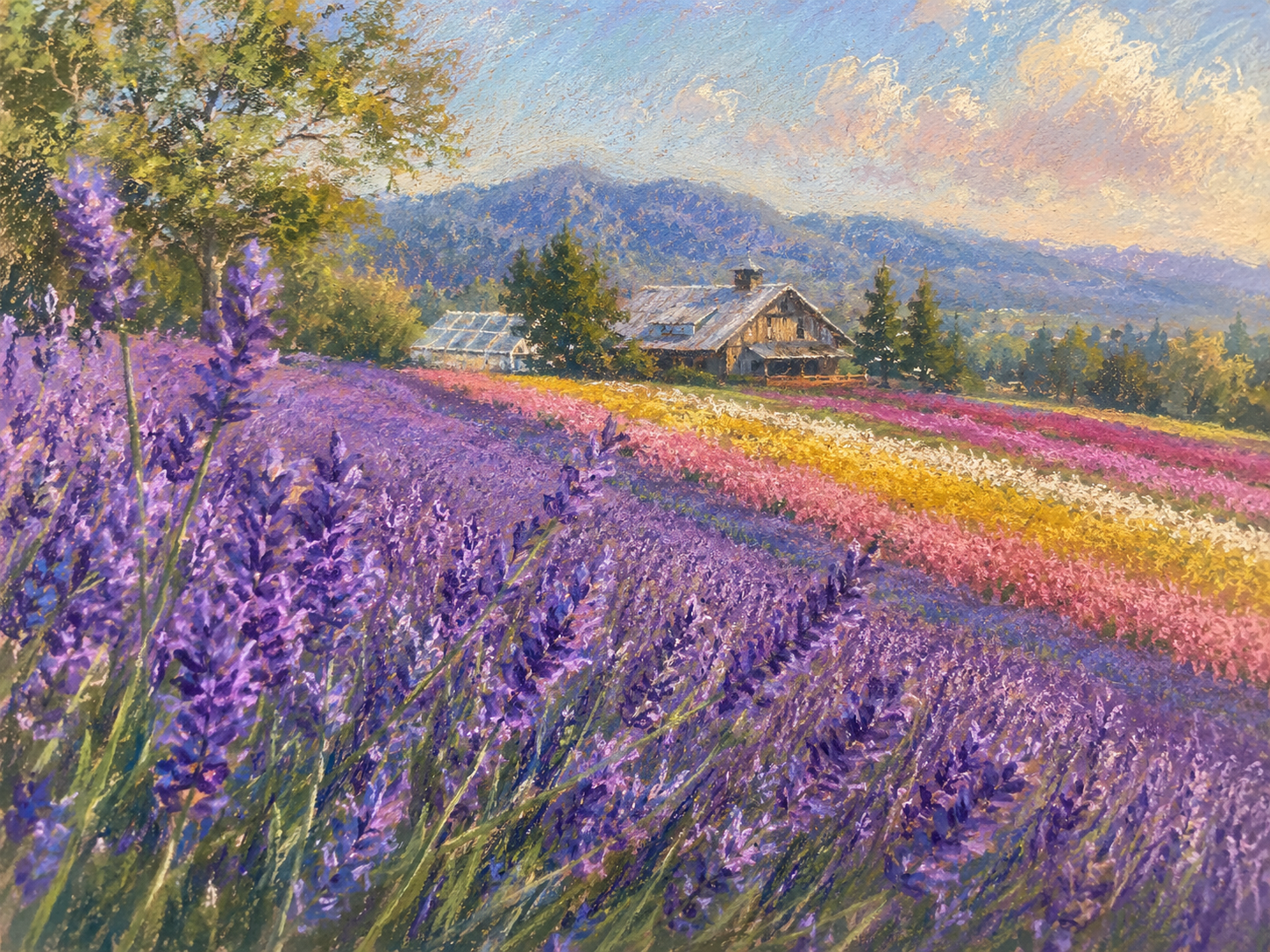
The Earth's Melodic Bloom
Critique
1. Introduction This work presents a cultivated flower field spreading toward a farmhouse and distant mountains under soft evening light. The picture uses an agricultural setting, yet it is composed with the richness and rhythm usually associated with ornamental garden scenes. 2. Description Purple flower spikes occupy most of the foreground and left side, creating a dense surface of repeated vertical forms. Farther back, the field opens into horizontal bands of pink, yellow, and white blossoms leading toward a wooden house and a small greenhouse. Beyond these structures, blue-violet mountains stretch across the horizon beneath a pale sky touched with warm cloud. 3. Analysis The composition is organized through strong recession and color layering. The viewer moves from the close violet plants through increasingly narrow floral bands to the buildings and finally to the mountains. Color is the primary structural force here, with purple, rose, gold, white, and cool blue balanced carefully so that abundance does not become visual confusion. 4. Interpretation and Evaluation The painting may be understood as an image of cultivation shaped into harmony with the wider land. Its descriptive skill appears in the varied treatment of blossoms, foliage, wood, and distant atmosphere. The composition is clear, the color design is ambitious but controlled, and the decision to combine broad flower stripes with a modest farmhouse gives the scene a persuasive sense of lived place. 5. Conclusion At first, the work seems to offer a simple delight in brilliant color. With closer attention, its more durable achievement emerges in the careful ordering of space, repetition, and chromatic contrast. The result is a coherent landscape in which composition, color, technique, and observation turn abundance into structure rather than excess.
Same Subcategory
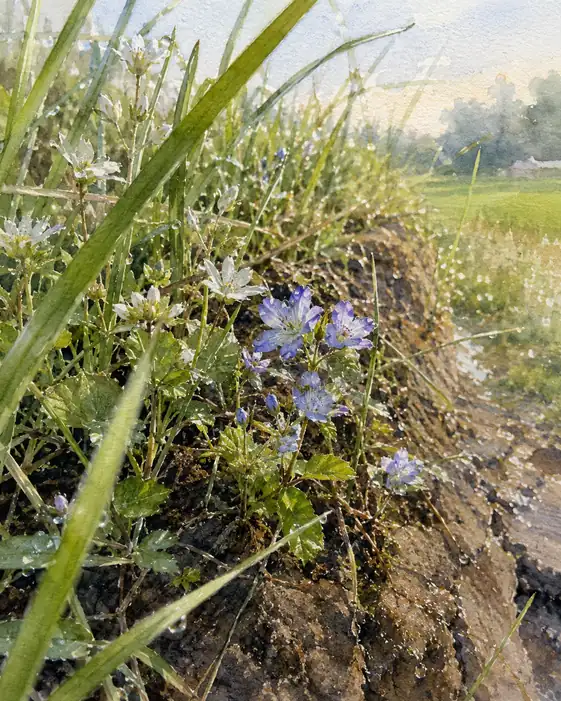 Awakening of the Tiny Stars
Similar Artworks
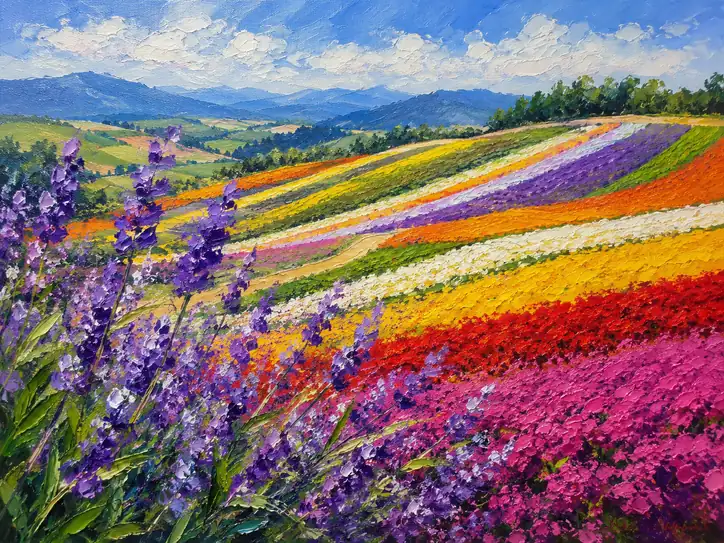 A Rainbow Journey to the Horizon
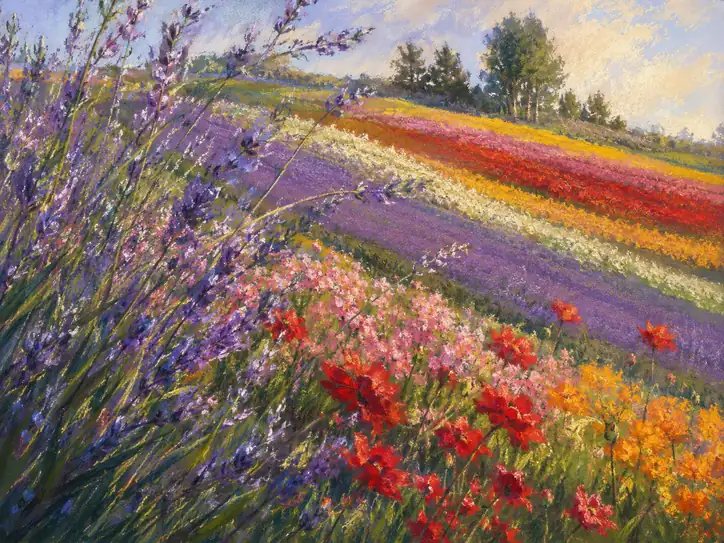 A Gradient of Summer Dreams
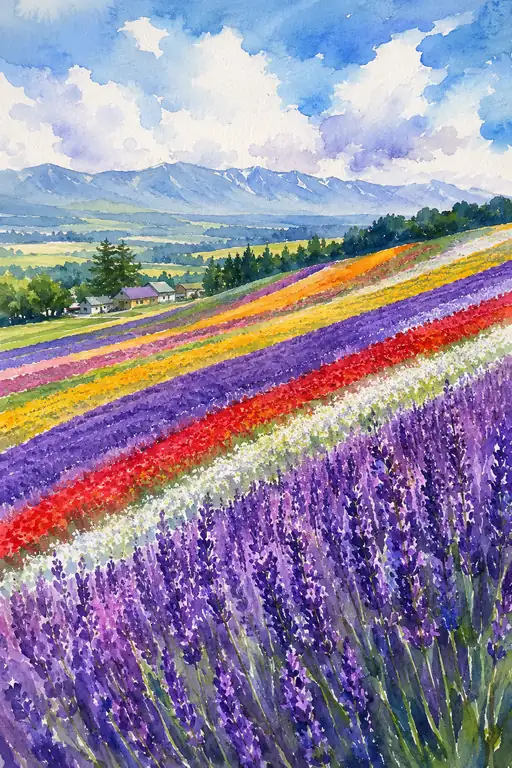 Breeze across the Rainbow Hill of Furano
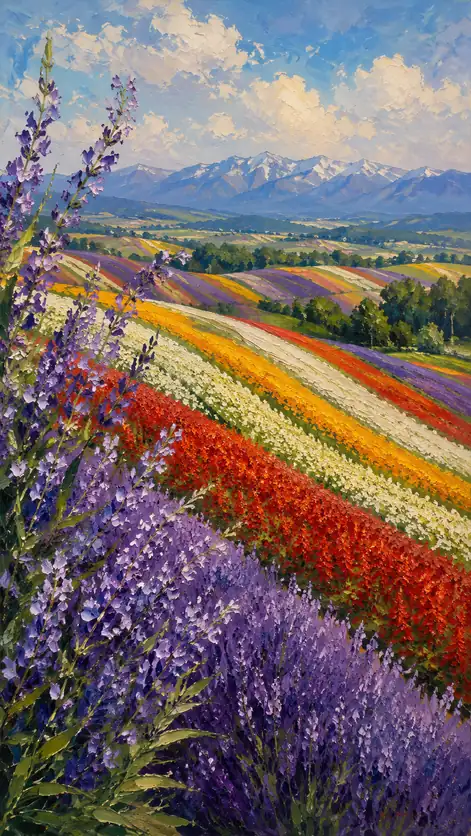 Tactile Bloom beneath the Snow-Capped Peak
 Joyful Chorus of Summer Blooms
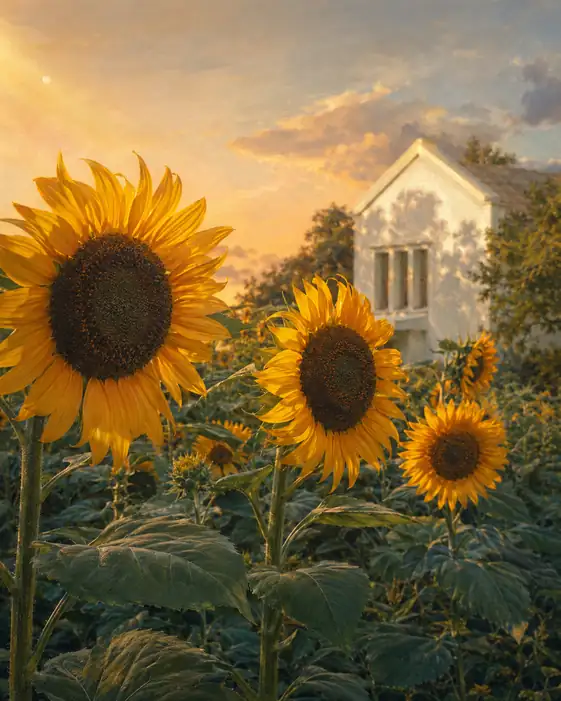 Sunflowers and the White Cottage at Sunset
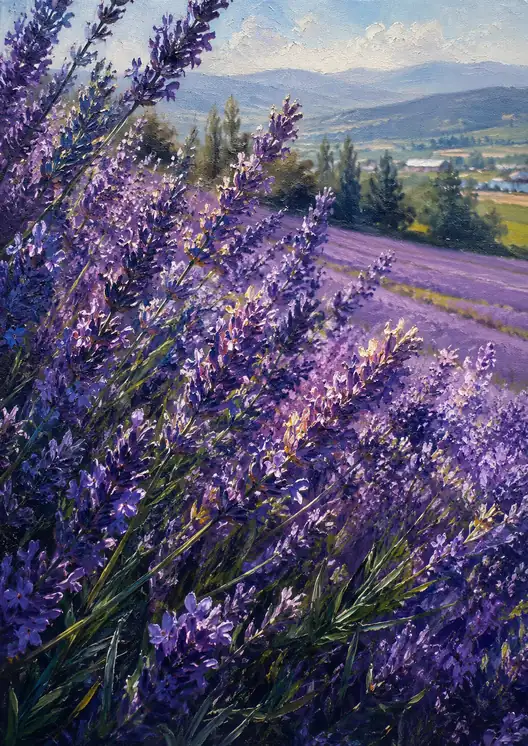 Golden Beams and Luminous Petals
 Twilight Reflections in the Glass Prism
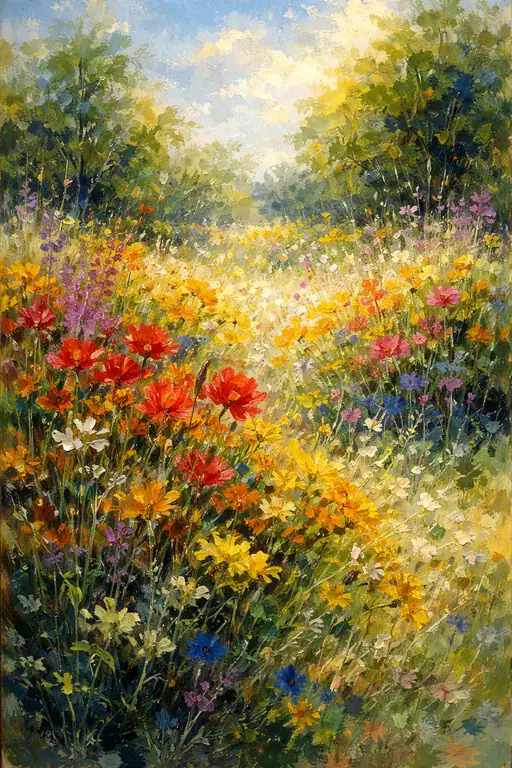 Impressions of a Fleeting Morning
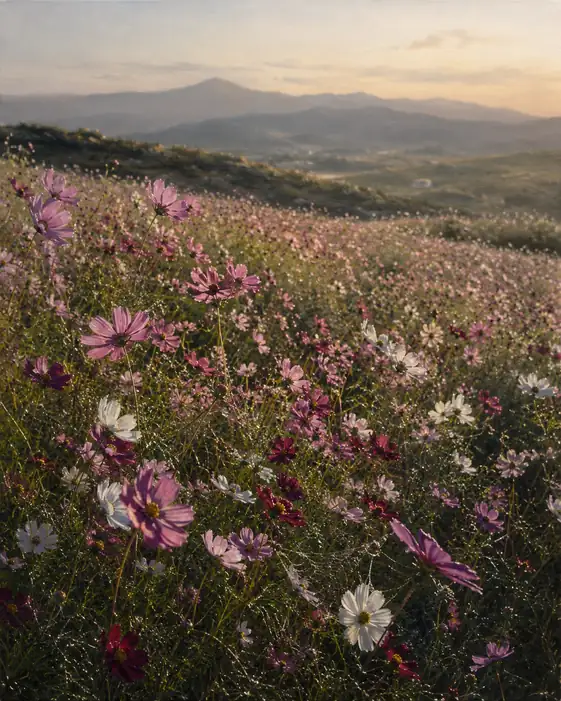 Sloping Fields of Evening Cosmos