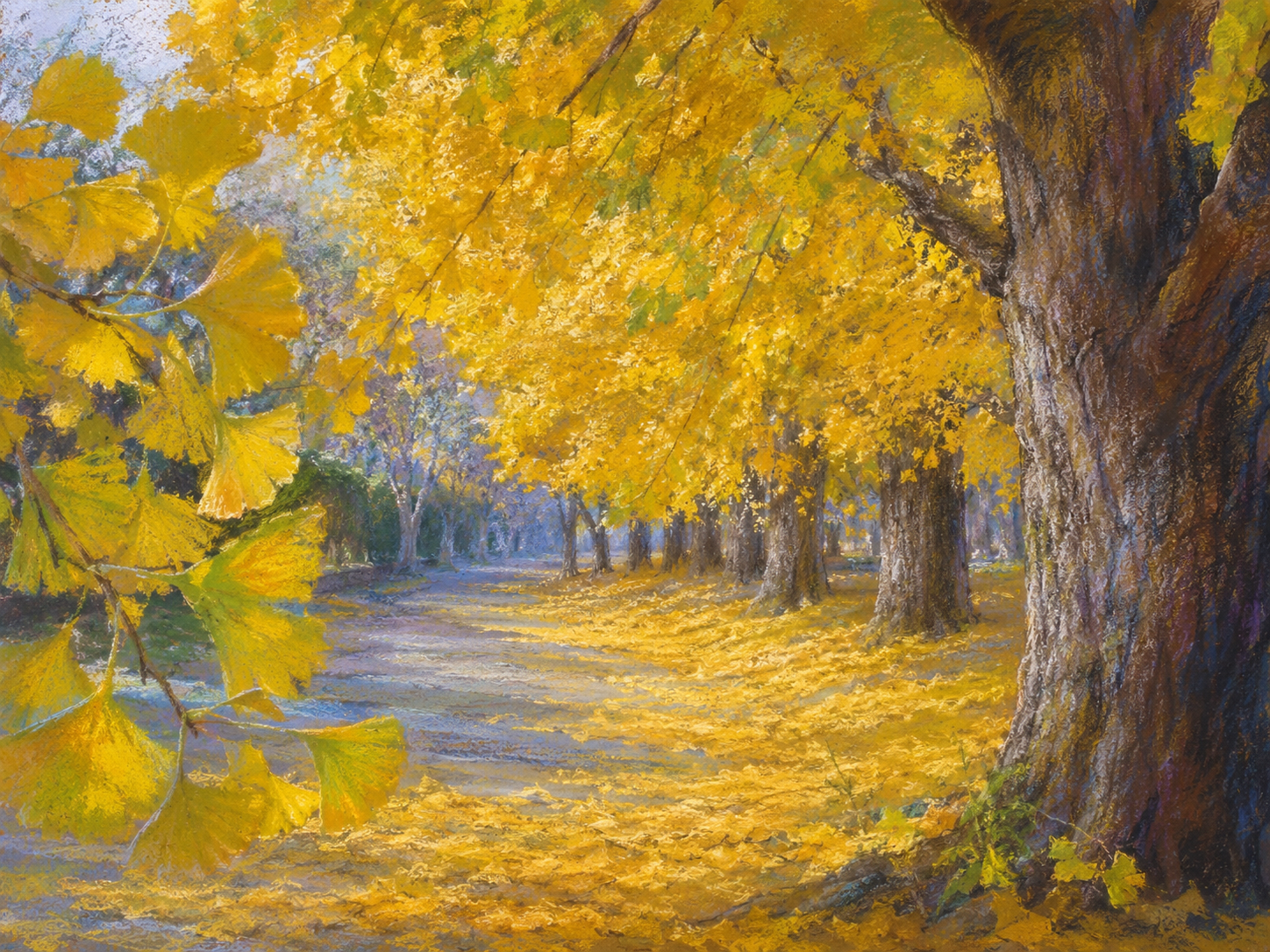
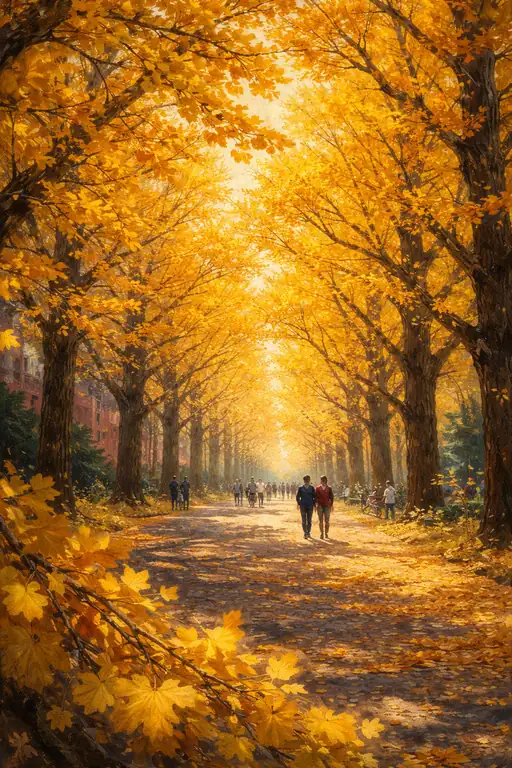
Under the Golden Canopy of Ginkgo
Critique
1. Introduction This work presents an autumn tree-lined path filled with dense yellow foliage and soft afternoon light. The exact medium and size cannot be confirmed from the image alone. Although the subject is simple, the picture treats the avenue as a carefully structured study of seasonal color, depth, and the filtering of light through leaves. 2. Description Large fan-shaped leaves enter from the left, almost touching the viewer, while massive trunks rise along the right edge and into the middle distance. The ground is covered with fallen yellow leaves, and a pale path recedes between the trees toward a cool bluish background. The canopy overhead is so thick that it becomes a luminous ceiling, interrupted only by thin branches and small passages of sky. 3. Analysis The composition uses repetition with variation. The rhythm of trunks establishes order, but the hanging leaves and drifting carpet of foliage prevent the scene from becoming rigid. Color is central to the work, especially the sustained dialogue between golden yellow, muted green, cool violet-gray shadow, and the earthy browns of bark. 4. Interpretation and Evaluation The painting may be understood as an image of seasonal abundance held briefly before decline. Its descriptive strength lies in the contrast between the rough bark, delicate leaf edges, and hazy distance. The composition is stable, the chromatic design is rich without becoming noisy, and the close framing of leaves gives the scene a modest originality by turning a familiar avenue into an enveloping visual field. 5. Conclusion At first, the work appears to be a straightforward celebration of autumn color. With sustained viewing, a more careful achievement emerges in the measured arrangement of light, repetition, and spatial recession. The result is a landscape in which color, composition, and technique transform a familiar subject into a coherent and reflective image.
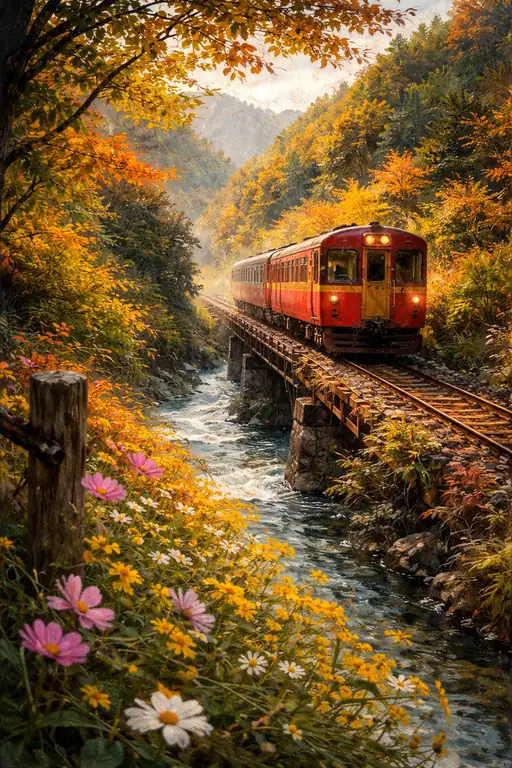 The Crimson Journey Through Autumn Echoes
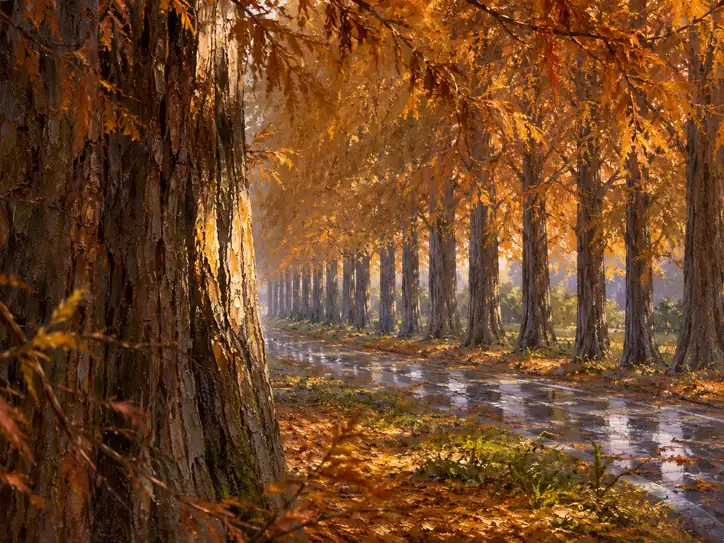 Golden Corridor of the Sleeping Forest
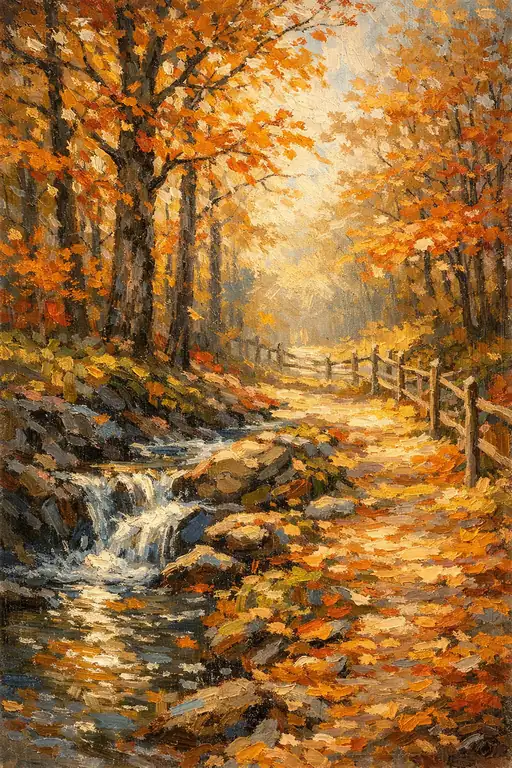 Dance of Colors in the Wind
 Walking the Golden Canopy
 Pathway to the Luminous Secret
 Autumn's Golden Breath over the Stream
 Autumn Whispers in the Sunlit Gorge
 The Golden Corridor
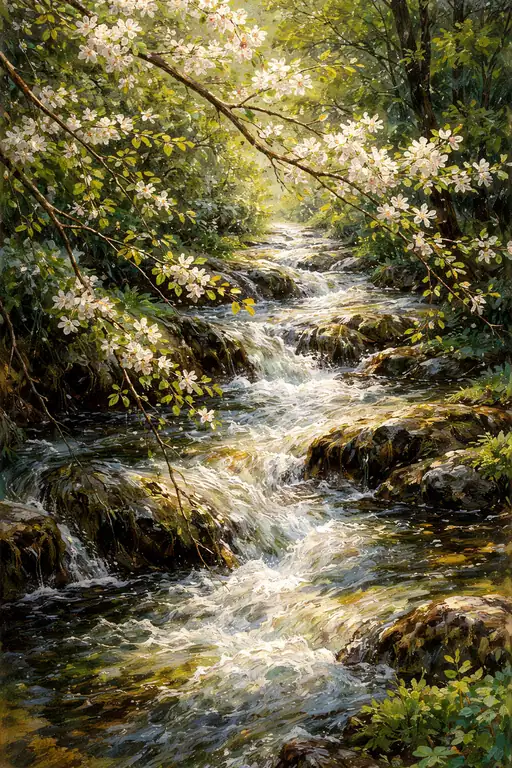 Dance of the Forest Stream
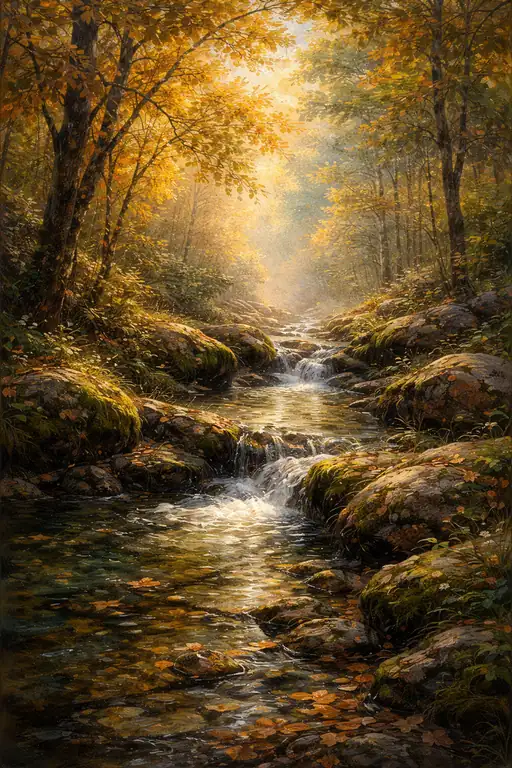 Song of the Hidden River
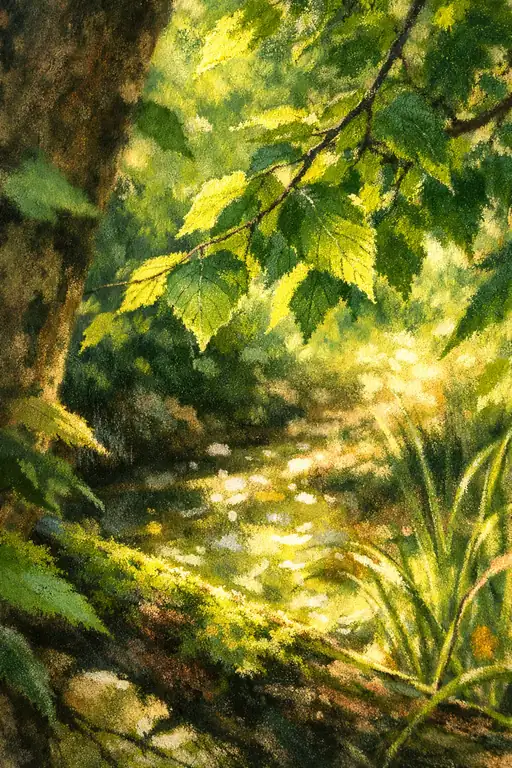 Sunlit Stream Through Leaves