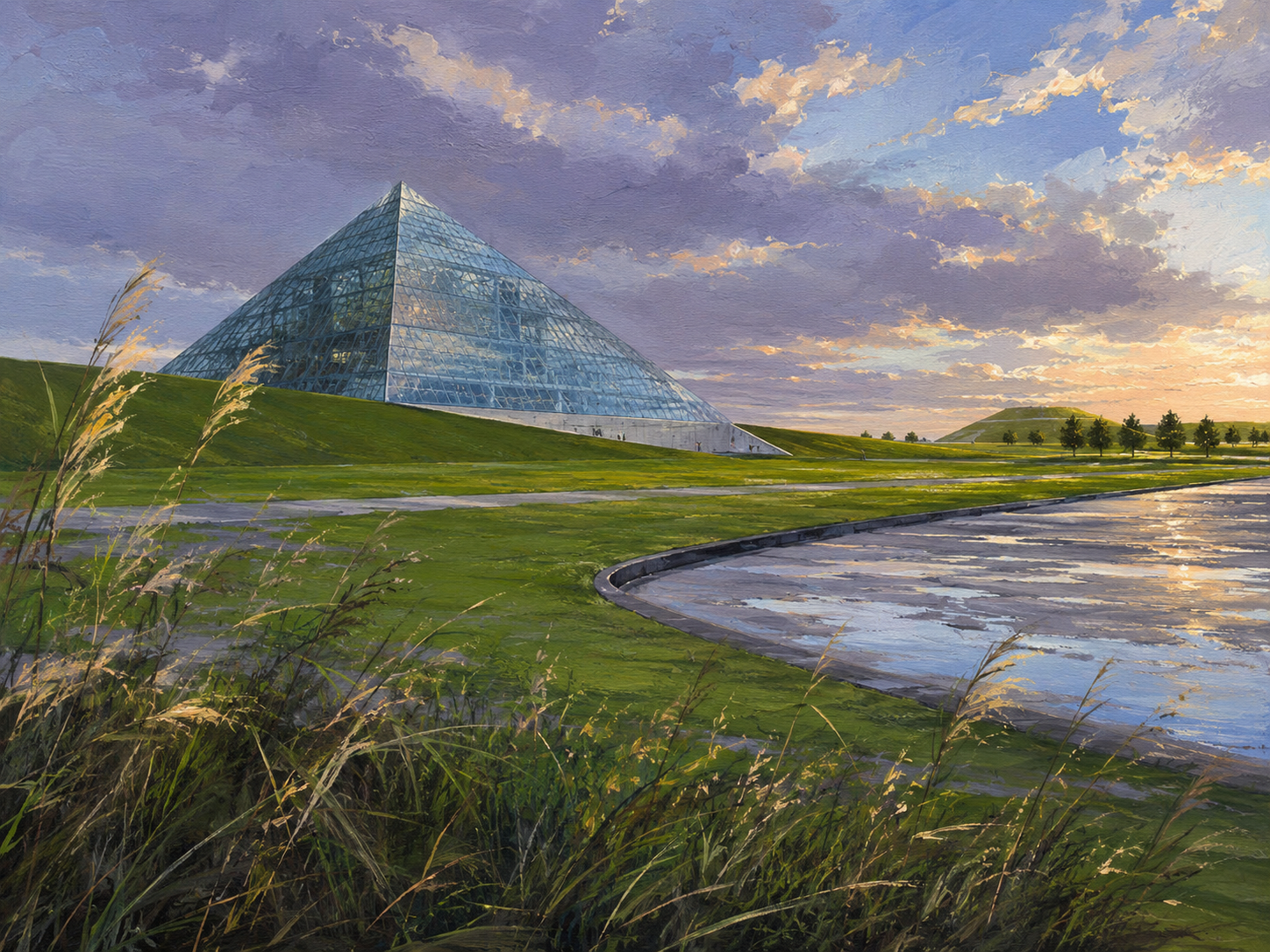
Twilight Reflections in the Glass Prism
Critique
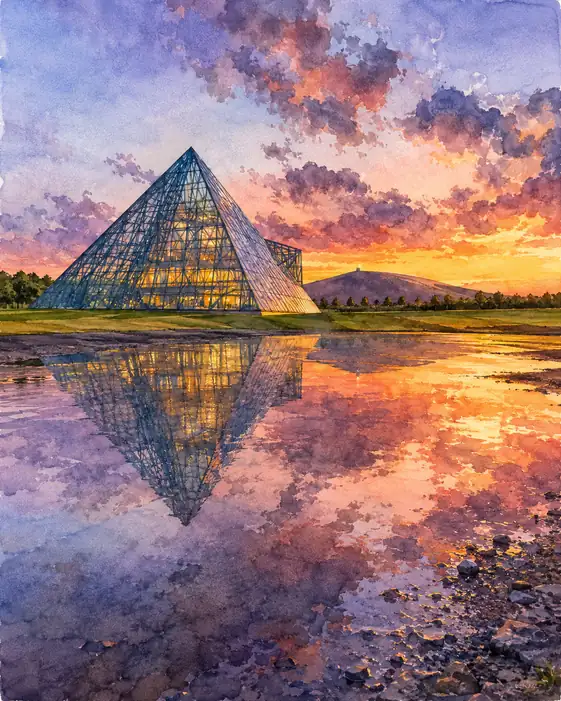
1. Introduction This work presents a landscape organized around a pyramid-shaped glass building set within rolling grass. Even so, the scene clearly combines landscape painting with an architectural subject, treating the structure not as an isolated monument but as part of weather, light, and open ground. 2. Description In the foreground, tall grasses bend across the lower edge, creating a rough, wind-touched threshold. The middle ground is formed by broad green embankments, a curving paved basin or reflecting surface, and the large glazed pyramid rising slightly left of center. Overhead, violet-gray clouds open toward a warm evening light at the right, and that light is echoed in the wet surface below. 3. Analysis The composition depends on a strong dialogue between geometric order and organic spread. The pyramid provides a stable triangular mass, while the curving paths, reeds, and cloud bands keep the scene mobile and expansive. Color is organized through cool blues and purples in the sky and glass, balanced by green earth and restrained gold highlights that mark the late sun. 4. Interpretation and Evaluation The work can be read as an image of coexistence between constructed form and cultivated land. Its descriptive skill is evident in the handling of reflections, atmospheric light, and the transparent surfaces of the building. The composition is clear, the chromatic structure is controlled, and the decision to place wild grasses close to the viewer gives the scene a modest originality rather than a purely monumental character. 5. Conclusion At first, the picture seems to celebrate the striking silhouette of the glass pyramid against a dramatic sky. With longer looking, its quieter achievement becomes clearer: architecture, weather, and terrain are held in measured balance. The result is a landscape in which composition, color, technique, and observation deepen the first impression without excess.
Same Subcategory
 Reflections of a Future Dream
 Resonating Light in the Glass Vessel
Similar Artworks
 The Geometry of Quietude
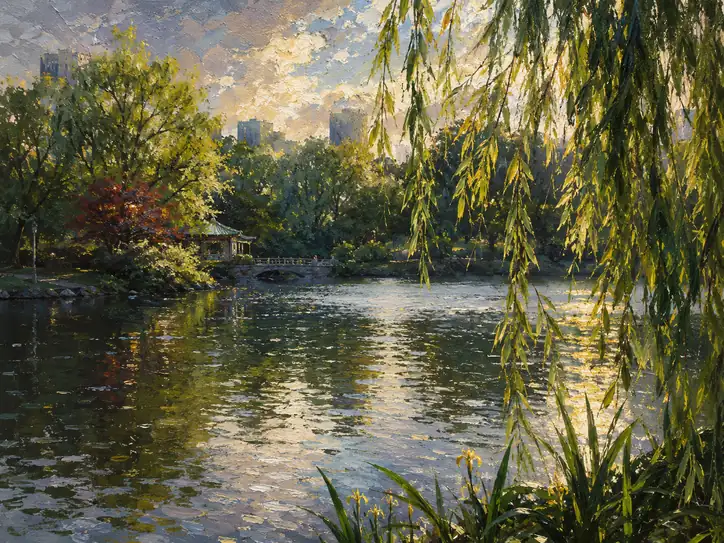 Beyond the Willow's Veil
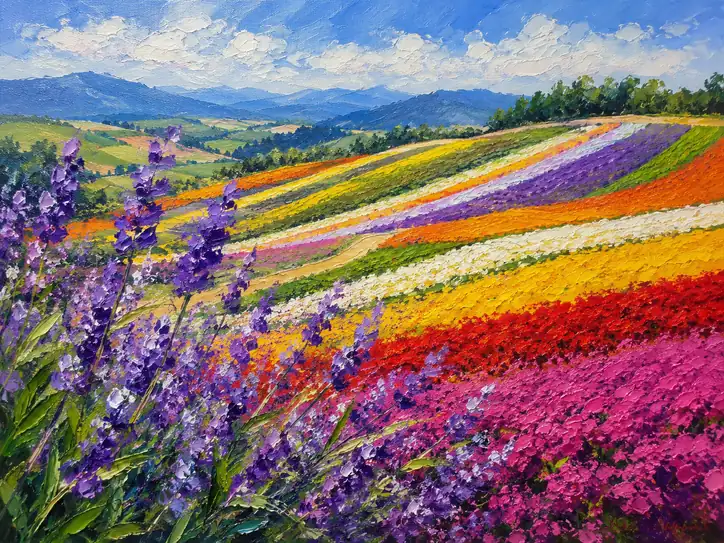 A Rainbow Journey to the Horizon
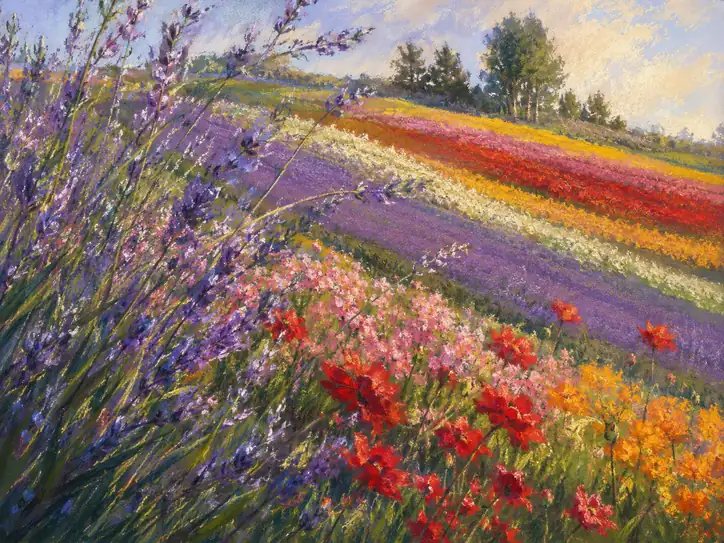 A Gradient of Summer Dreams
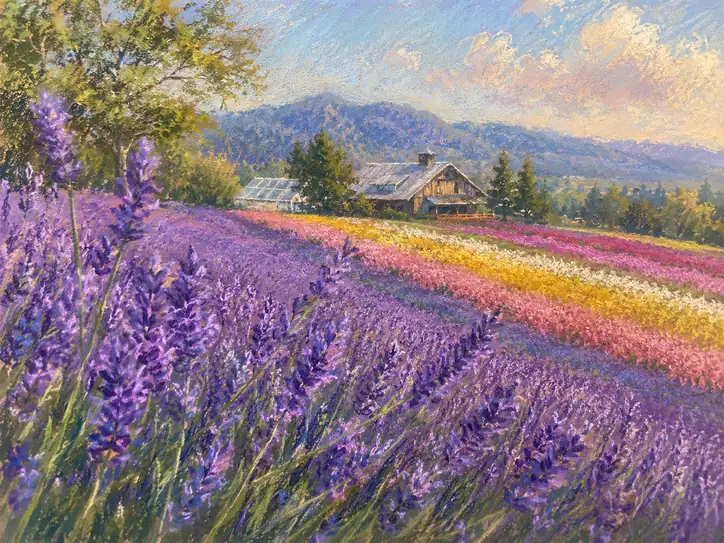 The Earth's Melodic Bloom
 Whispering Mist and the Mirroring Peak
 Golden Peace in the Pine-Framed Garden
 The Sky Enters the Glass Mountain
 The Sky Enters the Glass and Doubles
 The Silence of Sapphire Depths