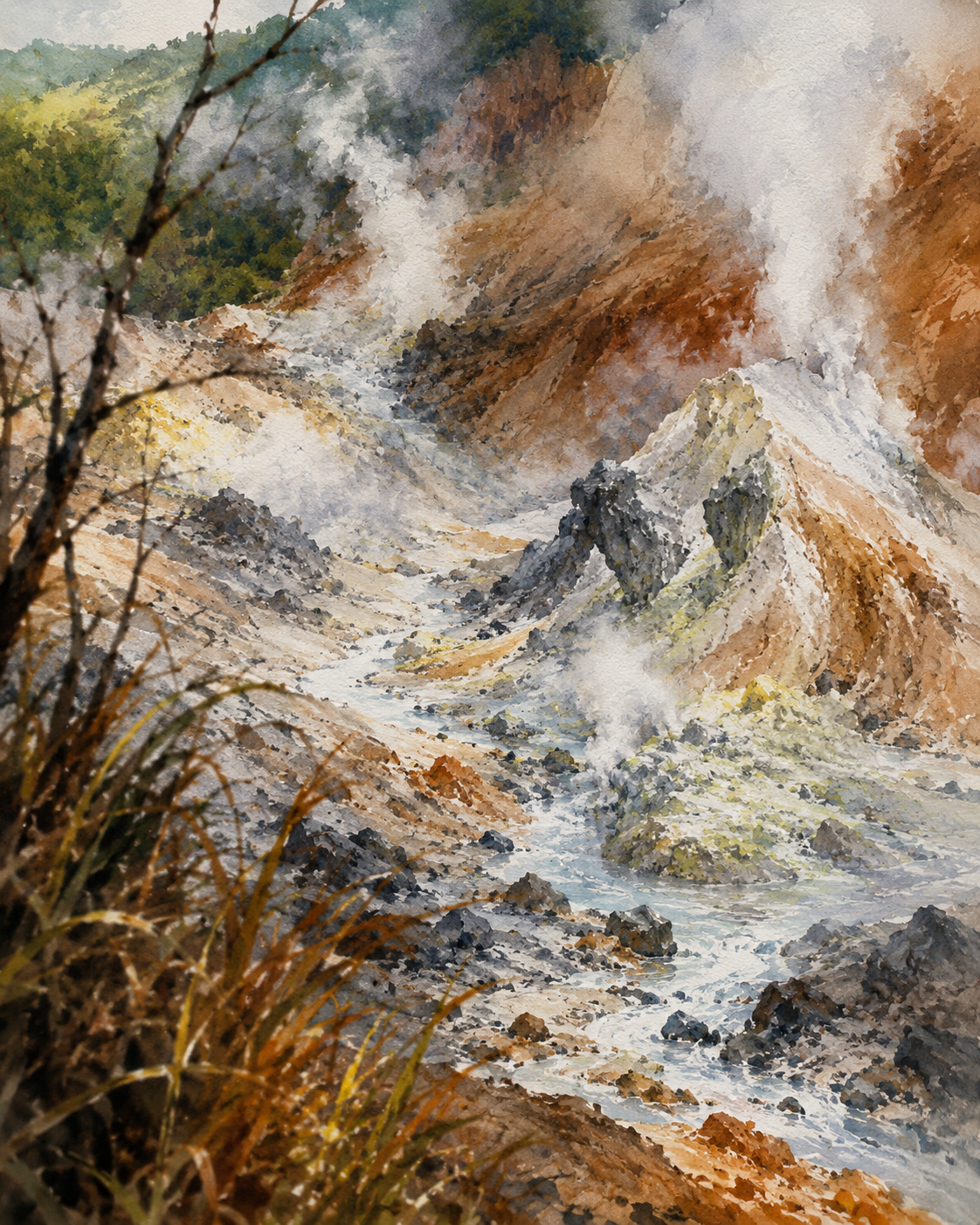
The Ever-Shifting Veils of Sulfur
Critique
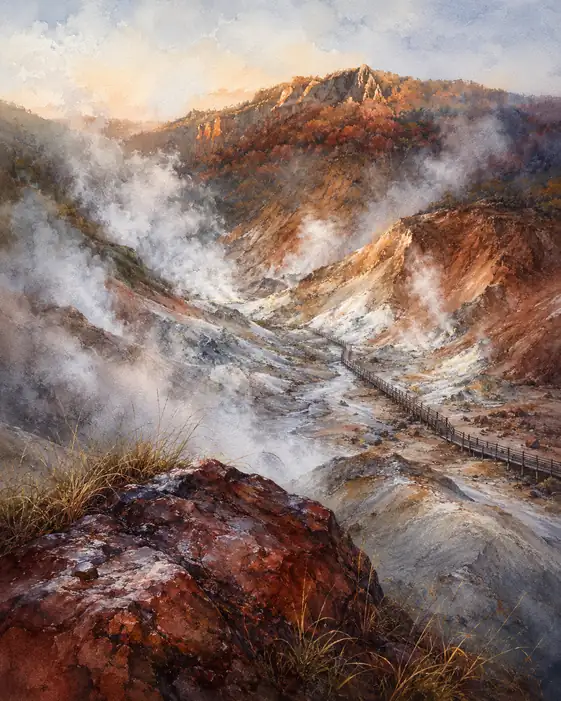
1. Introduction This watercolor landscape depicts a steaming geothermal valley where mineral slopes, scattered rocks, and narrow channels of water are partially concealed by rising vapor. The painting is less about picturesque beauty than about instability and transformation within the earth itself. Its atmosphere is built through pale washes, eroded forms, and the repeated interruption of visibility. 2. Description The foreground includes grasses and a dark branch at the left edge, creating an oblique frame for the basin beyond. Across the center, pale streamlets and wet channels run between mounds of mineral-rich earth in white, ochre, and rusty brown. Several plumes of steam rise from vents in the valley floor and from the flanks of the slopes, obscuring the terrain behind them. At the top edge, a band of green forest contrasts with the barren activity below. 3. Analysis The composition leads the eye inward along the winding watercourse, but this movement is repeatedly interrupted by steam, making the path through the image uncertain. The palette is dominated by chalky whites, sulfurous yellows, pale blues, and iron-rich browns, all appropriate to a chemically altered landscape. Watercolor is used effectively here: transparent layers make the vapor feel mobile, while sharper marks on rocks and ridges retain enough structure. The opposition between vegetated upper ground and exposed mineral basin strengthens the image's thematic clarity. 4. Interpretation and Evaluation This painting can be read as a study of the earth in active change, where solid ground is continually reworked by heat and water. Its strengths lie in the balance between legibility and obscurity, the sensitive handling of steam, and the disciplined limitation of color. Technical control is evident in the depiction of wet surfaces, eroded slopes, and the shifting density of vapor. The work is especially successful in rendering a harsh site without losing painterly coherence. 5. Conclusion At first, the rising steam seems to deny stable vision, but closer attention reveals a carefully organized landscape of channels, ridges, and mineral masses. The eye learns to read the terrain through interruption rather than despite it. Through this method, the painting transforms a geothermal basin into a compelling meditation on continual natural change.
Same Subcategory
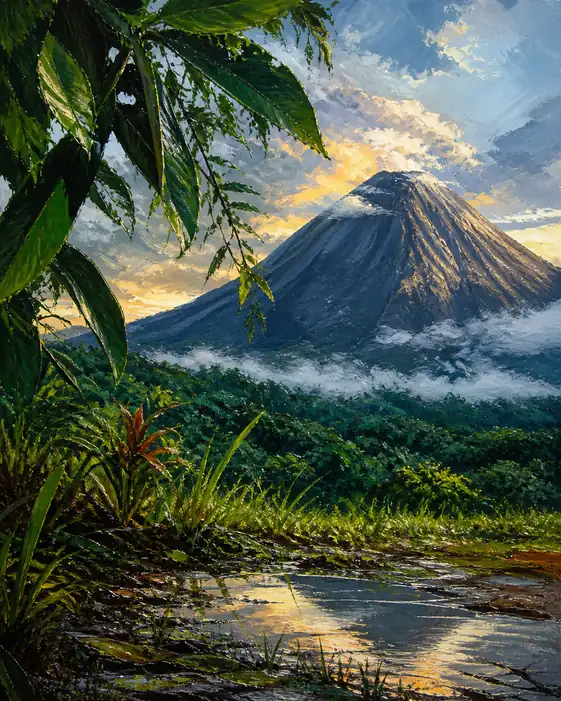 Majesty of the Golden Peak
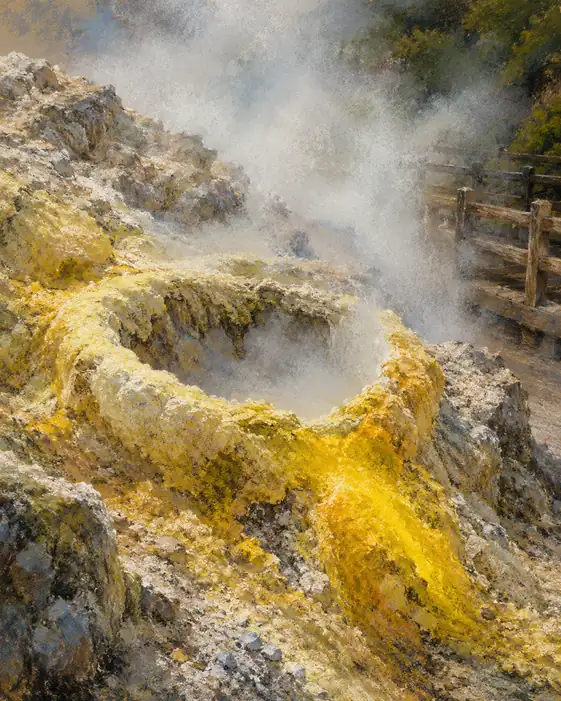 Breath of the Primordial Earth
Similar Artworks
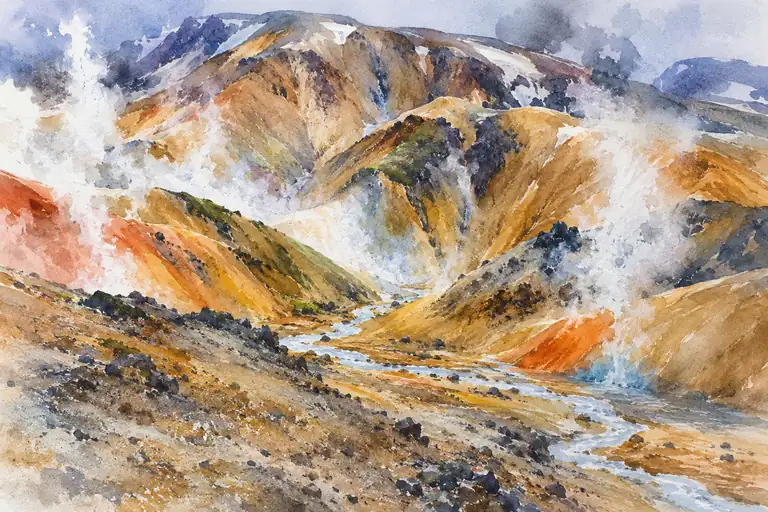 Breath of the Living Earth
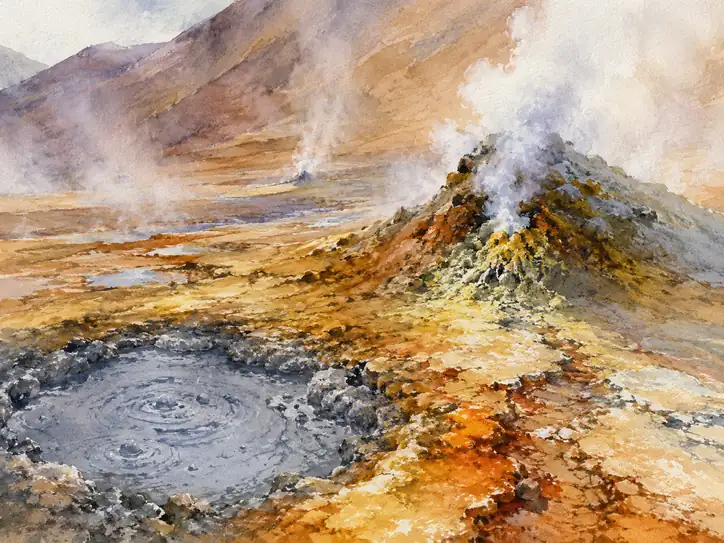 Breath of the Living Earth
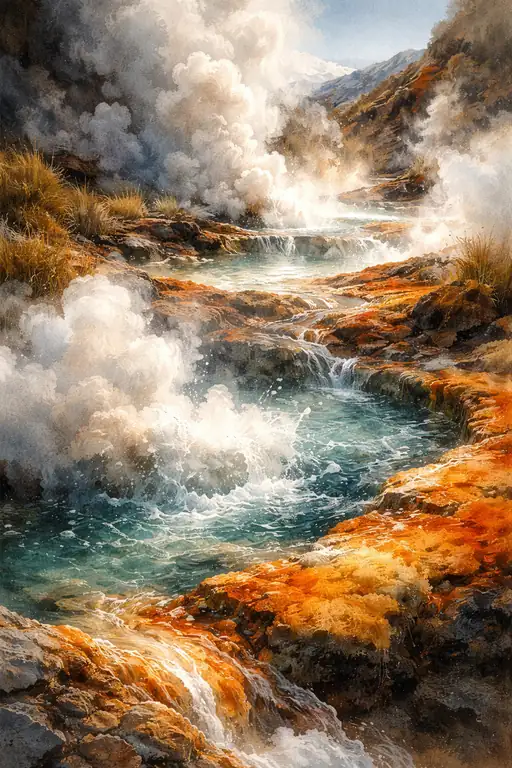 Tears of the Earth, Breath of the Sky
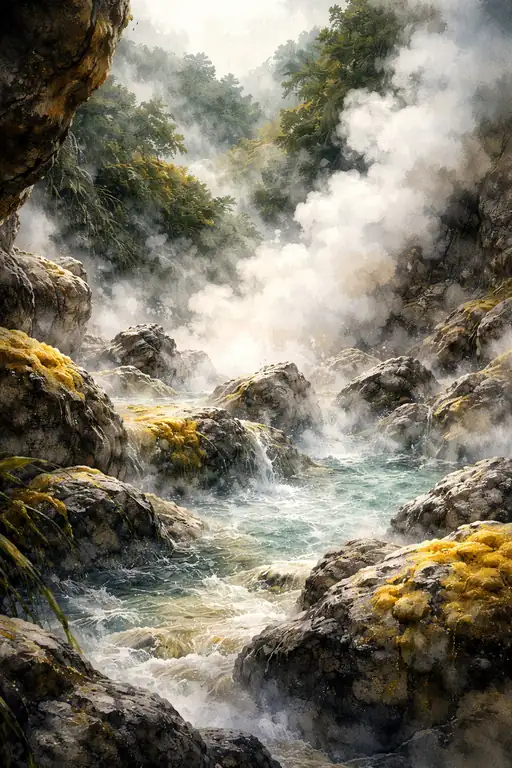 The Ethereal Breath of the Hidden Springs
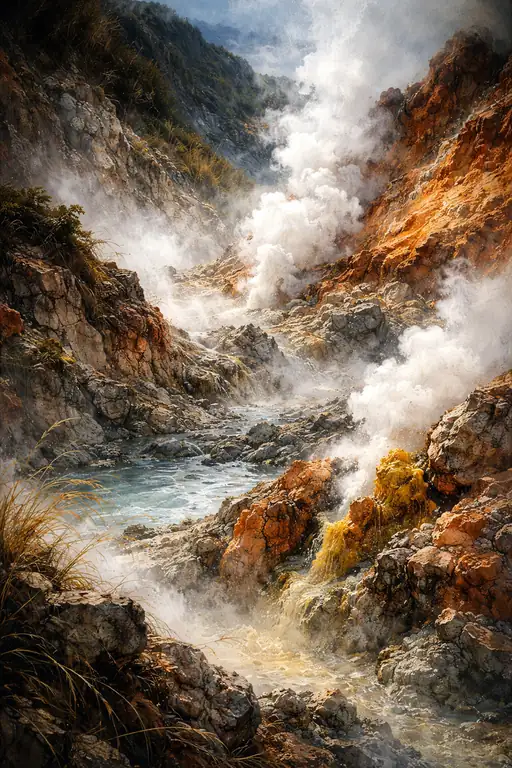 Breath of the Primordial Earth
 Breath of the Living Earth
 Breath of the Painted Hills
 The Earth Writes in Steam and Rust
 The Earth's Emerald Breath
 Silent Spring's Breath