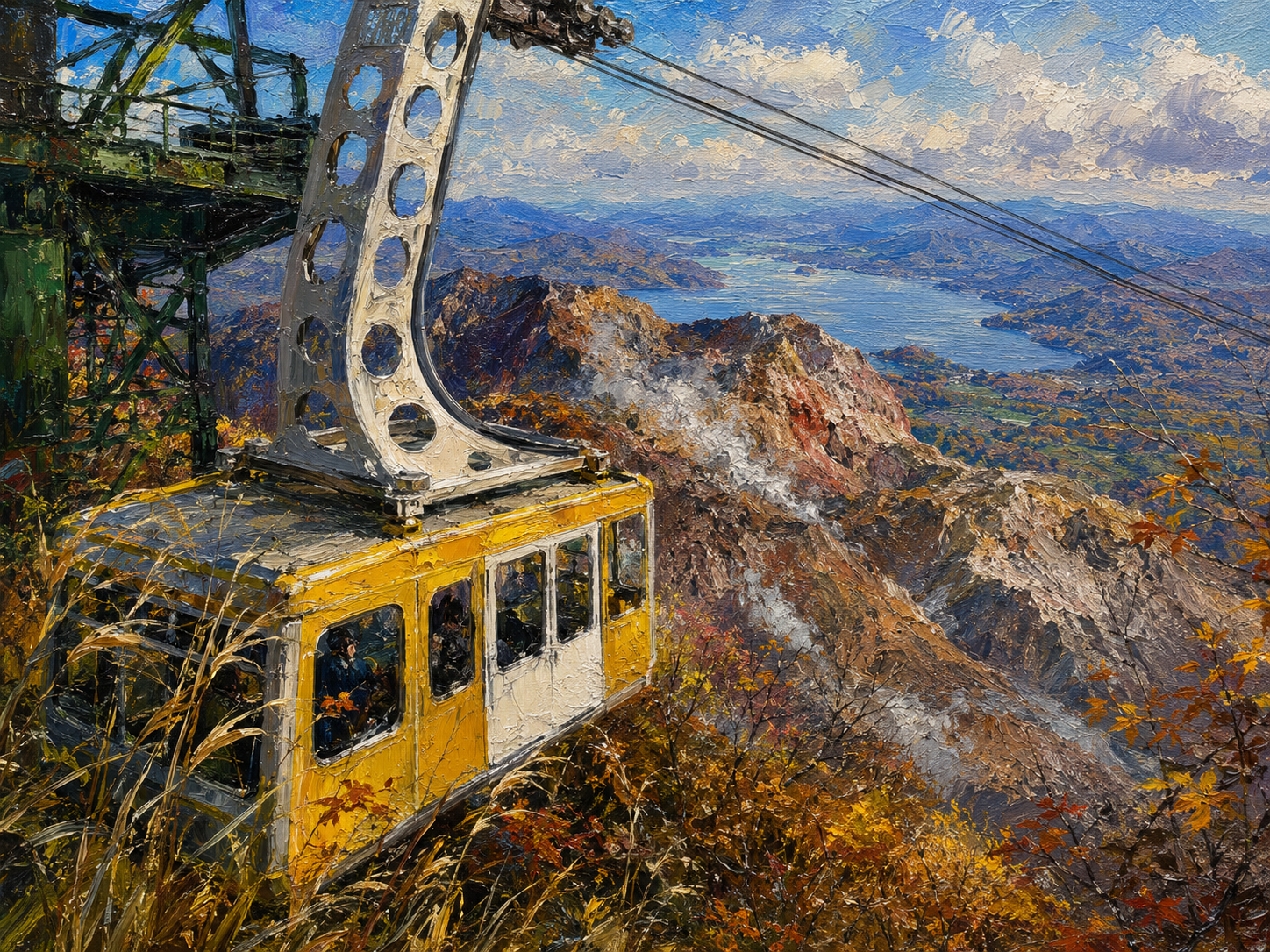
Yellow Cabin Above the Vast Blue
Critique
1. Introduction This painting presents a cable car station and cabin suspended above a rugged autumn mountain landscape, with a lake visible far below. The work is striking because it does not oppose machinery and nature; instead, it binds them within a single field of sharp light, height, and distance. The result is both panoramic and immediate. 2. Description At the left stands the steel structure of a cableway station, from which a yellow cabin hangs over the descending slope. Cables stretch diagonally across the sky toward the right, pulling the eye into the distance. Below and beyond the station lies a rocky mountain ridge dotted with autumn foliage, opening eventually onto a large blue lake and layered mountain ranges. The sky is bright with clustered white clouds against strong blue. 3. Analysis The composition depends on a powerful contrast between the geometric, industrial forms of the station and the irregular terrain beyond. Diagonal cables intensify depth and motion, while the cabin's yellow body becomes a strong chromatic accent amid browns, blues, and rust-colored vegetation. Thick paint gives the rocks and clouds tactile mass, yet the distant lake remains relatively smooth and open. The painting manages scale effectively, moving from machinery in the foreground to a vast receding panorama. 4. Interpretation and Evaluation This work can be interpreted as an image of mediated access to nature, where human technology becomes a means of entering, not dominating, the mountain landscape. Its strengths lie in the balance between structural clarity and scenic breadth, the vivid use of color, and the convincing handling of elevation. Technical skill is evident in the articulation of metal surfaces, rocky textures, and aerial depth. The painting's originality lies in making the cable car a genuine participant in the landscape rather than a disruption of it. 5. Conclusion At first, the bright cabin commands attention, but sustained viewing reveals how precisely it is integrated into the mountain and lake panorama. The eye follows the cables outward, then returns to the structure with renewed awareness of scale. Through this circulation, the work becomes a compelling study of height, movement, and modern presence within nature.
Same Subcategory
Similar Artworks
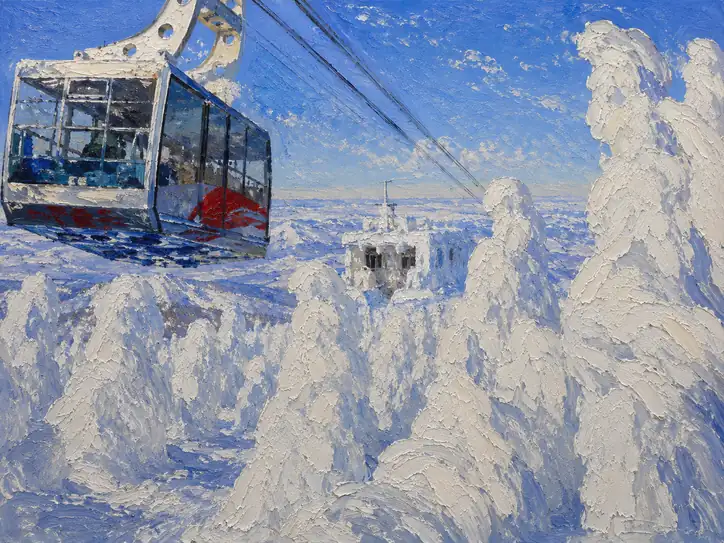 Silent Transit Over the Frozen Giants
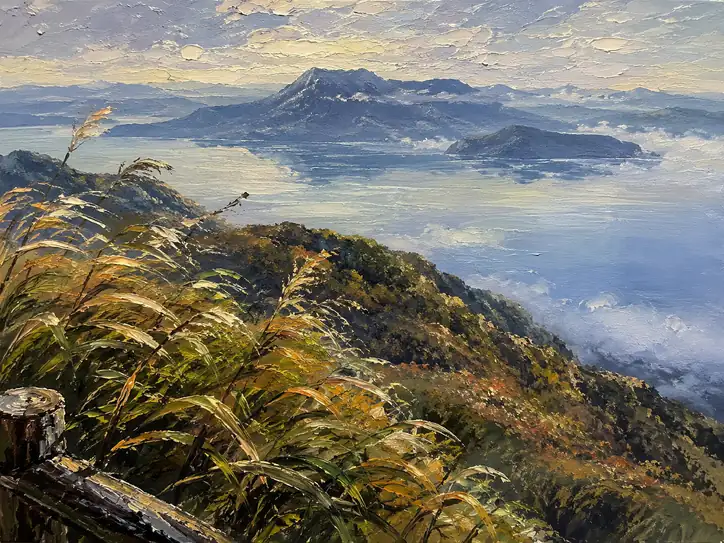 Where My Soul Meets the Horizon
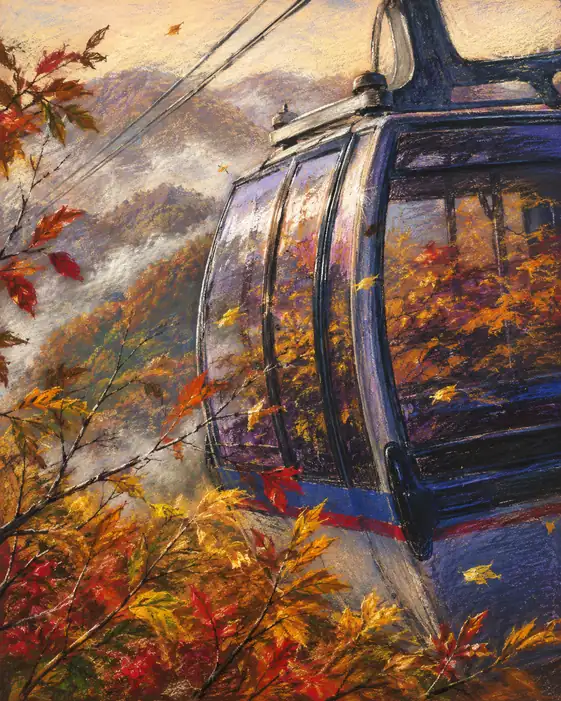 Ascending into Amber Memories
 The Golden Wake
 Soaring Above the Autumn Tapestry
 Suspended Over the Golden Sea
 Suspended Over the Autumn Horizon
 Arching Over the Golden Abyss
 Journey to the Azure Heights
 Autumn's Embrace on the Rocky Shore