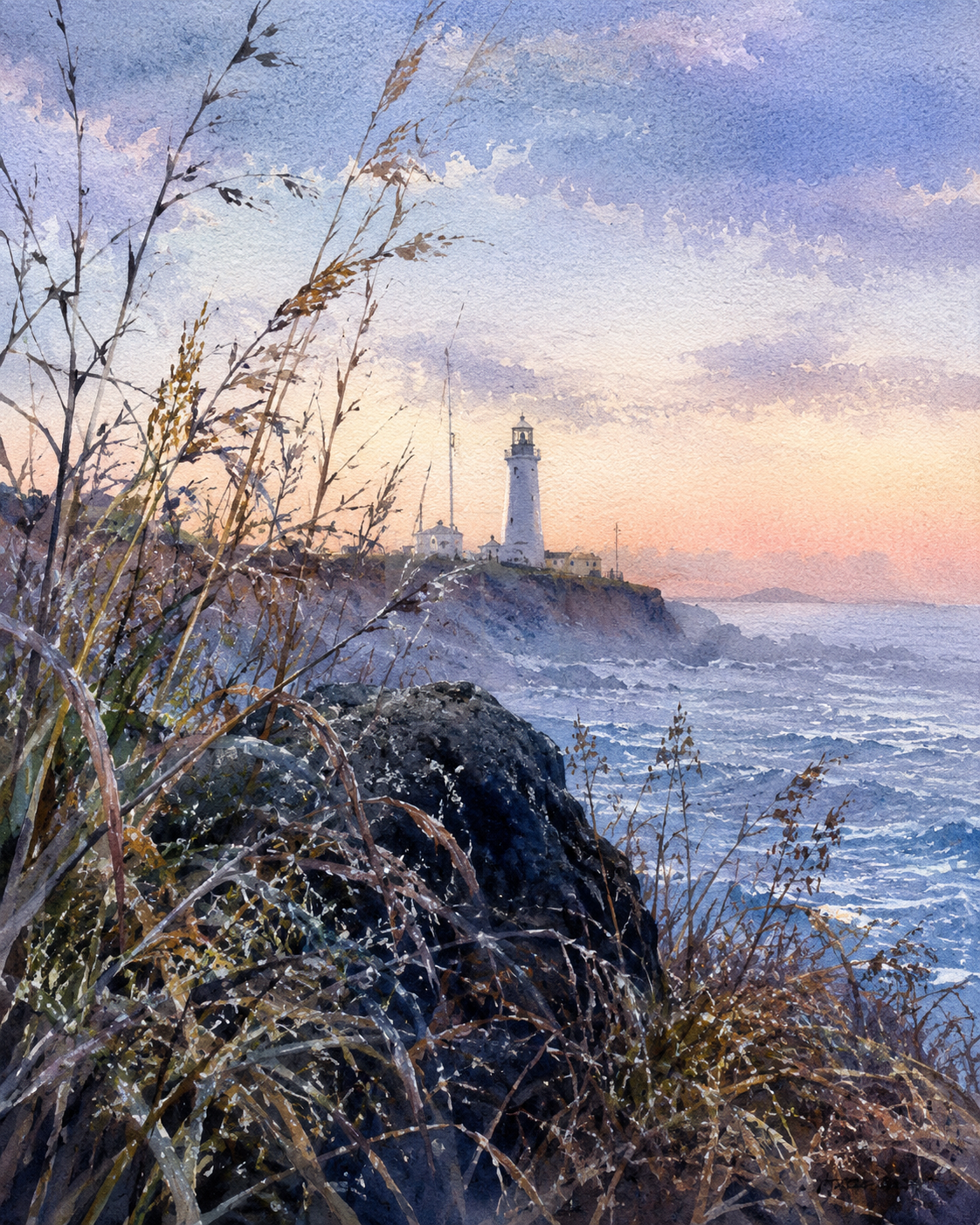
The Beacon’s Solitary Path
Critique
1. Introduction This watercolor painting depicts a lighthouse standing on a rocky coast at dusk, seen through wind-bent grasses and dark shoreline vegetation. The scene combines maritime distance with intimate foreground texture, turning a familiar beacon motif into a study of atmosphere and vantage. The work is especially effective in its treatment of evening light and coastal haze. 2. Description In the foreground, tangled grasses, reeds, and dark rocks fill the lower portion of the image and climb the left side. Beyond them, a white lighthouse rises on a low headland, accompanied by smaller utility buildings and masts. The sea spreads out to the right beneath a pale horizon, and low haze softens both the rocky promontory and the distant water. Above, a lavender-blue sky opens into warm pink and peach tones near the setting light. 3. Analysis The composition is structured by depth, moving from heavily textured foreground plants to the simplified silhouette of the lighthouse and then to open sea and sky. Cool blues and violets dominate the upper portion, while warmer rose and apricot tones near the horizon introduce a measured emotional lift. The watercolor medium allows grasses and mist to remain lively and partially transparent, preventing the scene from becoming rigid. The lighthouse serves as a stable vertical accent within an otherwise windswept arrangement. 4. Interpretation and Evaluation The painting can be understood as an image of guidance seen from a position of exposure rather than safety. Its strengths lie in the contrast between fragile foreground vegetation and the distant firmness of the tower, as well as in the subtle orchestration of evening color. Technical control is visible in the handling of haze, the layered recession of forms, and the refusal to overstate detail around the lighthouse. The work's originality comes from emphasizing the path of looking toward the beacon rather than the beacon alone. 5. Conclusion At first, the viewer notices the lighthouse as the obvious focal point, but sustained attention reveals that the surrounding grasses, rocks, and atmosphere are equally important to the image's meaning. The eye must travel through uncertainty before reaching the tower. Through this structure, the painting turns a coastal landmark into a thoughtful meditation on distance and orientation.
Same Subcategory
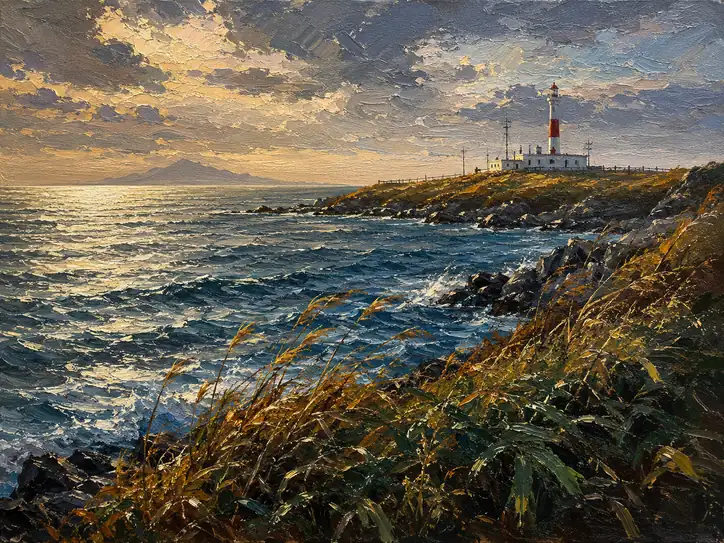 The Red-Striped Sentinel: Twilight Over the Rugged Coast
Similar Artworks
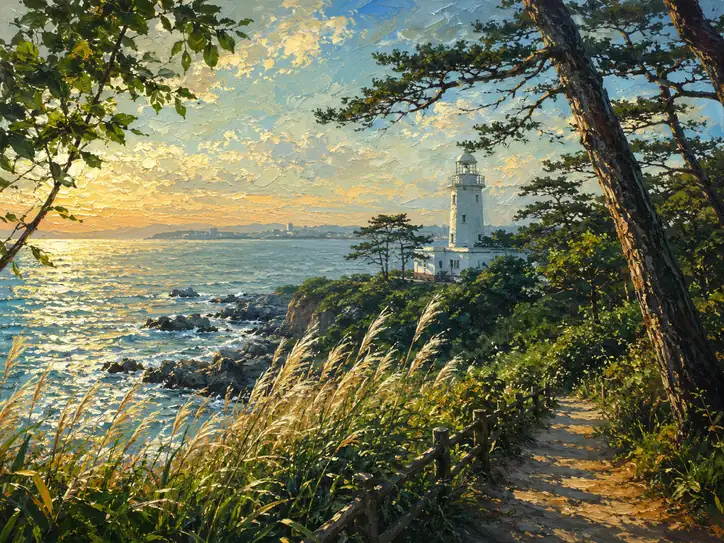 The Silent Guide of the Burning Sky
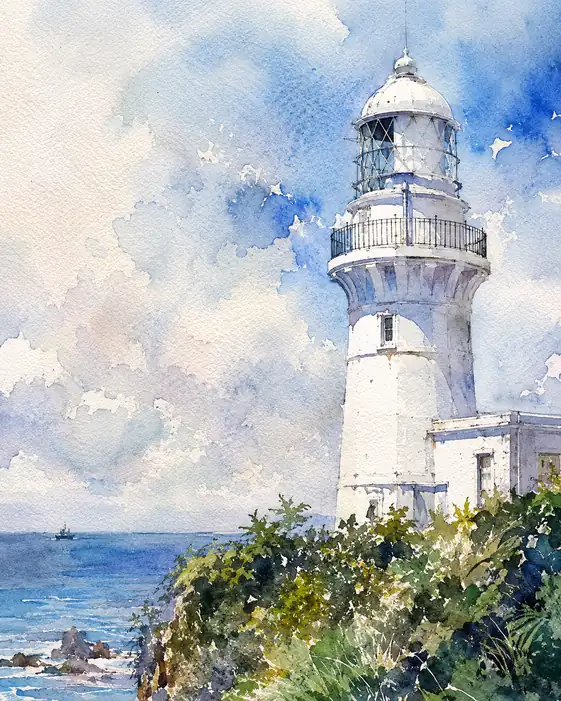 Guardian of the Cerulean Horizon
 The Silent Beacon of the Sea's Serenade
 The Solitary Sentinel at Twilight
 The Lighthouse Drinks the Last Sun
 Lighthouse Standing in Golden Sunrise
 Beacon Ablaze on the Twilight Tide
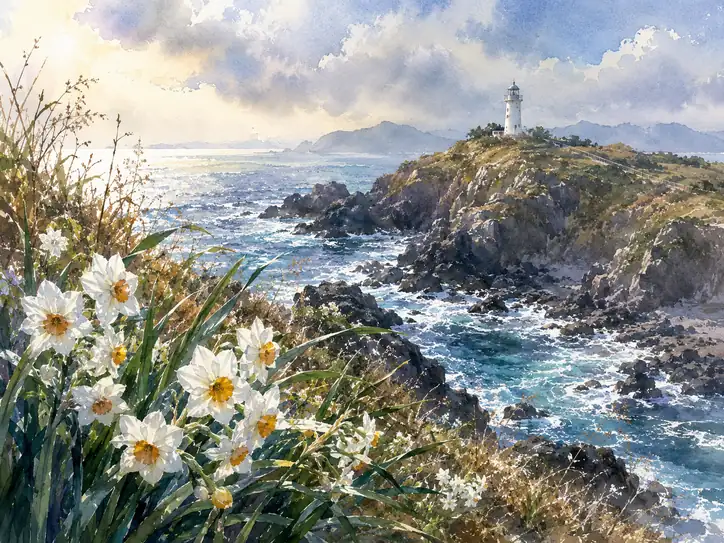 Whispers of Spring on the Windswept Cliff
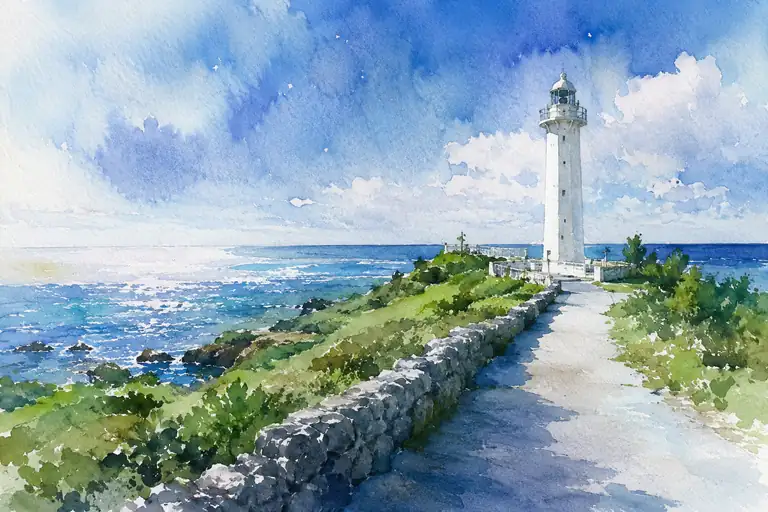 The White Path to the Sea Beacon
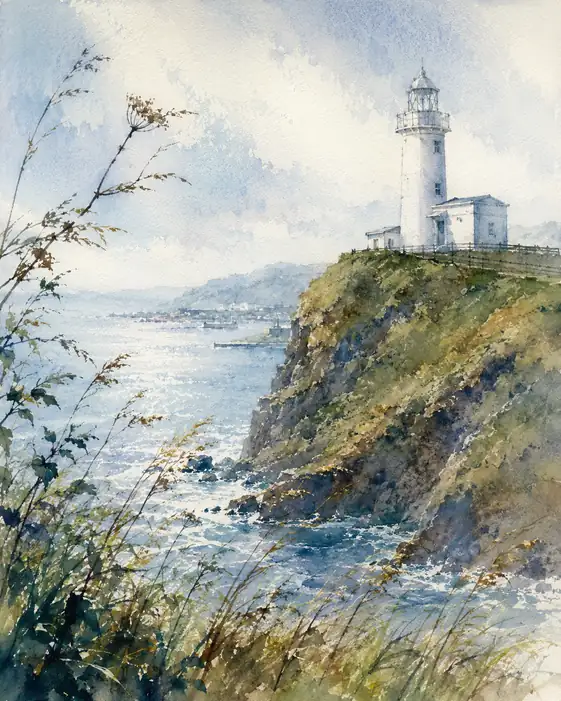 Beacon in the Wind