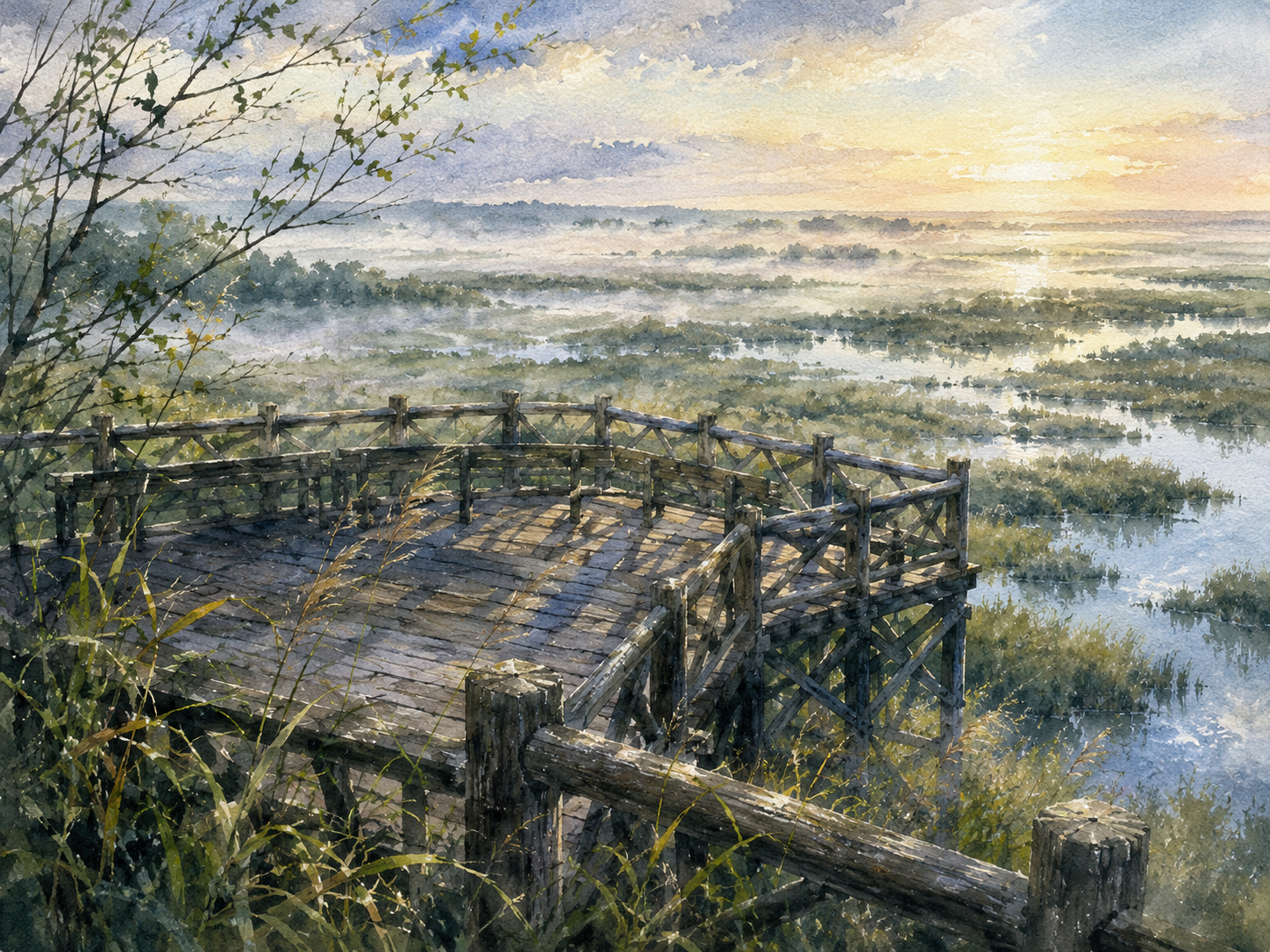
Threshold to the Silver Marsh
Critique
1. Introduction This watercolor landscape depicts a wooden observation deck overlooking a vast wetland at sunrise or early morning. The view combines human-made structure, drifting mist, and broad reflective water channels in a balanced and contemplative design. The painting is especially effective in joining the intimacy of a near platform to the openness of a far-reaching horizon. 2. Description The foreground is occupied by a weathered wooden deck and railings, seen from a slightly elevated angle and partly framed by reeds and thin branches. Beyond the platform stretches an expansive marsh, broken into islands of grass and water that catch the pale light of the sky. Bands of mist lie low across the middle distance, softening the vegetation and reducing the horizon to a narrow line. The sun itself is not dominant, but warm yellow light spreads across clouds and reflections. 3. Analysis The composition is built around the geometric form of the deck, whose diagonals and rail patterns anchor the otherwise fluid expanse of marshland. Soft greens, silver-blues, pale yellows, and warm browns form a restrained palette appropriate to early morning humidity. Transparent washes handle the distant wetland, while the deck is described with firmer lines and darker tonal accents. The contrast between built structure and dissolving atmosphere gives the image both order and breadth. 4. Interpretation and Evaluation This painting can be understood as an invitation to observation, placing the viewer at the threshold between shelter and open landscape. Its strengths lie in the measured relation between the platform and the surrounding wetland, the subtle organization of light, and the convincing sense of distance. Technical control is visible in the handling of perspective, reflection, and mist without overburdening the image with detail. The work's originality lies in making a modest viewing deck the emotional point of entry into a vast environment. 5. Conclusion At first glance, the deck appears to be a simple foreground device, but sustained attention reveals that it governs the entire act of seeing within the picture. The eye moves from timber shadows to the wetland's quiet brightness and then out to the horizon. Through this progression, the painting becomes a thoughtful meditation on looking, distance, and morning light.
Same Subcategory
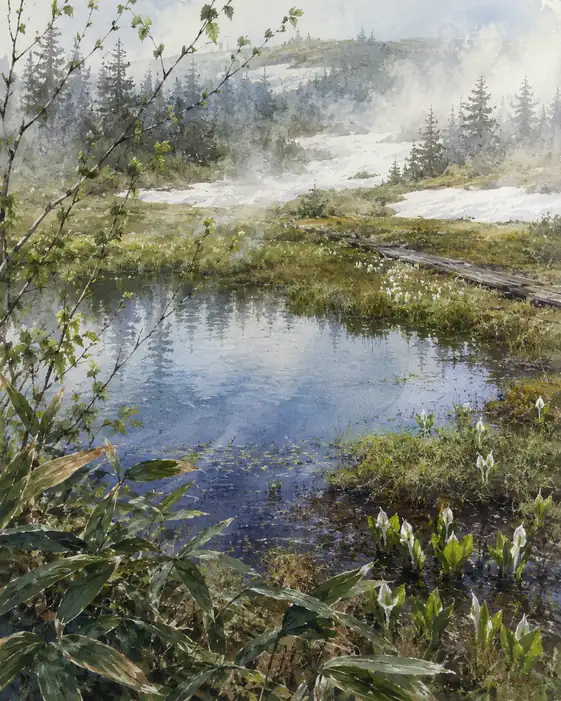 Whispers of the Silver Thaw
Similar Artworks
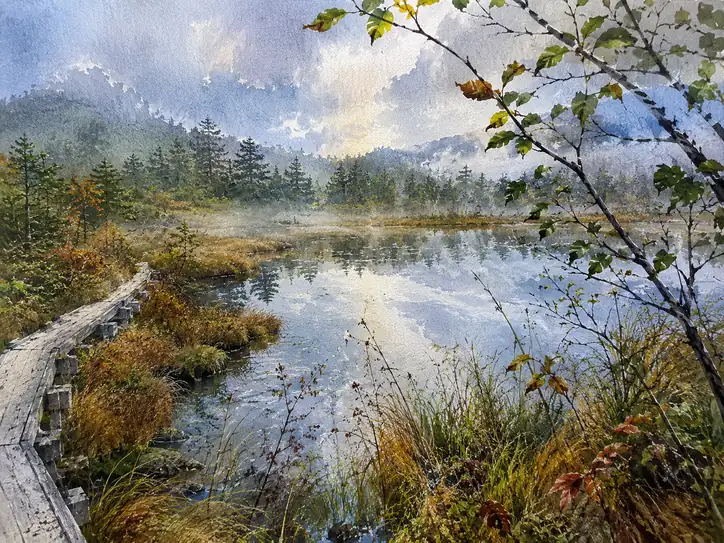 Steps Through the Morning Mist
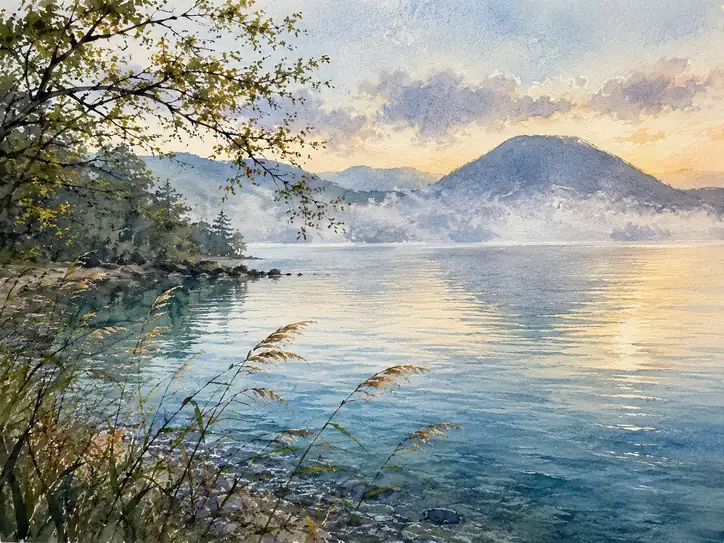 The Lake's Dreaming Glass
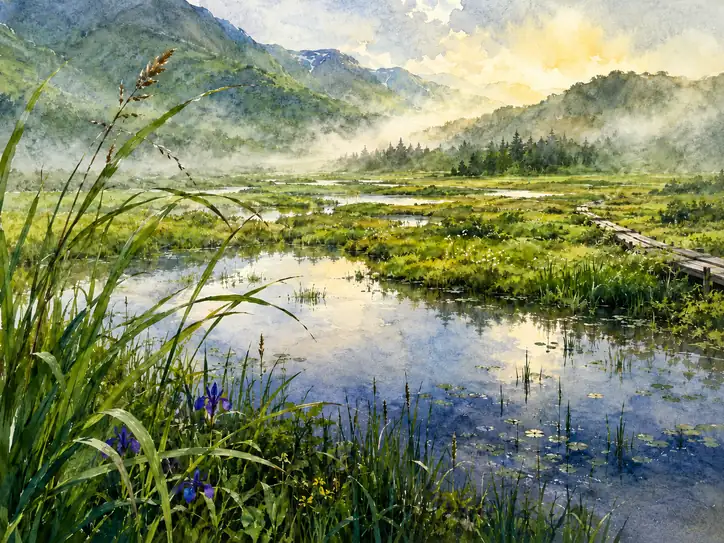 Journey Through the Mist
 Luminous Calm Across the Water
 Whispers from the Sacred Mist
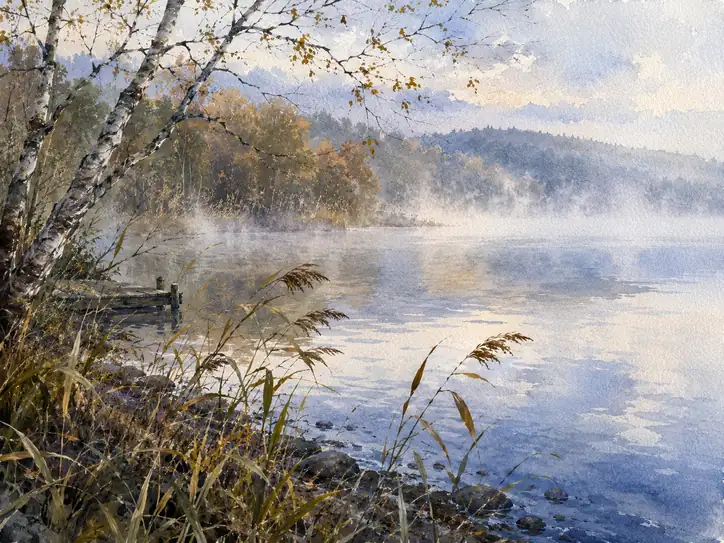 Stillness Woven in White Bark
 Golden Ripple in the Quiet Morning Mist
 The Blooming of Silent Hope
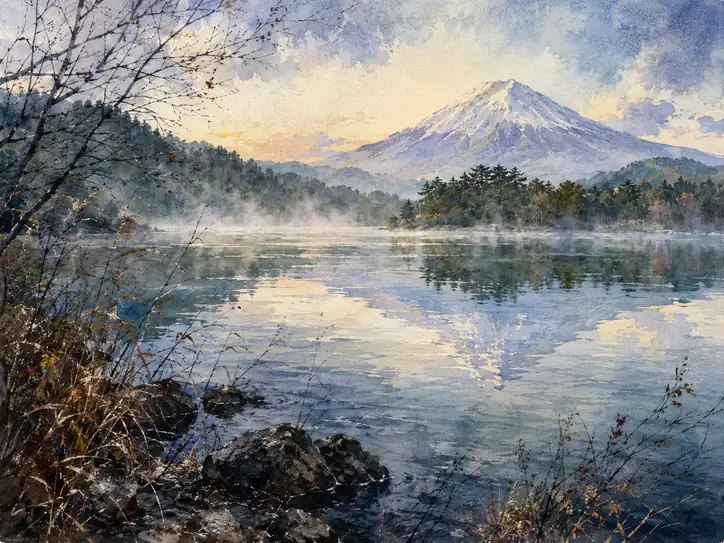 Silent Mirror of the Sacred Mountain
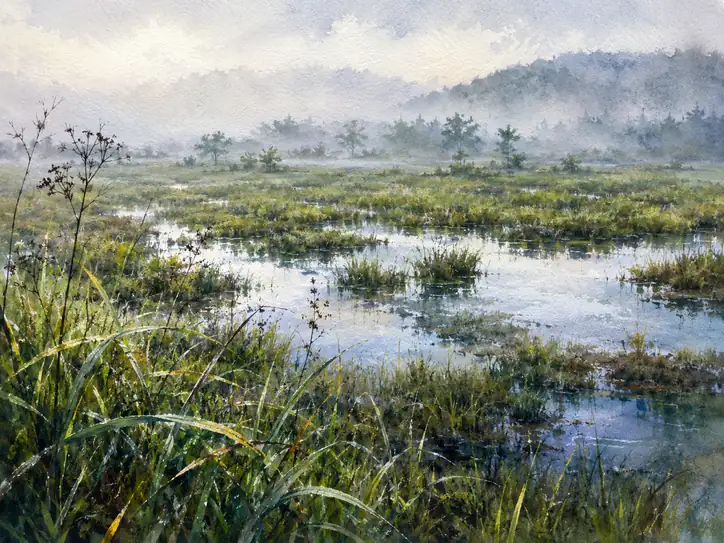 Stillness of the Waking Mist