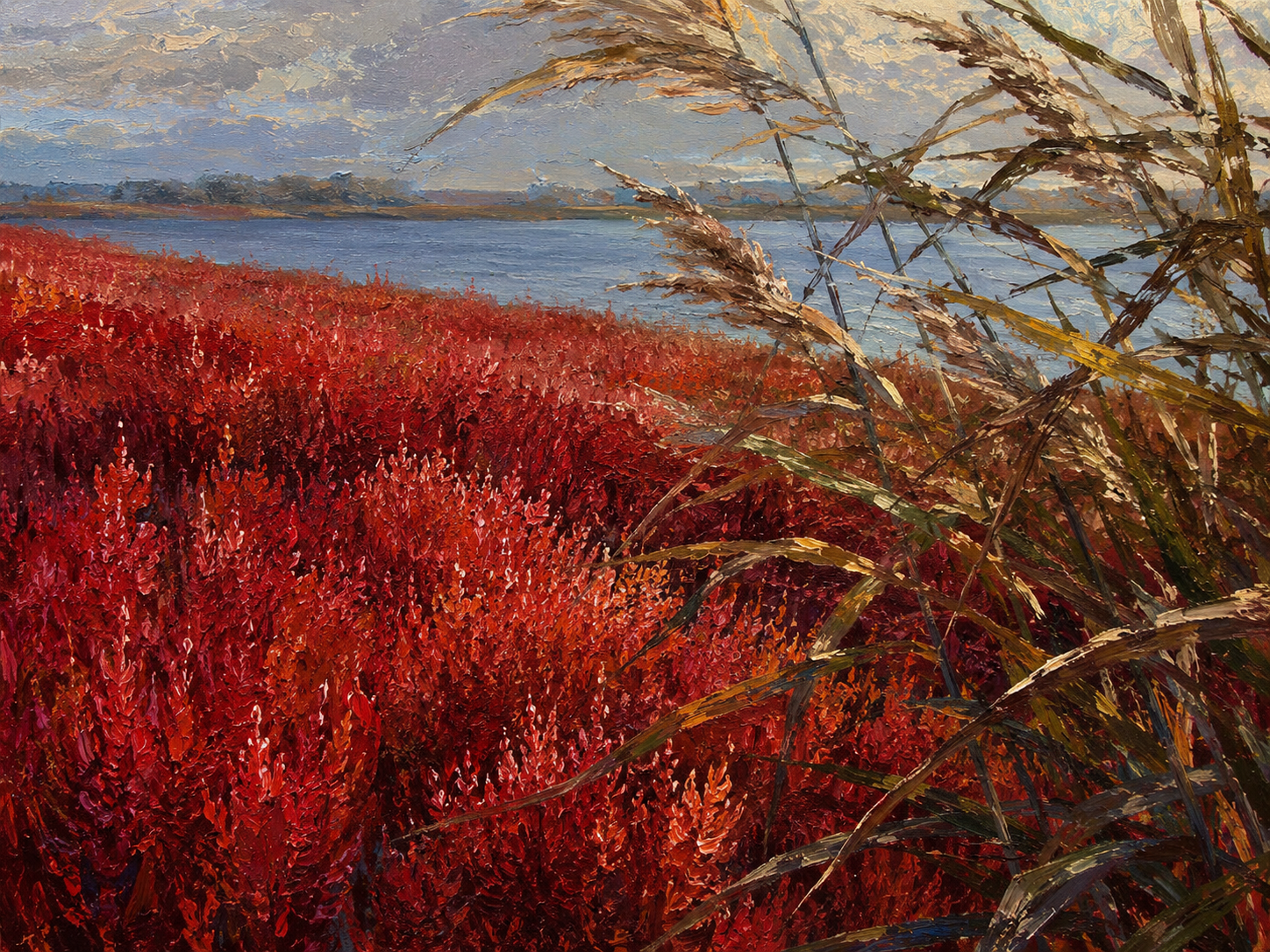
Where the Earth Breathes Fire
Critique
1. Introduction This landscape painting presents a lakeside marsh transformed by intense red vegetation beneath an open sky. Water occupies the middle distance, while wind-bent reeds cross the right side and introduce movement into the broad horizontal view. The work is striking for its bold chromatic contrast and for the way it turns a simple shoreline into a vivid field of sensation. 2. Description Most of the foreground is filled with dense red plants that spread from the lower edge toward the lake. At the right, tall reeds lean diagonally across the composition, partially veiling the water behind them. Beyond the band of blue water lies a low, distant shore beneath a pale sky with broken clouds. The horizon remains relatively calm, allowing the foreground vegetation to dominate the visual experience. 3. Analysis The composition relies on a strong opposition between the expansive horizontal bands of land, water, and sky and the restless diagonal sweep of reeds. Red, crimson, rust, and orange occupy a large portion of the surface, creating unusual intensity against the cool blue lake. Thick brushwork gives the marsh plants a tactile density and prevents the color field from becoming flat. The reeds also act as a structural counterweight, breaking the openness of the background. 4. Interpretation and Evaluation This painting can be understood as an exploration of seasonal transformation, perhaps at the point when marsh growth becomes most vivid before decline. Its major strengths are color invention, textural vitality, and a composition that keeps abundance under control. The work shows solid technique in the handling of layered foliage and atmospheric distance. Its originality lies in allowing vegetation, rather than mountain or sky, to claim the emotional center of the landscape. 5. Conclusion What first seems to be a decorative contrast of red and blue becomes, on closer viewing, a carefully balanced study of mass, movement, and surface energy. The eye shifts from surprise at the color to appreciation of the painting's formal discipline. Through decisive brushwork and confident composition, the work gives a familiar wetland scene unusual force.
Same Subcategory
Similar Artworks
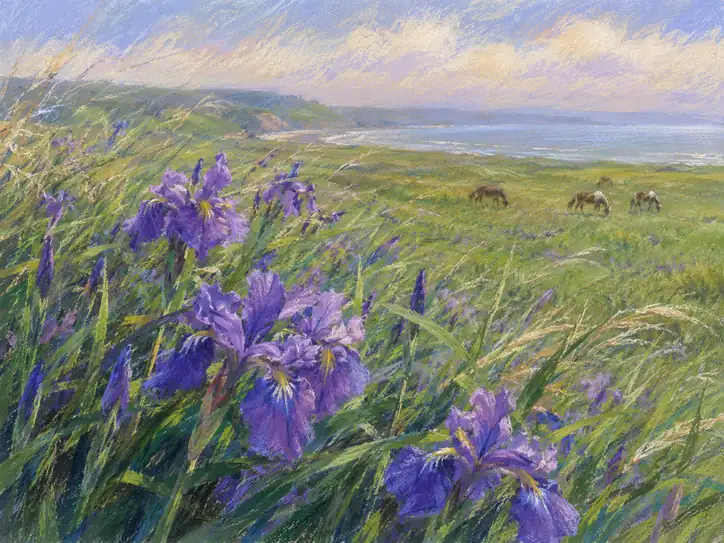 Wind and the Iris Sea
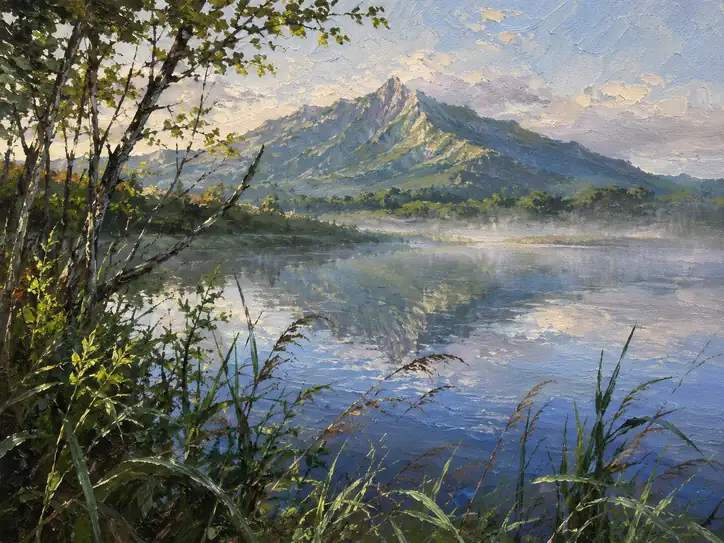 Morning Mirror: The Peak's Reflection in Still Blue Waters
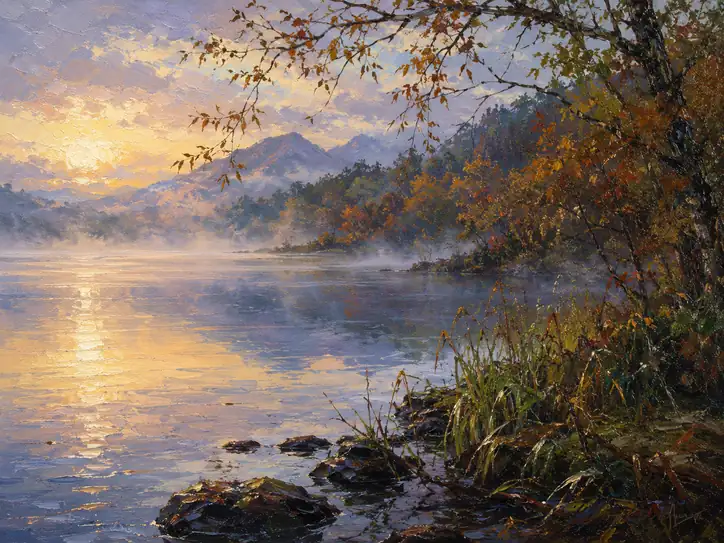 Solitude by the Fog-Bound Pond
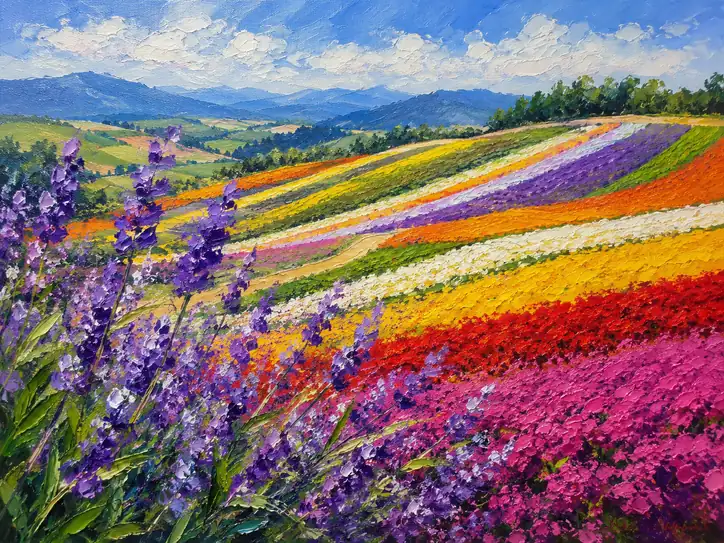 A Rainbow Journey to the Horizon
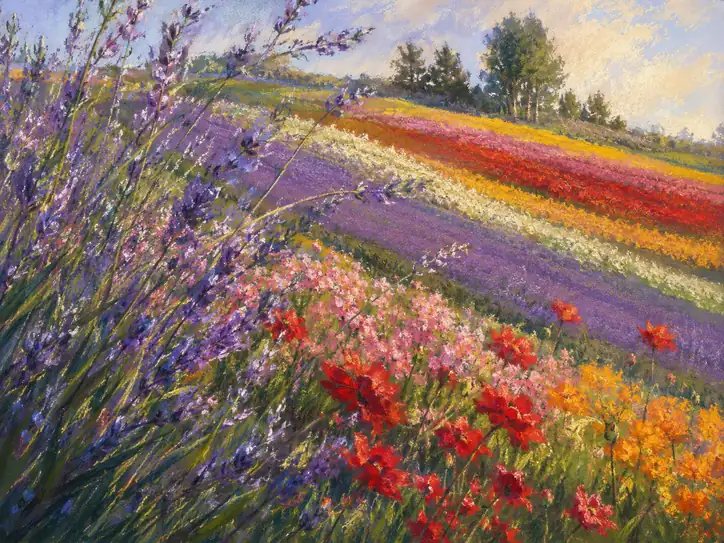 A Gradient of Summer Dreams
 Whispers of the Crimson Hill
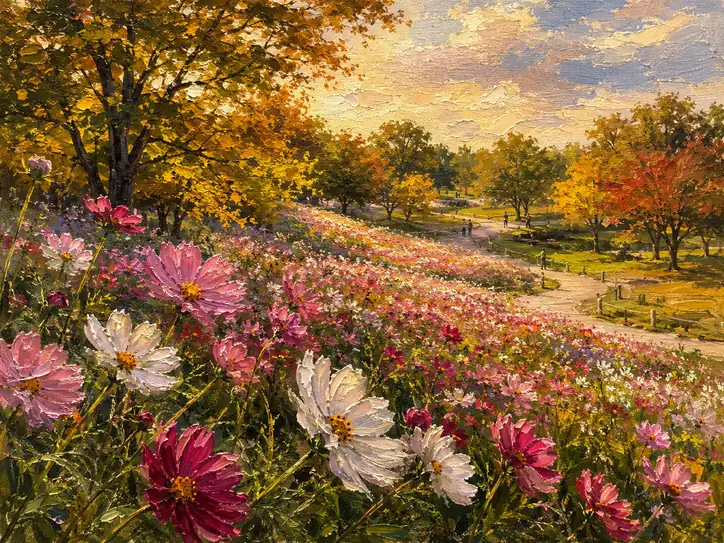 Autumn's Shimmering Tapestry
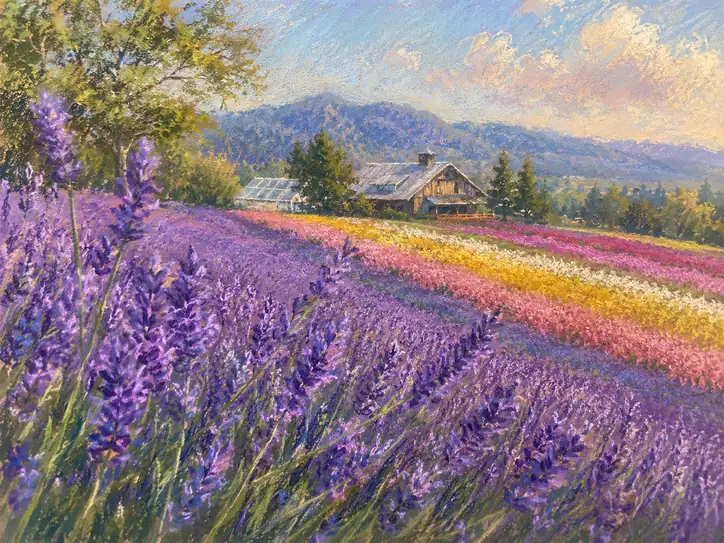 The Earth's Melodic Bloom
 Chasing the Crest Through Cloud and Light
 Where My Soul Meets the Horizon