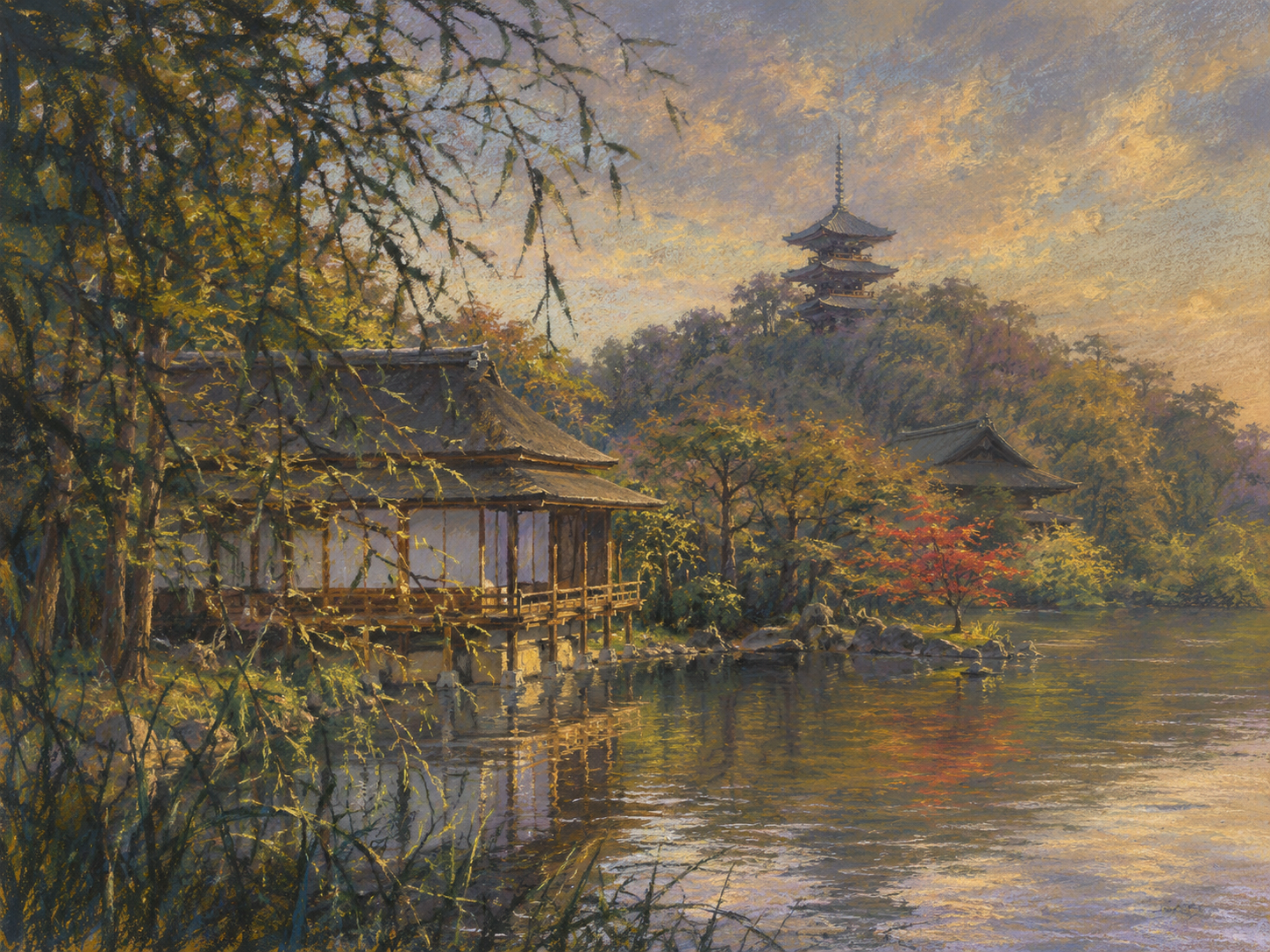
Where Time Dissolves in Golden Light
Critique
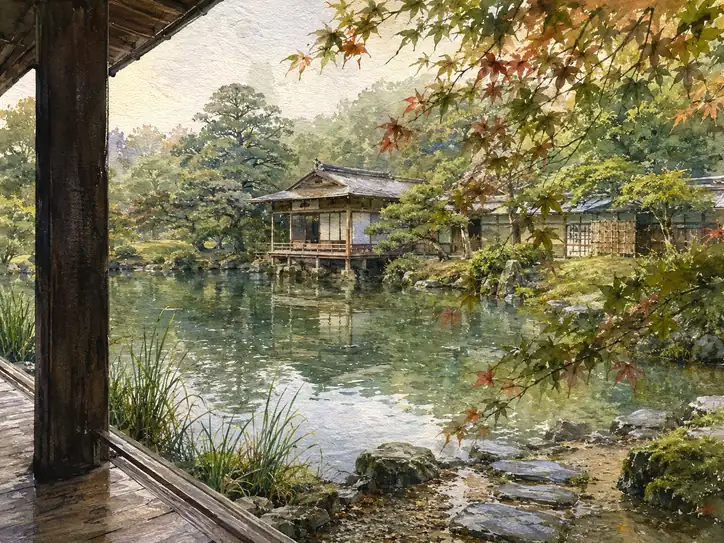
1. Introduction This landscape painting depicts a pavilion and distant pagoda beside a reflective pond under warm evening light. The scene evokes a garden setting shaped by architecture, water, and layered foliage. Rather than emphasizing monumentality, the work focuses on how built forms settle into a luminous natural environment. 2. Description At the left stands a wooden pavilion raised over the edge of the water, partly screened by drooping branches. Across the pond, a smaller roofed structure appears among dense trees, while a pagoda rises on the hill in the background. A bright red tree near the center-right introduces a strong accent within the otherwise muted vegetation. The sky is filled with soft gold and gray clouds, and their light spreads across the water's surface. 3. Analysis The composition is organized through layered recession, moving from the shadowed foreground branches to the pond, the middle trees, and the distant pagoda. Warm ochres, browns, and olive greens dominate, with the red foliage functioning as a controlled focal point. Broken brushwork softens edges and helps the entire scene feel unified by atmosphere. Reflections in the pond repeat the surrounding forms and slow the visual rhythm, reinforcing the sense of stillness. 4. Interpretation and Evaluation The painting can be understood as a meditation on cultivated nature, where architecture is meaningful because it remains subordinate to seasonal light and surrounding growth. Its strength lies in the harmony between composition and color, as well as in the convincing handling of water and foliage. The work is not highly dramatic, yet its restraint gives it durability. Originality appears in the quiet integration of shrine-like structures into an enveloping landscape rather than in overt narrative content. 5. Conclusion At first, the scene seems to offer a picturesque garden at sunset, but closer attention reveals a careful orchestration of depth, reflection, and color emphasis. The painting gradually shifts from charm to structural coherence. Through controlled technique and balanced design, it achieves a calm but memorable vision of place.
Same Subcategory
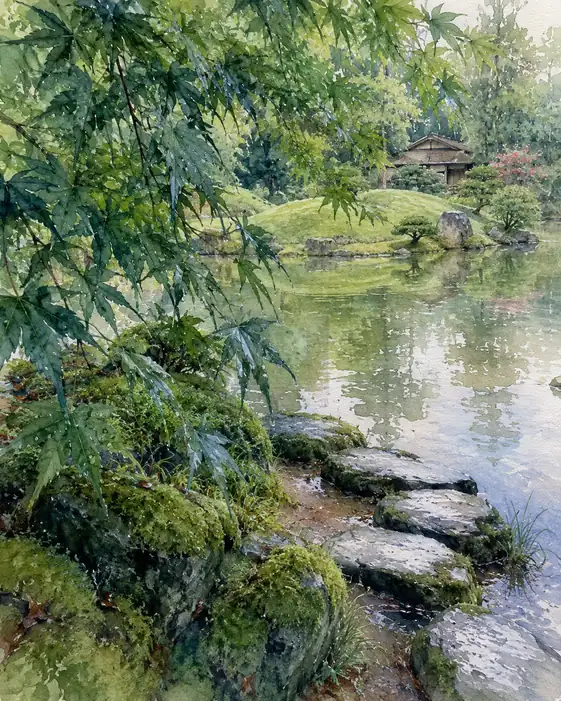 Whispers of the Emerald Sanctuary
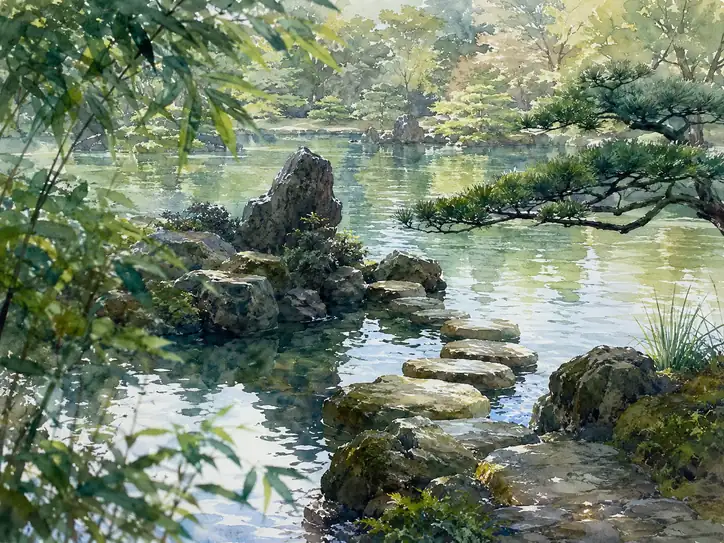 Path of Silent Stones
Similar Artworks
 The Vermilion Sanctuary of Twilight Waters
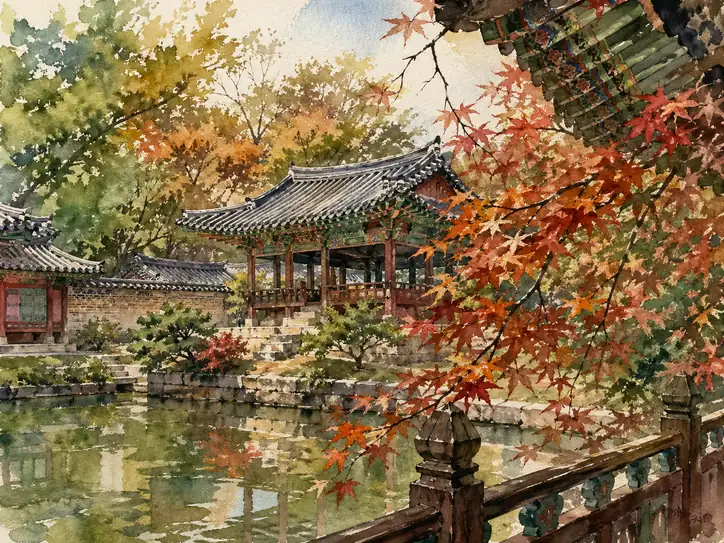 Whispers of Red in the Tranquil Garden
 Eternal Echoes of the Golden Keep
 Solitude by the Fog-Bound Pond
 Autumn twilight, the Pagoda’s Silent Prayer
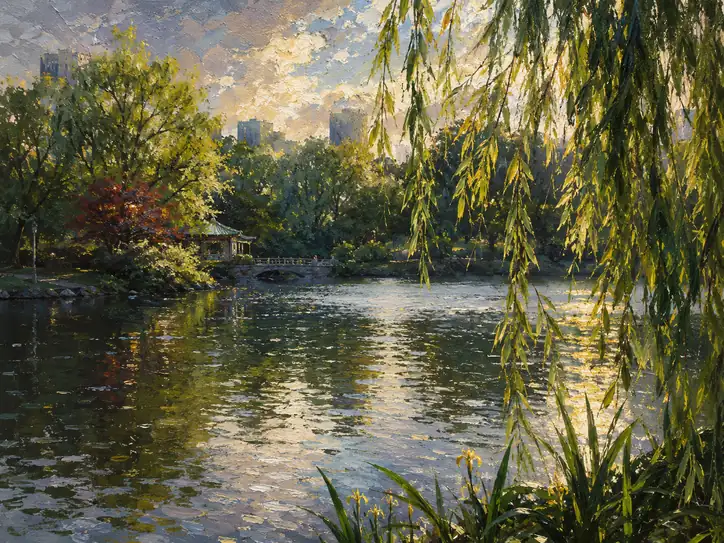 Beyond the Willow's Veil
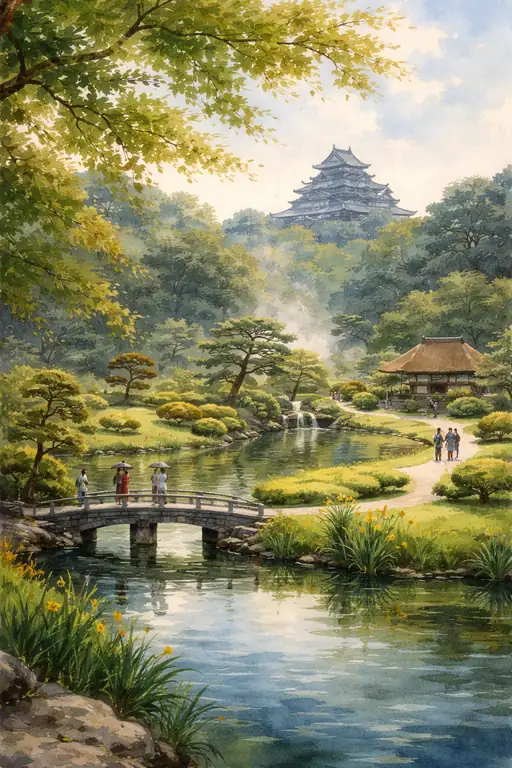 Serenity Under the Castle's Watch
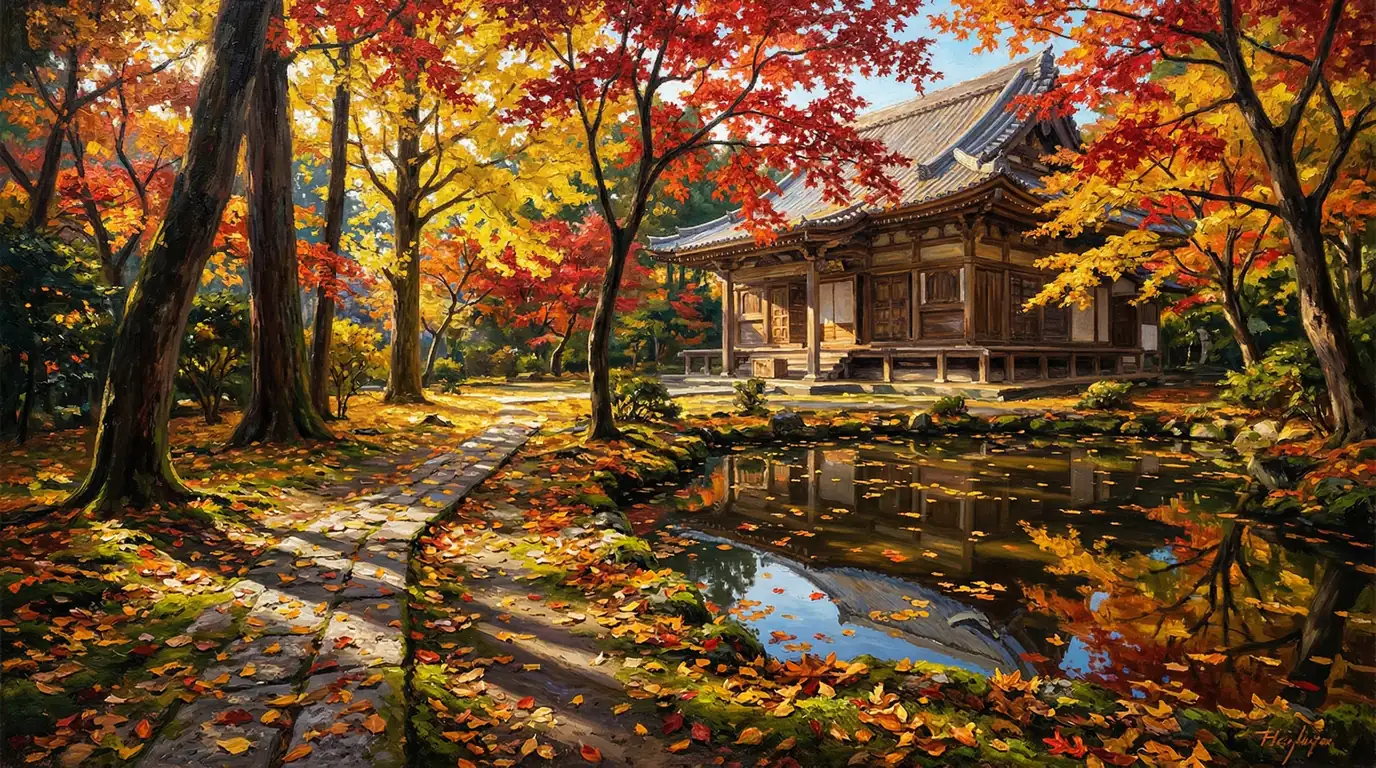 Crimson Reflections at the Temple Pond
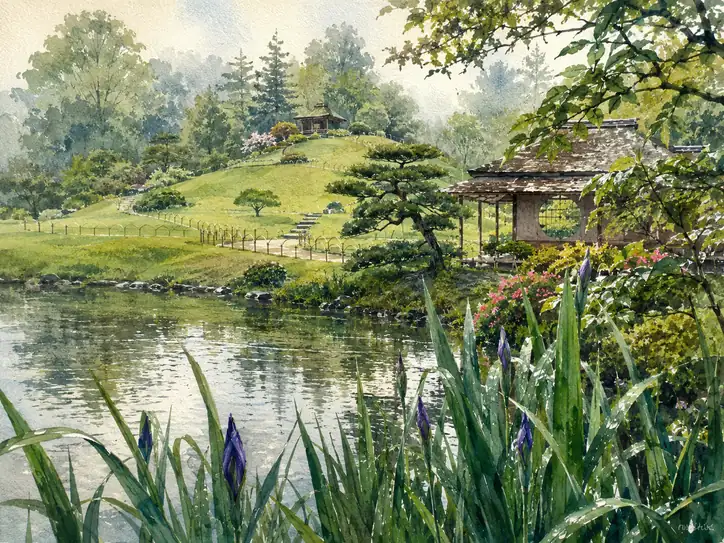 The Garden's Silent Breath
 Autumn Whispers in the Water's Mirror