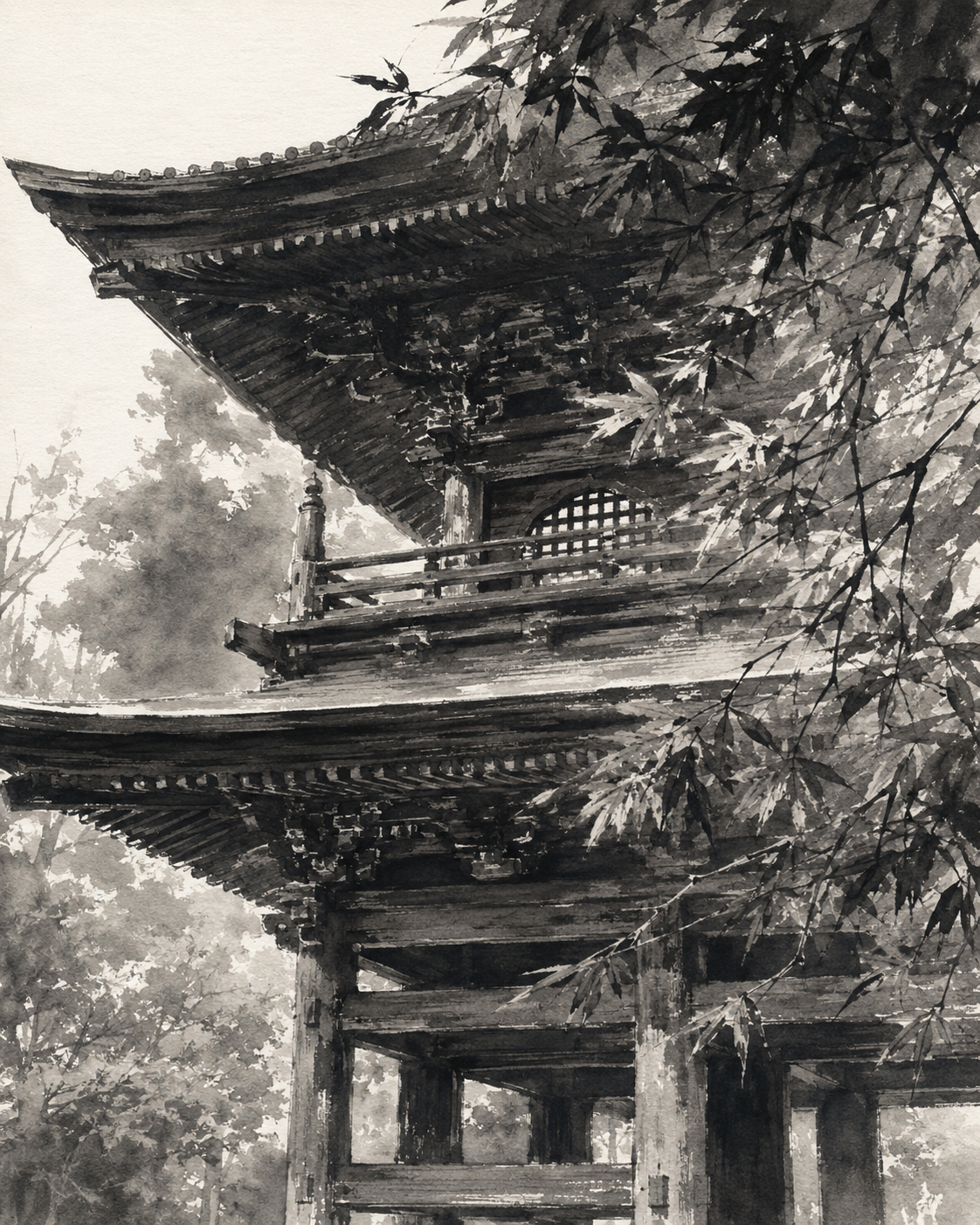
Echoes of Zen: Ancient Pagoda and the Dance of Shadowed Leaves
Critique
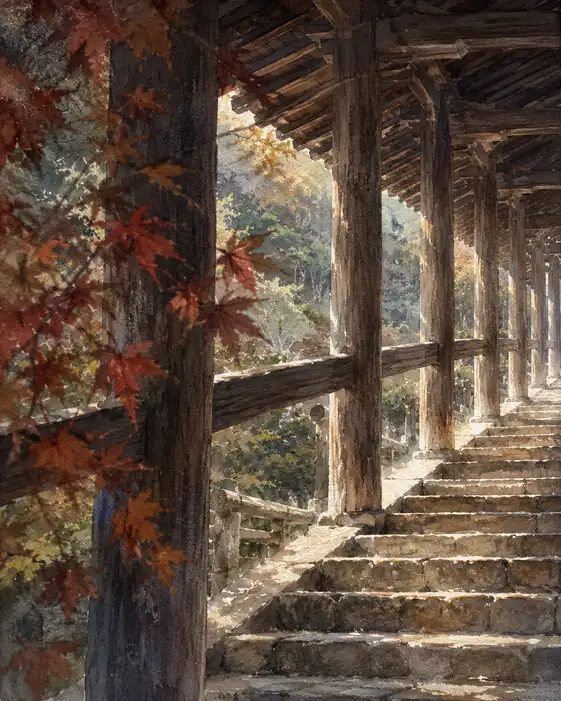
1. Introduction This monochromatic ink wash painting features a detailed architectural study of a traditional Japanese wooden pagoda or gate, partially obscured by the delicate foliage of maple trees. The work utilizes the classic aesthetics of sumi-e to capture the structural complexity and temporal beauty of historical craftsmanship. It invites the viewer to appreciate the harmony between human-made permanence and the transient nature of organic life. 2. Description The central subject is a multi-tiered wooden structure, viewed from a low angle that highlights the intricate bracketing systems and curved rooflines characteristic of Buddhist architecture. To the right and upper right, branches of maple leaves are rendered with varying ink densities, some crisp and dark, others soft and hazy, creating a sense of layered space. The background consists of a light, atmospheric wash that suggests a misty forest or a bright, overcast day, providing a neutral backdrop for the dark timber. 3. Analysis The artist demonstrates mastery over the medium through the controlled use of ink bleeds and precise brushwork to define the repetitive patterns of the rafters and joinery. The composition is dynamically balanced by the heavy, solid mass of the building on the left and the light, airy branches on the right. Tonal values range from the deep black of the shadows within the structure to the nearly white paper of the sky, establishing a strong sense of light and shadow. 4. Interpretation and Evaluation The work is an exceptional example of technical skill, particularly in the rendering of architectural details without losing the expressive quality of the ink wash. The low-angle perspective grants the structure a sense of monumental dignity, while the maple leaves introduce a seasonal element of fragility and grace. This contrast effectively communicates the Zen-like philosophy of "mono no aware," or a sensitivity to ephemera, within a disciplined artistic framework. 5. Conclusion Initially, the complexity of the wooden joinery commands intellectual respect, but the overall composition soon settles into a tranquil, contemplative mood. The successful integration of architectural precision with spontaneous floral rendering results in a cohesive and evocative piece. Overall, the painting stands as a sophisticated tribute to traditional Japanese aesthetics, executed with contemporary clarity and traditional reverence.
Same Subcategory
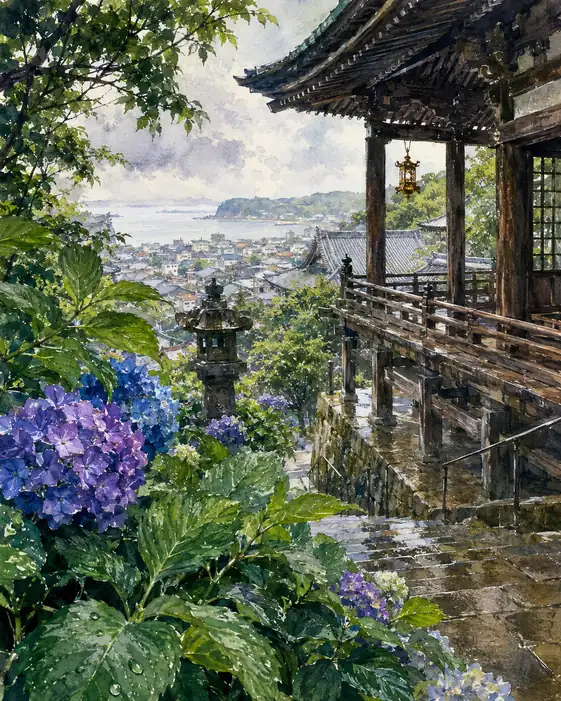 Hydrangeas at the Temple Overlook: A Watercolor Dream of Onomichi
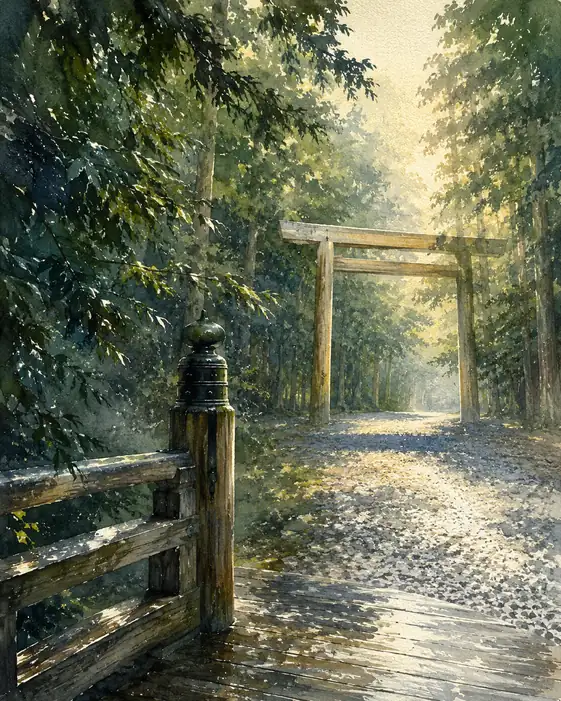 Invitation to the Divine Silence
Similar Artworks
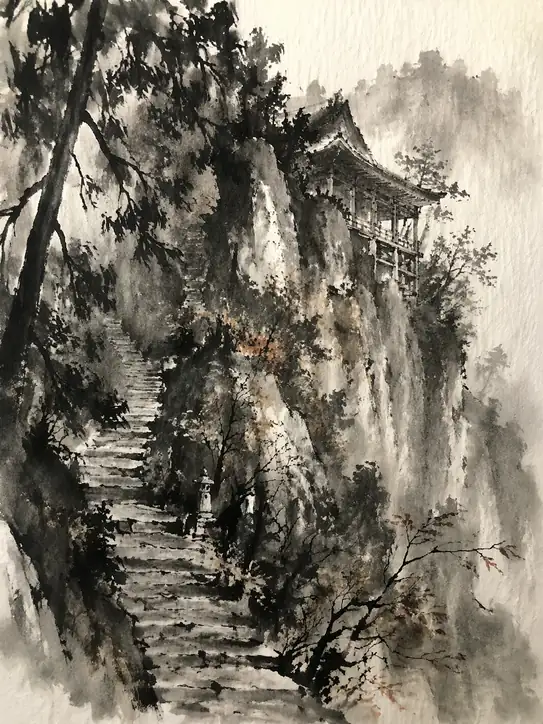 Springtime Symphony of Shadows and Cherry Blossoms
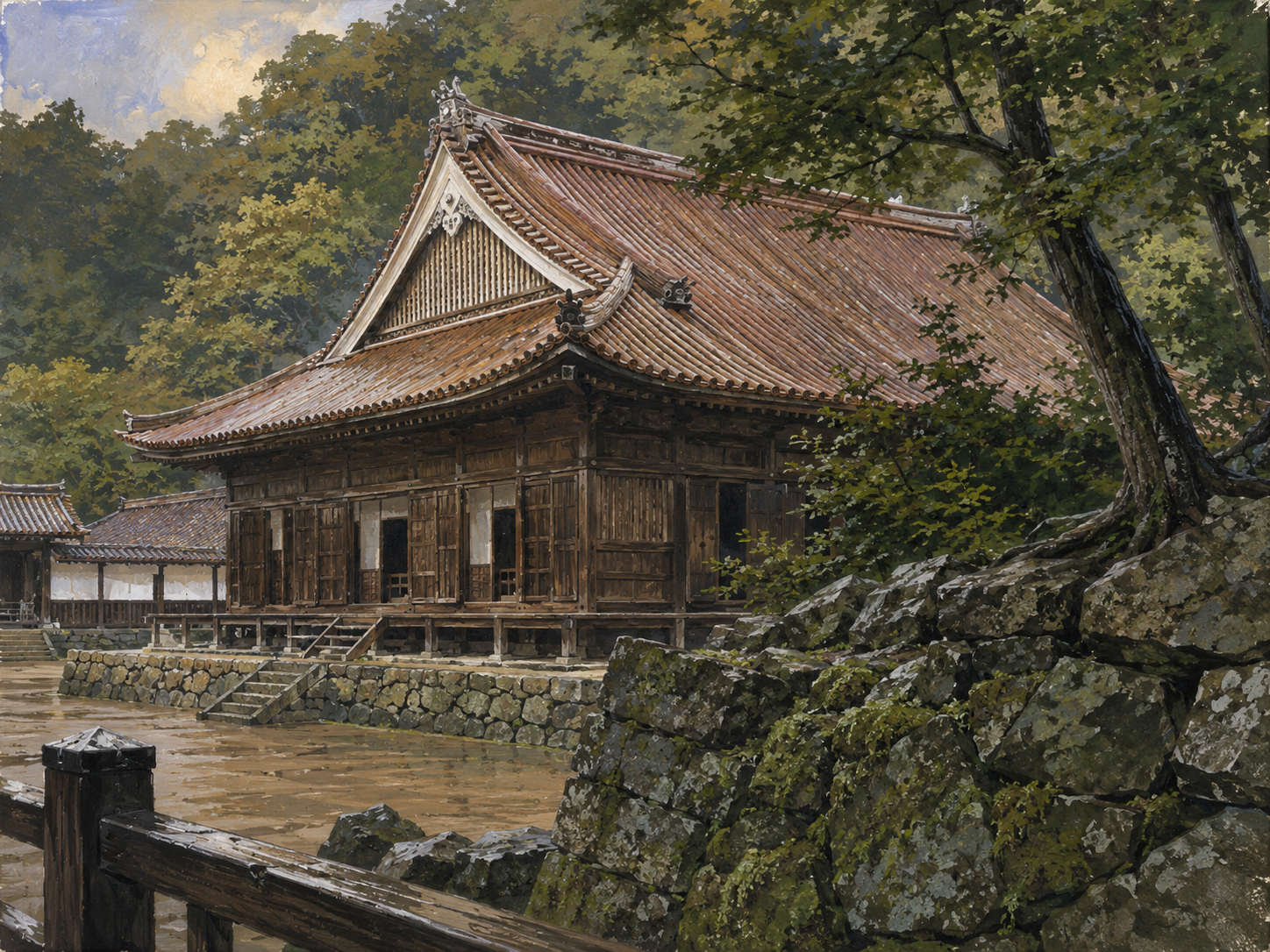 Eternity in the Moss-Covered Hall
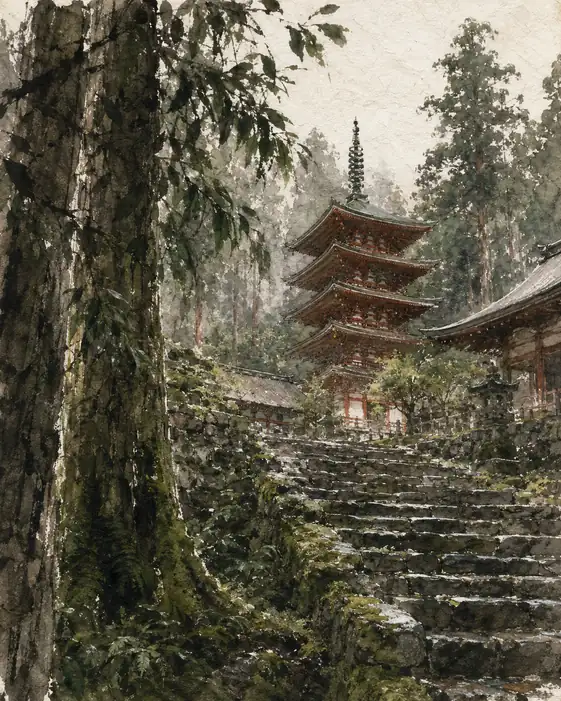 Echoes of Eternity in the Mossy Mist
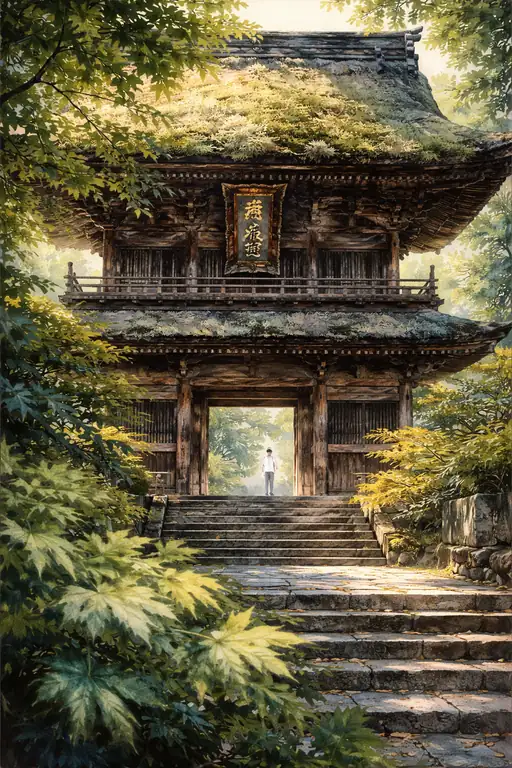 Light Through the Ancient Gate
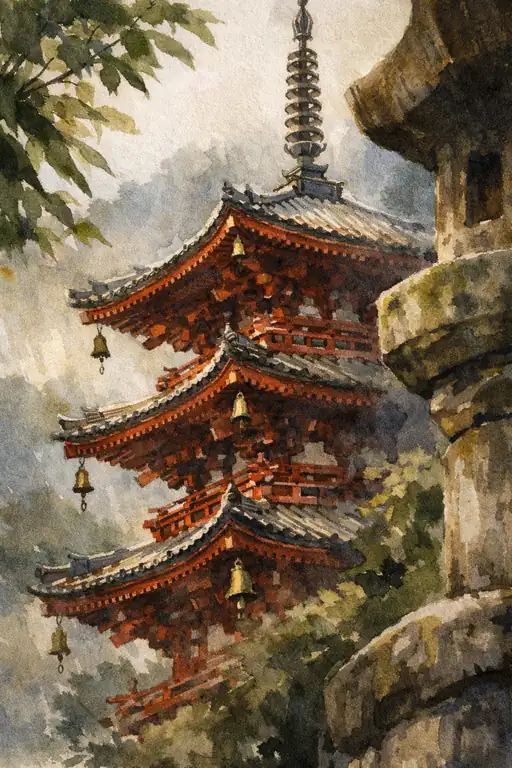 The Silent Watch of the Crimson Tier
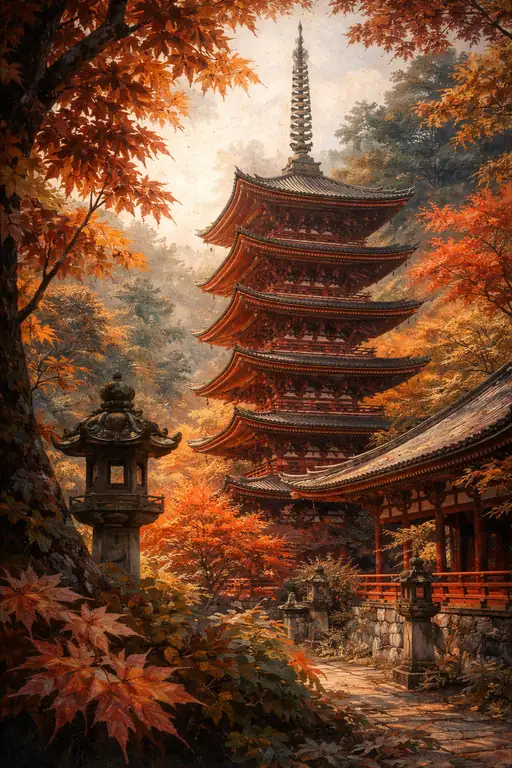 Autumn's Golden Reverie
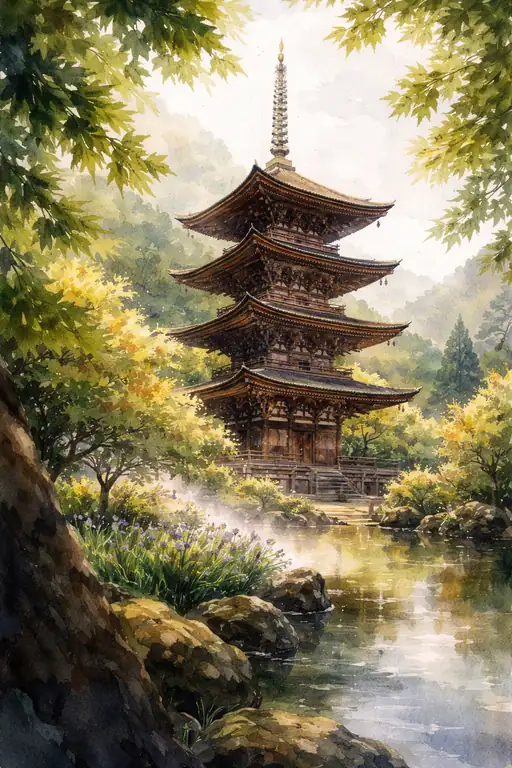 Reflection of the Silent Pagoda
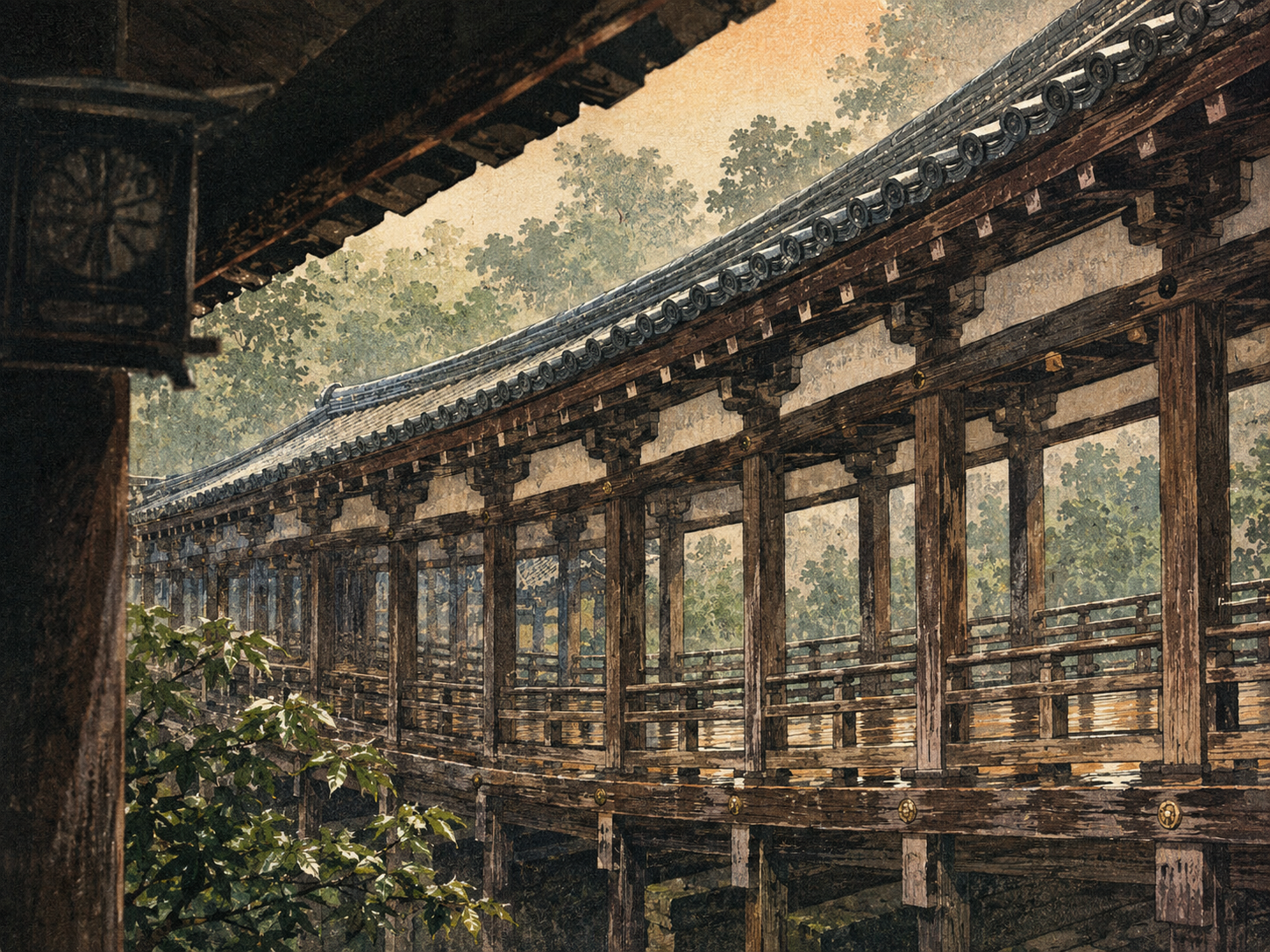 Whispers of the Ancient Corridor
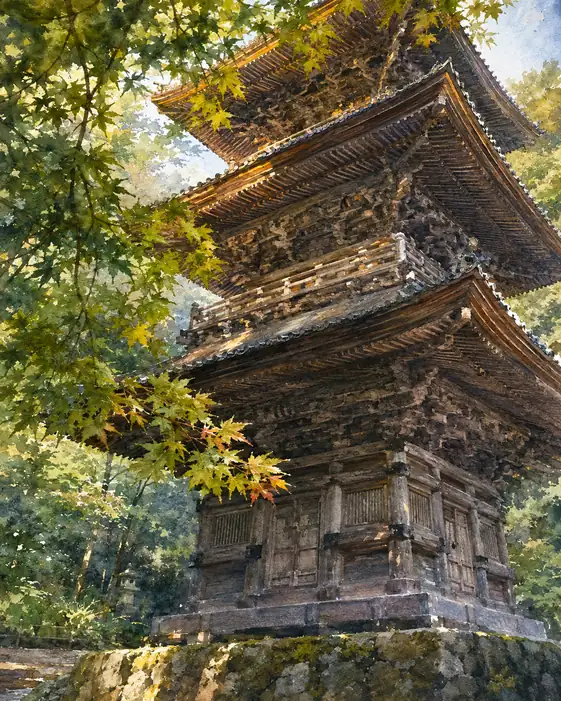 A Forest Three-Story Pagoda Through Maples
 Echoes of Crimson Footsteps