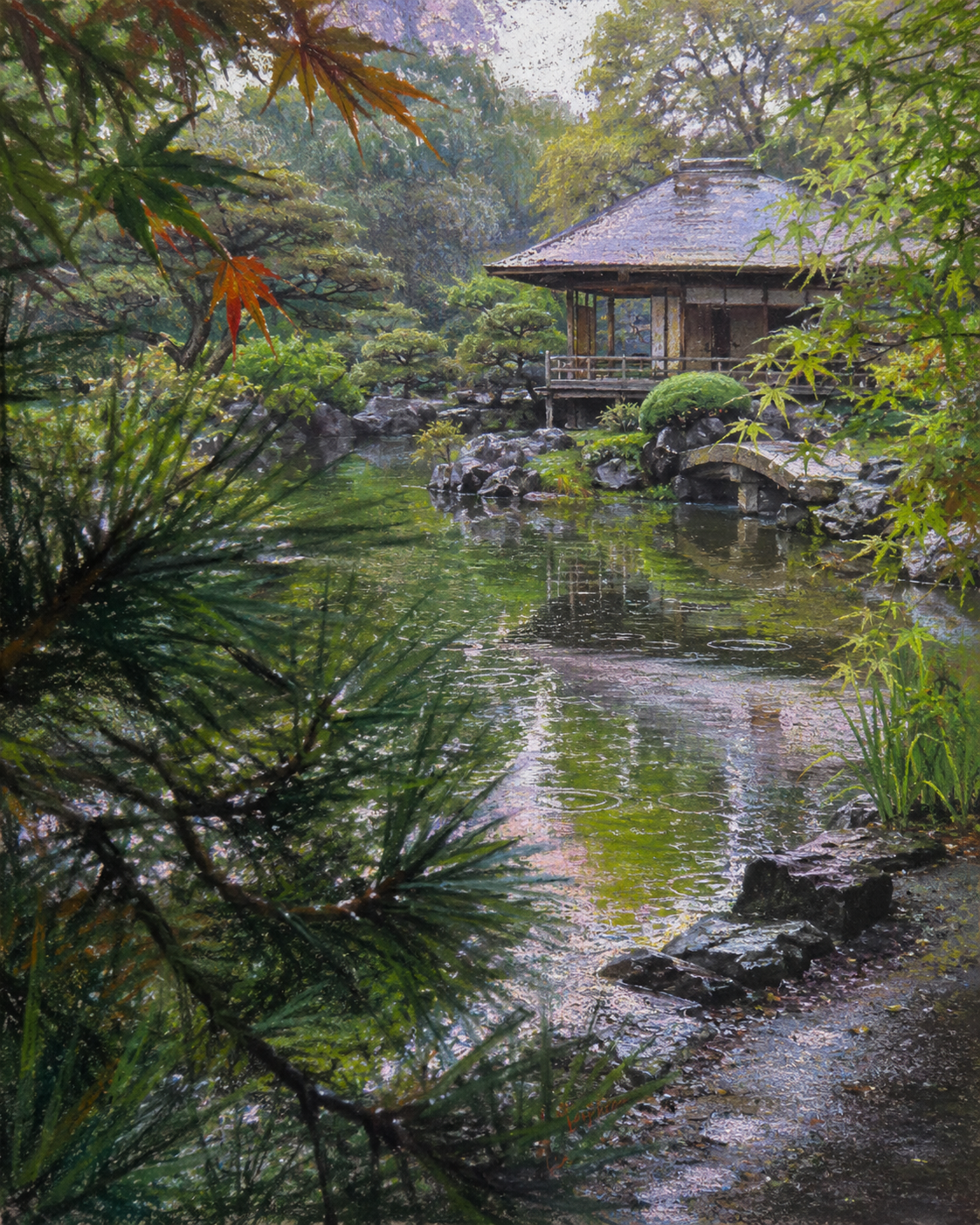
Rain-Soaked Reverie: The Garden's Silent Melody
Critique
1. Introduction This oil painting presents a traditional Japanese garden shrouded in a gentle, persistent rain, creating a deeply atmospheric and evocative scene. The work captures the tranquil beauty of wet foliage and the subtle ripples spreading across the surface of a pond. These specific weather conditions dictate the mood of the entire composition, infusing it with a sense of quietude and emotional depth. It invites the viewer into a contemplative space where only the soft sound of falling rain might be heard. 2. Description In the immediate foreground, sharp pine needles and a few maple leaves beginning to turn red frame the view of the inner garden. The middle ground is occupied by a calm pond, its surface delicately marked by numerous concentric circles created by falling raindrops. Beyond the water stands an elegant tea house with a thatched roof, accompanied by a small stone bridge that crosses a narrow section of the pond. The background vegetation is softened by the mist, with a diffused light gently illuminating the entire scene. 3. Analysis The artist utilizes meticulous brushwork, reminiscent of pointillism, to capture the glistening textures of wet leaves and stones along with subtle light reflections. While deep greens dominate the color palette, the pond reflects a complex array of colors, including the purplish-grey of the overcast sky and the surrounding greenery. The overall sense of humidity and atmospheric depth is achieved through the careful layering of thin glazes, creating a rich and immersive visual field for the observer to explore. 4. Interpretation and Evaluation Rain, often seen as a somber element, is masterfully transformed into a lyrical device that enhances the inherent beauty of the garden. The rhythmic depiction of the ripples on the water provides a quiet dynamism, drawing the viewer's awareness into the temporal flow of the painting. The contrast between the static presence of the tea house and the ever-changing surface of the pond suggests a harmony between the eternal and the fleeting. This work represents a sophisticated reinterpretation of traditional themes through a modern understanding of light. 5. Conclusion While the viewer is initially captivated by the serene mood of the rainy day, they are soon impressed by the artist's profound observational skills evident in every detail. The masterful rendering of light, shadow, and moisture elevates the subject beyond a mere landscape study into a work of significant spiritual depth. Such meticulous attention to detail results in a profoundly moving and peaceful viewing experience. The painting is an exceptional example of technical mastery combined with a sensitive portrayal of nature's varied and subtle moods.
Same Subcategory
 A Seat for the Sun
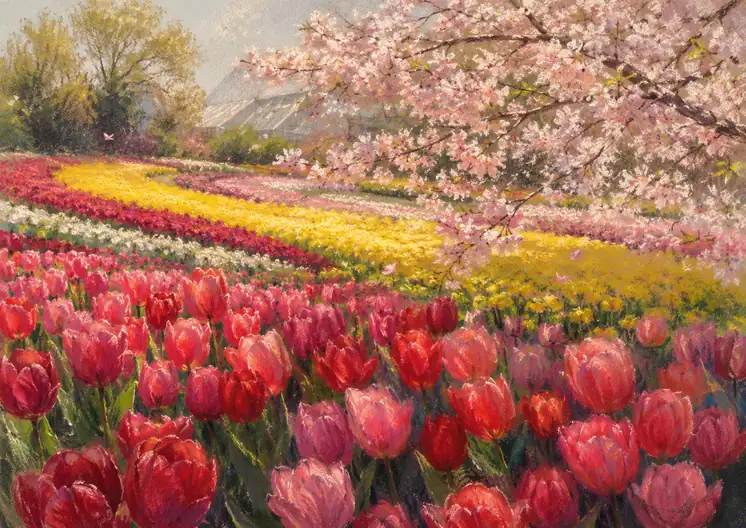 A Breath of Spring
Similar Artworks
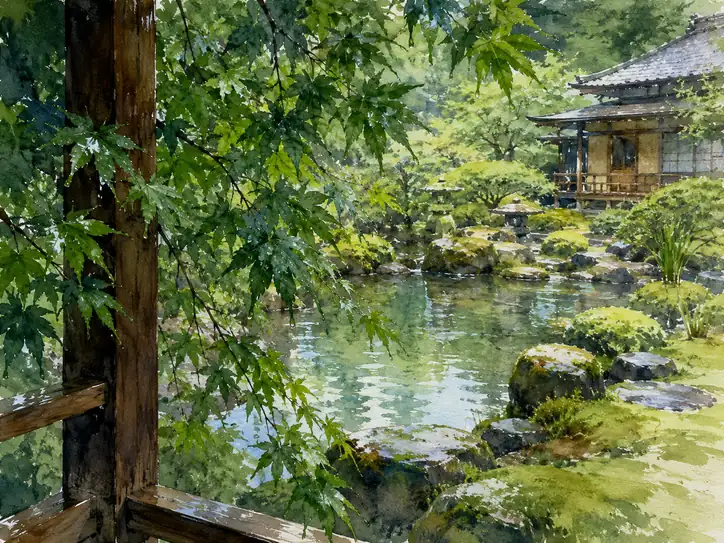 Whispers of the Summer Rain
 Ephemeral Fire of the Autumn Court
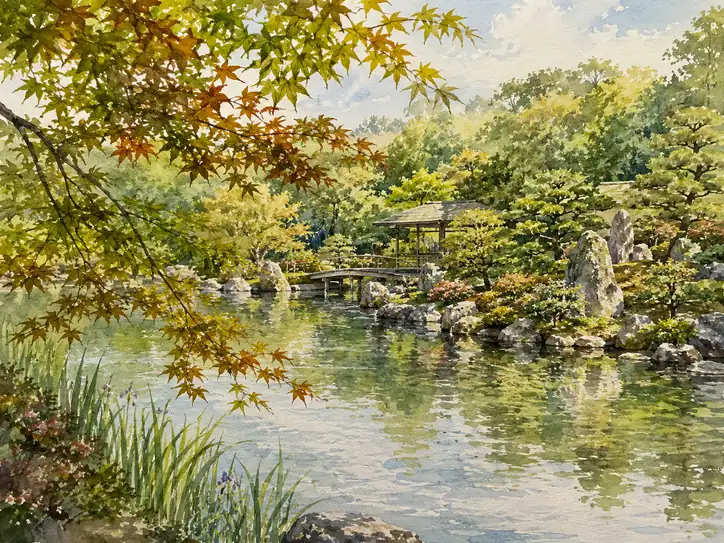 The Serenity of a Changing Season
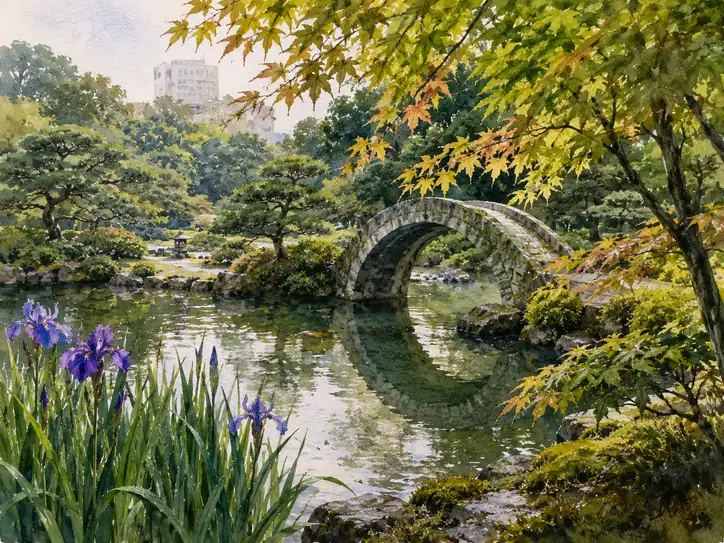 Where the Heart Finds Its Circle
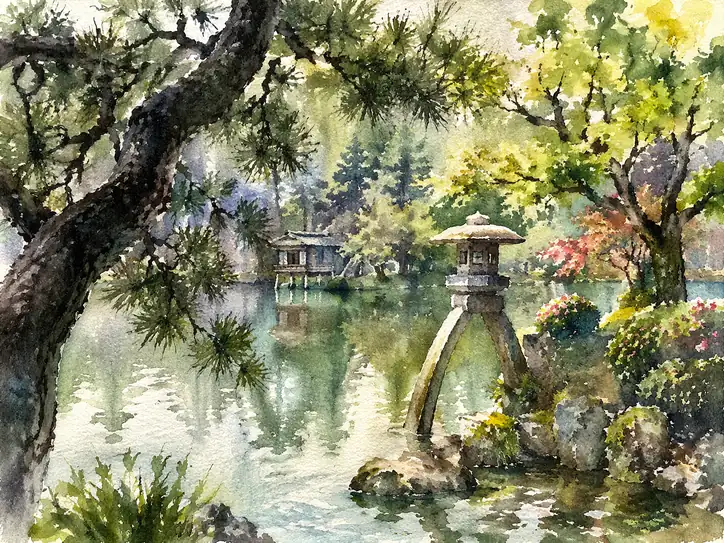 Quiet Reflections by the Stone Guardian
 The Autumn Sanctuary of Koi
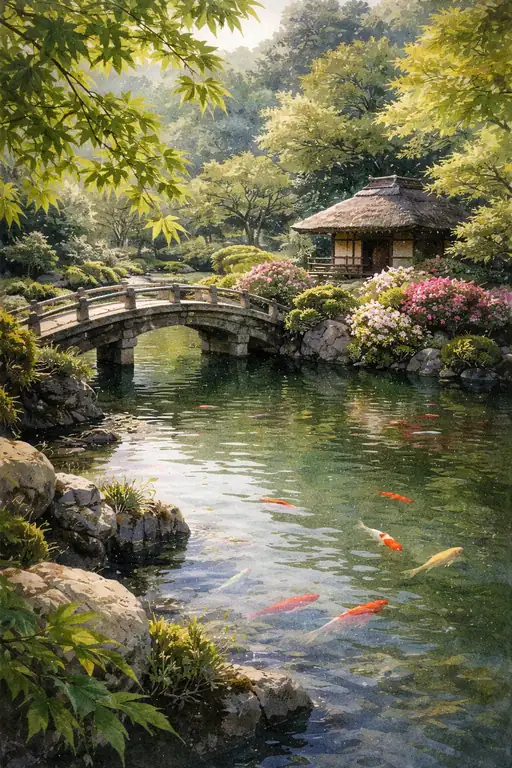 Harmony in the Sunlit Ripples
 Autumn's Embrace at the Still Water
 Quiet Bridge
 Crimson Leaves Reflected in Autumn's Mirror