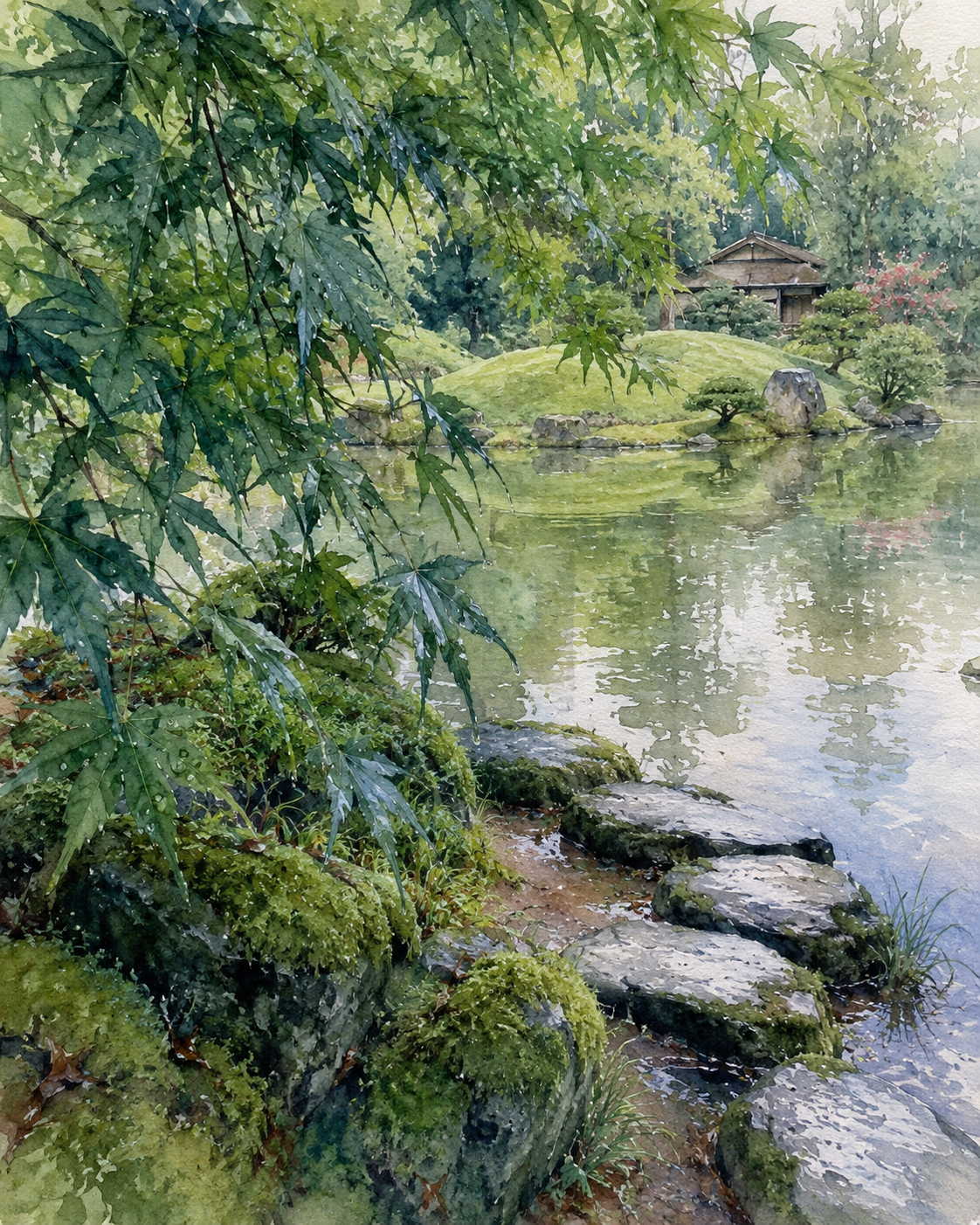
Whispers of the Emerald Sanctuary
Critique
1. Introduction This watercolor painting captures a lush, traditional Japanese garden, characterized by vibrant greenery and a sense of profound stillness. The work depicts a space of harmony and quietude, likely during the refreshing season of early summer. Through the masterful use of the watercolor medium, the artist beautifully expresses the textures of light, water, and flora. It is a highly evocative piece that transports the viewer away from the bustle of modern life and into a serene place of contemplation and natural beauty. 2. Description In the immediate foreground, moss-covered rocks and drooping maple branches with vivid green leaves dominate the composition. The maple leaves, rendered with such detail that their veins are visible, appear to hold droplets of moisture as if after a light rain. The middle ground features a calm pond that reflects the surrounding greenery and the soft sky above with impressive clarity. Stepping stones line the edge of the water, leading toward a gently sloping hill and a charming, thatched-roof tea house nestled quietly in the background. 3. Analysis The range of green tones is exceptionally rich, from the deep emerald of the moss to the bright, translucent hues of the young leaves. A sharp focus on the foreground elements contrasts effectively with the softer, atmospheric rendering of the distant trees and hills, creating a convincing sense of depth. The reflections on the pond's surface are achieved through a combination of wet-in-wet techniques and delicate lifting of pigment, conveying both the clarity of the water and the absolute stillness of the air. 4. Interpretation and Evaluation The painting successfully merges the meticulously manicured beauty of a Japanese garden with the inherent vitality of nature. The exquisite rendering of the maple leaves in the foreground demonstrates the artist's keen observational skills and high technical proficiency. The arrangement of the stepping stones suggests a narrative path, inviting the viewer's imagination to wander toward the secluded tea house. This work represents a poetic reinterpretation of traditional aesthetics, characterized by its lyrical quality and a remarkably high degree of artistic finish. 5. Conclusion While the viewer is initially struck by the overwhelming vibrancy of the greens, they are gradually drawn into the meticulous details and the quiet atmosphere of the scene. The handling of light is remarkably subtle, giving the impression that the entire garden is bathed in a soft, ethereal glow throughout. The artist's sincere approach to representation reveals a deep-seated affection for the natural world. This painting stands as a refined example of artistic expression, capable of bringing peace and tranquility to the observer's mind.
Same Subcategory
 Whispers of Red in the Tranquil Garden
 Where Time Dissolves in Golden Light
Similar Artworks
 Harmony in the Sunlit Ripples
 Whispers of the Summer Rain
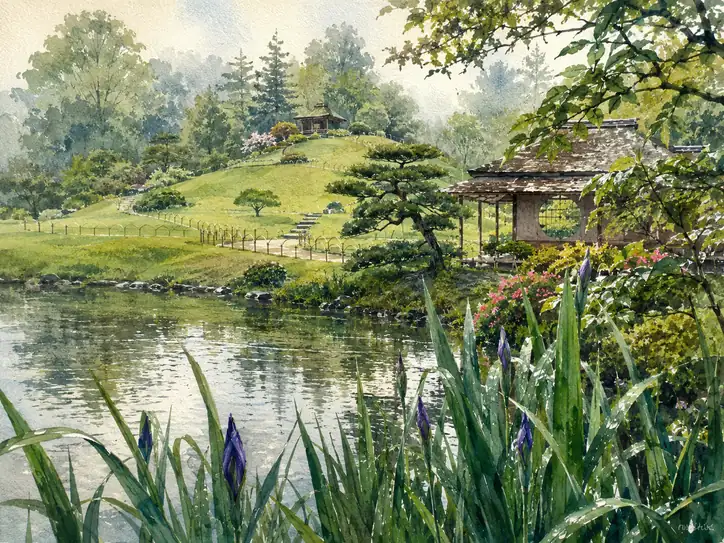 The Garden's Silent Breath
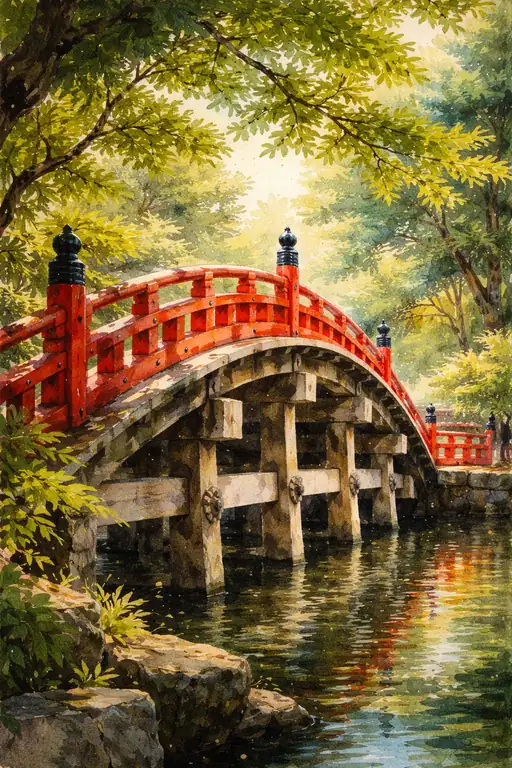 Crimson Arch Through the Sunlit Verdure
 Autumn's Embrace at the Still Water
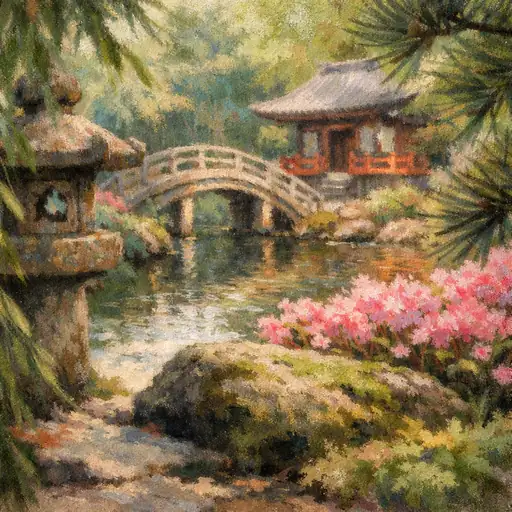 Quiet Bridge
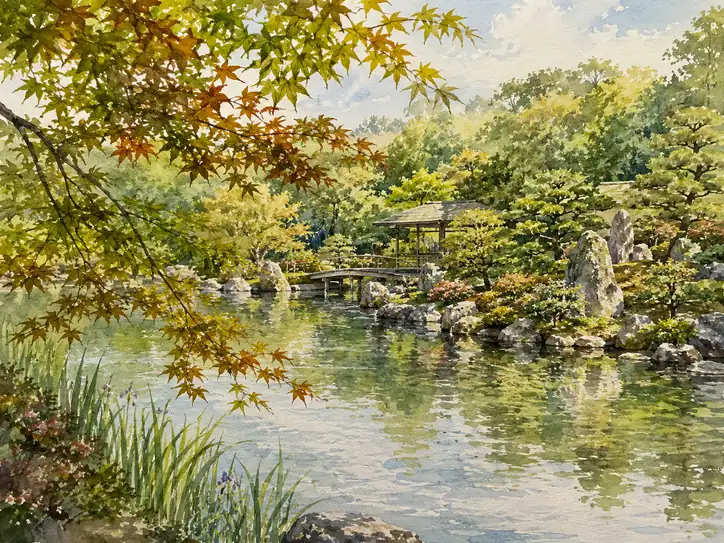 The Serenity of a Changing Season
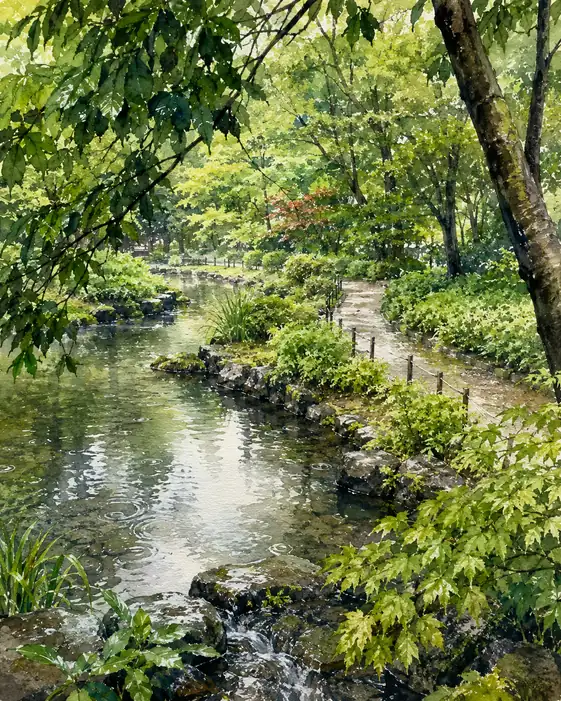 Listening to the Song of the Ripples
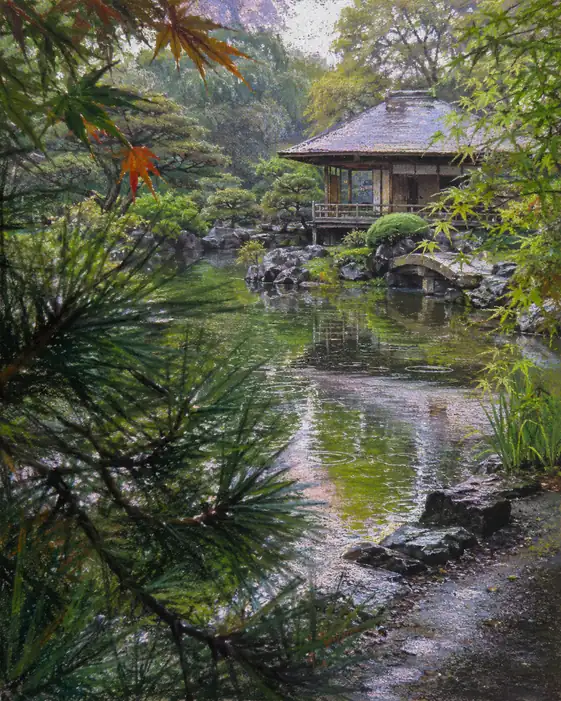 Rain-Soaked Reverie: The Garden's Silent Melody
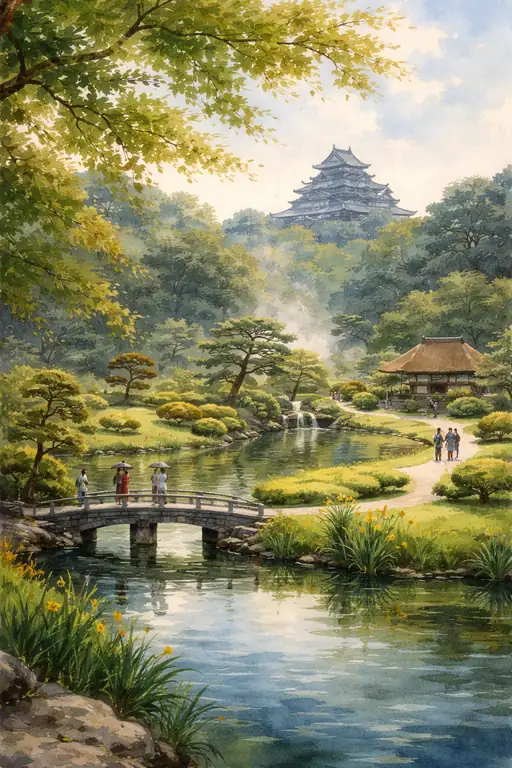 Serenity Under the Castle's Watch