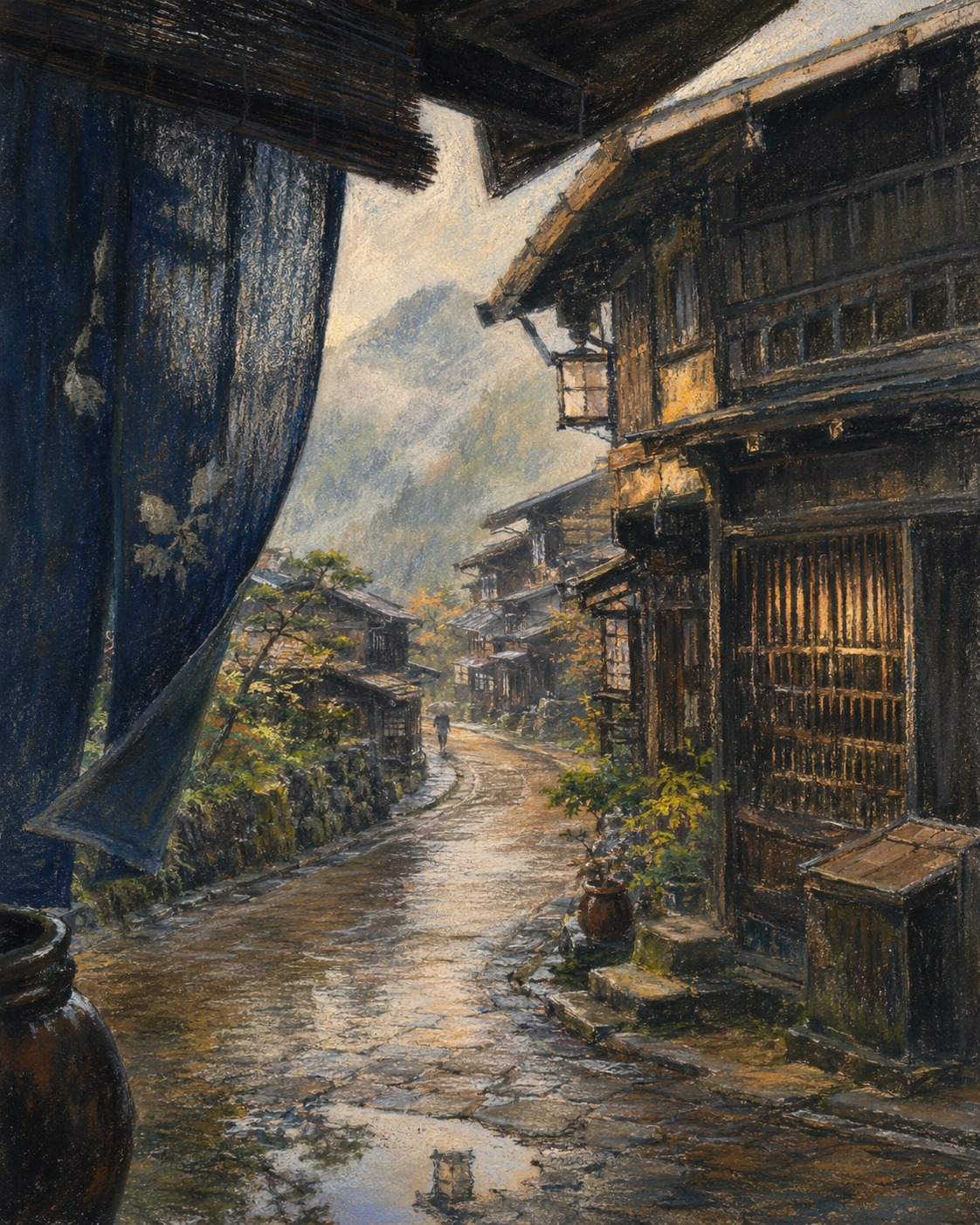
Indigo Dreams in Mist
Critique
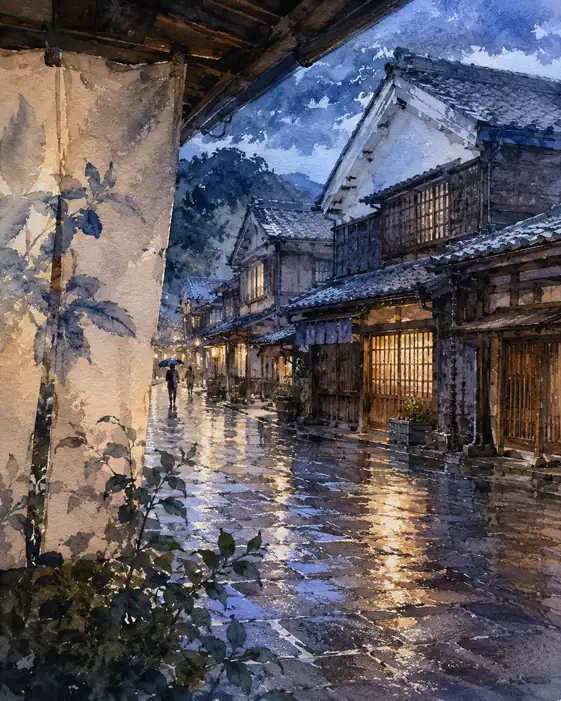
1. Introduction This evocative painting presents a view of a traditional Japanese village street, framed by a dark indigo "noren" curtain in the foreground. The composition captures a moment of quiet solitude as a lone figure with an umbrella walks down a winding, wet cobblestone path. The work masterfully blends architectural detail with atmospheric depth, evoking the nostalgic beauty of a historical post town during a gentle rain. 2. Description The foreground is dominated by the deep blue fabric of a noren, its texture rendered with fine, white patterns. To the right, the dark wooden facade of a traditional house features delicate latticework illuminated from within by a warm, golden glow. The wet cobblestones of the narrow street reflect the soft light, leading the eye toward a solitary person in the distance. Beyond the clustered wooden buildings, a misty mountain rises into a pale, overcast sky, its slopes covered in dense, hazy foliage. 3. Analysis The artist employs a strong framing device, using the noren and the overhanging eaves to create a sense of looking out from a sheltered interior. The contrast between the saturated blue of the curtain and the warm amber of the interior lights creates a visually engaging color harmony. The use of a slightly textured, almost pastel-like technique adds a soft, atmospheric quality to the scene, particularly in the rendering of the mist-shrouded mountains and the reflections on the damp road. 4. Interpretation and Evaluation This work serves as a poetic meditation on the theme of journey and solitude within a traditional cultural context. The figure walking away suggests a narrative of quiet transit, while the warm lights of the houses offer a sense of communal belonging and sanctuary. The technical execution is exceptional, particularly in the way the artist captures the subtle variations in light and texture across different materials. The balance between the heavy, dark foreground and the airy, distant background creates a compelling sense of spatial depth. 5. Conclusion Through its sophisticated composition and emotive use of color, the painting successfully creates a world that feels both historical and timeless. The interplay of light, rain, and tradition elevates the simple village scene into a powerful expression of Japanese aesthetics. Ultimately, the work is a beautifully crafted tribute to the enduring charm of Japan's rural landscapes and the quiet beauty of everyday moments.
Same Subcategory
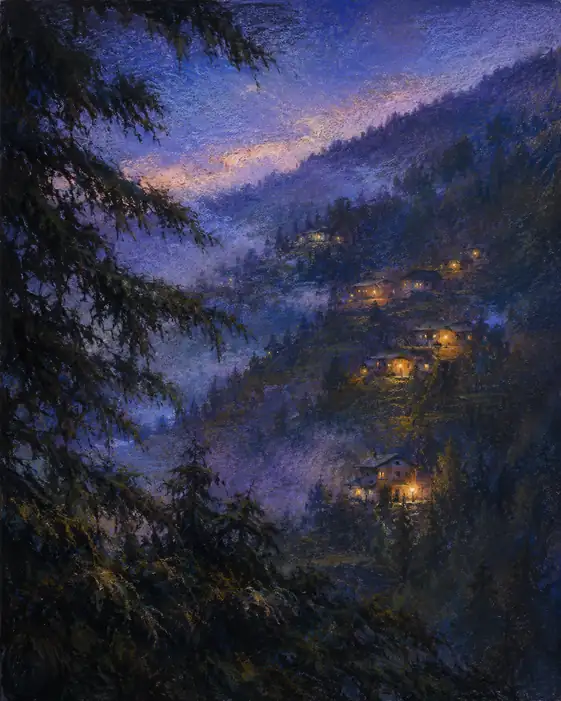 The Hearth of the Silent Mountain
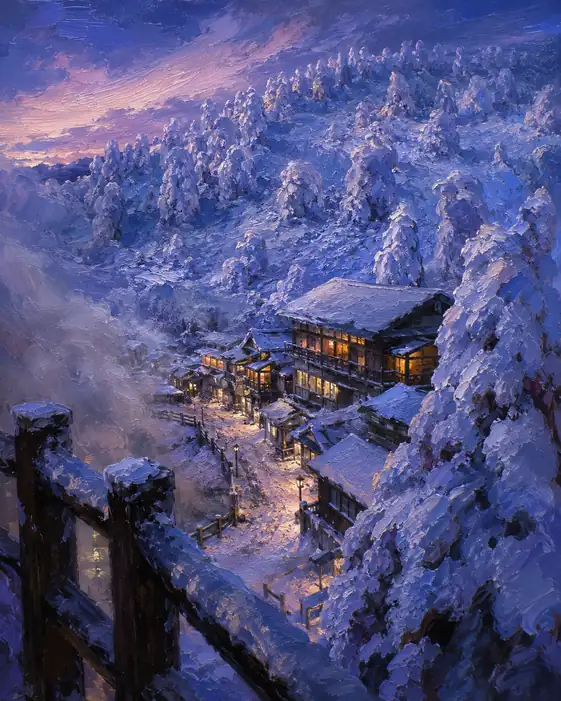 Warmth of the Snowy Night
Similar Artworks
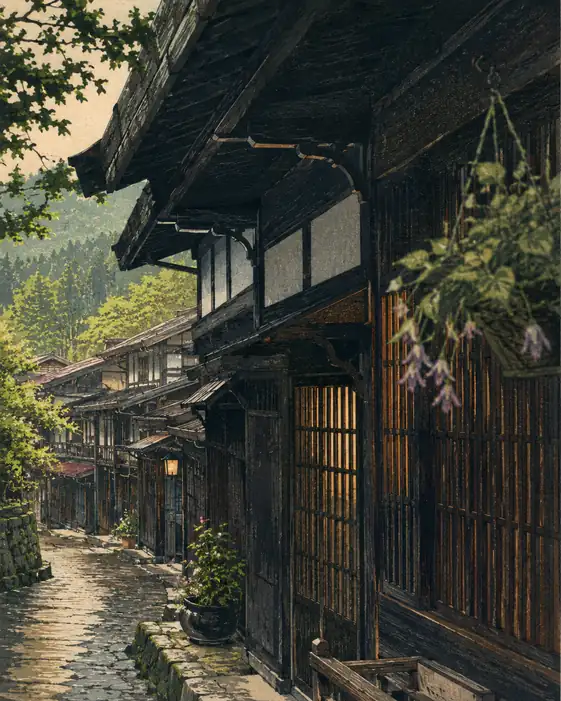 Golden Whispers of Home
 The Warm Embrace of Yesterday's Valley
 Echoes of the Sloping Town
 Dusk Awakens the Lantern's Memory
 Whispers of the Glistening Night
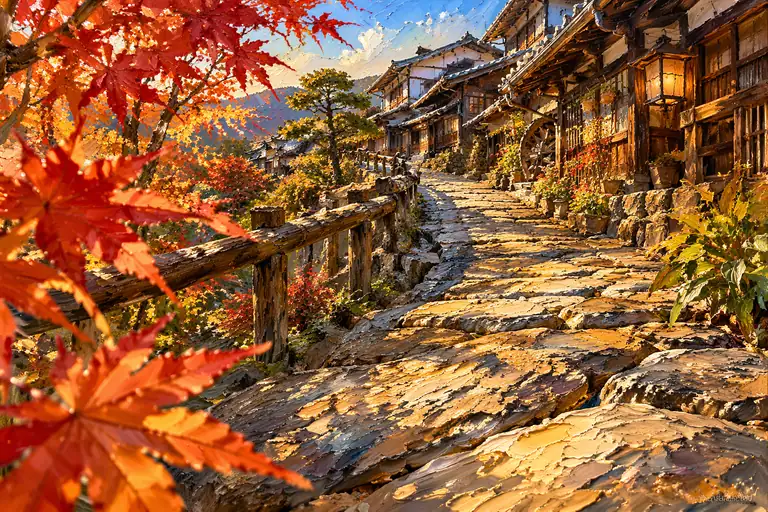 Ascent to the Autumn Skies
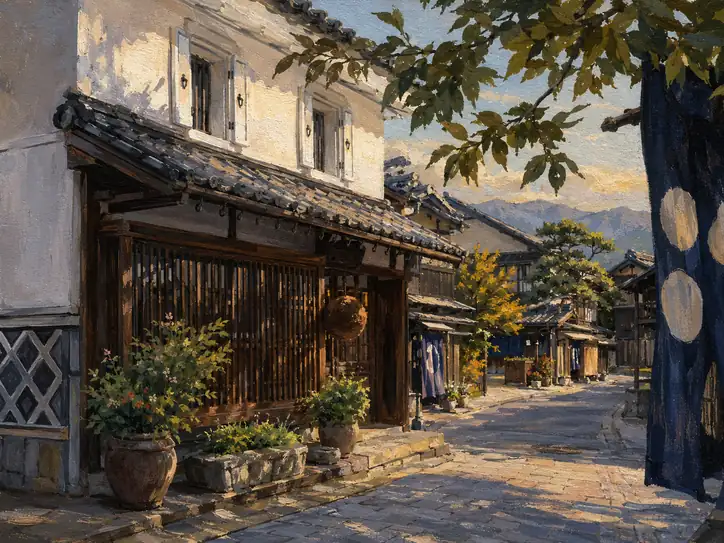 The Golden Hour in a Hidden Village
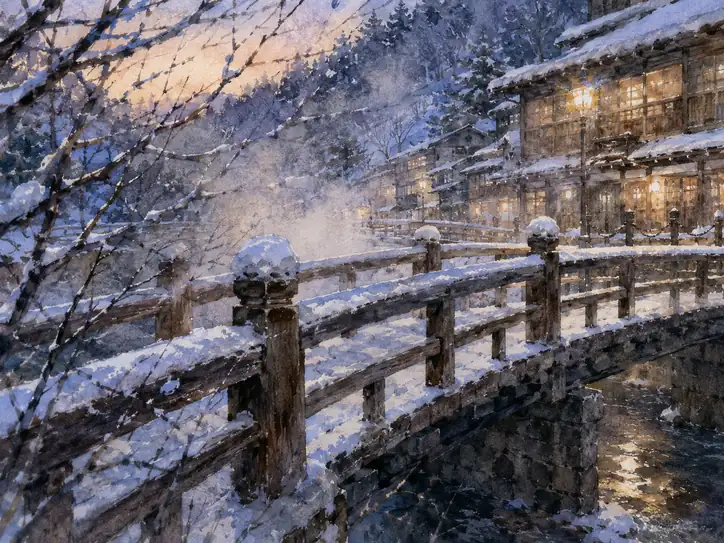 Twilight Serenity at the Snowy Inn
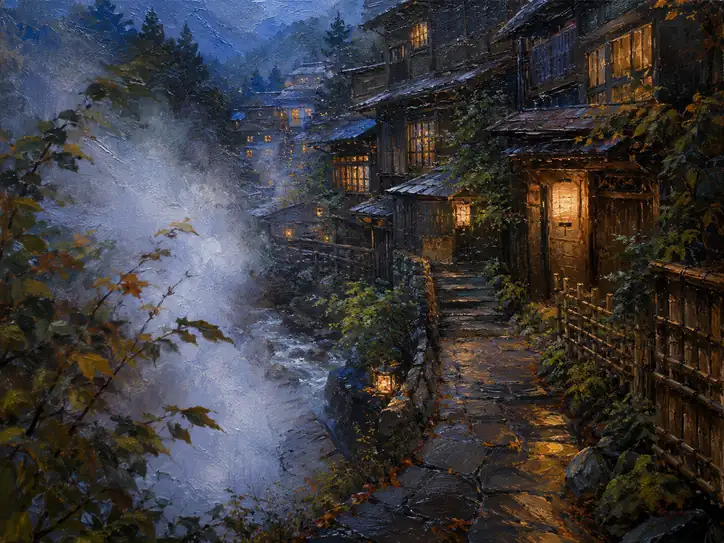 Golden Echoes in the Ravine
 Light Dwelling in the Rain