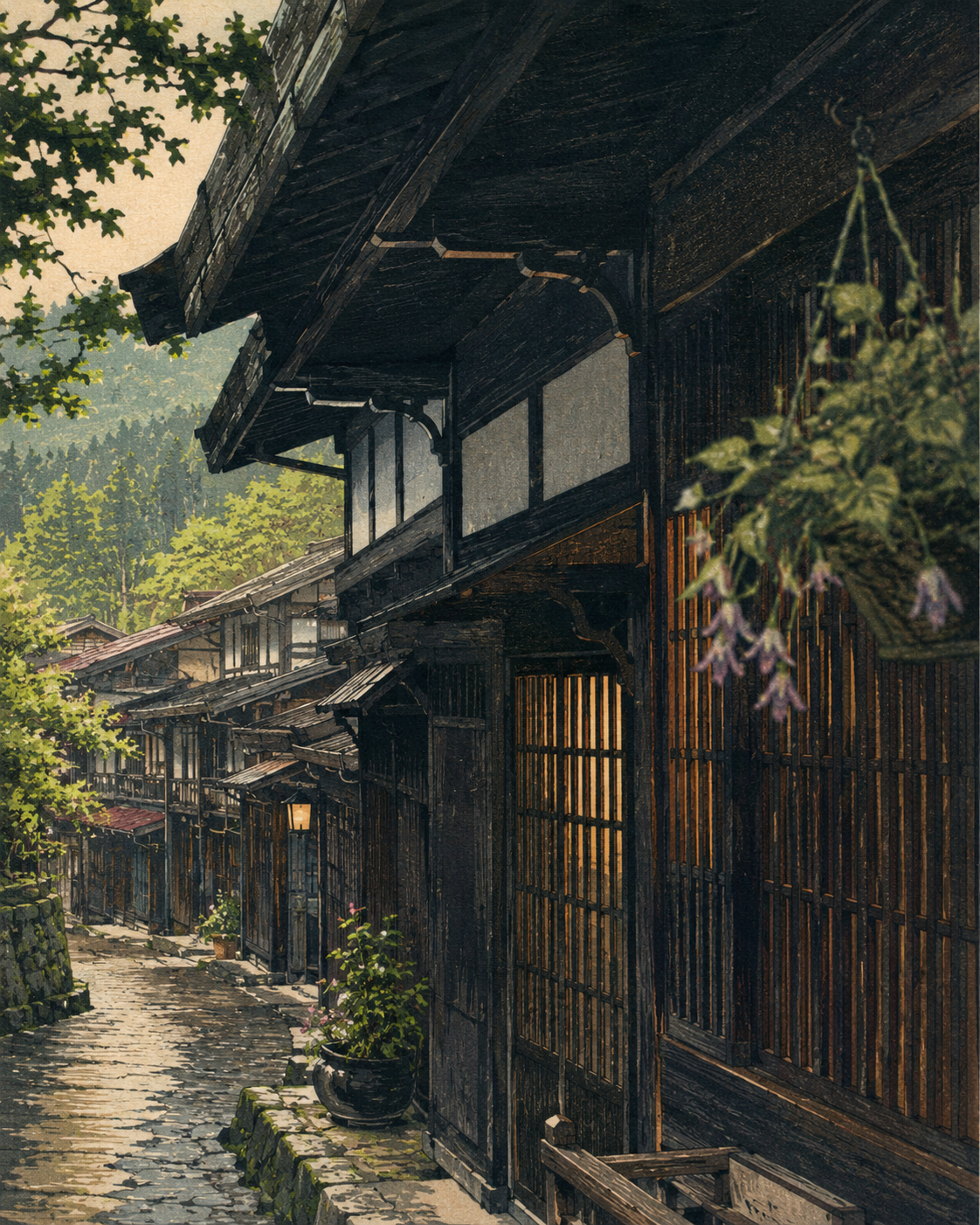
Golden Whispers of Home
Critique
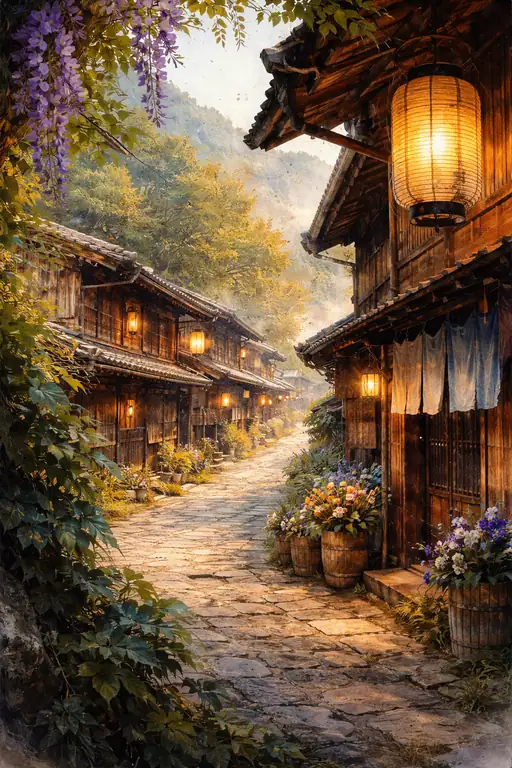
1. Introduction This evocative painting depicts a narrow, stone-paved street in a traditional Japanese village, reminiscent of a historical post town. The composition focuses on the weathered wooden facades of old buildings, where the passage of time is visible in every grain and texture. A hanging flower basket in the foreground and a stone-lined path leading toward a forested mountain create a scene of profound tranquility and cultural depth. 2. Description The foreground is dominated by a dark wooden house featuring intricate vertical latticework, or "koshi," through which a warm, golden light glows from within. A large eaves overhangs the scene, its complex joinery rendered with meticulous detail. To the right, a basket of delicate purple flowers hangs gracefully, partially obscuring the view of the street. The wet, stone-paved path reflects the soft ambient light, winding past similar traditional structures toward a background of lush green trees and a misty mountain ridge. 3. Analysis The artist utilizes a "Shin-hanga" woodblock print aesthetic, characterized by high contrast and a dramatic interplay of light and shadow. The vertical lines of the latticework and the diagonal recession of the street provide a strong structural framework for the composition. The deep, saturated browns of the aged wood are balanced by the vibrant greens of the foliage and the soft, diffused light, creating a sense of three-dimensional space and atmospheric depth. 4. Interpretation and Evaluation This work serves as a nostalgic tribute to Japan's architectural heritage, capturing the quiet elegance of rural life. The technical execution is masterful, particularly in the rendering of the wood's texture and the subtle reflections on the damp cobblestones. By emphasizing the warm interior light against the dark exterior, the artist evokes a feeling of home and sanctuary. The inclusion of the hanging plants adds a touch of organic life to the man-made environment, symbolizing a harmonious coexistence with nature. 5. Conclusion Through its disciplined composition and rich tonal palette, the painting successfully immerses the viewer in a serene, historical atmosphere. The balance between architectural precision and atmospheric light elevates the scene beyond a mere topographical record into a poetic meditation on tradition. Ultimately, the work stands as a beautiful and technically proficient celebration of Japanese aesthetics and the enduring spirit of its traditional landscapes.
Same Subcategory
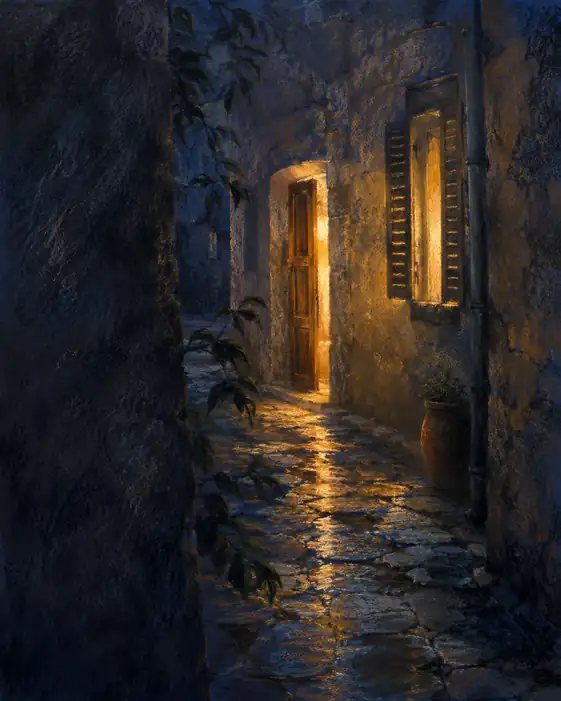 The Midnight Sanctuary
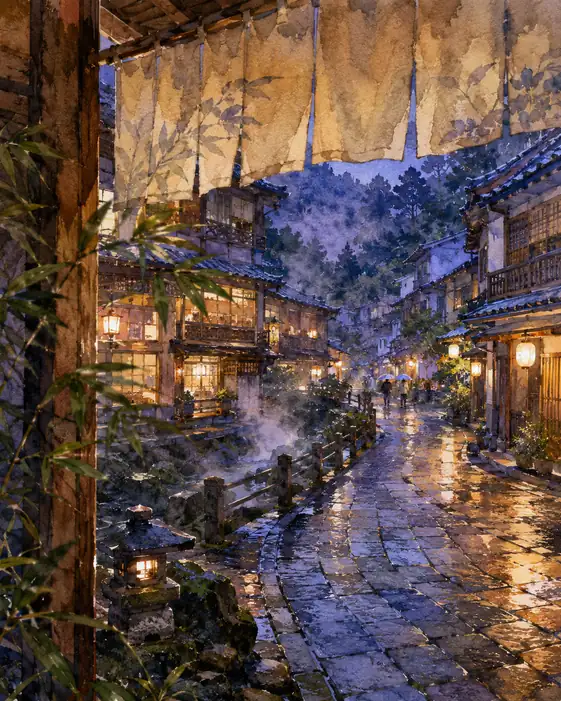 Lamps on the Rain-Kissed Road
Similar Artworks
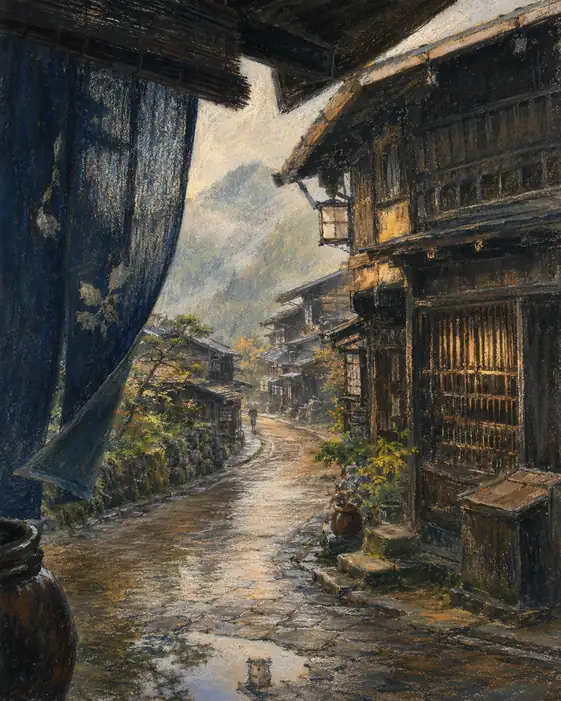 Indigo Dreams in Mist
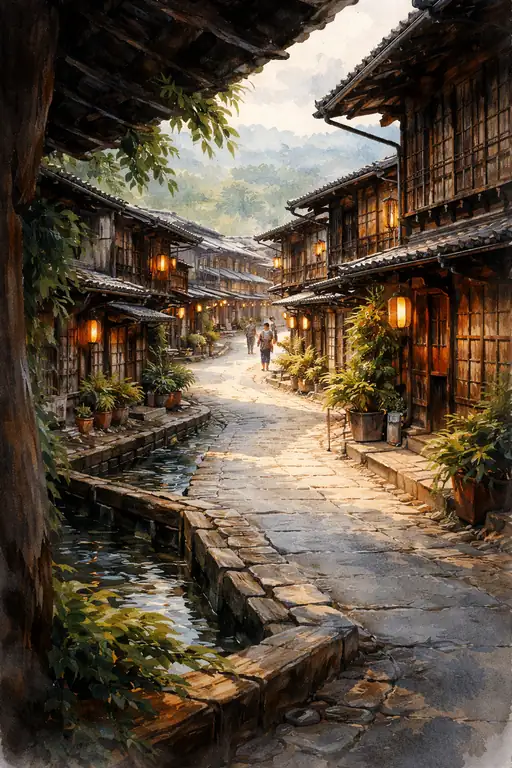 Whispers Along the Stone Path
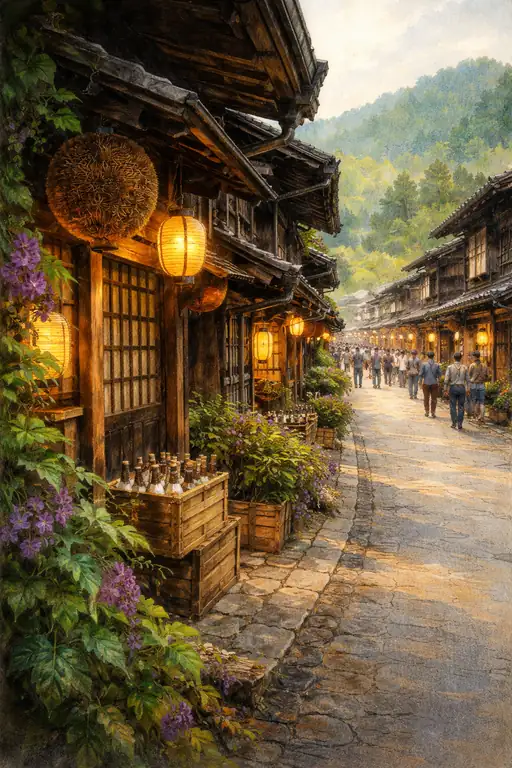 Dusk Awakens the Lantern's Memory
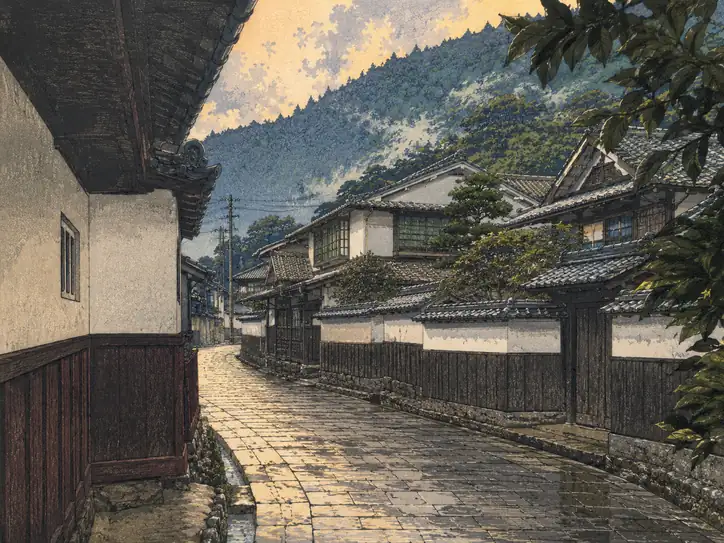 Whispers of the Eternal Village
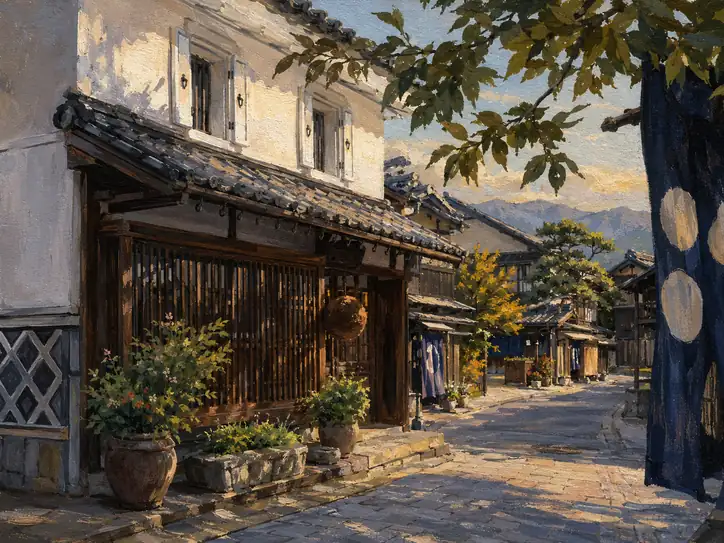 The Golden Hour in a Hidden Village
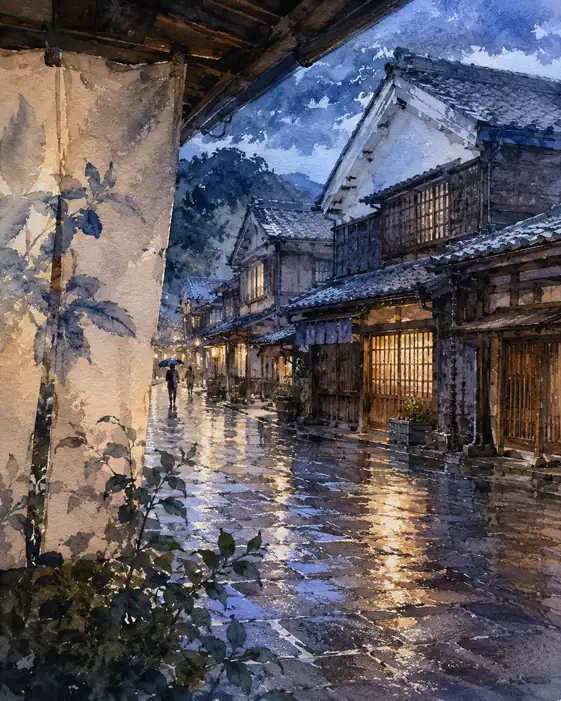 Light Dwelling in the Rain
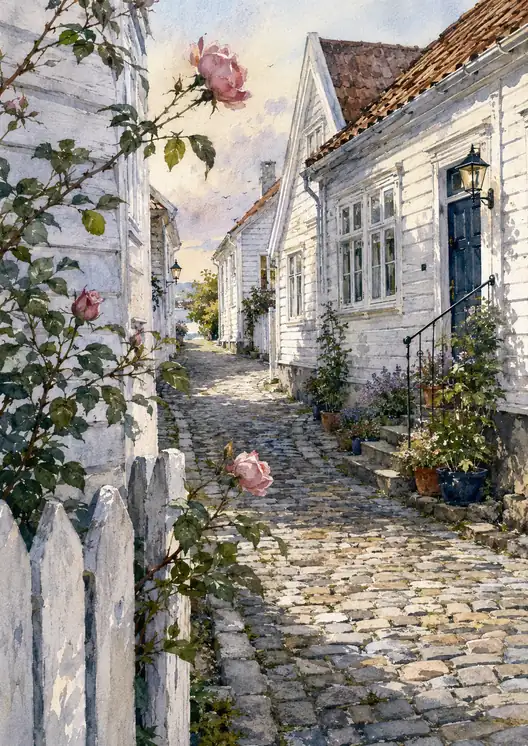 Where Roses Bloom on White Walls
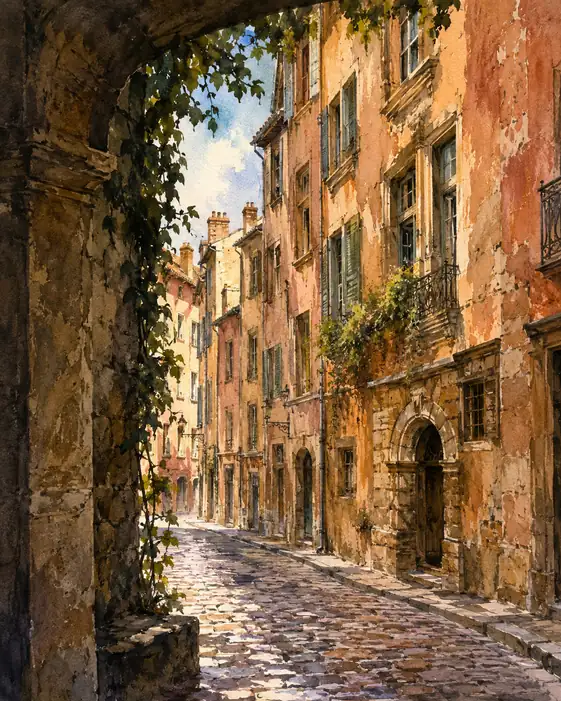 Golden Afternoon in the Mediterranean Alley
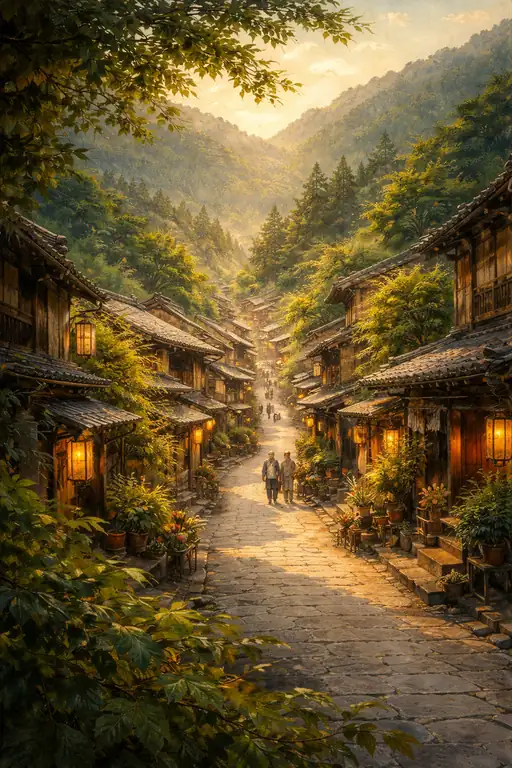 The Warm Embrace of Yesterday's Valley
 Wisteria Dreams in the Quiet Town