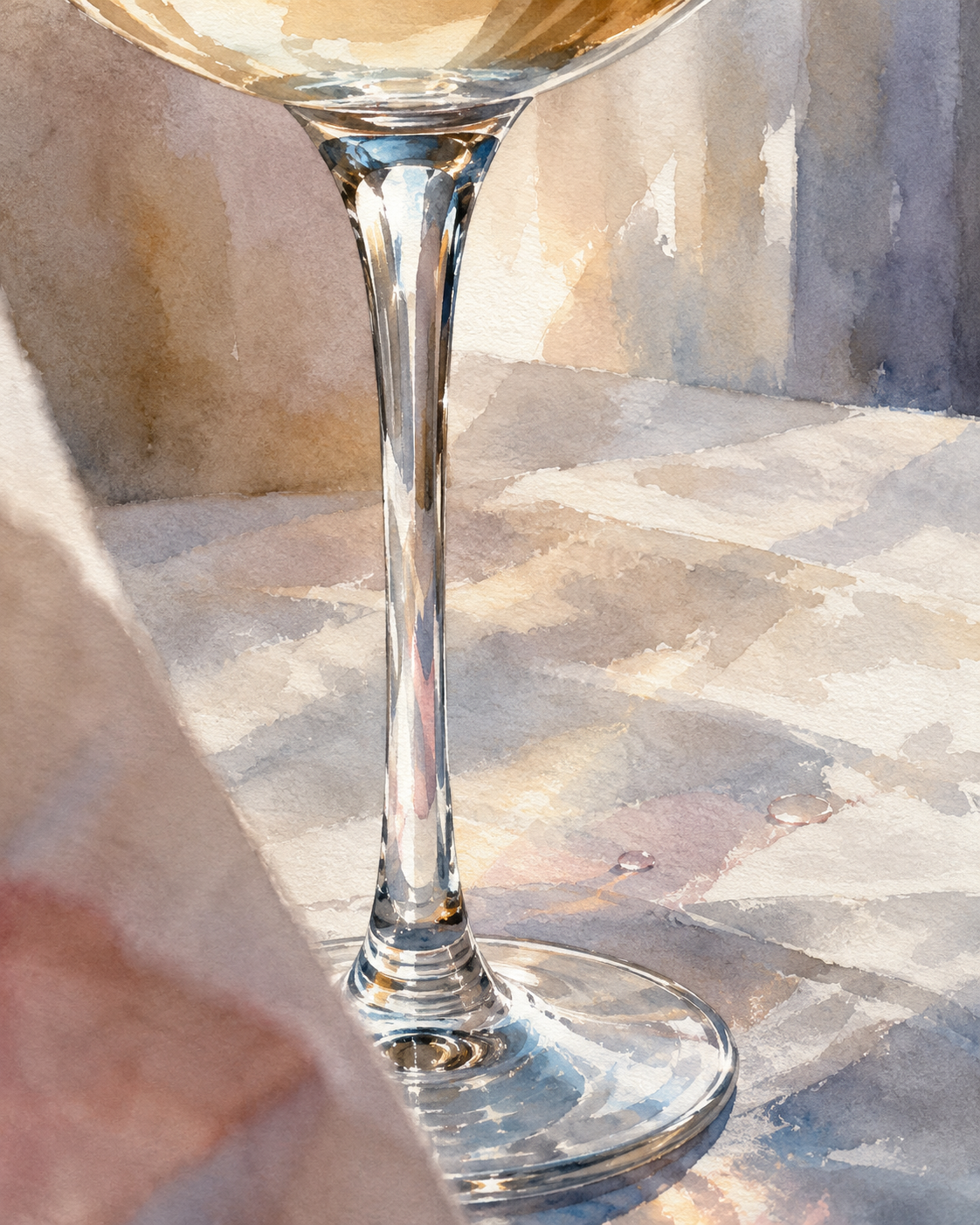
Prism of the Ordinary
Critique
1. Introduction This watercolor painting presents an intimate, close-up study of a glass vessel, focusing specifically on its elegant stem and base. The work explores the complex interplay between light, transparency, and shadow in a domestic or still-life setting. By choosing a tight crop, the artist elevates a common object into a subject of formal beauty and technical exploration. The overall atmosphere is one of lightness and clarity, characteristic of the watercolor medium. 2. Description The central focus is the slender, curved stem of a glass, which reflects the surrounding environment in subtle streaks of color. The base of the glass rests on a surface that is covered with a patterned shadow, possibly from a window or a nearby object. Pale yellow liquid is visible in the bowl of the glass at the top of the frame, its color spilling down into the reflections on the stem. In the foreground on the left, a soft-edged, brownish form, perhaps a napkin or a tablecloth, partially enters the frame, adding a sense of casual placement. 3. Analysis The composition is dominated by the strong vertical line of the glass stem, which is balanced by the horizontal and diagonal elements of the surface below. The artist employs a palette of delicate washes, including soft purples, pale ambers, and cool blues, to depict the transient effects of light. The transparency of the glass is expertly rendered through negative space and carefully placed highlights that suggest a polished surface. The shadows on the table are not merely dark areas but are filled with color variations that reflect the ambient light. 4. Interpretation and Evaluation This piece demonstrates an exceptional mastery of the watercolor technique, particularly in the control of edges and the layering of transparent washes. The depiction of light filtering through the glass and creating warm, golden highlights is both convincing and aesthetically pleasing. The choice of a close-up perspective encourages the viewer to appreciate the subtle details of a functional object. While the subject matter is simple, the execution reveals a sophisticated understanding of optical phenomena and a refined sense of color harmony. 5. Conclusion At first glance, the painting seems to be a simple exercise in rendering glass, but it ultimately transcends its subject to become a study of light itself. The contrast between the crisp lines of the glass and the soft, bleeding washes of the background creates a dynamic visual experience. The work stands as a testament to the artist's ability to find extraordinary beauty in the ordinary details of daily life. The successful integration of form and light confirms the piece as a high-quality example of contemporary watercolor still life.
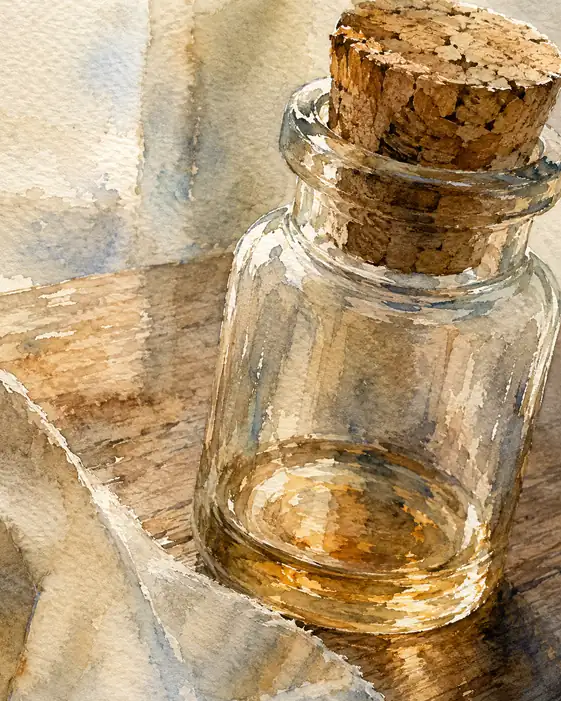 Preserving a Golden Moment
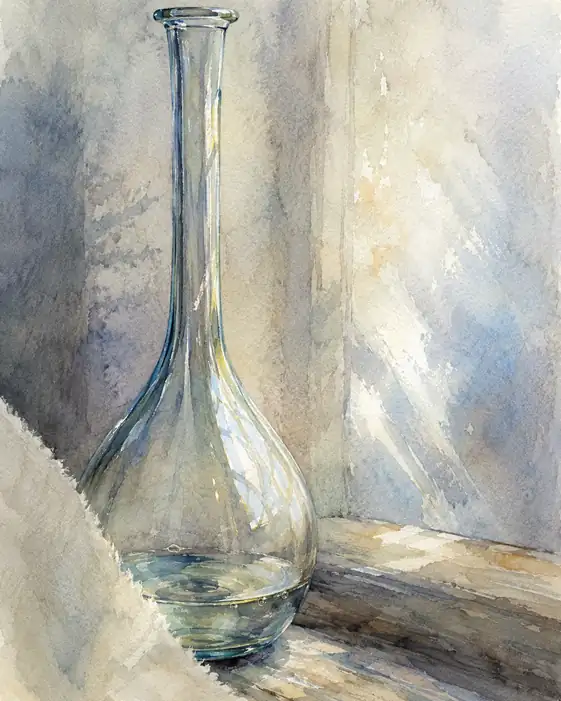 The Silent Breath of Morning Light
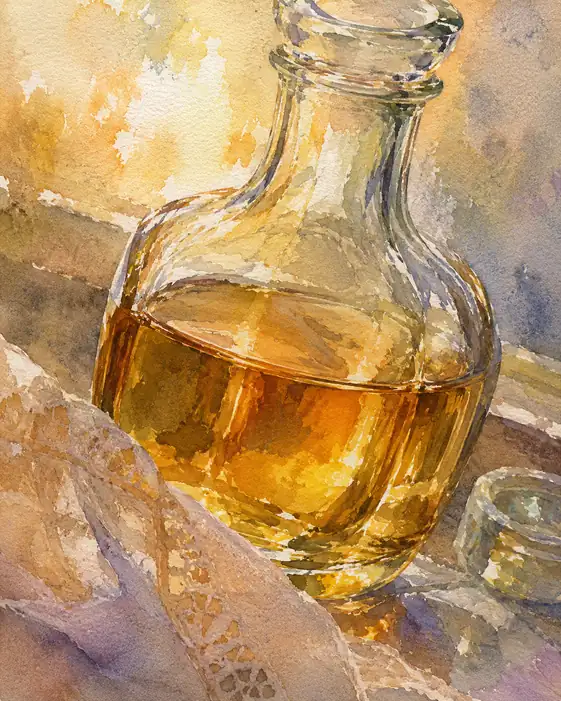 Golden Memories Wrapped in Lace
 Alchemy of Light
 Captured Sunbeam
 A Breath of Captured Azure
 Crystal Clarity in the Sun
 Frozen Whispers of Time
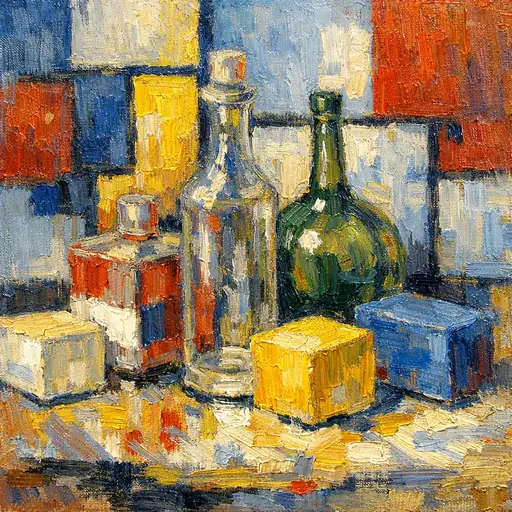 Shattered Reality: A Vibrant Dance of Cubes and Bottles
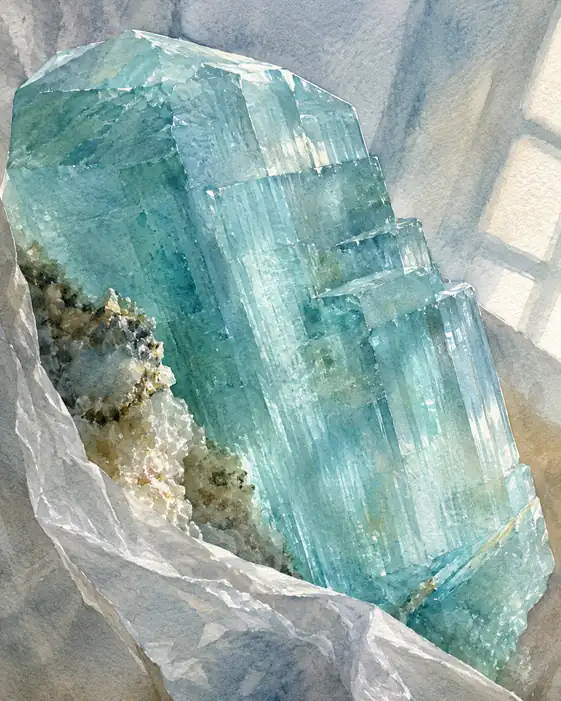 Prism of Silent Morning