Threshold of the Dream
Critique
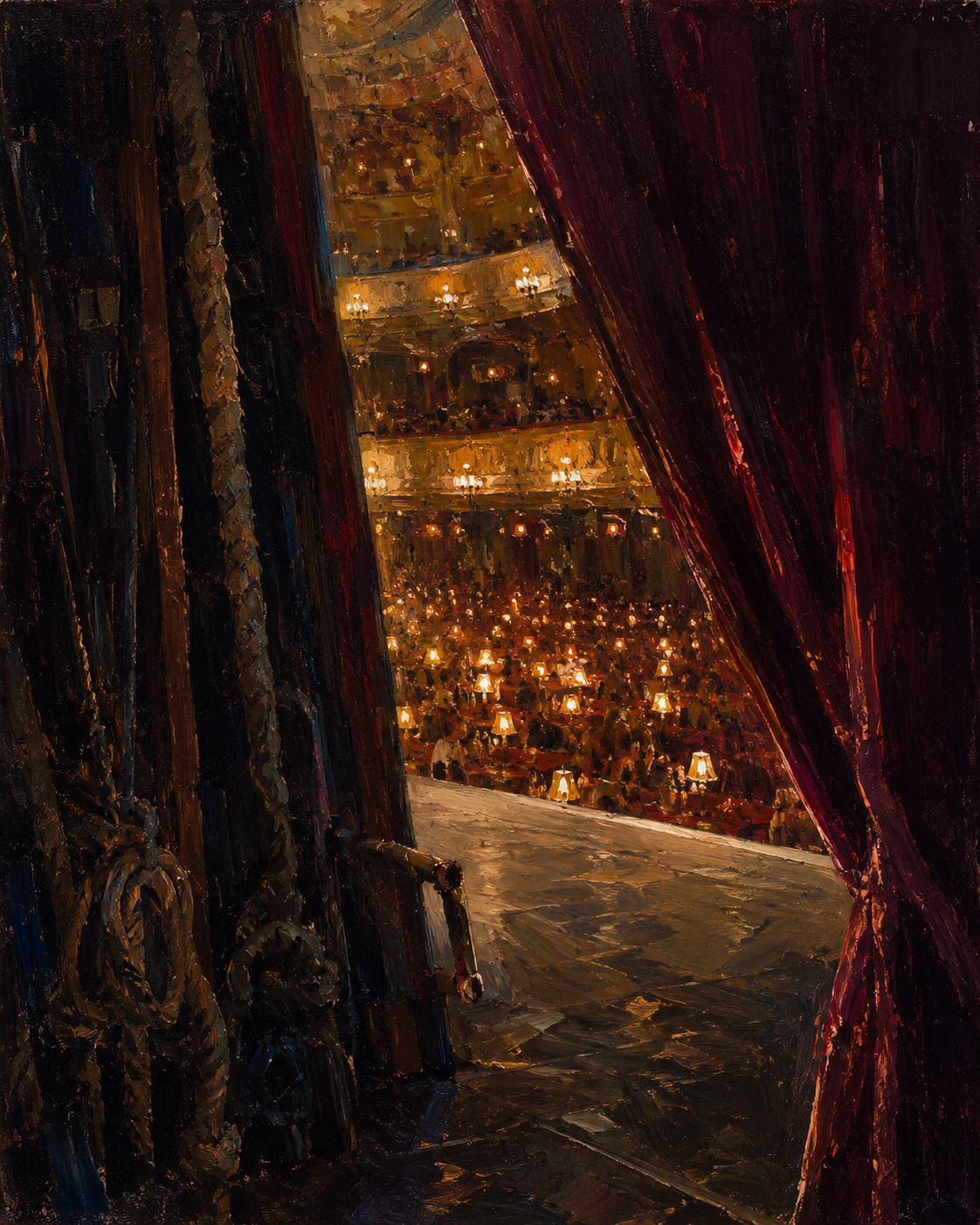
1. Introduction This painting presents a dramatic oil study of a grand opera house viewed from the wings, capturing the magical threshold between the hidden world of the stage and the luminous spectacle of the auditorium. The powerful interplay between the heavy, dark velvet curtains and the sparkling, gold-adorned tiers of the theater creates a scene that immediately evokes a sense of theatrical mystery, anticipation, and the enduring luxury of classical performance art. 2. Description The composition is framed by the massive, deep red folds of a velvet curtain and the thick, weathered ropes of the stage rigging in the foreground. Through this narrow opening, the viewer glimpses the breathtaking interior of a classic European-style opera house, with multiple tiers of balconies decorated in ornate gold leaf. The auditorium is filled with a sea of warm lights from countless chandeliers and lamps, creating a shimmering mosaic of brilliance that suggests a packed house. The stage floor in the middle ground reflects the ambient glow, rendered with bold palette knife strokes that emphasize its wooden texture. A rich color palette centered on crimson, gold, and deep umber provides a cooling visual rhythm that enhances the majestic and historic mood of the scene. 3. Analysis The artist utilizes a vigorous impasto technique, employing thick layers of paint to achieve a profound sense of material density and physical presence. This is particularly effective in capturing the heavy, light-absorbing quality of the velvet and the brilliant, tactile highlights of the individual lights within the auditorium. The spatial structure is masterfully handled, utilizing the dark "behind-the-scenes" area as a framing device to create an immense sense of depth and focus. The contrast between the rugged textures of the stage equipment and the refined elegance of the seating area provides a dynamic visual rhythm that guides the viewer’s eye toward the luminous center. The brushwork is expressive and confident, showcasing an exceptional ability to manage complex value relationships and intricate architectural details. 4. Interpretation and Evaluation This work can be interpreted as a meditation on the duality of performance—representing both the polished facade of the public spectacle and the raw, unrefined reality of the creative labor that supports it. The perspective from the wings places the viewer in a privileged, intimate position, transforming a public landmark into a personal discovery. The technical execution is superb, demonstrating a sophisticated mastery of light control and surface texture. The artist’s ability to capture the specific, electric atmosphere of a theater just before the curtain rises marks this as a work of significant artistic merit and emotional power. 5. Conclusion Ultimately, the painting is a masterful celebration of form, light, and the performing arts. While it depicts a specific architectural space, the refined technique and thoughtful composition elevate it beyond a simple representational study. It successfully captures the silent energy and serene brilliance of the opera house, preserving a moment of cultural grandeur within a framework of rigorous artistic integrity, leaving a lasting impression of the profound beauty found in the intersection of tradition and imagination.
 Beyond the Crimson Veil
 Overture of Light
 Beyond the Velvet Veil
 The Breath Before the Song
 Before the Applause
 The Gilded Gaze
 The Theater of Gazes
 Her First Aria
 The Silent Narrator
 The Golden Echo of a Dream
 Gilded Symphony of the Silent Hall