The Texture of Lost Years
Critique
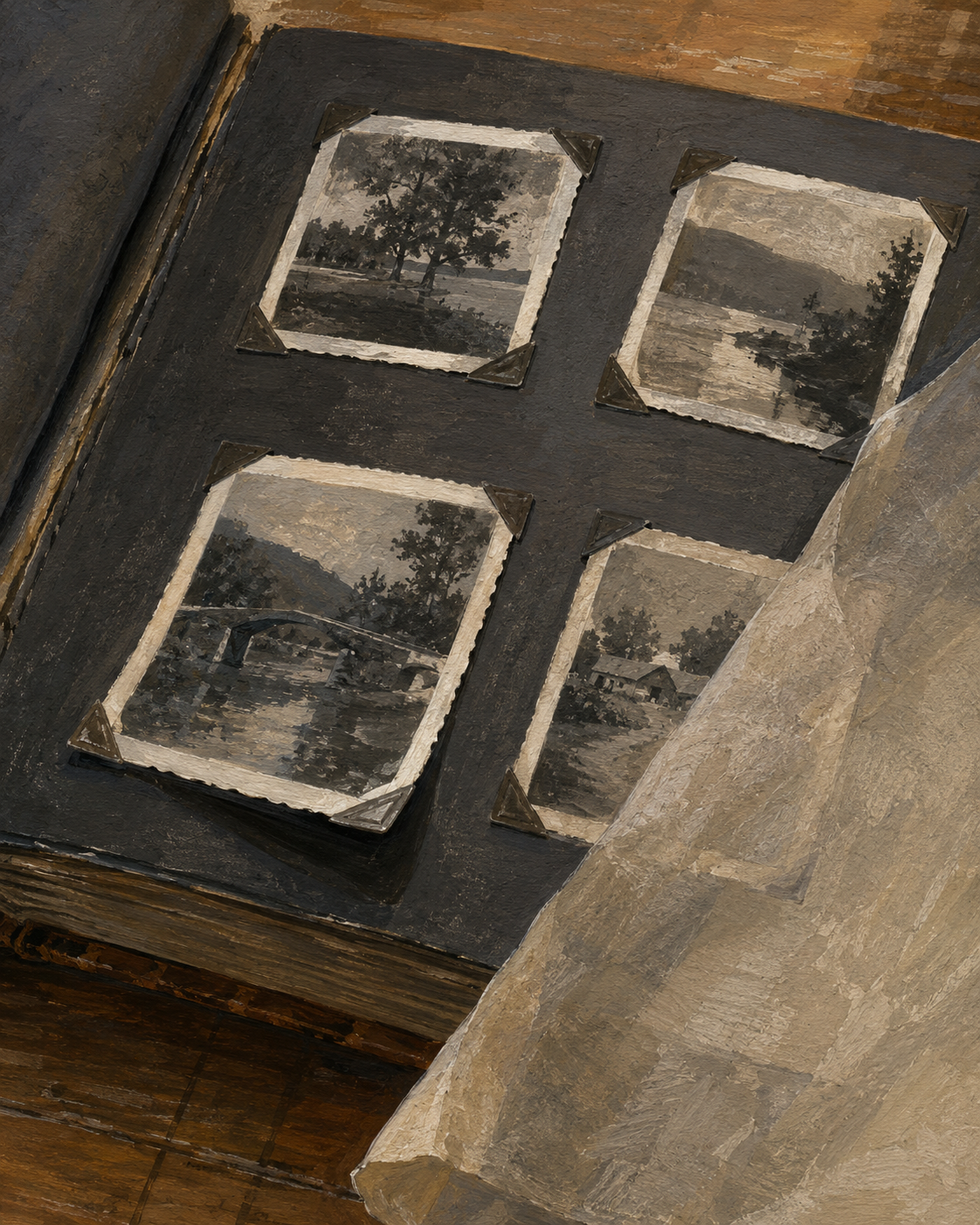
1. Introduction This oil painting presents a still-life composition of an open, vintage photo album. The work explores themes of memory, history, and the tactile quality of physical archives. The artist utilizes a realistic style with a focus on texture and lighting to create a sense of nostalgia and material presence. 2. Description The center of the composition features a dark album page with four small, monochromatic landscape photographs. Each photograph is secured by metallic-looking corner mounts. The images depict various natural scenes: a prominent tree by a body of water, a vista of mountains and a lake, a stone bridge crossing a river, and a secluded cottage. A crumpled, translucent sheet of paper lies across the right side of the book, its surface reflecting a soft, ambient light. 3. Analysis The artist uses a limited color palette of deep greys, ochres, and muted sepias to reinforce the vintage aesthetic. The brushwork is particularly expressive in the rendering of the worn album edges and the coarse texture of the covering paper. Lighting is handled with care, creating subtle shadows beneath the photographs and highlights on the folded paper, which adds a three-dimensional quality to the flat surfaces of the album. 4. Interpretation and Evaluation This artwork effectively communicates the weight of time through its meticulous attention to the physical signs of aging. The choice to depict photographs within a painting creates a compelling meta-narrative about representation and the preservation of the past. Technically, the contrast between the sharp edges of the photo mounts and the soft, diffused appearance of the parchment demonstrates a high degree of control over the medium. The composition is well-balanced, leading the eye across the individual photos while maintaining the unity of the entire object. 5. Conclusion Initially, the painting appears as a simple arrangement of objects, but the varying textures and historical context invite a more profound reflection on the nature of documentation. The tactile realism employed here serves as a bridge between the viewer's present and a captured, bygone era. Overall, the piece is a successful exploration of still life that combines technical skill with evocative storytelling.
Same Subcategory
 The Silence of Sealed Memories
Similar Artworks
 Silhouettes of a Forgotten City
 The Reliquary of Silent Echoes
 Echoes in Sepia and String
 The Weight of a Silent Memory
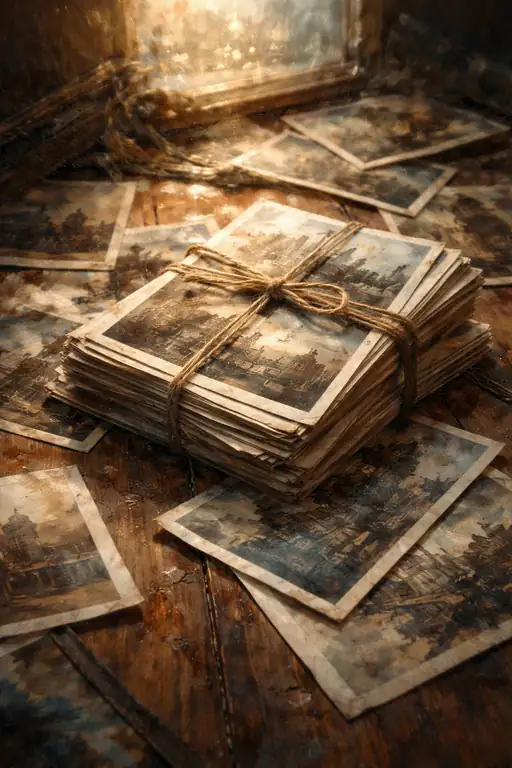 The Heavy Bundle of Yesterdays
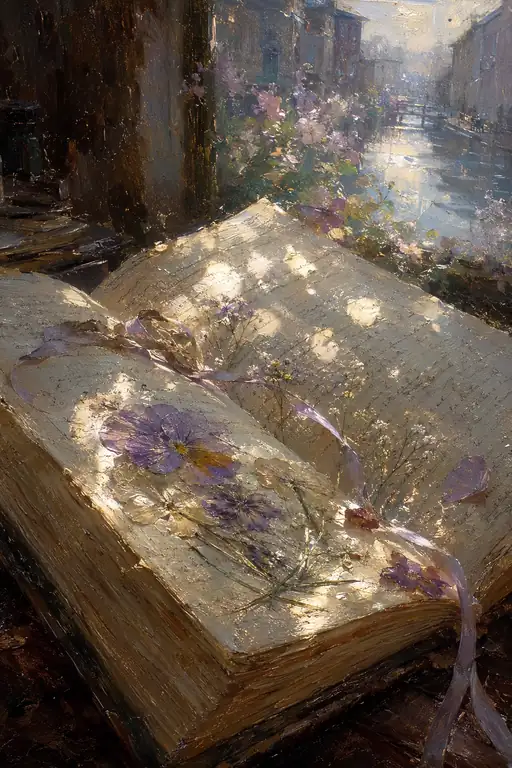 The Canal Pressed Between Beloved Pages
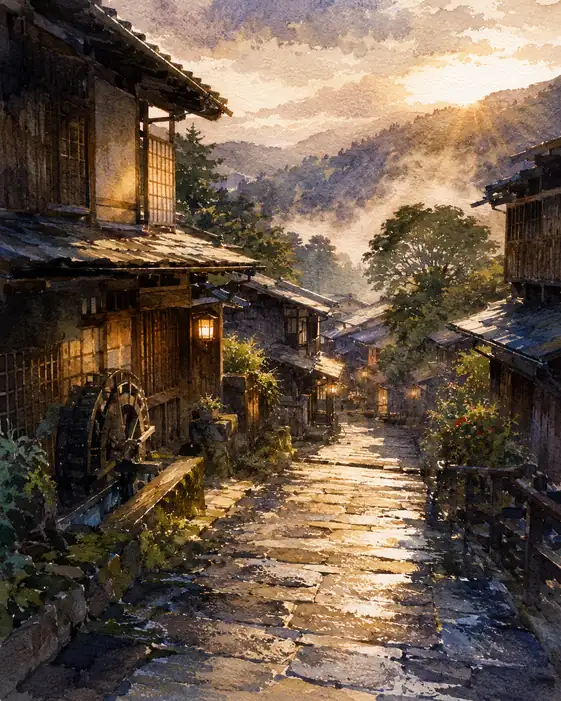 Light Descends the Old Road
 Time Bound in a Wine-Red Ribbon
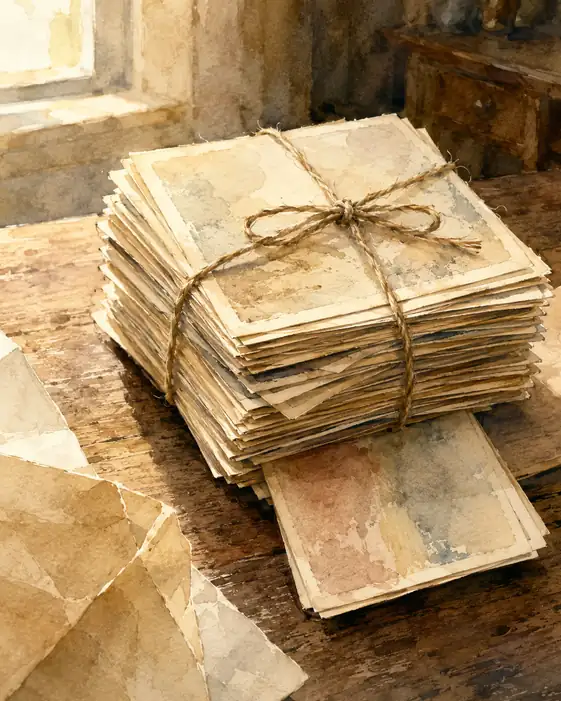 Bonds Tied in Faded Twine
 The Silent Weight of Knowledge