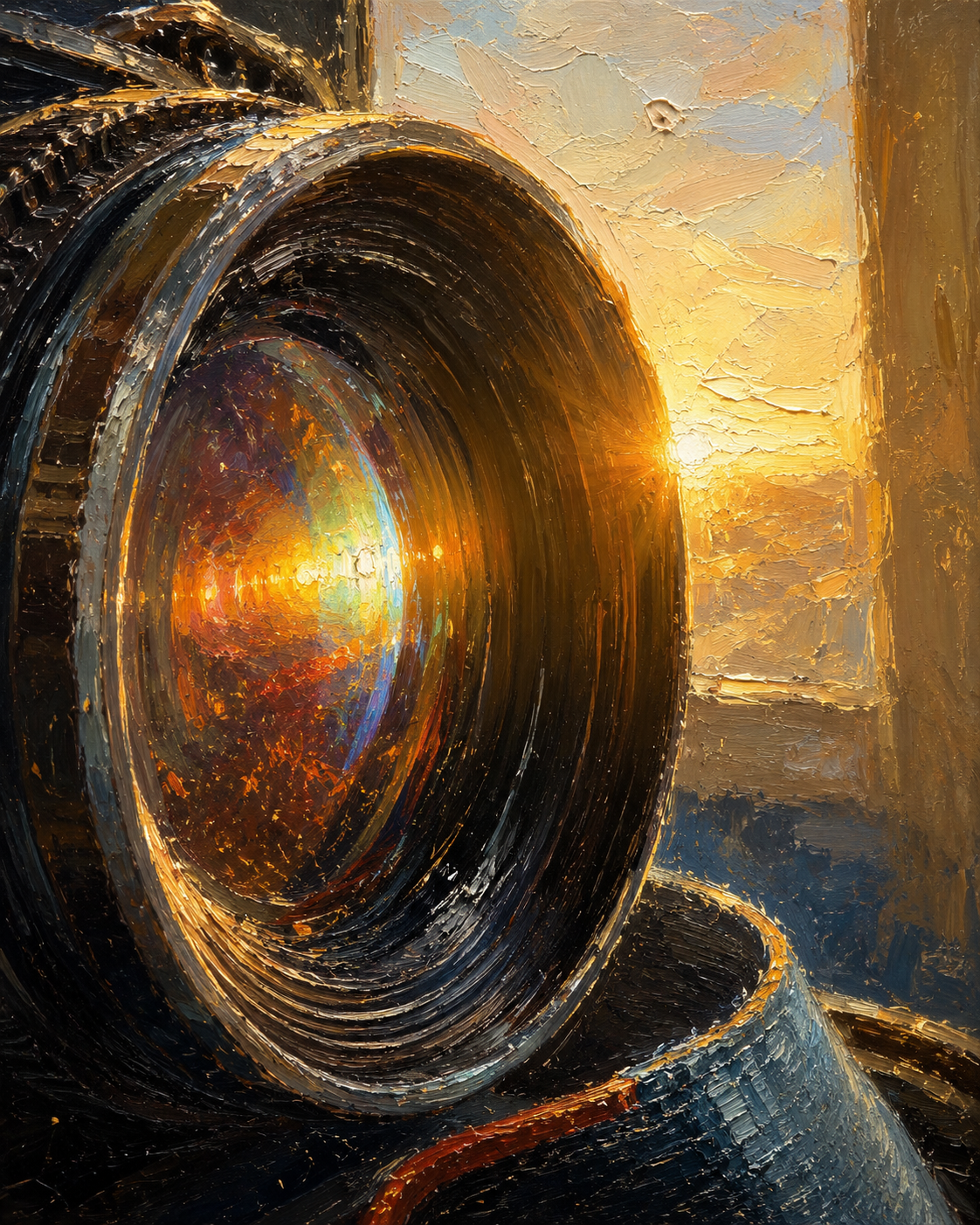
The Eye that Swallows the Sun
Critique
1. Introduction This oil painting presents a compelling study of a camera lens positioned by a window during the golden hour. Executed with a heavy impasto technique, the work reimagines a rigid, mass-produced industrial object as an organic and textured entity. By focusing on the interplay of light and shadow on a technical apparatus, the artist elevates a mundane tool into a profound symbol of visual perception and atmospheric beauty. 2. Description The composition is dominated by a dramatic close-up of the lens barrel and its large front glass element, viewed from a slight diagonal angle. Brilliant golden and amber light from the sunset streams in from the right, reflecting off the curved glass surface and creating intricate patterns of refraction within the lens. The background features a softly blurred window frame and a suggestion of the evening sky, enveloping the scene in a warm, glowing radiance. 3. Analysis The most striking formal quality of the piece is the bold application of paint, likely using a palette knife, which creates a highly tactile surface. The metallic sheen of the barrel and the transparency of the glass are rendered through thick, sculptural ridges of pigment rather than smooth gradients. This intense chiaroscuro, characterized by deep blacks and brilliant highlights, provides the circular composition with a sense of dynamic movement and three-dimensional weight. 4. Interpretation and Evaluation The work interprets the lens not as a mere medium for capturing images, but as a self-contained microcosm of light itself. The artist's ability to capture the complex spectrum of reflected colors demonstrates exceptional observational skill and technical mastery. By employing an extreme close-up, the painting strips the subject of its utilitarian function and highlights its inherent formal elegance, representing a successful fusion of traditional medium and modern subject matter. 5. Conclusion It is remarkable how the warmth and energy of oil paint breathe life into a cold, mechanical object. The viewer is invited to stop looking through the lens and instead look at the lens as it interacts with the transformative power of light. While initially overwhelmed by the raw power of the brushwork, one eventually discovers a delicate balance of calculation and passion that makes this an outstanding piece of contemporary realism.
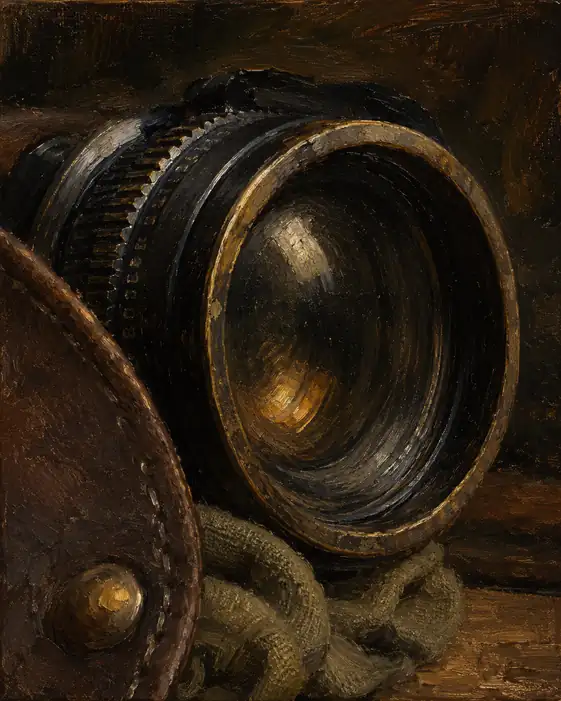 The Silent Witness of the Gaze
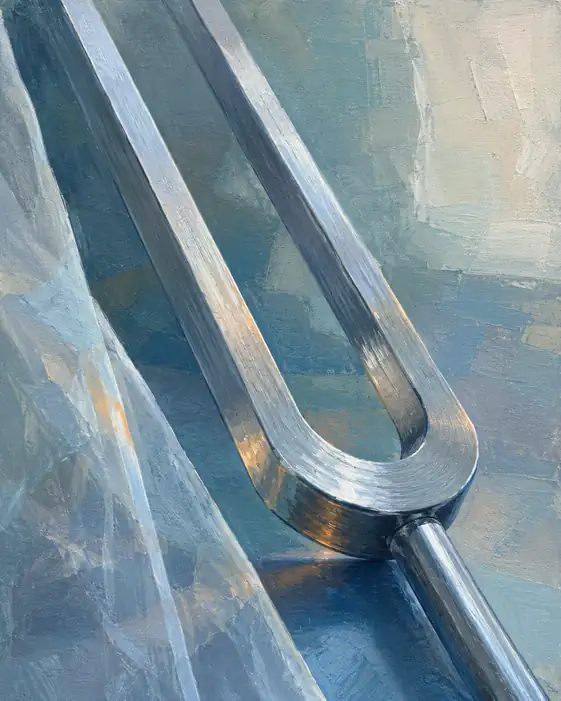 Resonance of Truth
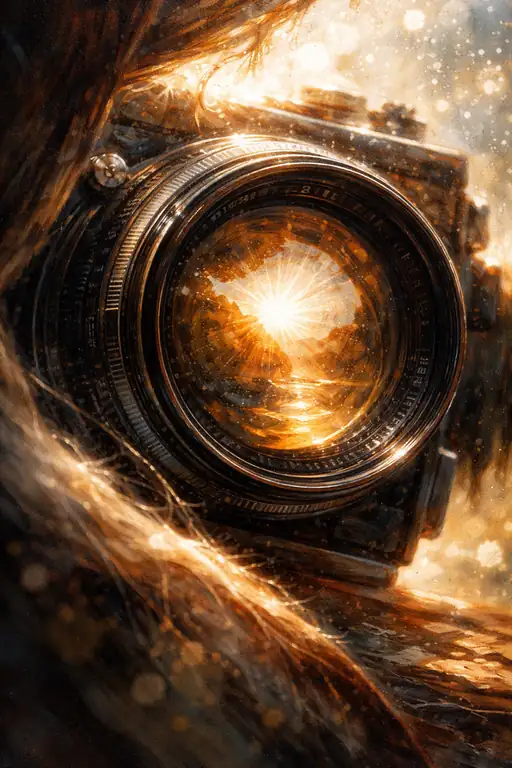 The Transient Sun Caged in Glass
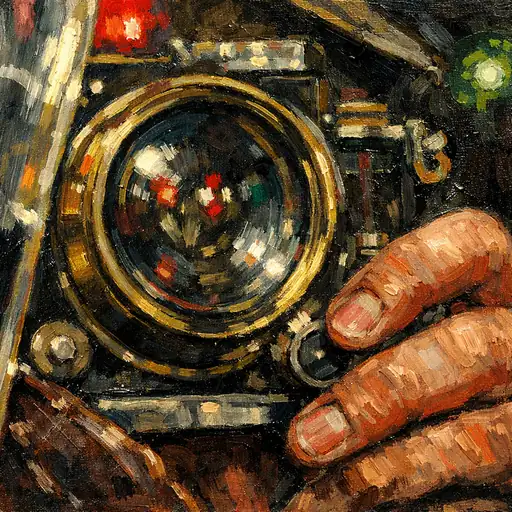 The Touch of Time
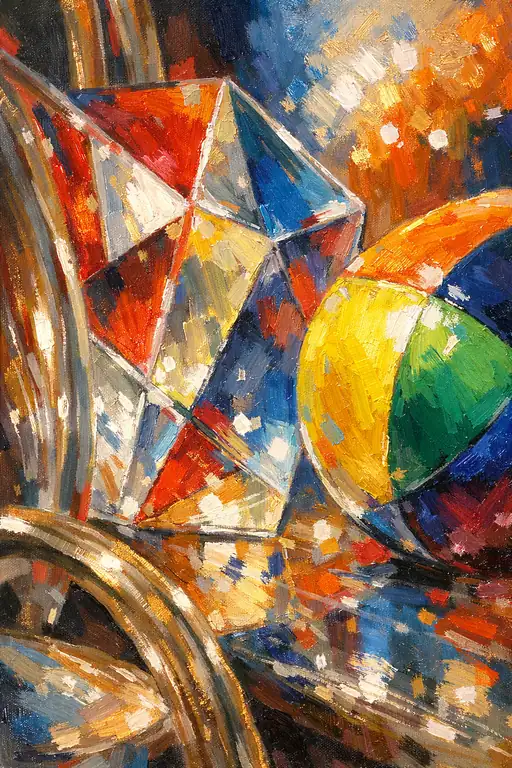 Fragments of a Fractured Reality
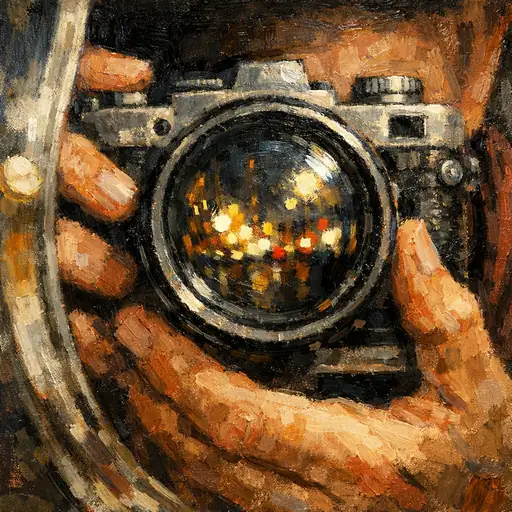 Cradling the Eye of Memory
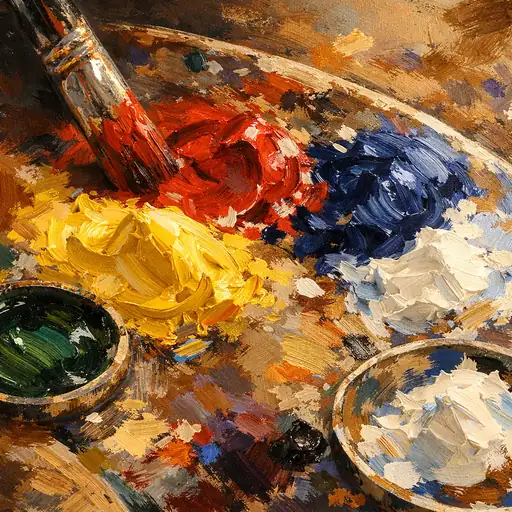 The Pulsing Heart of Creation
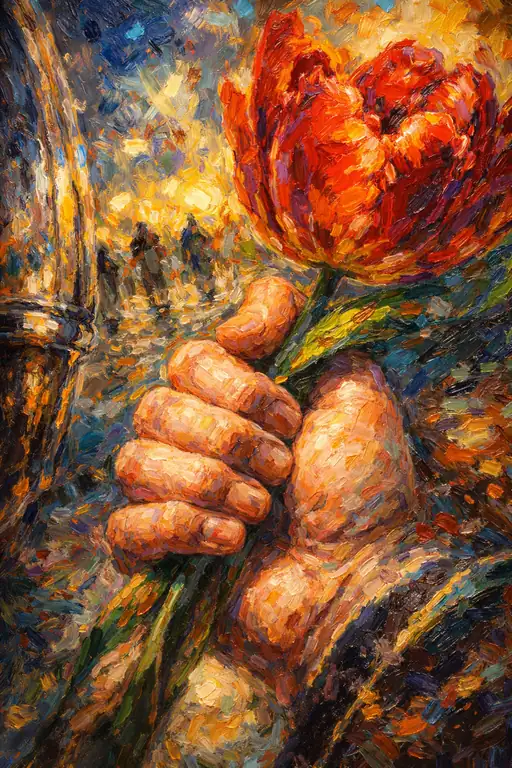 Crimson Anchor in the Storm
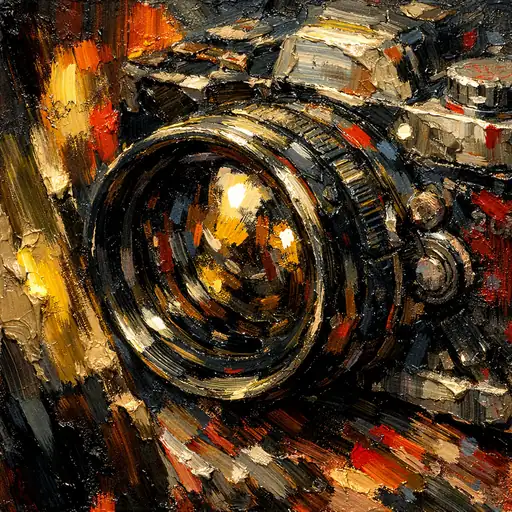 The Mechanical Eye That Captures Time
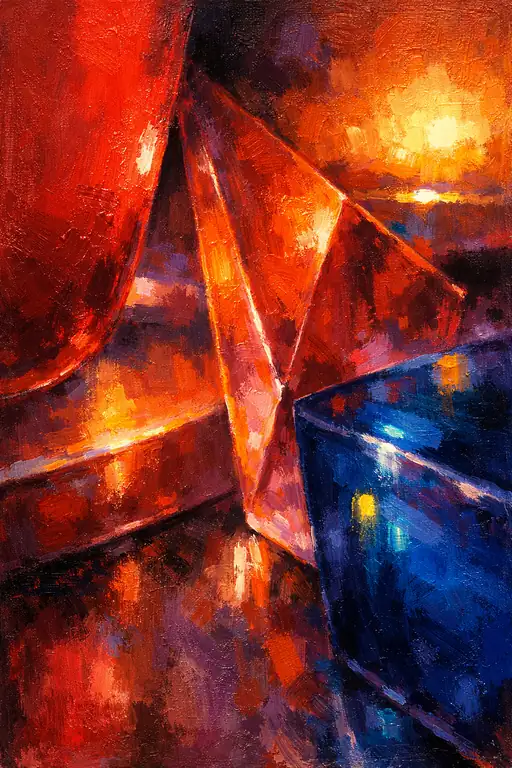 Whispers in Blue Velvet
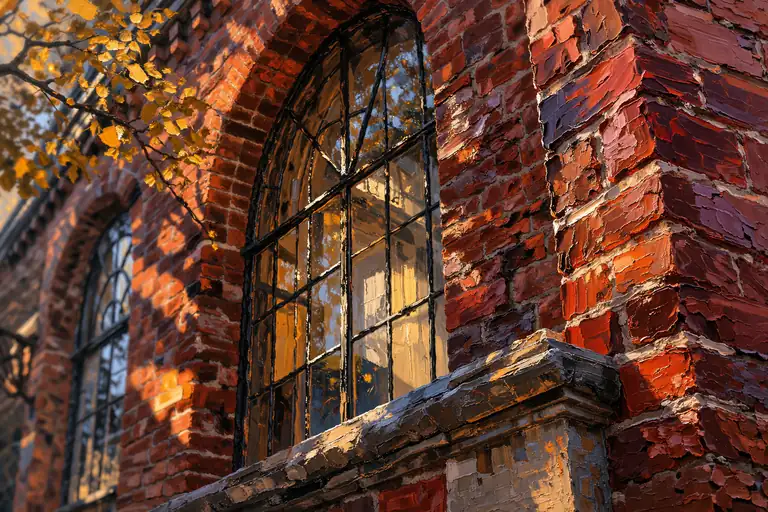 A Window to an Autumn Dream