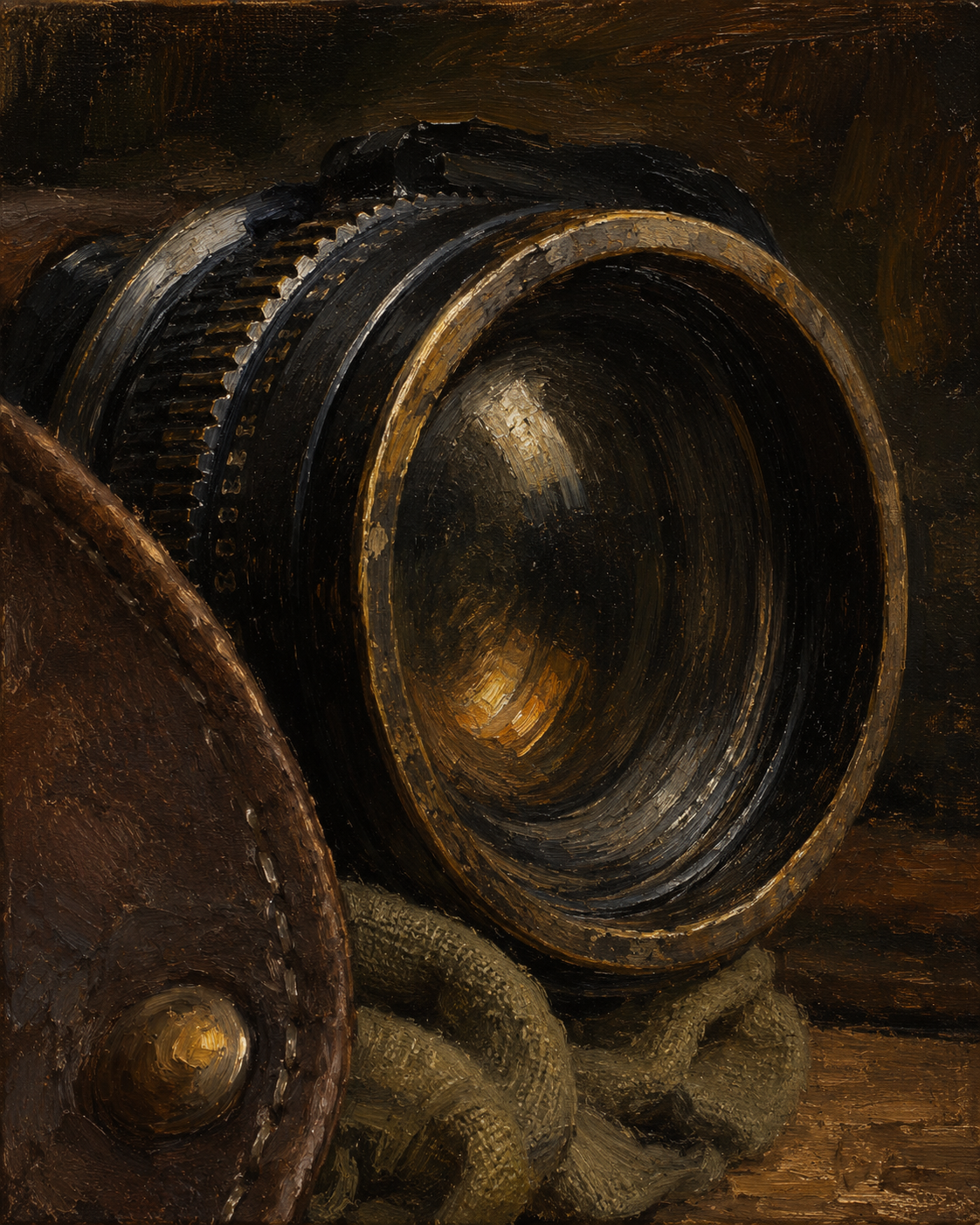
The Silent Witness of the Gaze
Critique
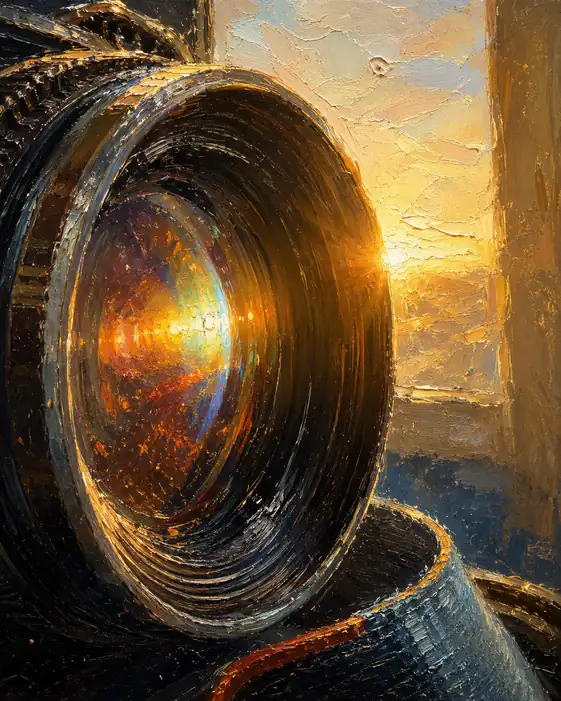
1. Introduction This oil painting presents an intriguing and atmospheric study of a large, vintage camera lens. Executed in a rich impasto style, the work elevates a mechanical object into a subject of significant aesthetic depth. The artist uses a dark, moody palette to explore the interplay between light, shadow, and the various textures of early photographic equipment. 2. Description The composition is dominated by the front element of a large lens, tilted slightly away from the viewer. The glass surface reflects a series of warm, concentric highlights that draw the eye into its depths. To the lower left, the curved edge of a worn brown leather case is visible, complete with detailed stitching and a brass stud. The lens rests upon a bunched-up piece of rough, olive-green fabric, while the background remains a dark, indeterminate space. 3. Analysis The painting is characterized by its expert handling of texture and directional light. The artist employs thick, confident brushstrokes to render the grainy surface of the leather and the ridges of the lens's metallic rings. The light source, presumably from the upper right, creates a dramatic glow within the lens, contrasting sharply with the deep shadows of the surrounding components. This high-contrast approach provides the subject with a powerful, three-dimensional presence. 4. Interpretation and Evaluation This piece can be interpreted as a meditation on the tools of vision and the nature of the gaze. By choosing oil paint to depict a device designed for photography, the artist creates a self-referential dialogue between two different modes of image-making. The technical execution is particularly impressive in its ability to differentiate between the hardness of metal, the translucency of glass, and the organic softness of leather. 5. Conclusion Initially seen as a simple depiction of equipment, the work evolves into a sophisticated exploration of form and medium. The artist succeeds in imbuing a functional object with a sense of mystery and historical weight. This painting effectively captures the mechanical beauty of the lens while showcasing the expressive possibilities of the impasto technique, resulting in a compelling and memorable still life.
Same Subcategory
Similar Artworks
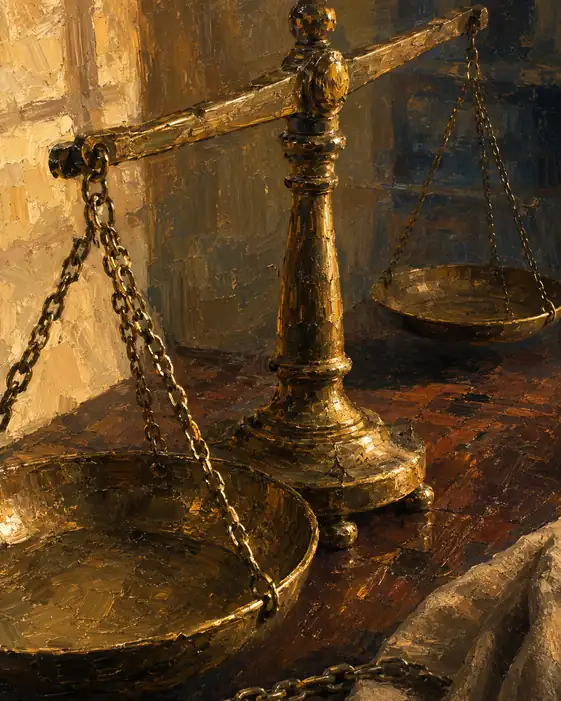 The Weight of a Silent Choice
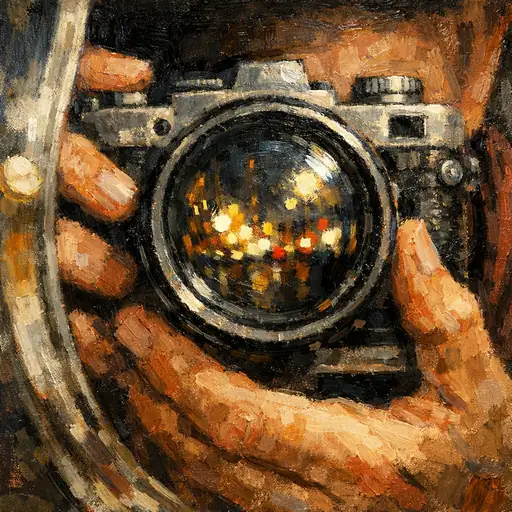 Cradling the Eye of Memory
 Guiding Light Through the Pages of Time
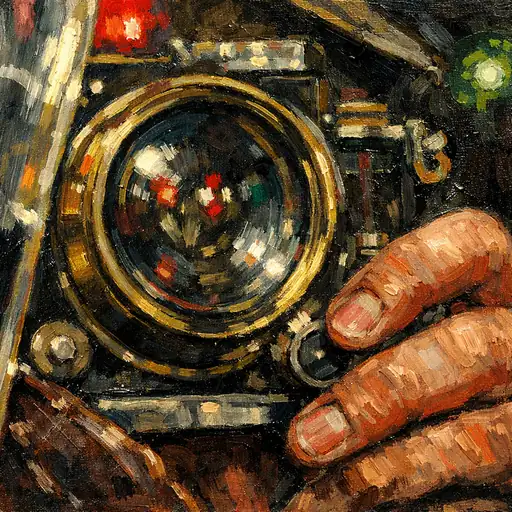 The Touch of Time
 Visions Through the Brass Eye
 The Eye that Swallows the Sun
 Gazing Into Timeless Precision
 The Mechanical Eye That Captures Time
 The Gilded Grip of Time
 The Compass that Knows My Heart's Direction