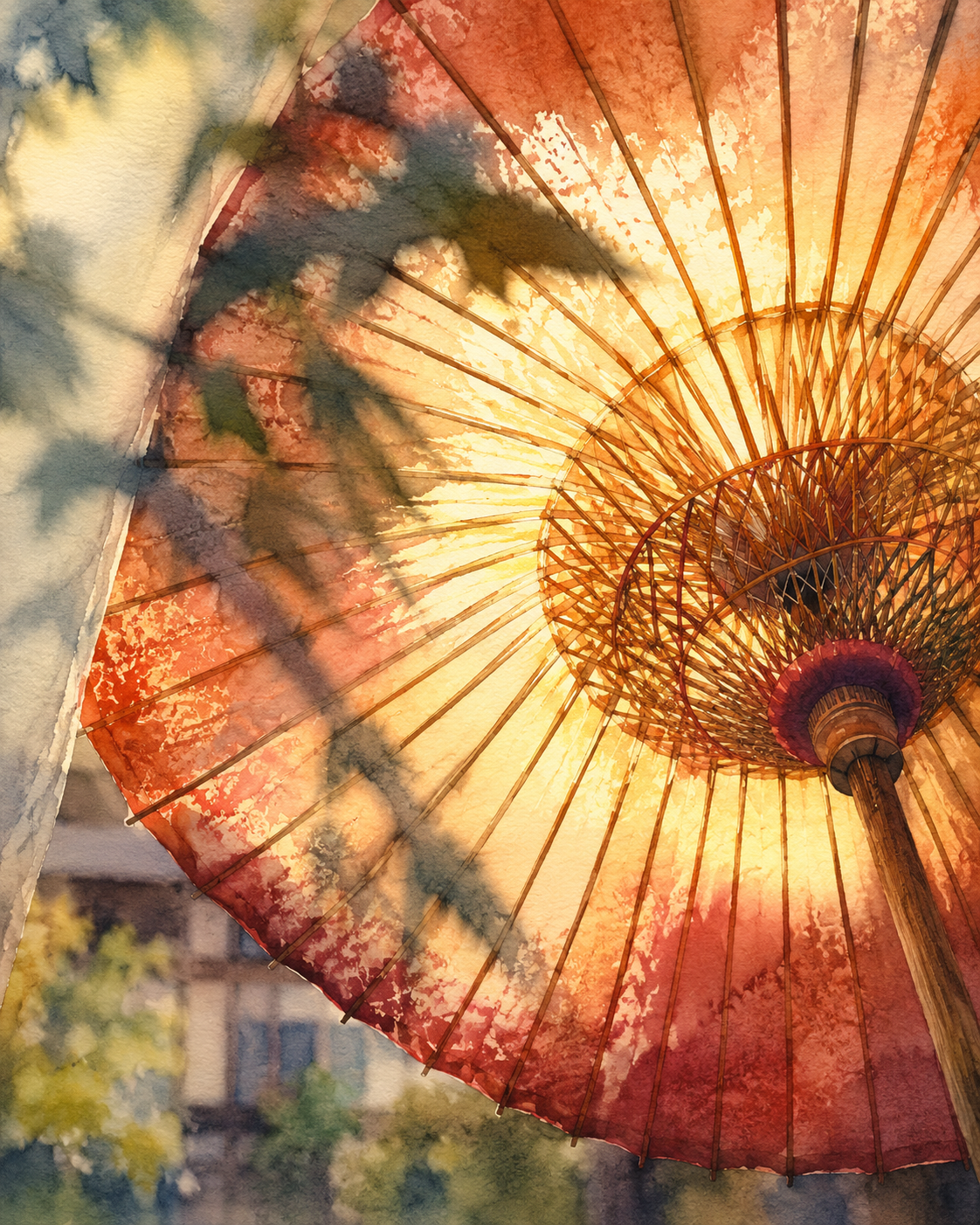
Under the Sunlit Crimson
Critique
1. Introduction This watercolor painting presents a dynamic view of a traditional Japanese oil-paper umbrella, known as a wagasa, from a low-angle perspective. The work captures the interplay between sunlight and material, focusing on the underside of the umbrella as it filters the brilliant rays of an afternoon sun. 2. Description The composition is dominated by the radial structure of the bamboo ribs, which extend from the central hub to the edge of the vibrant red paper canopy. Sunlight passes through the translucent paper, creating a warm, golden glow that transitions into deep crimson at the periphery. Across the upper left section, soft, dark shadows of tree leaves are cast onto the paper, contrasting with the sharp lines of the umbrella's internal frame. 3. Analysis The artist effectively uses the watercolor medium to depict the translucency of the paper and the intricate geometry of the bamboo support system. The radial symmetry of the ribs provides a strong focal point, drawing the viewer's eye towards the bottom right where the handle and hub are located. A sophisticated balance of warm oranges and cool, shaded blues in the background creates a sense of spatial depth and atmospheric heat. 4. Interpretation and Evaluation The piece successfully conveys the elegance of traditional Japanese craftsmanship while exploring the ephemeral nature of light and shadow. The choice of perspective transforms a functional object into a complex study of pattern and illumination. Technically, the control of color washes is impressive, particularly in the way the shadows are integrated without muddying the underlying vibrant tones. 5. Conclusion Initially striking for its bold use of color, the painting reveals its true strength in the meticulous rendering of structural details and atmospheric effects. It stands as a masterful exploration of how light can transform the ordinary into something visually profound and culturally resonant.
Same Subcategory
 Echoes of Eternal Elegance
Similar Artworks
 Beneath the Golden Canopy
 A Thousand Fluttering Prayers
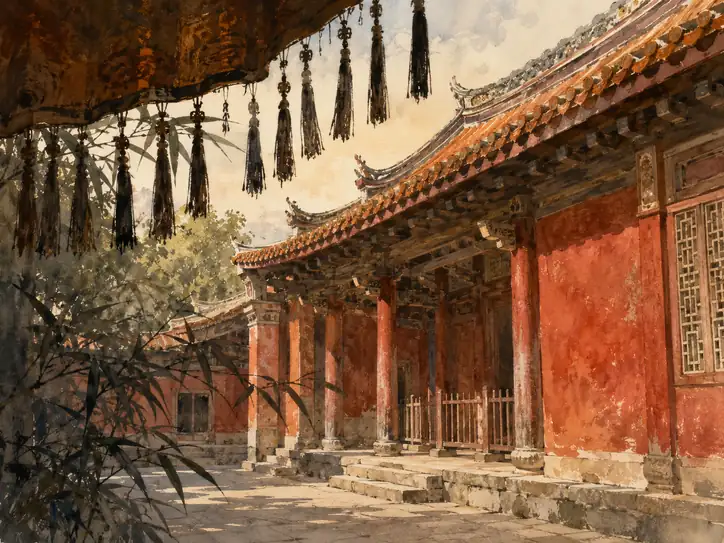 Where Sunlight Whispers to Vermilion
 A Symphony of Silent Prayers
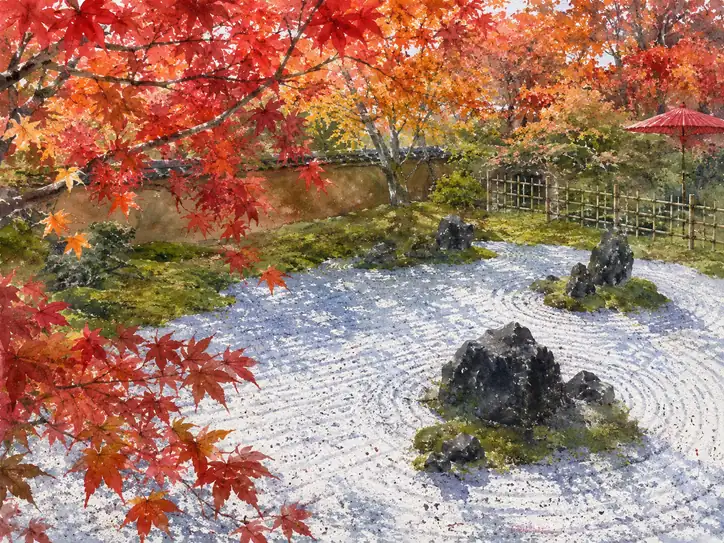 Zen Garden, Where Maples and Sand Ripples Weave Silence
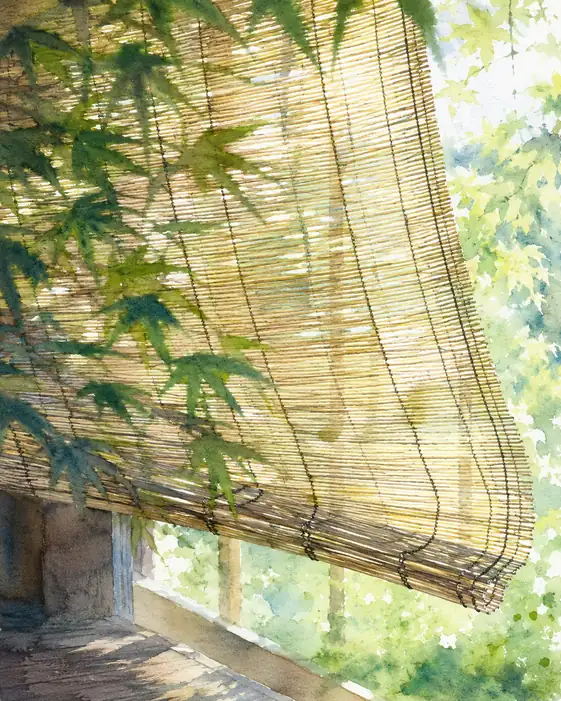 The Green Whisper of the Veranda
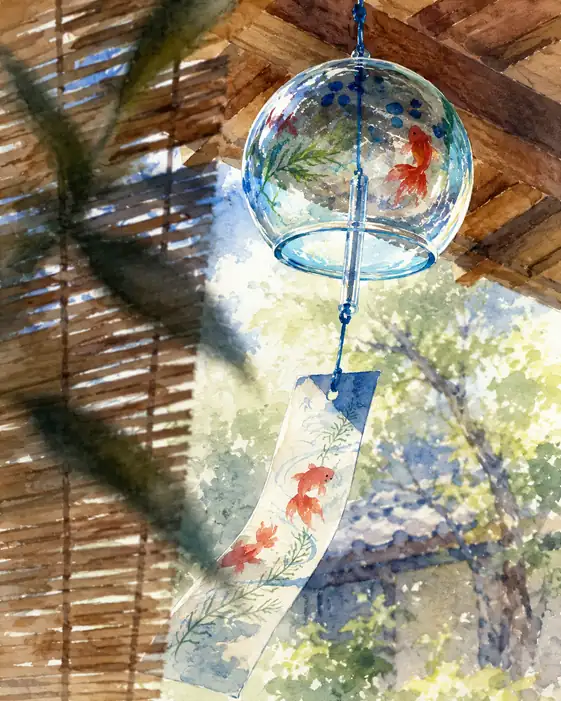 The Song of a Summer Breeze
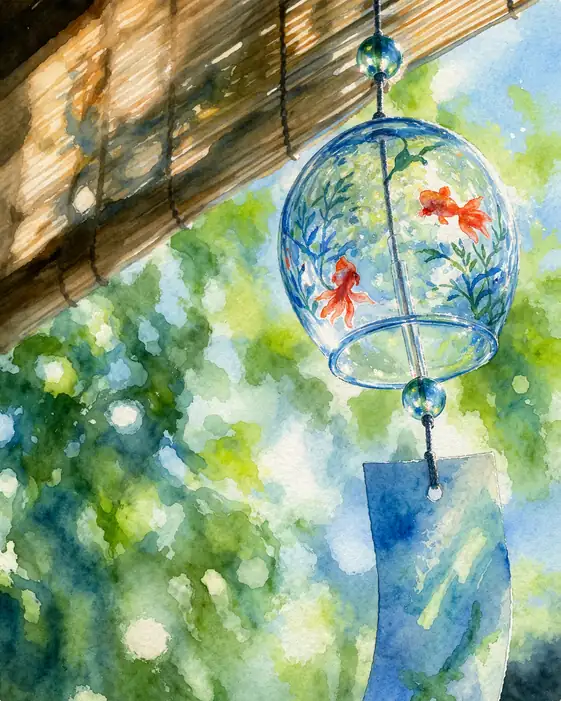 Whispers of the Wind
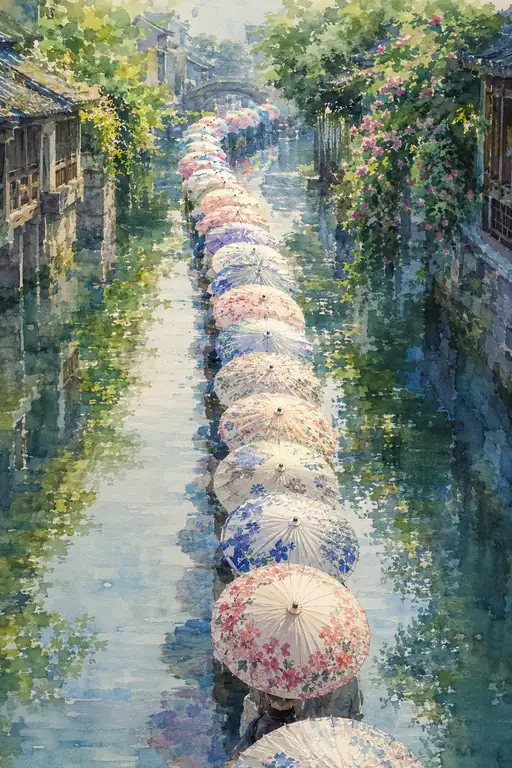 A Procession of Silent Flowers
 Waiting Under the Crimson Shelter