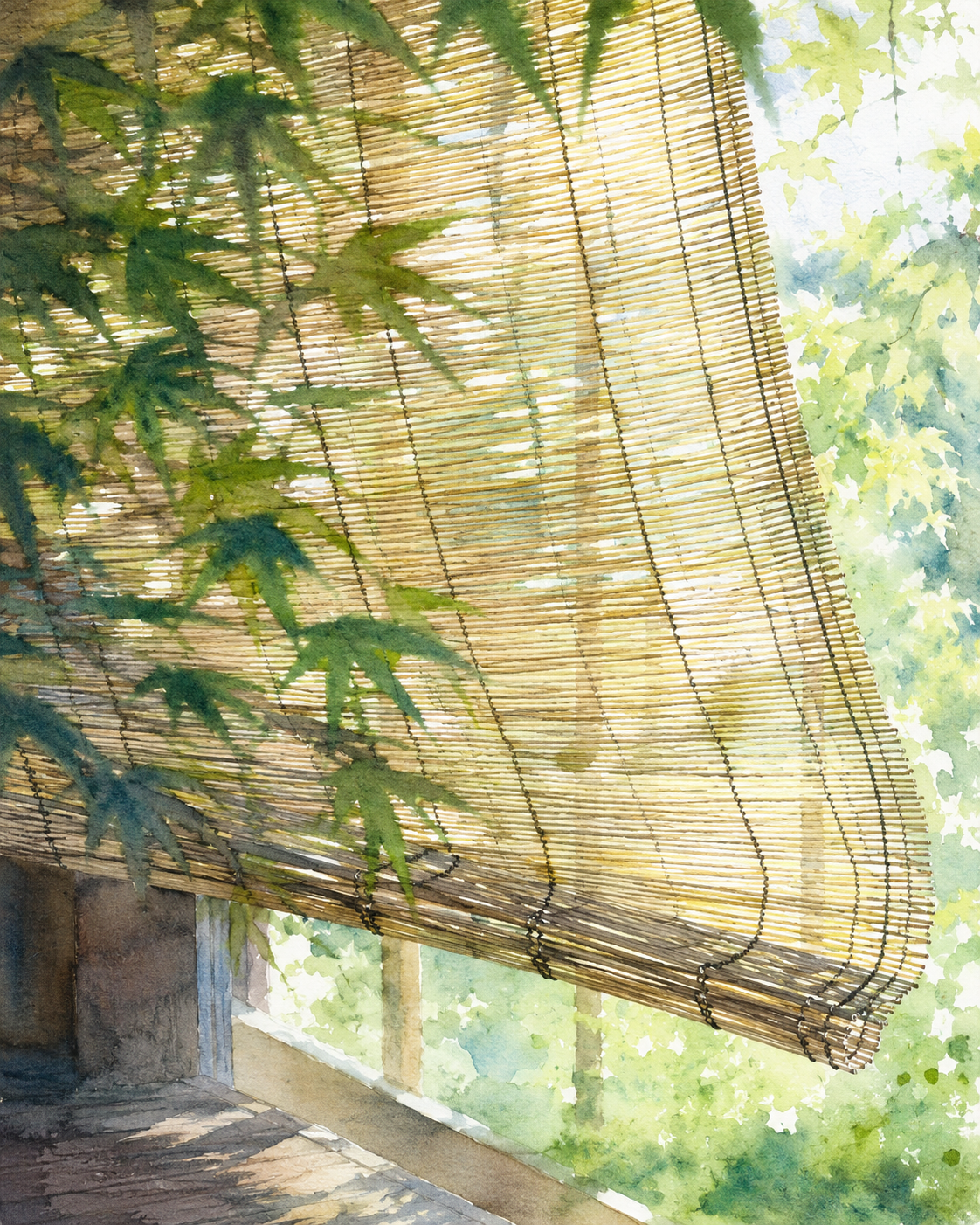
The Green Whisper of the Veranda
Critique
1. Introduction This watercolor painting captures the refreshing atmosphere of a Japanese summer through the depiction of a bamboo blind, or sudare. The composition focuses on the interplay of light and shadow as maple leaves cast delicate patterns onto the woven surface of the blind. 2. Description A large bamboo blind cuts diagonally across the frame, partially obscuring a sunlit garden. Vibrant green maple leaves are rendered both as physical branches and as soft shadows upon the blind. The foreground features a darkened veranda, or engawa, which provides a stark contrast to the brilliant, overexposed greens of the garden visible on the right. 3. Analysis The color palette balances the natural browns of the bamboo with the lively greens of the foliage, creating a sense of cleanliness and vitality. Watercolor techniques like layering and glazing effectively depict the translucency of the leaves and the individual texture of the bamboo slats. The horizontal lines of the blind provide a structural counterpoint to organic curves. 4. Interpretation and Evaluation The artist successfully visualizes "coolness" by treating the blind as a filter for intense natural light. This work demonstrates exceptional skill in rendering the diffusion of sunlight and the complex overlapping of shadows. By elevating a simple domestic scene into a poetic study of light, the painting achieves a high level of aesthetic and emotional resonance. 5. Conclusion Every element contributes to a cohesive atmosphere of tranquility and summer warmth. Further observation reveals the sophisticated beauty within the shifting patterns of light and dark. The artwork stands as a refined testament to the harmony between traditional Japanese architecture and the natural world.
Same Subcategory
 The Gestural Echo of a Fleeting Moment
 A Symphony of Silent Prayers
Similar Artworks
 Dappled Light and Crimson Stillness
 Two Swimmers in the Summer Sky
 Whispers in Glass and Summer Breeze
 The Song of a Summer Breeze
 A Trail of Cool Summer Smoke
 Where the Summer Breeze Rests
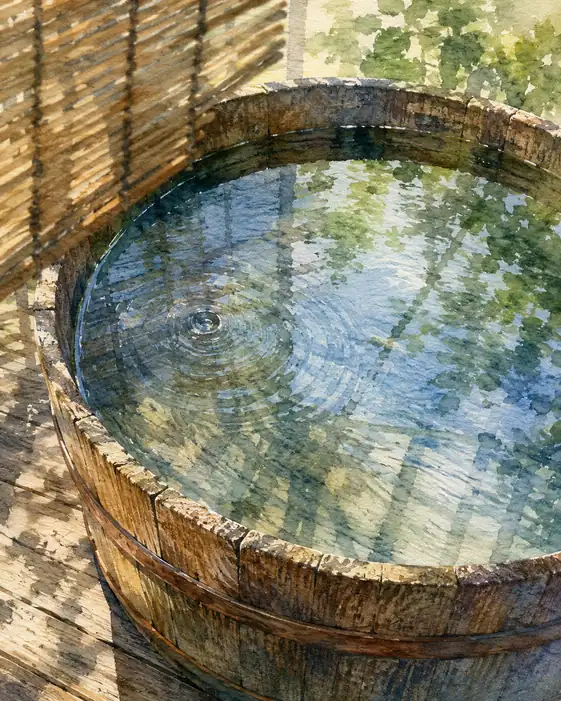 The Mirror of Summer Stillness
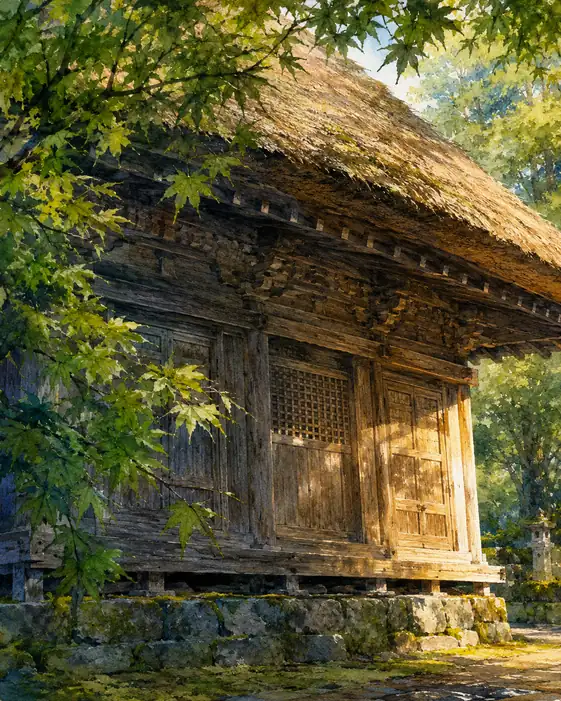 Memory of the Sun-Drenched Leaves
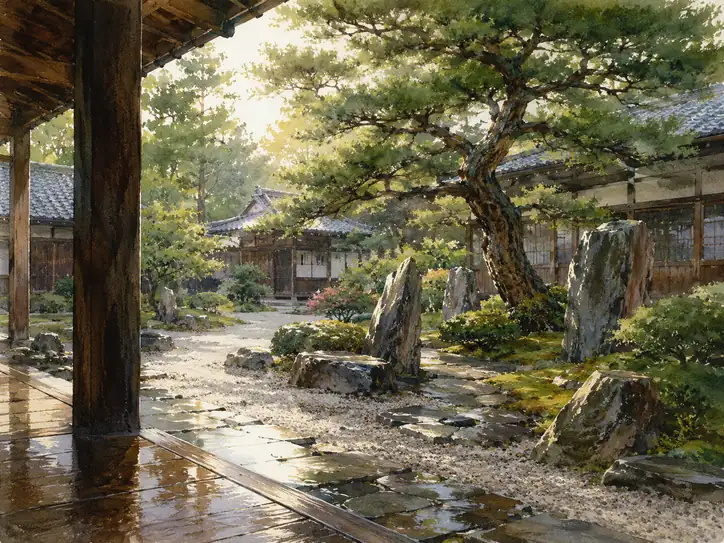 Reflections of Tranquility: Sunlight on the Wet Engawa
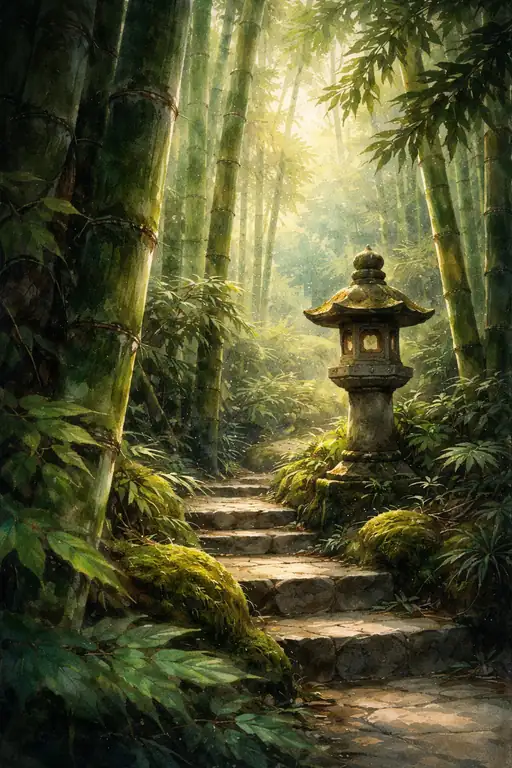 Mystic Light in the Bamboo Path