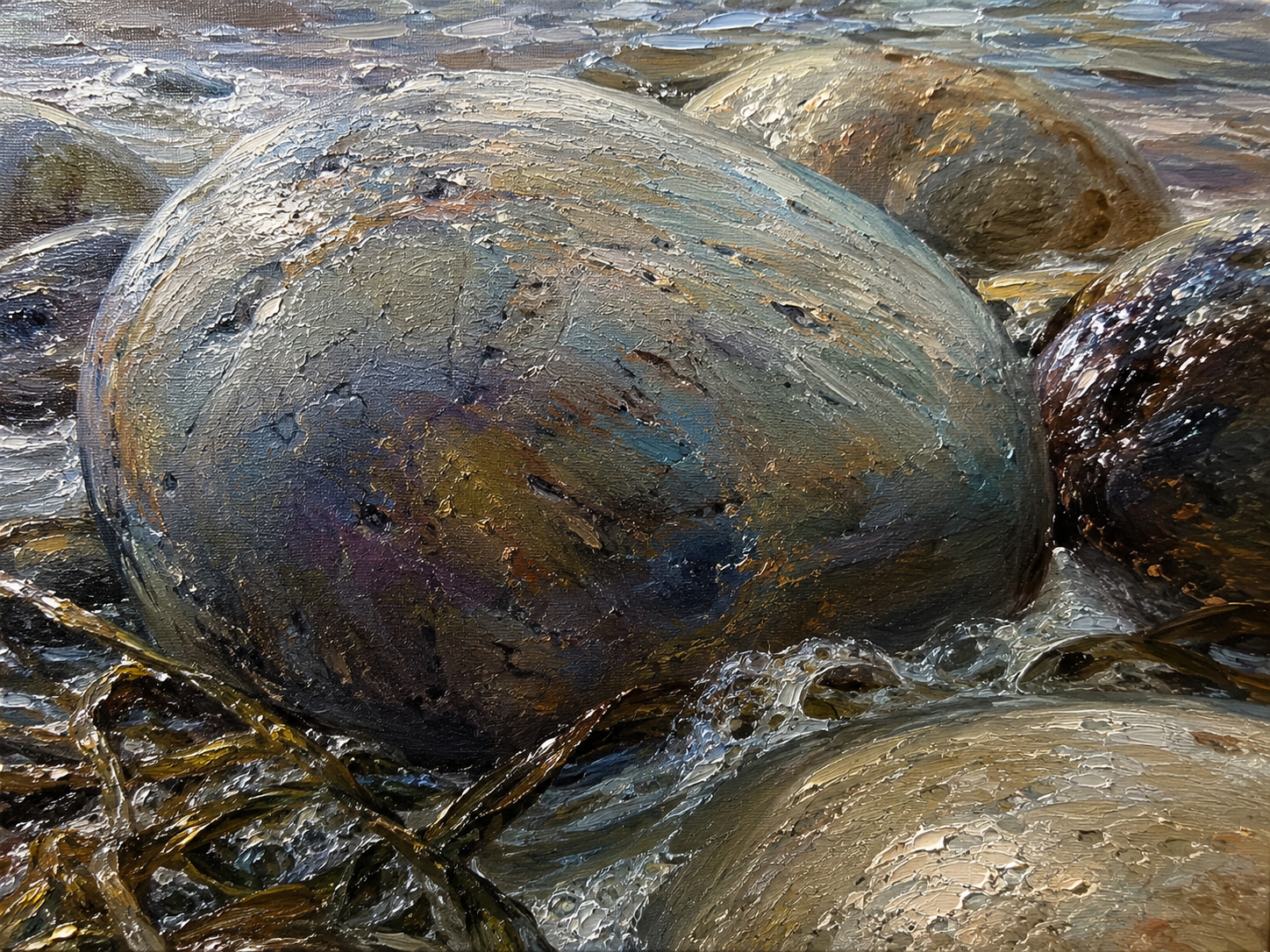
Resilience of the Ancient Shore
Critique
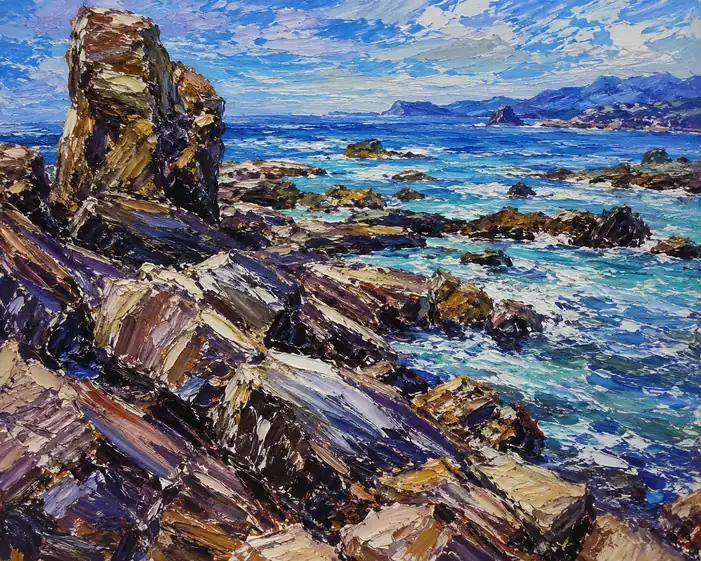
1. Introduction This horizontal oil painting offers a close-up, tactile exploration of massive boulders situated along a shoreline. The artist emphasizes the sheer weight and enduring presence of these natural forms through a heavy impasto technique. The resulting image is one that prioritizes physical texture and the interplay of natural elements over fine detail. 2. Description The central focus is a large, rounded stone that occupies a significant portion of the frame, showing a complex surface of grey, violet, and golden hues. To its right and behind it, other boulders of varying sizes are partially submerged in the churning water. In the lower left, dark, tangled seaweed clings to the base of the rocks, adding an organic complexity to the scene. 3. Analysis The artist’s use of thick, layered paint creates a surface that is as rugged as the subject matter itself. The brushwork is vigorous and directional, following the curves of the stones and the movement of the water. Highlights are applied with a palette knife or stiff brush, creating bright, foamy crests on the water and a sense of light reflecting off the wet surfaces of the rocks. 4. Interpretation and Evaluation The work effectively captures the raw energy of the coast, where the solidity of earth meets the constant motion of the sea. The limited color palette reinforces a somber, grounded mood, while the varied textures keep the viewer engaged. The composition is well-balanced, using the large central rock as an anchor for the more fluid elements surrounding it. 5. Conclusion This painting stands as a powerful study of geological forms and the transformative power of light and water. The successful integration of heavy impasto and expressive color suggests a deep appreciation for the physical properties of the natural world. It invites the viewer to consider the slow, relentless passage of time through the lens of these stoic coastal giants.
Same Subcategory
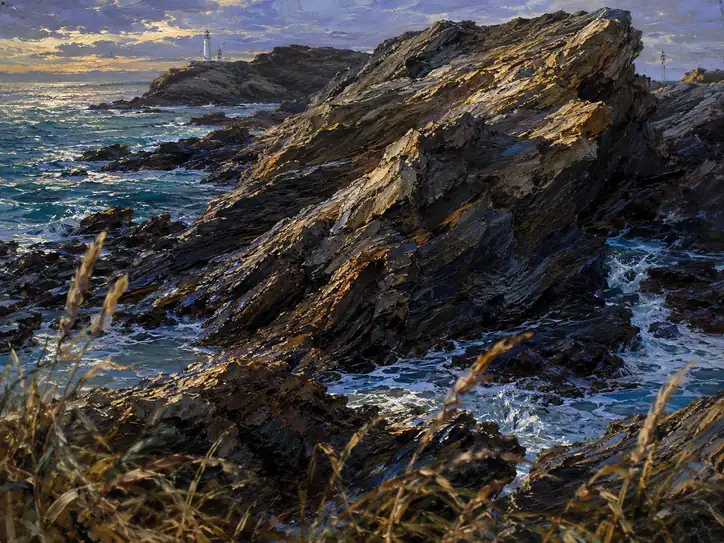 The Golden Bastion Against the Tide
Similar Artworks
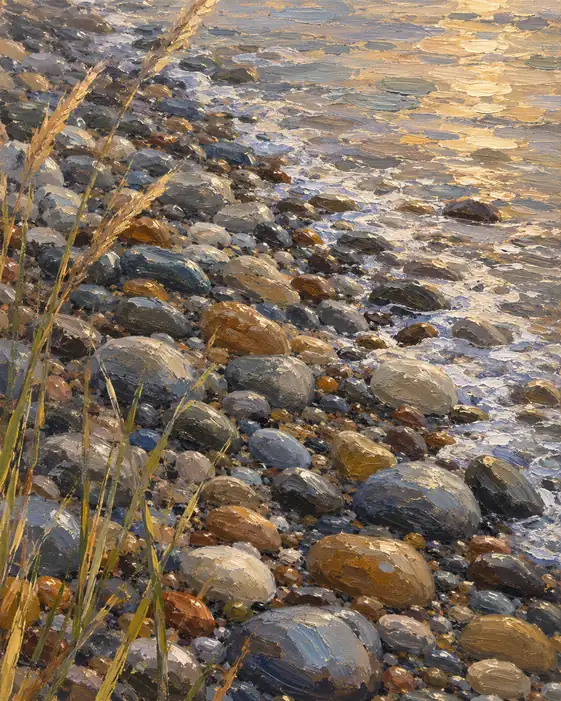 Golden Promises at the Water's Edge
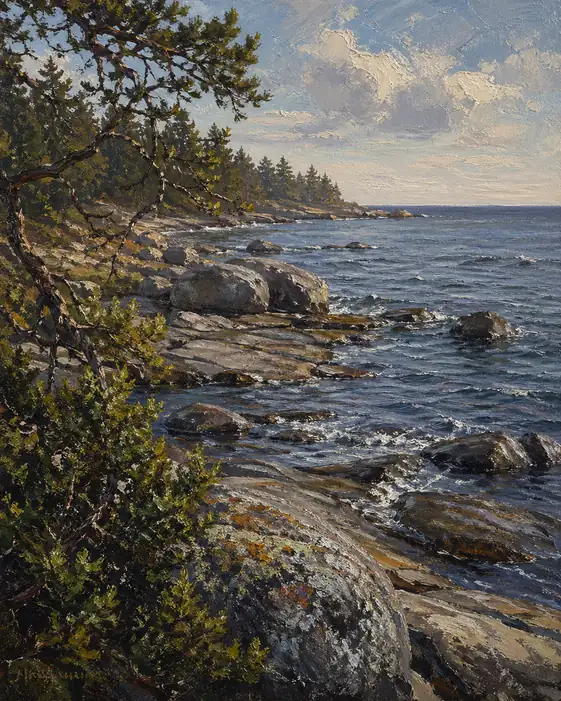 Golden Sunset Over the Rugged Coast
 The Pure Land's Eternal Gaze
 Eternal Resonance on the Sunlit Shore
 Where the Silence of the Peak Meets the Song of the Sea
 Gateway to the Infinite Blue
 Sacred Light Within Ancient Basalt Walls
 Where Time Dissolves in Blue
 The Breath of Ocean and Stone
 The Shore of White Silence