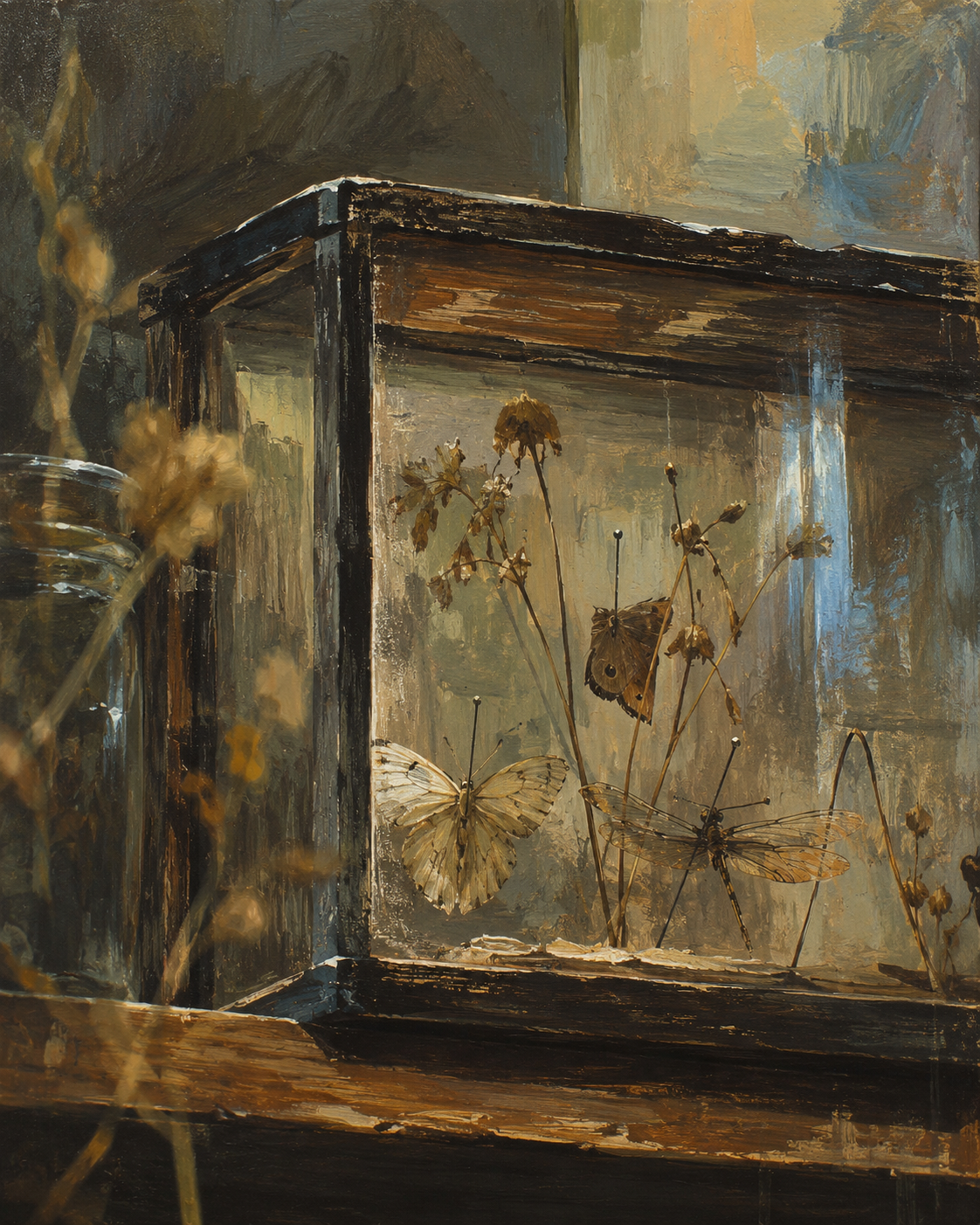
Sanctuary of the Silent Wings
Critique
1. Introduction This still life painting presents a meticulous arrangement of preserved insect specimens and dried botanical elements within a traditional glass display case. The composition is centered on the fragile remnants of the natural world, capturing a moment of absolute stillness and quiet contemplation. This work invites the viewer to reflect on the relationship between scientific observation and the aesthetic appreciation of organic forms. 2. Description The central focus of the work is a wooden display case housing several pinned butterflies and a dragonfly alongside slender, dried plant stems. On the left, a translucent glass jar and out-of-focus foliage suggest a domestic or laboratory setting. The wooden shelf and the frame of the case exhibit a weathered texture, rendered with thick, visible brushstrokes that emphasize the materiality of the objects. 3. Analysis The artist employs a muted, earthy color palette dominated by ochre, sepia, and deep browns, creating a nostalgic and historical atmosphere. Cool blue highlights on the glass surfaces provide a necessary contrast to the warm tones of the wood and specimens. The lighting is soft and directional, casting subtle shadows that define the three-dimensional space within the case and highlighting the delicate veining of the insect wings. 4. Interpretation and Evaluation The choice of subject matter speaks to themes of preservation, mortality, and the human desire to categorize and hold onto transient beauty. The juxtaposition of the once-living insects with the dried, skeletal plants reinforces the concept of "stasis" as a form of eternal life. The painterly technique bridges the gap between scientific illustration and emotional expression, effectively elevating these small specimens to subjects of profound dignity. 5. Conclusion This painting successfully captures a sense of hushed reverence for the intricate details of nature. Through the skillful use of texture and light, the artist transforms a simple scientific display into a poignant meditation on time and memory. The initial impression of clinical observation eventually gives way to a deeper appreciation for the fragile beauty of life preserved in silence.
Same Subcategory
 Resting on a Summer Bloom
 Chasing the Shimmering Wings
Similar Artworks
 The Quiet Permanence
 Curated Whispers of the Wild
 White Plum Blossom and Gilded Mirror
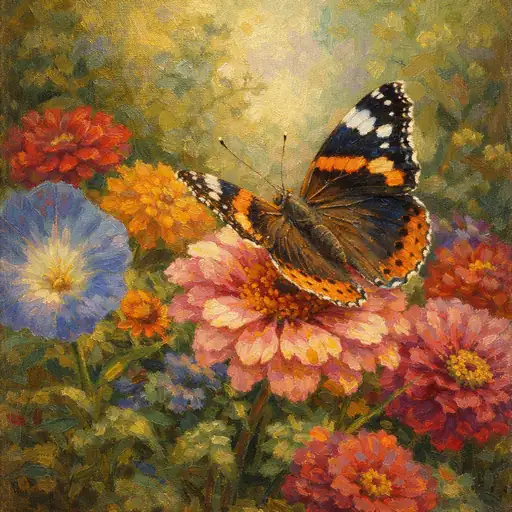 Dance of Life Upon the Sun-Drenched Petals
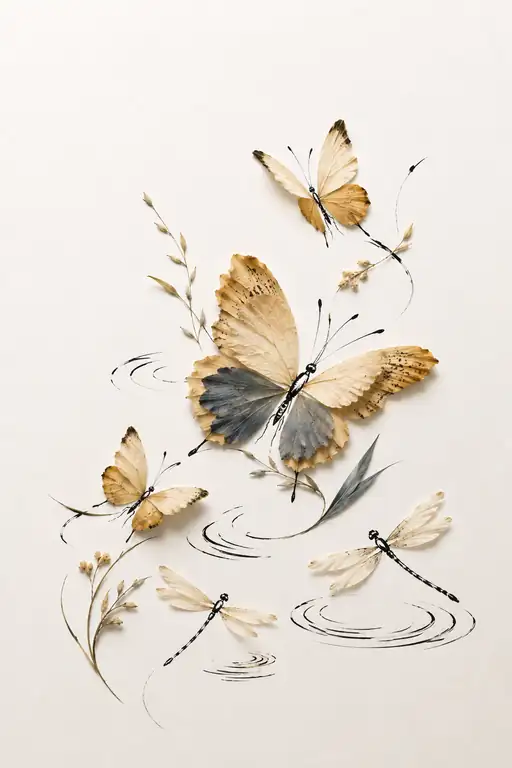 Dance of Wings Above Rippling Water
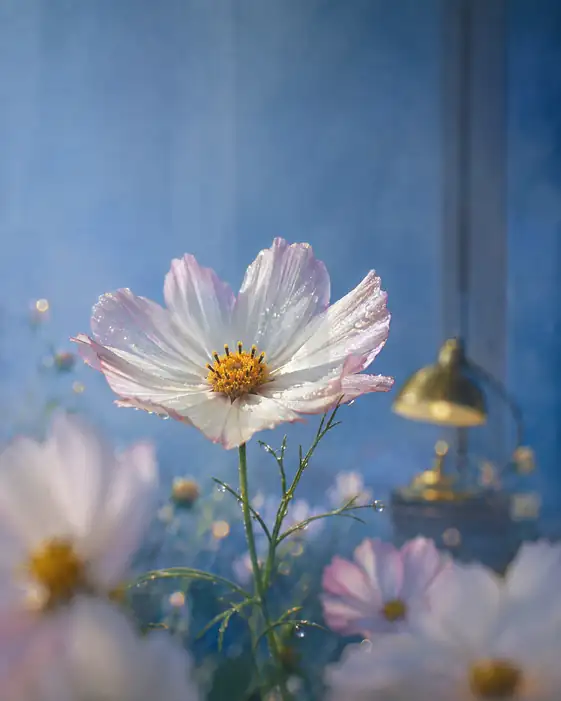 Pink Cosmos and Brass Desk Lamp
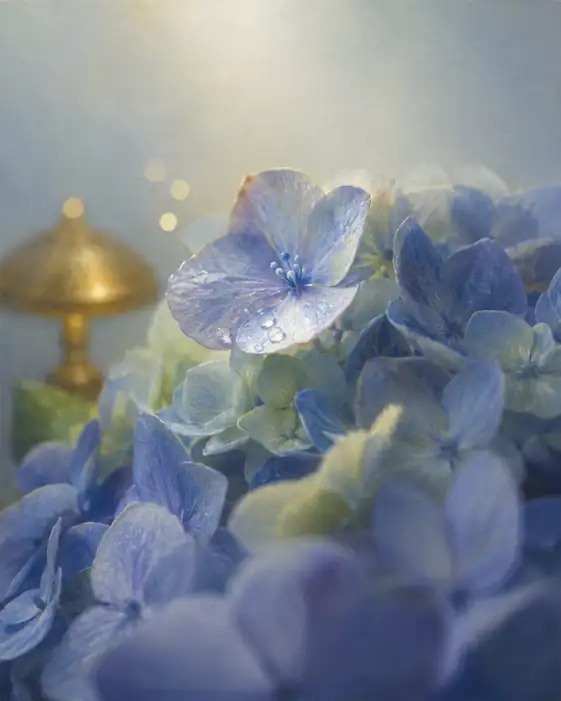 Golden Resonance in Azure Petals
 Eternal Splendor in Gold and Silk
 The Dew-Kissed Sentinels of Autumn
 A Breath of Ethereal Pink Softly Settling in the Mist